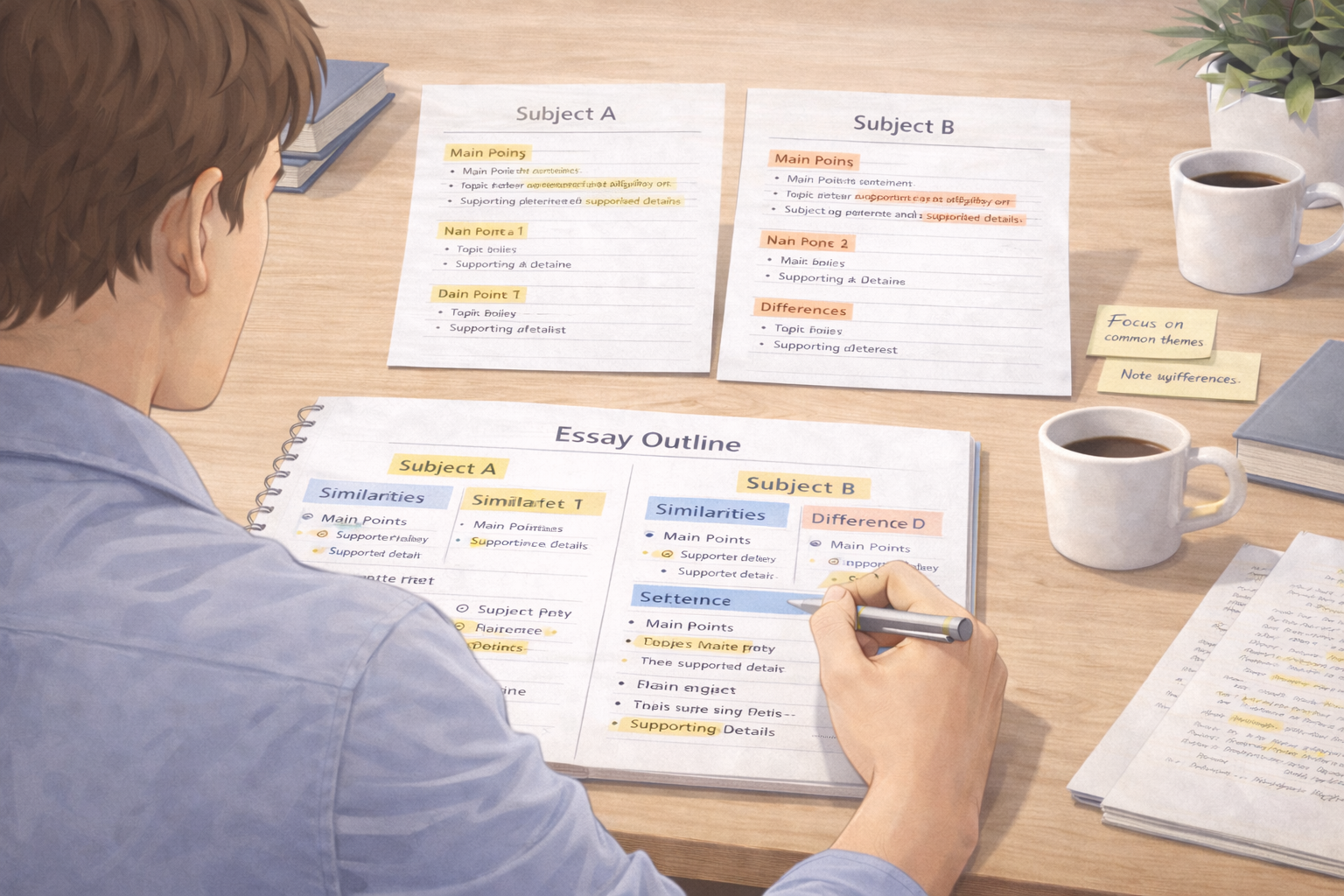
A compare and contrast essay outline is an essential planning tool that helps students organise ideas logically before writing. At university level, outlines are not optional drafting aids but strategic frameworks that shape argument clarity, analytical depth, and coherence.
Many students struggle with compare and contrast essays because they begin writing without a clear outline. This often results in unbalanced analysis, repetition, or superficial comparison. This article explains how to construct a strong compare and contrast essay outline, demonstrates accepted academic models, and shows how outlines translate into high-quality essays.
What a Compare and Contrast Essay Outline Is and Why It Matters
A compare and contrast essay outline is a structured plan that organises similarities and differences between two or more subjects around specific criteria. It ensures that comparisons are purposeful rather than descriptive.
In academic assessment, outlines help students maintain balance between subjects, avoid digression, and demonstrate logical progression. Examiners value essays that follow a clear analytical structure because it reflects disciplined thinking.
Academic principle: Effective comparison begins at the outlining stage, not during paragraph drafting.
Key Components of a Compare and Contrast Essay Outline
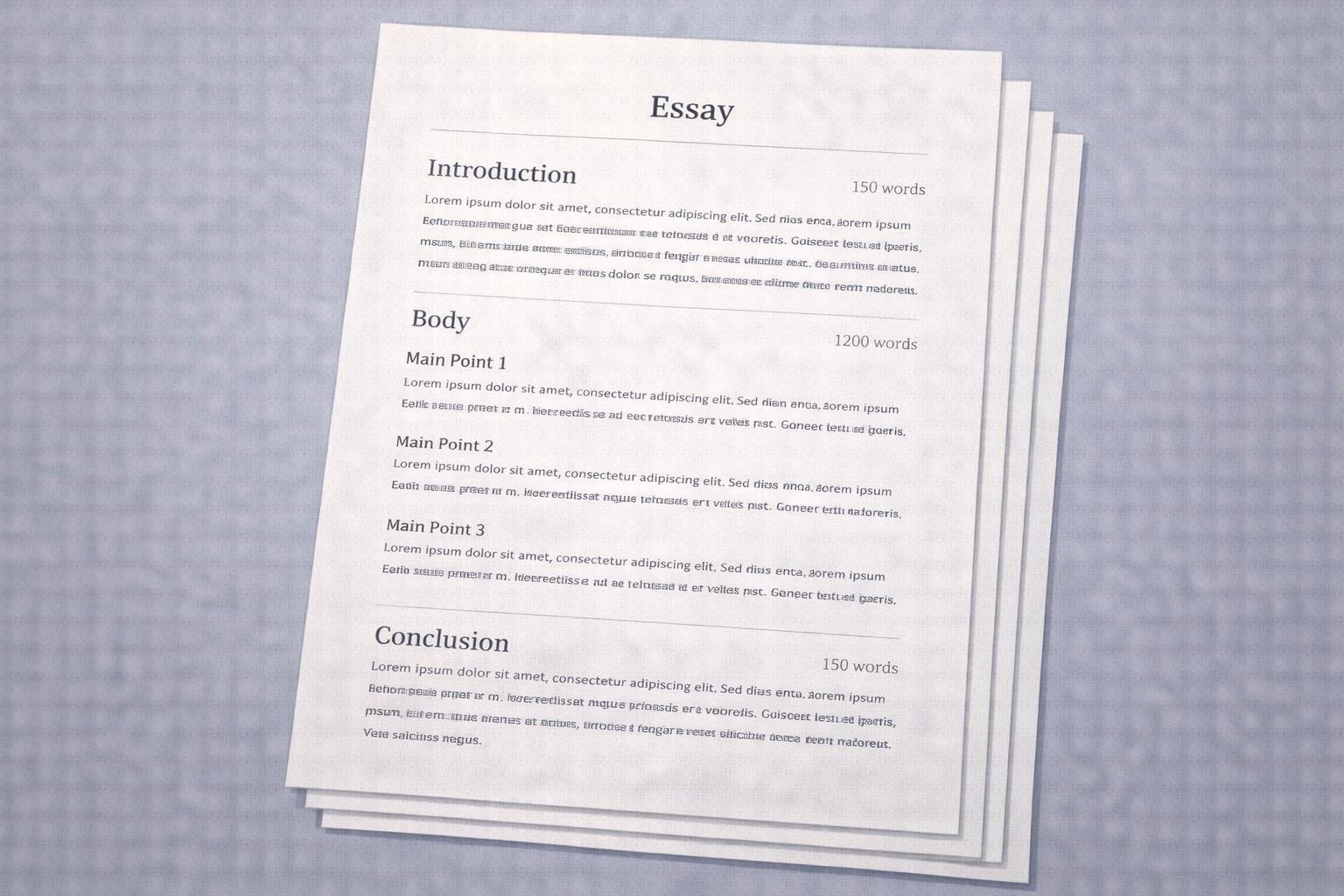
Regardless of discipline, a strong compare and contrast essay outline contains three core sections: an introduction, body paragraphs organised by comparison method, and a conclusion that synthesises insights.
Each section must serve a clear academic purpose. An outline should never simply list topics; it should indicate the direction of analysis and the logic connecting each section.
Introduction Section in the Outline
The introduction outline should establish context, identify the subjects being compared, and present an analytical thesis. At outline stage, the thesis should already signal the criteria for comparison.
Rather than writing full sentences, students should note the central argument and the basis of comparison to guide the rest of the essay.
Body Paragraph Sections in the Outline
The body of the outline is where comparison occurs. Each paragraph should be planned around a single comparison criterion, not a general topic.
Clear labelling at outline stage prevents overlapping arguments and ensures that both subjects are addressed consistently.
Conclusion Section in the Outline
The conclusion outline should summarise the main comparative findings and restate their academic significance. No new comparison points should appear at this stage.
Outlining the conclusion helps students avoid repetition and ensures analytical closure.
Block Method Compare and Contrast Essay Outline
The block method outline organises the essay by discussing one subject fully before moving on to the second subject. Each block follows the same criteria in the same order.
This outline is useful when subjects are complex or when background explanation is required before comparison.
| Section | Outline Focus |
|---|---|
| Introduction | Context, subjects, thesis |
| Body Paragraphs (Block A) | Subject A analysed by criteria |
| Body Paragraphs (Block B) | Subject B analysed using same criteria |
| Conclusion | Comparative synthesis |
While straightforward, this method risks weaker comparison if students fail to make explicit analytical links between blocks.
Point-by-Point Compare and Contrast Essay Outline
The point-by-point outline is the most common structure used in university-level compare and contrast essays. It organises paragraphs by comparison criteria rather than by subject.
This outline encourages direct comparison and stronger analytical engagement, making it preferred in most academic disciplines.
| Section | Outline Focus |
|---|---|
| Introduction | Context, thesis, comparison criteria |
| Body Paragraph 1 | Criterion 1: Subject A vs Subject B |
| Body Paragraph 2 | Criterion 2: Subject A vs Subject B |
| Body Paragraph 3 | Criterion 3: Subject A vs Subject B |
| Conclusion | Overall analytical insight |
This structure produces clearer argumentation and reduces descriptive writing.
Example Compare and Contrast Essay Outline for University Students
Essay topic: Compare and contrast online learning and traditional classroom education.
Outline example:
- Introduction
- Growth of digital education
- Definition of both learning modes
- Thesis: Differences in engagement, accessibility, and learning outcomes
- Body Paragraph 1 – Student Engagement
- Online learning: flexibility, self-paced study
- Classroom learning: real-time interaction
- Comparative analysis
- Body Paragraph 2 – Accessibility
- Online learning: geographic reach
- Classroom learning: physical constraints
- Comparative analysis
- Body Paragraph 3 – Learning Outcomes
- Evidence from academic studies
- Comparative interpretation
- Conclusion
- Summary of findings
- Implications for higher education
This outline demonstrates balance, clarity, and analytical focus.
Common Mistakes When Creating a Compare and Contrast Essay Outline
A frequent mistake is outlining topics instead of comparison criteria. This leads to descriptive paragraphs rather than analytical comparison.
Critical warning: If a paragraph does not compare both subjects, it does not belong in a compare and contrast essay.
Other errors include inconsistent criteria, uneven paragraph weighting, and vague thesis statements that do not guide the outline.
How Instructors Evaluate Compare and Contrast Essay Outlines
Instructors often assess outlines informally through essay structure and coherence. A well-developed outline results in logical transitions and focused analysis.
Clear outlines signal academic maturity and planning competence, especially in upper-level coursework.
Examiner expectation: Each outlined paragraph should advance the comparison, not repeat background information.
Final Guidance on Writing a Strong Compare and Contrast Essay Outline
A strong compare and contrast essay outline functions as an analytical roadmap. It ensures that ideas are organised, arguments are balanced, and comparisons remain purposeful throughout the essay.
By selecting an appropriate structure, defining clear comparison criteria, and outlining analytically rather than descriptively, students can produce essays that meet university-level academic standards with confidence.
Comments