
Narrative essays occupy a distinctive place in college-level writing. Unlike purely analytical or argumentative assignments, narrative essays allow students to draw on personal experience while still meeting rigorous academic standards. When executed effectively, a narrative essay does more than tell a story; it demonstrates reflection, insight, and intellectual growth.
Many students struggle with narrative writing because they assume that personal experience alone is sufficient. In reality, academic narrative essays require purposeful structure, selective detail, and clear thematic focus. This guide presents narrative essay examples for college students, accompanied by analysis explaining how successful narratives balance storytelling with academic reflection.
What Defines an Effective College Narrative Essay
An effective narrative essay at the college level combines chronological storytelling with critical reflection. The narrative should guide the reader through a specific experience while clearly communicating why that experience matters in an academic context. Rather than recounting every detail, successful essays select moments that support a central insight or lesson.
College instructors typically evaluate narrative essays on clarity, coherence, depth of reflection, and relevance to the assignment prompt. Strong narratives demonstrate an awareness of audience, use descriptive language responsibly, and connect personal experience to broader themes such as learning, identity, or social context.
Examiner expectation: A narrative essay should demonstrate reflection and insight, not just a sequence of events.
Example 1: Narrative Essay About an Academic Challenge
Essay topic: A moment that changed your approach to learning.
The first statistics lecture of my sophomore year felt like an unfamiliar language unfolding at the front of the room. As equations filled the whiteboard, I realised that the study habits that had carried me through high school were no longer sufficient. I left the lecture hall that day with a sense of unease, aware that effort alone would not bridge the gap between confusion and comprehension.
Rather than withdrawing, I decided to attend the weekly study sessions offered by the department. At first, asking questions felt uncomfortable, as though admitting weakness. Over time, however, those sessions transformed my understanding of learning itself. Concepts that once appeared abstract began to connect logically, and I learned to view confusion as the starting point of mastery rather than a sign of failure.
This experience reshaped my academic mindset. The challenge of statistics taught me that effective learning requires adaptation, collaboration, and patience. In this narrative essay example, the focus is not simply on difficulty but on personal growth and academic maturity.
Example 2: Narrative Essay on a Campus Experience
Essay topic: A defining experience during your first year of college.
Orientation week introduced me to campus life through a blur of campus tours, icebreaker games, and unfamiliar faces. Amid the noise and excitement, I felt both eager and overwhelmed, uncertain of where I belonged. It was not until I joined a small discussion group led by a senior student that the campus began to feel navigable.
In those weekly meetings, we shared experiences ranging from academic stress to cultural adjustment. Listening to others articulate challenges similar to my own reframed my perception of isolation. The conversations created a sense of shared purpose and reminded me that belonging in college is built gradually through connection and engagement.
This narrative essay example illustrates how a specific campus experience can serve as a lens for exploring broader themes such as community, transition, and personal development.
Example 3: Narrative Essay Focused on Personal Growth
Essay topic: A failure that contributed to your growth.
Failing my first chemistry midterm was an unexpected rupture in my academic confidence. Accustomed to high grades, I struggled to reconcile effort with outcome. The red ink on the exam paper felt like a public declaration of inadequacy, and for several days I avoided thinking about the course entirely.
Eventually, I scheduled a meeting with my professor, expecting criticism. Instead, the conversation centred on strategy, time management, and realistic expectations. That discussion reframed failure as a diagnostic tool rather than a final judgment. Over the remainder of the semester, my performance improved steadily, but more importantly, my resilience strengthened.
This narrative demonstrates how reflection transforms a personal setback into an academically meaningful insight.
How Narrative Essay Examples Demonstrate Structure
Although narrative essays are story-driven, they still rely on clear organisational patterns. Most effective college narratives follow a structure that mirrors analytical writing: introduction, body development, and reflective conclusion. The narrative arc provides coherence, while reflection supplies academic depth.
The table below outlines a common narrative essay structure used in college assignments.
| Section | Function | Key Focus |
|---|---|---|
| Introduction | Introduce context and theme | Setting, thesis insight |
| Body Paragraphs | Develop the narrative | Key events, turning points |
| Reflection | Interpret significance | Learning, growth, meaning |
| Conclusion | Synthesise insight | Broader implications |
This structure ensures that personal storytelling remains purposeful and academically relevant.
Language Use in College Narrative Essays
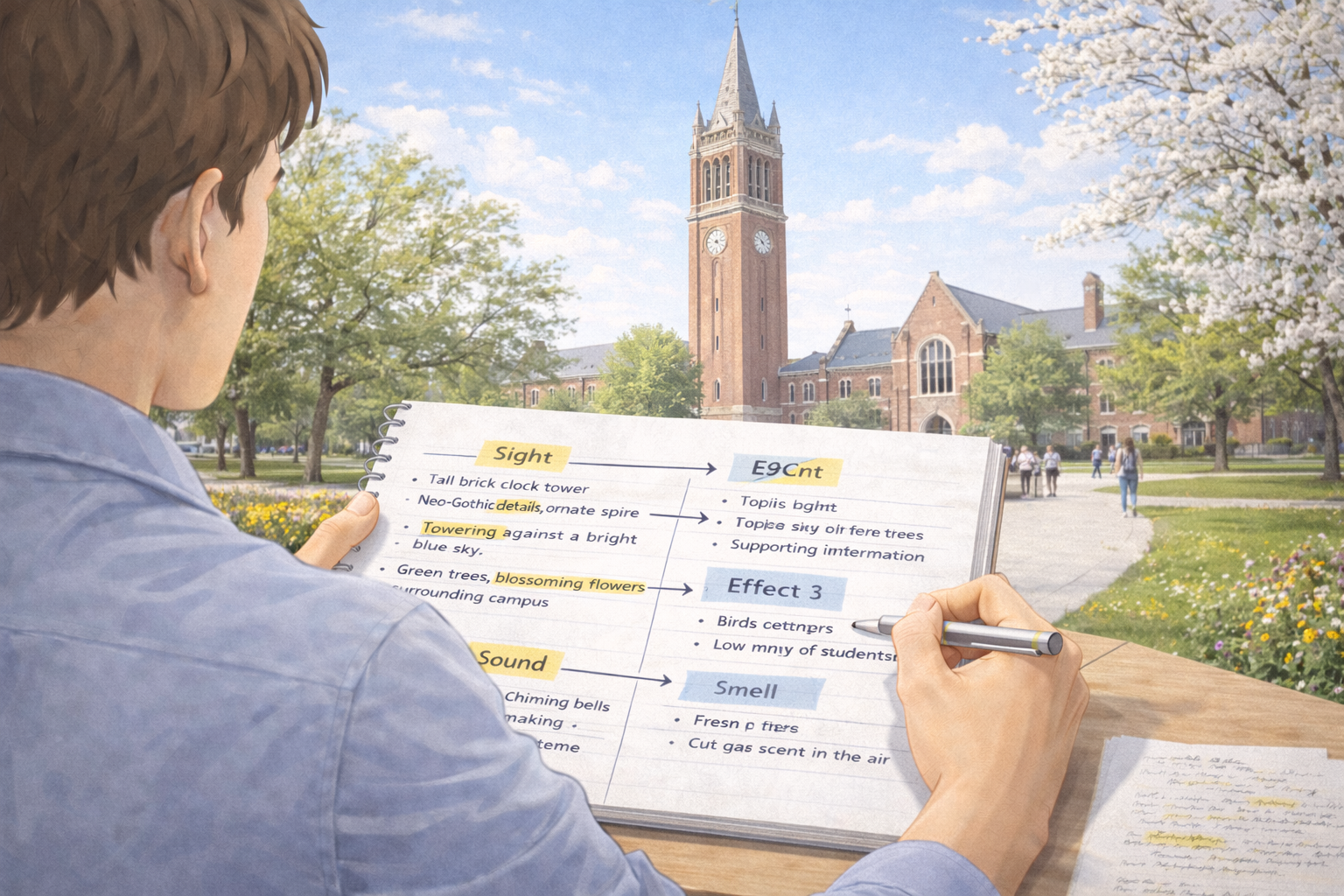
Narrative essays benefit from descriptive language, but restraint is essential in academic settings. Effective narratives employ vivid detail selectively, using description to clarify experience rather than overwhelm the reader. Overly ornate language can obscure meaning and weaken analytical clarity.
In the examples above, sensory detail supports reflection rather than replacing it. This balance helps maintain academic tone while preserving narrative engagement.
Academic guideline: Description should enhance reflection, not distract from it.
Common Mistakes in Narrative Essays
One frequent mistake is treating the narrative essay as a diary entry rather than an academic task. Excessive focus on emotion without analysis often leads to superficial writing. College narratives must demonstrate insight, not simply recount experience.
Critical mistake: Narratives that lack reflection or thematic focus often receive low academic evaluations.
Another issue is poor organisation. Even compelling stories lose impact if events are presented without logical progression or clear transitions.
Using Narrative Essay Examples to Improve Your Writing
Studying narrative essay examples helps students identify effective strategies for integrating experience with reflection. Rather than copying content, writers should analyse how examples structure events, introduce insight, and conclude with broader significance.
Through deliberate practice and careful revision, students can transform personal stories into academically credible narratives that meet college-level expectations.
Final Guidance for Writing College Narrative Essays
Narrative essays offer college students an opportunity to connect personal experience with academic learning. The strongest narratives are those that move beyond storytelling to demonstrate reflection, growth, and intellectual awareness.
By studying narrative essay examples, applying clear structure, and focusing on insight rather than description alone, students can produce narrative essays that are both engaging and academically sound.
Comments