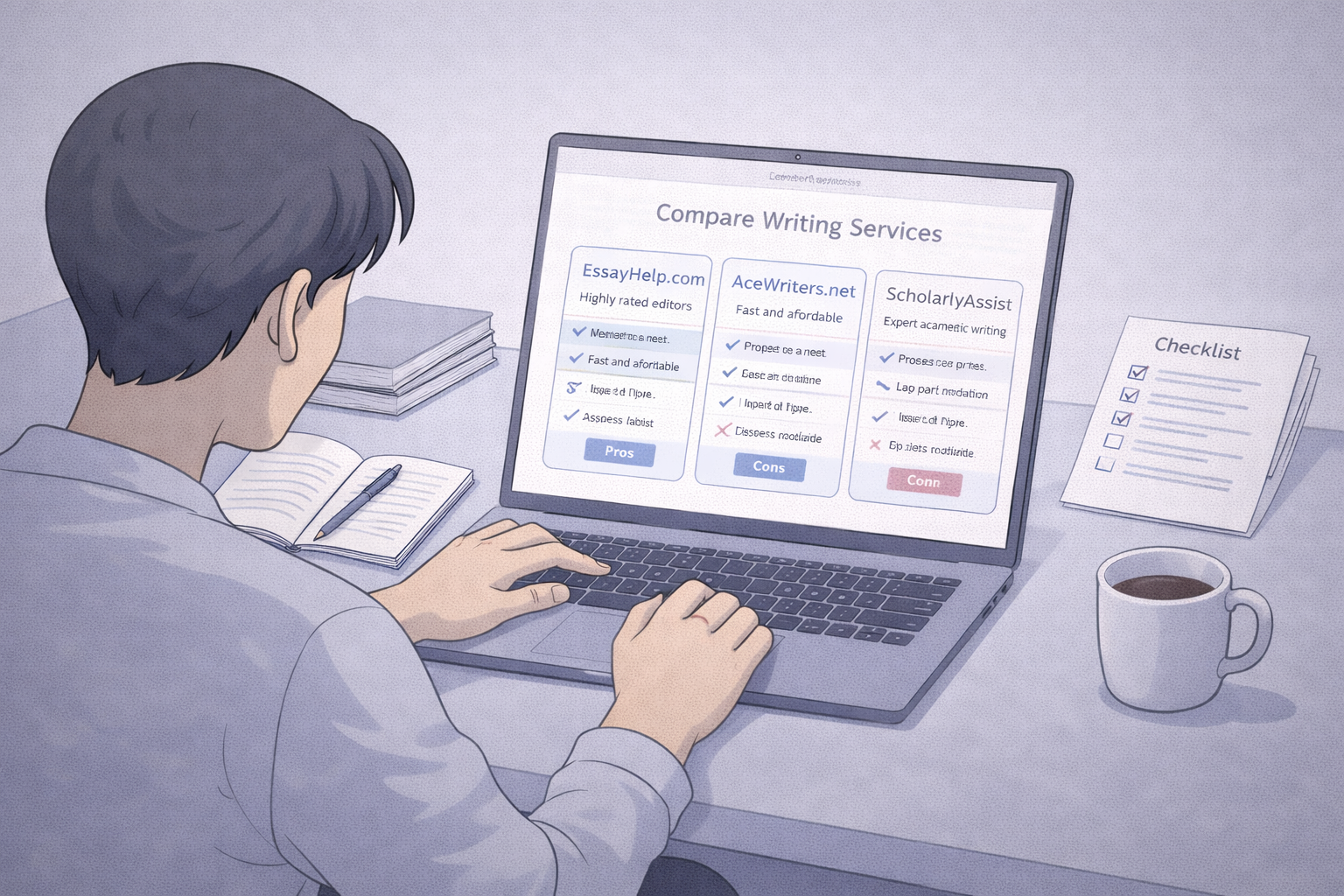
University students today face a demanding academic environment characterised by tight deadlines, complex assessment criteria, and high expectations for independent scholarly work. As a result, many students consider external academic support at some point in their studies, particularly when balancing coursework with work, family responsibilities, or research pressures.
Choosing a writing service, however, is not a straightforward decision. The academic support market is diverse and unevenly regulated, ranging from legitimate educational assistance to services that undermine academic integrity. This article provides a structured framework to help students evaluate writing services critically and select support that aligns with university standards and personal learning goals.
Why Students Consider Writing Services in the First Place
Students turn to writing services for a range of reasons that extend beyond simple time pressure. Many struggle with academic conventions that are rarely taught explicitly, such as argument structure, critical engagement, or discipline-specific writing styles.
International students may face additional challenges related to academic English, while postgraduate students often encounter unfamiliar expectations when transitioning from coursework to independent research. In these contexts, external support can appear attractive as a way to reduce uncertainty and improve clarity.
Understanding these motivations is essential, as it helps distinguish between seeking developmental support and outsourcing academic responsibility.
What “Choosing a Writing Service” Actually Involves
Choosing a writing service is not simply about comparing prices or turnaround times. It involves evaluating whether a service supports learning, respects academic integrity, and aligns with institutional regulations.
A responsible choice requires students to ask what kind of assistance is being offered, how it will be used, and whether it enhances or replaces their own academic work.
This decision-making process mirrors the critical thinking universities expect students to apply in their coursework.
Key principle: A legitimate writing service supports academic development rather than producing assessable work on a student’s behalf.
Understanding Different Types of Writing Services
Not all writing services operate in the same way. Some focus on feedback and editing, while others claim to deliver complete assignments. Recognising these differences is crucial when evaluating options.
Services that emphasise guidance, review, and improvement are generally more compatible with academic integrity than those promising ready-to-submit work.
Common Categories of Writing Services
The table below outlines broad categories of writing services and their typical academic implications.
| Service type | Main focus | Academic implication |
|---|---|---|
| Editing and proofreading | Language, clarity, and presentation | Generally permitted with disclosure |
| Structural feedback | Organisation and coherence | Supports learning and revision |
| Research guidance | Direction and source identification | Acceptable when student writes |
| Ghostwriting | Full assignment production | Academic misconduct risk |
This comparison highlights why careful evaluation is essential before committing to any service.
Academic Integrity and Institutional Expectations
Universities place strong emphasis on academic integrity, particularly regarding authorship and originality. Many institutions explicitly allow certain forms of support, such as proofreading or feedback, provided they are acknowledged appropriately.
Problems arise when students submit work that is not their own or fail to disclose external assistance where required. These risks increase significantly when students use services without understanding their institution’s policies.
Choosing a writing service responsibly therefore requires familiarity with university regulations as well as service practices.
Critical warning: Submitting work written by another person is usually treated as academic misconduct, regardless of payment.
Key Criteria When Choosing a Writing Service
Students should apply clear criteria when evaluating writing services, rather than relying on marketing claims. These criteria help differentiate educational support from ethically problematic services.
Transparency, scope clarity, and academic focus are particularly important indicators of legitimacy.
- Clear explanation of what the service does and does not provide
- Emphasis on feedback, editing, or guidance rather than authorship
- Alignment with university assessment standards
- Qualified academic writers or editors
Each of these factors contributes to informed and responsible decision-making.
Evaluating Claims and Guarantees
Many writing services advertise guarantees related to grades, plagiarism-free work, or institutional acceptance. Students should approach such claims with caution.
Academic outcomes depend on numerous factors beyond writing quality, including marking criteria and examiner judgment. No ethical service can guarantee specific grades.
Overly confident promises often signal a transactional approach rather than a learning-oriented one.
The Role of Discipline-Specific Expertise
Academic writing conventions vary significantly across disciplines. A service that works well for humanities essays may not be suitable for scientific reports or business case studies.
When choosing a writing service, students should consider whether providers demonstrate familiarity with their field of study and its methodological expectations.
Discipline-aware support improves relevance and reduces the risk of inappropriate stylistic or structural advice.
Using Service Pages to Assess Scope
Reputable academic platforms clearly distinguish between different forms of support. For example, separating essay writing support from proofreading and editing services helps students understand what level of assistance is appropriate for their needs.
Such differentiation signals an awareness of academic boundaries and student responsibility.
Students should look for this clarity when reviewing any provider’s website.
Communication and Student Involvement
Legitimate writing services encourage active student involvement rather than passive submission. This may include opportunities to ask questions, request clarification, or revise drafts based on feedback.
One-way delivery models, where a completed document is simply handed over, offer little educational value and increase ethical risk.
Choosing a service that promotes dialogue supports both learning and accountability.
Cost, Value, and Realistic Expectations
While cost is a practical consideration, it should not be the sole deciding factor. Extremely low prices often correlate with low-quality or ethically questionable practices.
Value in academic support is better measured by clarity, reliability, and educational benefit rather than speed alone.
Students should assess whether the service contributes to long-term skill development, not just short-term submission.
Red Flags to Watch for When Choosing a Writing Service
Certain warning signs suggest that a writing service may not operate within acceptable academic standards. Recognising these red flags can prevent serious academic consequences.
- Promises of guaranteed grades
- Claims that the service is “undetectable”
- Lack of transparency about authorship
- No mention of academic integrity
Encountering one or more of these indicators should prompt students to reconsider their choice.
Choosing a Writing Service for Long-Term Academic Growth
The most effective writing services are those that gradually reduce student dependence by improving skills and confidence. This developmental approach aligns with the purpose of higher education.
Students who use services as learning tools often report improved writing ability over time, reducing the need for external support.
Viewing writing assistance as part of an academic growth strategy reframes it as an investment rather than a shortcut.
Making an Informed and Ethical Choice
Choosing a writing service requires the same critical judgment that universities expect students to apply in their academic work. Understanding service types, ethical boundaries, and institutional expectations is essential.
When selected carefully and used responsibly, writing services can support clarity, confidence, and academic development without compromising integrity.
An informed choice ensures that external support strengthens, rather than replaces, the student’s own scholarly voice.


Comments