
The research methodology section is one of the most decisive components of an academic assignment, dissertation, or thesis. It explains not what you found, but how you arrived at those findings, allowing examiners to judge the credibility, reliability, and academic integrity of the study. Even well-argued research can be weakened if the methodology section is vague, inconsistent, or poorly justified.
Students often struggle with this section because it requires a shift in thinking. Rather than arguing or analysing results, the methodology section demands transparent explanation, careful justification, and methodological self-awareness. This article provides a comprehensive guide to writing a strong research methodology section, explaining what examiners expect, how to structure the section, and how to avoid common academic mistakes.
What the Research Methodology Section Is Designed to Do
The primary purpose of the research methodology section is to demonstrate that the study was conducted in a systematic, ethical, and academically defensible way. Examiners use this section to assess whether the chosen methods are appropriate for answering the research questions.
This section also allows readers to evaluate the reliability and validity of the findings. A clearly written methodology enables other researchers to understand, replicate, or critically assess the study. Without methodological transparency, research lacks academic credibility regardless of the quality of the results.
Importantly, the methodology section is not a procedural checklist. It is an academic justification of choices made throughout the research process.
Academic definition: The research methodology section explains and justifies the methods used to collect and analyse data.
Position of the Research Methodology Section in Academic Writing
The research methodology section typically appears after the literature review and before the analysis or findings section. This positioning is intentional, as the methodology builds logically on existing scholarship and leads directly into data interpretation.
By the time the reader reaches the methodology section, they should already understand the research problem and theoretical context. The methodology then explains how that problem is investigated in practical terms.
This sequencing reinforces academic coherence and allows examiners to assess alignment between research questions, methods, and analysis.
Common Types of Research Methodology
Understanding methodological categories helps students frame their research correctly. Most academic studies fall broadly into qualitative, quantitative, or mixed-methods approaches.
Each approach carries different assumptions, strengths, and limitations. Selecting an inappropriate methodology, or failing to justify it, is a frequent source of examiner criticism.
The table below summarises the core characteristics of each approach.
| Methodology Type | Primary Focus | Typical Data |
|---|---|---|
| Qualitative | Understanding meanings and experiences | Interviews, texts, observations |
| Quantitative | Measuring variables and relationships | Numerical data, surveys, experiments |
| Mixed methods | Combining depth and measurement | Qualitative and quantitative data |
Clearly identifying the methodological approach early in the section helps frame all subsequent decisions.
Research Design and Methodological Framework
Research design refers to the overall strategy used to integrate different components of the study. In the methodology section, students must explain whether the research is exploratory, descriptive, explanatory, or evaluative.
A strong methodology section shows how the research design aligns with the research questions. For example, exploratory questions are rarely suited to rigid experimental designs, while causal questions usually require structured quantitative approaches.
Failure to align design and research objectives is a common methodological weakness.
Data Collection Methods Explained Clearly
The data collection subsection explains how information was gathered. This may include interviews, surveys, document analysis, experiments, or secondary datasets.
Students should explain not only what method was used, but why it was appropriate. This includes justification of instruments, timing, and context of data collection.
Overly technical descriptions are unnecessary, but insufficient detail undermines transparency.
Sampling and Participant Selection
Sampling decisions are a critical part of the research methodology section. Examiners expect students to explain how participants, cases, or sources were selected.
This includes justification of sample size, inclusion criteria, and any limitations arising from sampling choices. Even small or non-random samples can be acceptable if justified appropriately.
Ignoring sampling rationale often raises questions about validity.
Data Analysis Procedures
The methodology section must explain how data were analysed once collected. This may involve statistical analysis, thematic coding, discourse analysis, or comparative frameworks.
Students should name and briefly describe analytical techniques, showing how they relate to the research questions. Merely stating that data were “analysed” is insufficient.
Clarity here helps examiners distinguish between methodological rigour and unsupported interpretation.
Ethical Considerations in the Methodology Section
Ethics are a mandatory component of the research methodology section, particularly in studies involving human participants. Students must demonstrate awareness of ethical responsibilities.
This includes informed consent, confidentiality, data protection, and institutional approval where applicable. Ethical reflection should be proportionate to the nature of the research.
Neglecting ethical discussion can result in serious academic penalties.
Critical warning: Failure to address ethical considerations can invalidate otherwise sound research.
Validity, Reliability, and Trustworthiness
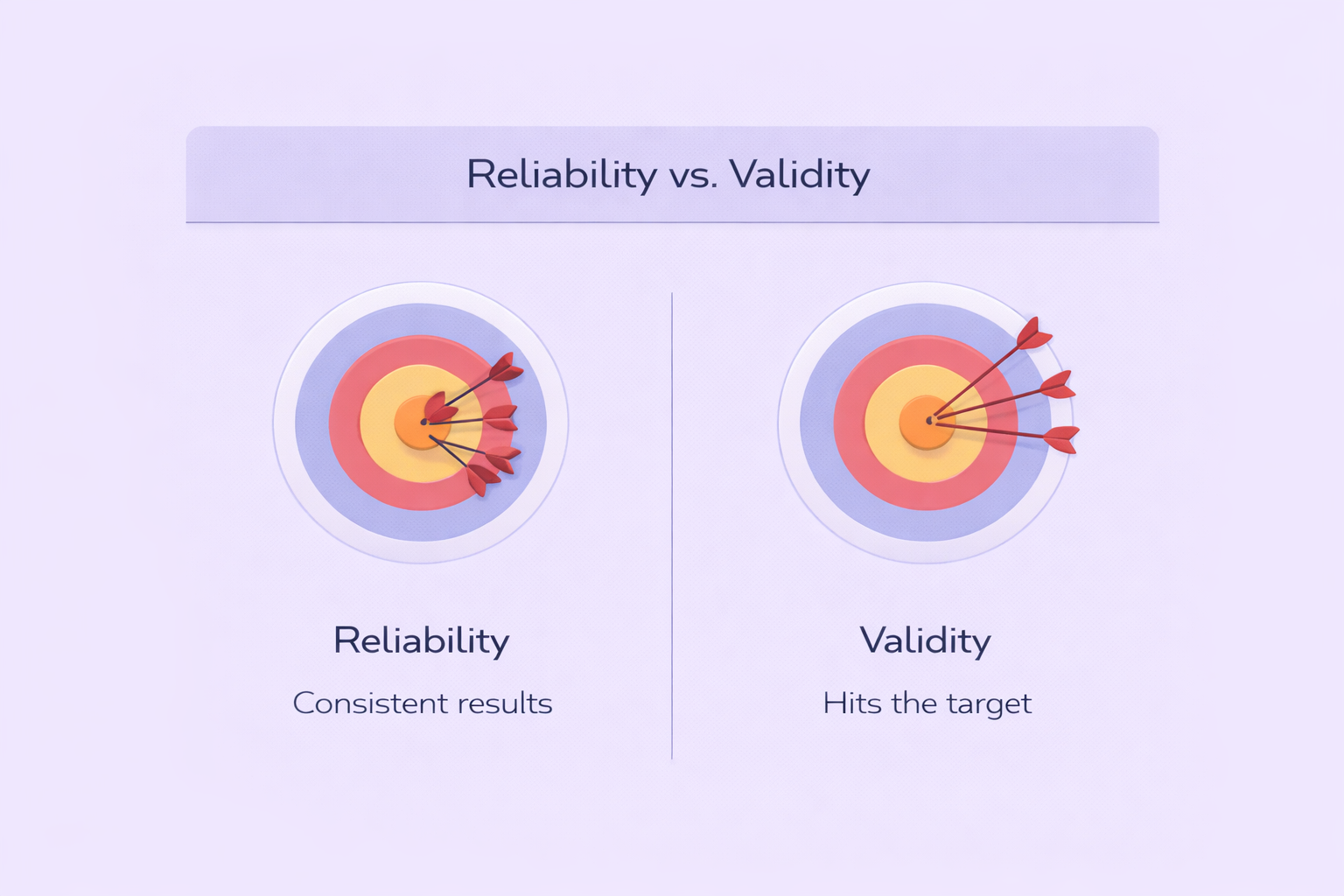
Methodological quality is often judged through concepts such as validity and reliability in quantitative research, or credibility and trustworthiness in qualitative studies.
The methodology section should explain how the study minimised bias, ensured consistency, and strengthened the credibility of findings.
This reflection demonstrates methodological maturity and awareness of research limitations.
Limitations of the Research Methodology
No research design is without limitations. A strong methodology section acknowledges constraints openly rather than attempting to conceal them.
Limitations may relate to sample size, access, time constraints, or methodological trade-offs. Acknowledging these issues shows academic honesty.
Examiners typically penalise unacknowledged limitations more than acknowledged ones.
Common Mistakes in the Research Methodology Section
Several errors recur in student methodology sections. These issues often stem from misunderstanding the purpose of the section.
- Describing methods without justification
- Confusing methodology with methods
- Providing excessive procedural detail
- Omitting ethical considerations
- Failing to link methods to research questions
Avoiding these mistakes significantly improves academic credibility.
Methodology Sections in Dissertations and Theses
In dissertations and theses, the research methodology section carries greater weight than in shorter assignments. Examiners expect deeper justification, clearer alignment, and more explicit discussion of limitations.
At postgraduate level, methodology is often assessed as evidence of independent research competence. Weak methodology can undermine an otherwise strong dissertation.
Many students seek structured guidance through dissertation writing support to strengthen methodological clarity and alignment.
Editing and Refining the Methodology Section
Revision of the research methodology section should focus on clarity, coherence, and justification rather than stylistic polish alone.
Students should check that every methodological choice is explained and linked to the research objectives. Redundant detail should be removed, while weak justification should be strengthened.
Targeted support such as proofreading and editing services can help refine language without altering academic meaning.
Writing the Research Methodology Section with Confidence
The research methodology section is not a test of technical perfection, but of academic reasoning and transparency. Examiners are assessing whether choices are logical, appropriate, and clearly explained.
By focusing on justification, alignment, and ethical awareness, students can produce methodology sections that strengthen the overall research argument.
When written with clarity and purpose, the research methodology section becomes a foundation of academic credibility rather than a source of uncertainty.


Comments