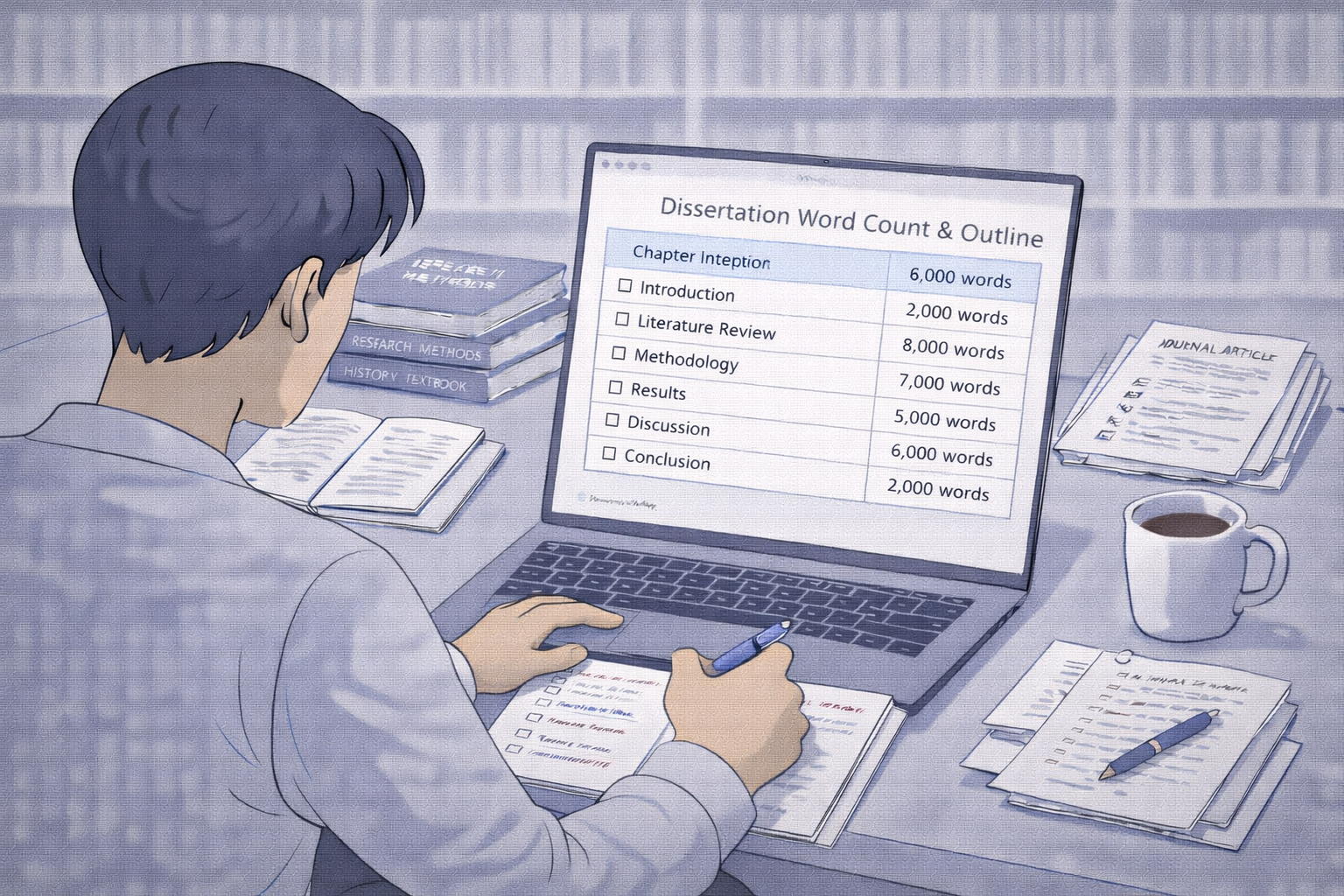
Dissertation length is often treated as a technical requirement, yet it plays a central role in how academic work is judged. Word count expectations shape the depth of analysis, the scope of research, and the structure of the final submission. Writing too little can signal superficial engagement, while writing too much often reflects weak focus and poor academic discipline.
Students frequently ask whether exceeding or falling short of the required dissertation length will affect grades. The answer depends not only on numerical compliance, but on how effectively the word count is used to demonstrate critical thinking, methodological rigour, and sustained argument. This guide explains dissertation length in practical academic terms, clarifying expectations across degree levels and showing how students can manage length strategically rather than mechanically.
Why Dissertation Length Matters in Academic Assessment
Dissertation length exists to ensure parity and fairness in assessment. Universities set word count ranges to define the expected depth and complexity of research at a given academic level. These limits allow examiners to compare work consistently while ensuring students demonstrate sufficient analytical engagement.
From an examiner’s perspective, dissertation length is not an arbitrary rule. It reflects assumptions about how much space is required to justify a research problem, engage with literature, explain methodology, and analyse findings coherently. Work that significantly deviates from the expected length often raises concerns about either underdevelopment or lack of focus.
Importantly, examiners assess how effectively students use the allocated word count. A well-structured dissertation that sits comfortably within the limit is often stronger than one that reaches the maximum length without clear purpose.
Standard Dissertation Length by Degree Level
Dissertation length varies depending on degree level, discipline, and institutional regulations. While exact requirements are always specified in the assignment brief or handbook, there are broadly accepted ranges that help students plan realistically.
Undergraduate dissertations typically focus on demonstrating research competence rather than originality. Master’s dissertations require deeper theoretical engagement and methodological justification, while doctoral theses demand original contributions to knowledge at a much greater scale.
The table below outlines common dissertation length expectations across academic levels.
| Academic Level | Typical Word Count Range | Primary Academic Expectation |
|---|---|---|
| Undergraduate (Bachelor’s) | 8,000–12,000 words | Demonstration of research skills and structured analysis |
| Postgraduate (Master’s) | 12,000–20,000 words | Critical engagement with literature and independent research |
| Doctoral (PhD) | 70,000–100,000 words | Original contribution to academic knowledge |
These ranges are indicative rather than prescriptive. Students must always defer to their institutional guidelines, as penalties may apply for exceeding permitted margins.
What Counts Toward Dissertation Length
One of the most common sources of confusion around dissertation length is what is included in the official word count. Universities differ slightly in their definitions, but most institutions specify inclusions and exclusions clearly in their regulations.
Typically, the main body chapters count toward the total word limit. This includes the opening chapter, literature review, methodology, analysis, and closing chapter. Elements such as the abstract, reference list, appendices, and tables are often excluded, but this must be confirmed.
Failure to understand these distinctions can lead to unintentional breaches of word count regulations, even when the apparent length seems compliant.
Academic rule: Always confirm what is included in the dissertation word count before final submission.
How Examiners Interpret Dissertation Length
Examiners do not reward length for its own sake. A longer dissertation does not automatically score higher than a shorter one. Instead, examiners assess whether the length is appropriate for the research objectives and whether space is used efficiently.
Under-length dissertations often suggest insufficient research depth, limited literature engagement, or underdeveloped analysis. Over-length dissertations, by contrast, frequently indicate repetition, weak editing, or lack of conceptual focus.
In both cases, the issue is not the number of words but the academic judgement demonstrated in structuring and sustaining an argument within defined limits.
Dissertation Length and Chapter Balance
Effective dissertation length management depends on proportional chapter planning. Each chapter should contribute appropriately to the overall argument without dominating the word count unnecessarily.
For example, an overlong literature review can crowd out space needed for analysis, while an excessively short methodology chapter may undermine research credibility. Balanced allocation of words reflects strategic academic planning.
Students often benefit from outlining approximate word counts per chapter early in the writing process, adjusting them as the research evolves.
Indicative Chapter Word Allocation
While allocations vary, the following proportions are commonly used as a planning guide for undergraduate and master’s dissertations:
- Opening chapter: approximately 10%
- Literature review: approximately 25–30%
- Methodology: approximately 15–20%
- Analysis / findings: approximately 30–35%
- Closing chapter: approximately 10%
These proportions help maintain analytical balance and prevent structural distortion.
Common Mistakes Students Make with Dissertation Length
Many dissertation length problems arise from avoidable planning errors. One common mistake is writing without a clear outline, leading to redundancy and uncontrolled expansion of sections.
Another frequent issue is equating word count with academic value. Students may add descriptive material, excessive quotations, or tangential discussion simply to increase length, weakening clarity and focus.
Conversely, some students attempt to compress complex ideas excessively to stay within limits, resulting in superficial analysis and underdeveloped arguments.
Critical warning: Padding a dissertation to meet word count requirements often reduces academic quality rather than improving it.
Managing Dissertation Length During Writing
Successful dissertation length management begins during the planning stage. Creating a detailed outline with provisional word limits per section provides a structural safeguard against imbalance.
During drafting, students should monitor section length regularly rather than waiting until the end. This allows adjustments to be made incrementally without extensive rewriting.
Editing is equally important. Reducing redundancy, tightening language, and removing low-value material often improves both clarity and compliance with word limits.
Dissertation Length in Relation to Structure and Quality
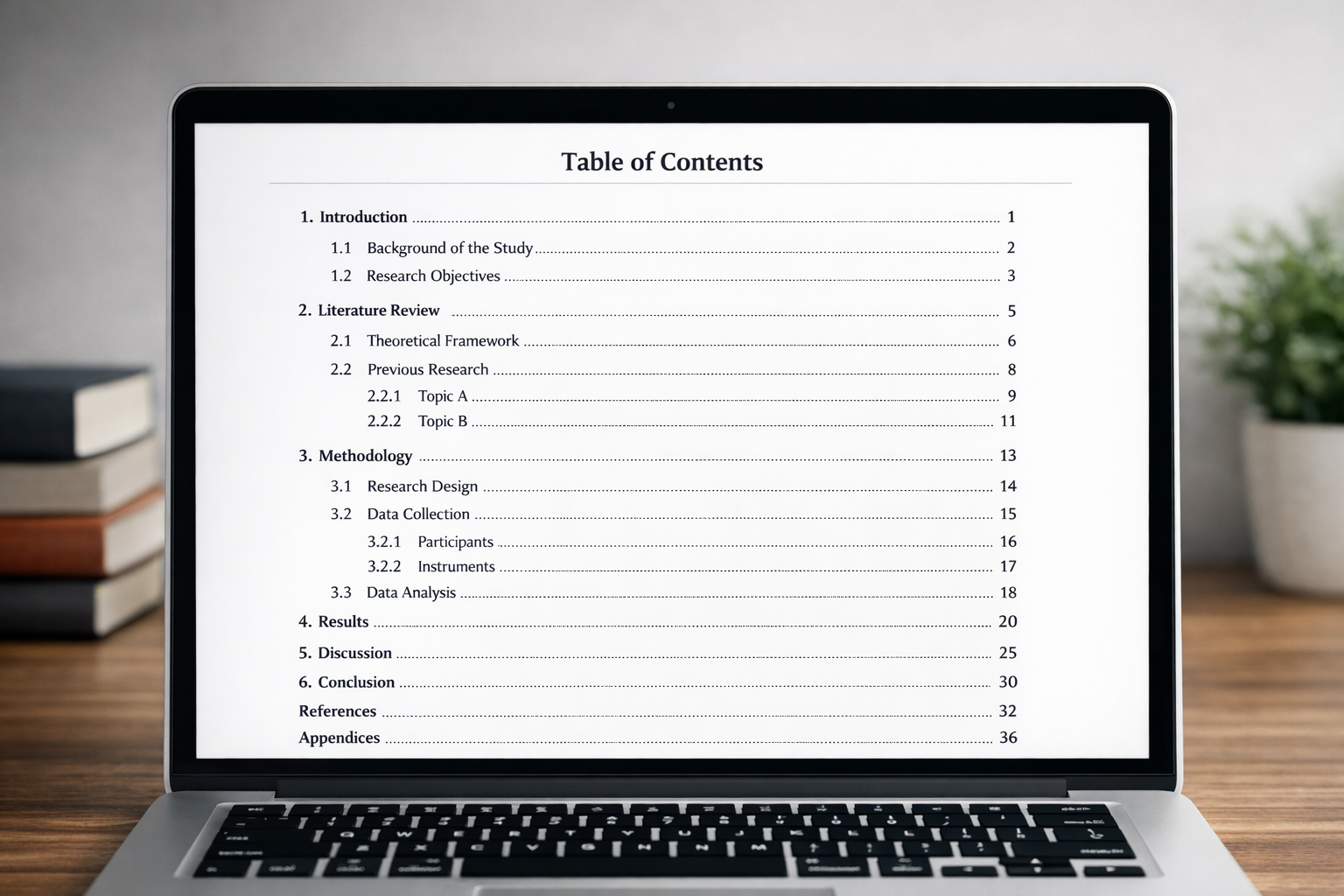
Dissertation length cannot be separated from dissertation structure. Clear structure allows students to use words efficiently, ensuring each section advances the research objective.
Guidance on structuring chapters effectively is explored in dissertation writing support, where length, structure, and argument coherence are treated as interconnected academic skills.
When structure is sound, managing length becomes a matter of refinement rather than crisis control.
Institutional Penalties and Tolerance Margins
Most universities allow a small tolerance margin around the stated dissertation length, commonly ±10%. Exceeding this margin may result in penalties, while falling significantly below it can trigger academic concerns.
However, tolerance policies vary widely. Some institutions apply strict penalties, while others treat deviations as indicators of broader issues rather than automatic deductions.
Students must therefore consult their departmental handbook or supervisor rather than relying on general assumptions.
Dissertation Length at Undergraduate vs Postgraduate Level
Expectations surrounding dissertation length increase substantially at postgraduate level. Master’s dissertations require more sustained critical engagement and methodological justification than undergraduate projects.
At doctoral level, length reflects not only scale but originality. A PhD thesis must demonstrate an independent contribution to knowledge, which naturally requires extensive analysis and documentation.
Understanding these escalating expectations helps students align effort with academic level rather than treating word count as a purely quantitative hurdle.
Using Academic Support to Manage Dissertation Length
Many students seek external academic support when struggling with dissertation length. This is often not due to writing ability, but to uncertainty about focus, structure, and relevance.
Services such as proofreading and editing support can help identify redundant sections, tighten language, and improve clarity without compromising academic integrity.
Used appropriately, such support strengthens argumentation while ensuring compliance with formal requirements.
Applying Dissertation Length Strategically
Dissertation length should be approached as a strategic academic tool rather than a constraint. The word limit defines the scope of inquiry and encourages disciplined thinking.
By planning structure carefully, allocating words proportionally, and editing critically, students can use dissertation length to their advantage. The goal is not to reach a numerical target, but to demonstrate sustained, coherent academic reasoning.
When dissertation length is managed with clarity and intention, it supports stronger arguments, clearer structure, and more confident academic performance.

Comments