
The dissertation findings and discussion chapters represe
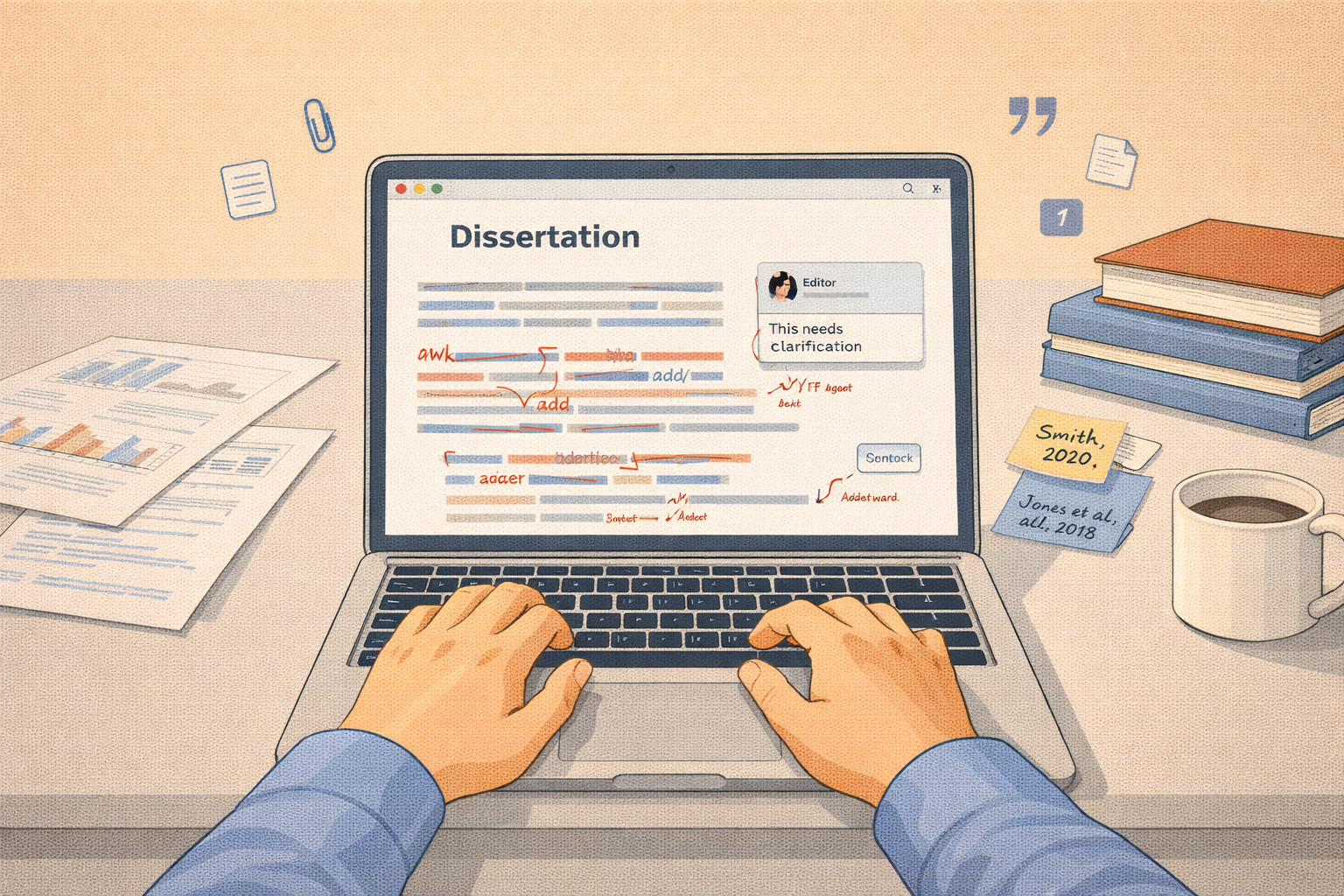
A postgraduate student analysing dissertation results, with tables, charts, and annotated discussion notes spread across a desk in a university study environment.
nt the intellectual core of an academic dissertation. This is where your data stop being raw evidence and begin to demonstrate meaning, contribution, and scholarly value. Examiners focus closely on these chapters because they reveal how well you understand your data and how effectively you can interpret it in relation to existing research.
Many students lose marks at this stage not because their data are weak, but because their findings and discussion are poorly structured, insufficiently analytical, or too descriptive. Understanding the distinct purposes of these chapters is essential for producing a high-quality dissertation.
This guide explains how to write dissertation findings and discussion chapters that are clear, analytical, and academically persuasive. It clarifies what belongs in each chapter, how they connect, and how to avoid the most common errors.
Understanding the Difference Between Findings and Discussion
The findings and discussion chapters serve different but closely connected purposes. Confusing these roles is one of the most common dissertation mistakes.
The findings chapter presents what the data show. It reports results in a neutral, systematic manner without interpretation or extensive reference to literature.
The discussion chapter explains what those findings mean. It interprets results, links them to research questions, and situates them within existing academic literature.
Key distinction: Findings describe results; discussion explains significance.
What Examiners Look for in the Findings Chapter
Examiners expect the findings chapter to be clear, logical, and directly aligned with the research questions. Every result presented should have a clear purpose.
This chapter should not include personal opinions or speculative explanations. Instead, it should focus on accurate reporting of patterns, trends, themes, or statistical outcomes.
Effective findings chapters guide the reader through the data in a structured way, often using subheadings that reflect research questions or analytical categories.
Structuring the Dissertation Findings Chapter
The structure of the findings chapter depends on whether your research is qualitative, quantitative, or mixed-methods. However, all approaches require clarity and coherence.
Quantitative findings are often organised around hypotheses or variables, while qualitative findings are commonly structured around themes or categories.
The table below illustrates typical organisational approaches.
| Research Type | Typical Organisation |
|---|---|
| Quantitative | Variables, hypotheses, statistical tests |
| Qualitative | Themes, patterns, participant narratives |
| Mixed-methods | Quantitative results followed by qualitative insights |
Regardless of approach, results should be presented in a consistent and reader-friendly format.
Using Tables and Figures in the Findings Chapter
Tables and figures are often essential for presenting complex results clearly. However, they must be integrated carefully into the narrative.
Each table or figure should be introduced in the text, clearly labelled, and briefly explained. Readers should not be left to interpret visual data on their own.
Importantly, tables and figures support the findings; they do not replace written explanation.
Transitioning from Findings to Discussion
The transition between the findings and discussion chapters should feel natural rather than abrupt. The discussion builds directly on the results already presented.
Many dissertations begin the discussion chapter by briefly restating the purpose of the study and summarising key findings in relation to the research questions.
This approach helps orient the reader and signals the shift from reporting to interpretation.
What the Dissertation Discussion Chapter Is Designed to Do
The discussion chapter interprets the findings and demonstrates their academic significance. This is where your analytical ability becomes most visible.
Rather than repeating results, the discussion explains why they matter, how they relate to previous research, and what they contribute to knowledge.
Strong discussion chapters move confidently between data, theory, and literature.
Examiner expectation: The discussion must show critical engagement with findings, not simple repetition.
Linking Findings to Research Questions and Literature
Each major finding should be explicitly linked back to the research questions or objectives introduced earlier in the dissertation.
You should then compare your results with existing studies discussed in the literature review. This may involve confirming, extending, or challenging previous research.
Clear referencing to peer-reviewed sources strengthens the credibility of your interpretation.
Explaining Agreements and Contradictions in Results
Not all findings will align neatly with existing literature. Discrepancies are not weaknesses if they are handled critically.
You should explain possible reasons for agreement or disagreement, such as methodological differences, contextual factors, or sample characteristics.
This demonstrates scholarly maturity and awareness of research complexity.
Discussing Implications of the Findings
Beyond interpretation, the discussion chapter should explain the implications of the findings. These may be theoretical, practical, or policy-related.
Implications show how your research contributes beyond the immediate study and why it matters within the wider field.
This section often distinguishes strong dissertations from average ones.
Acknowledging Limitations in the Discussion Chapter
No research is without limitations. Addressing them transparently strengthens rather than weakens your dissertation.
You should explain how limitations may have influenced the findings and how future research could address these issues.
This demonstrates critical self-awareness and methodological integrity.
Common Mistakes in Dissertation Findings and Discussion
Several recurring issues reduce marks in these chapters. Awareness of these problems can significantly improve your work.
- Mixing interpretation into the findings chapter
- Repeating results without analysis in the discussion
- Ignoring contradictory findings
- Failing to link results to research questions
Critical warning: A descriptive discussion chapter is one of the most common reasons for low dissertation grades.
How Findings and Discussion Connect to the Conclusion
The findings and discussion chapters set the foundation for the final conclusion. They provide the evidence and interpretation upon which conclusions are drawn.
Well-written chapters make it easier to summarise contributions, implications, and recommendations in the final stage of the dissertation.
Weak analysis at this stage often leads to an unfocused or superficial conclusion.
Final Guidance on Writing Dissertation Findings and Discussion
Strong dissertation findings and discussion chapters are clear, analytical, and conceptually grounded. They show that you can move beyond data collection to interpretation and scholarly contribution.
By clearly separating description from analysis and consistently linking findings to research questions and literature, you demonstrate academic competence at an advanced level.
When executed well, these chapters transform raw data into meaningful research outcomes that meet and exceed examiner expectations.


Comments