
Report writing is a core academic skill across disciplines such as business, management, engineering, health sciences, and social sciences. Universities use reports to assess a student’s ability to investigate a problem, analyse evidence, and present findings in a structured, professional format.
Despite their importance, many students lose marks because they misunderstand report writing conventions. Common mistakes include writing in essay style, omitting key sections, or failing to present information logically.
This guide explains the standard report writing format for university, clarifying what each section should contain and how to meet academic expectations with confidence.
What Makes University Report Writing Different
University reports are not simply longer essays with headings. They are formal documents designed to communicate information efficiently to a specific audience, often framed as decision-makers or professional stakeholders.
Academic reports prioritise clarity, organisation, and evidence-based reasoning. Ideas are presented through clearly labelled sections rather than continuous prose, allowing readers to locate information quickly.
Understanding this functional purpose is essential to writing an effective university report.
A report communicates findings and recommendations; it does not argue in the same way an essay does.
Standard Report Writing Format for University
While formats vary slightly by discipline, most university reports follow a predictable structure. Each section serves a specific academic and analytical function.
Using the correct format helps examiners assess your work efficiently and demonstrates your understanding of professional academic conventions.
| Section | Purpose |
|---|---|
| Title Page | Identifies topic, student details, and module information |
| Executive Summary | Summarises key findings and recommendations |
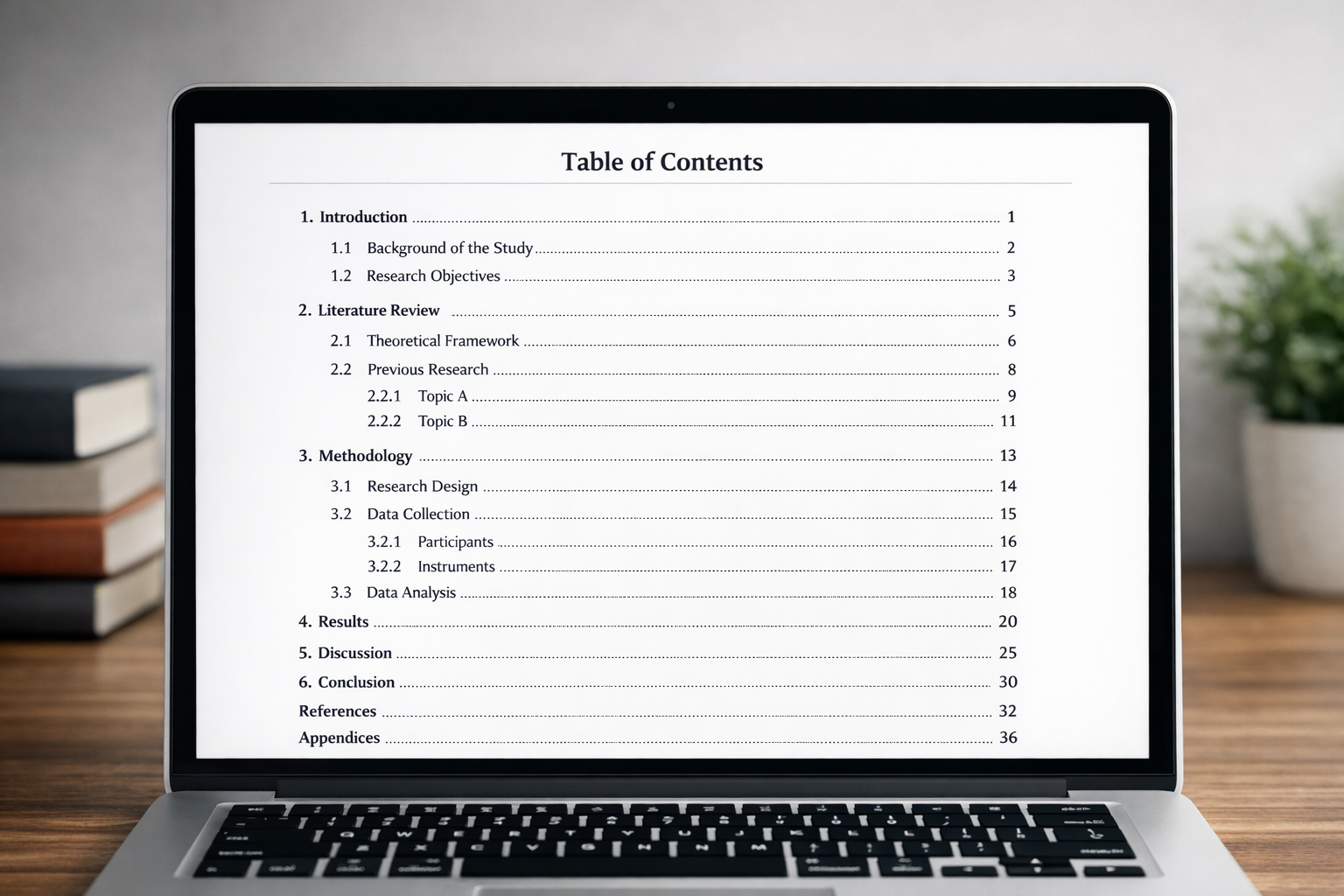
| Table of Contents | Shows structure and page numbers |
| Introduction | Defines purpose, scope, and context |
| Main Body | Presents analysis, findings, and discussion |
| Recommendations | Proposes justified actions |
| Conclusion | Summarises key insights |
| References | Lists all cited sources |
| Appendices | Includes supporting material |
Not all reports require every section, so always follow your assignment brief carefully.
Writing a Clear and Professional Title Page
The title page provides essential information about your report. Although it does not contribute to analysis, poor presentation can create a negative first impression.
A typical university report title page includes the report title, module name and code, student name or ID, lecturer’s name, and submission date.
The title should be specific and descriptive, clearly indicating the focus of the report.
How to Write an Executive Summary
The executive summary is one of the most important sections of a university report. It provides a concise overview of the entire document.
Unlike an introduction, the executive summary includes key findings and recommendations. It should be understandable even if the reader does not read the full report.
At university level, strong executive summaries demonstrate clarity of thought, not storytelling ability.
Structuring the Introduction Section
The introduction sets the context for the report and explains why it was written. It should clearly state the purpose, scope, and objectives of the report.
This section often outlines the problem or question being addressed and briefly explains how the report is organised.
Unlike an essay introduction, it does not contain a thesis argument but rather a roadmap for the report.
Organising the Main Body of the Report
The main body contains the analytical core of the report. It is usually divided into clearly labelled subsections based on the task requirements.
These sections may include literature review, methodology, analysis, findings, or discussion, depending on the discipline.
Each subsection should focus on one key aspect of the report and link logically to the overall purpose.
Using Headings and Subheadings Effectively
Headings guide the reader through your report and improve readability. They also help examiners identify where assessment criteria are addressed.
Headings should be descriptive rather than generic. For example, “Market Analysis” is more effective than “Analysis Section.”
Consistency in formatting and hierarchy is essential.
Presenting Analysis and Evidence
University reports are assessed heavily on the quality of analysis. This involves interpreting data, applying academic theory, and evaluating implications.
Simply presenting facts or describing models is insufficient. High-quality reports explain why findings matter and how they relate to the research question.
Evidence may be qualitative or quantitative, but it must always be explained in the text.
Data without interpretation does not count as analysis in university reports.
Writing Clear and Justified Recommendations
Recommendations translate analysis into action. They should be practical, specific, and directly linked to the findings.
Weak recommendations are vague or unsupported, while strong recommendations explain what should be done, how, and why.
In some disciplines, recommendations may be prioritised or linked to timelines.
Concluding a University Report Effectively
The conclusion summarises the key insights of the report without introducing new information. It reinforces the significance of the findings.
A strong conclusion connects the analysis back to the report’s objectives and highlights overall implications.
Unlike essays, report conclusions are usually concise and focused.
Referencing and Academic Integrity
All university reports must include accurate referencing using the required style, such as Harvard, APA, or Vancouver.
References should be listed in a separate section and formatted consistently.
Failure to reference correctly can result in significant penalties, regardless of the quality of analysis.
Using Appendices Correctly
Appendices contain supporting material that is too detailed for the main body, such as raw data, extended tables, or questionnaires.
They should be clearly labelled and referenced in the main text.
Appendices support your analysis but do not replace it.
Common Formatting and Structural Mistakes
Students frequently lose marks due to avoidable formatting errors.
- Writing long paragraphs without headings
- Including irrelevant information in the main body
- Using inconsistent fonts or spacing
- Failing to number tables and appendices
Attention to presentation reflects academic professionalism.
Final Guidance on University Report Writing Format
Mastering report writing format is essential for academic success at university. Reports test not only knowledge, but also organisation, clarity, and analytical thinking.
Students who understand the purpose of each section and follow academic conventions consistently perform better across disciplines.
By applying the correct format and focusing on evidence-based analysis, you can approach university report writing with confidence and control.


Comments