
Synthesis essays are a cornerstone of advanced academic writing because they test a student’s capacity to draw connections between multiple sources and present a unified, coherent explanation or argument. In higher education, these essays often appear in assignments that require students to engage with varied perspectives, analyse evidence critically, and demonstrate intellectual synthesis rather than simple summary. A synthesis essay example offers a practical blueprint for how this complex academic task can be approached successfully.
In practice, synthesis writing enables students to move beyond description toward analytical cohesion. This skill is not only essential for coursework but also for research projects, literature reviews, and capstone assessments. Understanding synthesis essays and their structure is therefore a key writing competency for undergraduate and graduate learners.
What Is a Synthesis Essay?
A synthesis essay is a type of academic writing that combines information from two or more sources to support a central thesis or claim. Unlike summary essays, which restate information, synthesis essays integrate ideas to demonstrate relationships, identify patterns, and provide a comprehensive perspective. This form of writing is widely used in literature, history, social sciences, and other fields where analysis of multiple texts is required.
A synthesis essay merges information from different sources to support a unified interpretation or thesis about a topic. :contentReference[oaicite:0]{index=0}
In a synthesis essay, students must interpret source material, evaluate its relevance, and incorporate it in a manner that reinforces their main claim. This requires critical thinking, organisational clarity, and disciplined academic writing. Many students find this demanding because it requires both understanding individual sources and discerning how they relate to one another in support of a central argument.
Components of an Effective Synthesis Essay
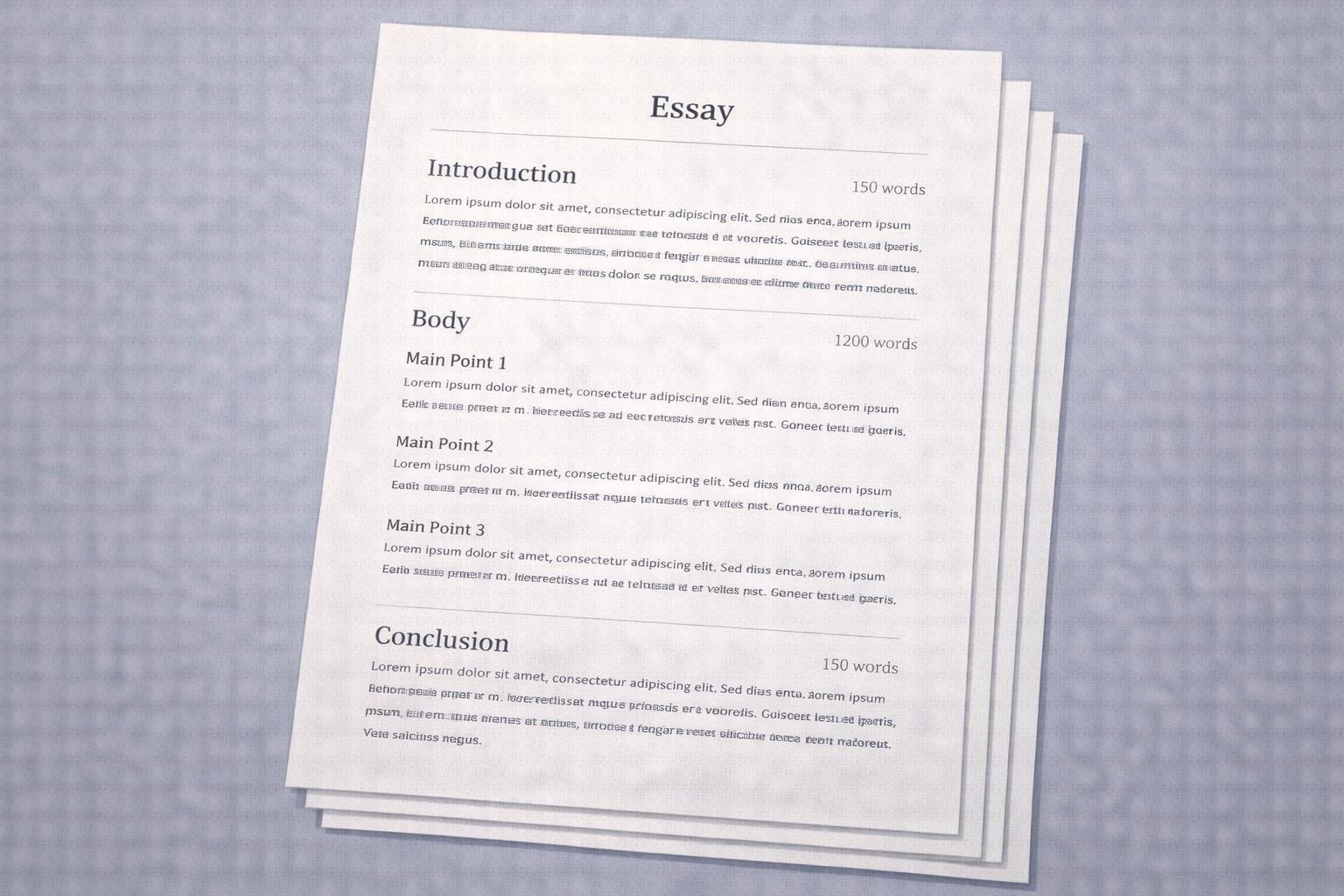
An effective synthesis essay example generally follows the introduction-body-conclusion structure common to academic essays, but with specific demands for integration of sources. The introduction sets up the thesis and scope, the body paragraphs synthesise evidence around key points, and the conclusion consolidates insights and underscores significance.
| Section | Academic Function | Key Activities |
|---|---|---|
| Introduction | Introduces topic and thesis | Contextualise sources, present claim |
| Body Paragraphs | Develops and integrates evidence | Summarise sources, synthesise insights, reinforce thesis |
| Conclusion | Finishes synthesis and emphasises importance | Restate thesis, reflect on implications |
In each body paragraph, the student should present evidence from multiple sources and explain how that evidence contributes to the development of the thesis. This turns isolated information into a comprehensive, academically rigorous argument rather than a series of unconnected points.
Annotated Synthesis Essay Example
Sample Topic: How Does Social Media Influence Social Interaction?
Introduction
The rapid proliferation of social media over the past decade has significantly altered how individuals communicate and form connections. While some scholars argue that social media enhances community by facilitating constant connection, others contend that it reduces meaningful face-to-face interaction. This synthesis essay examines contrasting perspectives to determine how social media affects social interaction, showing that while it expands communication channels, it may also weaken the quality of interpersonal engagement.
This introduction sets up a complex topic and presents a thesis that requires synthesising different arguments drawn from research, opinion, and empirical studies. It identifies a debate rather than a simple description.
Body Paragraph: Integrating Diverse Evidence
Research published in communication studies suggests that social media platforms increase the frequency of communication, enabling users to stay connected regardless of distance. Higher communication frequency can expand social networks and maintain relationships that might otherwise weaken. However, sociological studies indicate that increased virtual interaction sometimes correlates with decreased face-to-face engagement, weakening relational depth. When synthesising these findings, the essay should emphasise how increased quantity of communication does not necessarily equate to deeper quality of relationships. The integration of both perspectives strengthens the claim that social media’s influence is multifaceted rather than uniformly positive or negative.
Notice how evidence from different kinds of sources is combined here: empirical research (frequency of interaction) and sociological analysis (quality of relationships). The synthesis lies in acknowledging both phenomena and explaining their relationship to the central thesis.
Academic Techniques for Effective Synthesis
Producing an academically sound synthesis essay involves more than summarising each source individually. Students must:
- Identify common themes across sources and position them in relation to the thesis.
- Compare and contrast arguments to demonstrate how they support or challenge the central claim.
- Explain relationships between evidence and how it collectively advances understanding of the topic.
- Avoid over-reliance on a single source by balancing evidence from multiple texts.
These techniques ensure that the essay moves beyond description to genuine synthesis — the integration of ideas into coherent academic reasoning.
Common Pitfalls in Synthesis Essays
Even well-researched essays can fall short if synthesis is not executed correctly. One common mistake is the “patchwork synthesis,” in which separate summaries of sources are juxtaposed without clear connections or interpretive explanation. This approach fails to demonstrate how sources relate to one another or support the thesis.
Another pitfall is ignoring contradictory evidence. Strong synthesis acknowledges complexity and addresses conflicting perspectives rather than omitting them. Including opposing viewpoints and explaining why they are reconciled or subordinate to the central argument enhances credibility and analytical depth.
Assessing a Synthesis Essay Example as Model
Students should evaluate synthesis essay examples by examining three criteria:
- The clarity of the thesis and how well it guides the synthesis.
- The degree to which multiple sources are integrated rather than simply quoted.
- The coherence of the overall argument and its academic significance.
A model synthesis essay should show not just evidence, but also interpretation — explaining the “why” and “how” of connections between sources.
Final Academic Guidance
Mastering synthesis essays is a significant milestone in academic writing because it requires higher-order thinking: comprehension, analysis, evaluation, and integration. By studying high-quality examples and practising synthesis techniques, students can improve both the clarity and intellectual depth of their assignments.
Approaching synthesis essays with a focus on linkage and explanation rather than mere summary enhances academic credibility and aligns with university expectations across disciplines.


Comments