
Choosing appropriate thesis research methods is one of the most important decisions students make during the dissertation process. Research methods determine how data will be collected, analyzed, and interpreted, ultimately shaping the credibility and reliability of the study. Because the methodology forms the foundation of the entire research project, universities expect students to justify their methodological choices carefully.
The research methods section of a thesis explains how the study was conducted and why specific techniques were selected. This chapter allows readers to evaluate the validity of the research design and determine whether the results are supported by appropriate evidence. For many students, understanding research methods can be challenging because it requires connecting theoretical frameworks with practical research techniques.
This guide explains the major types of thesis research methods, when each approach is appropriate, and how students can design a methodology that supports their research objectives.
Understanding the Role of Research Methods in a Thesis
The research methods chapter describes the procedures used to investigate the research problem. This section demonstrates how the researcher collected data, analyzed results, and ensured the reliability of the study. Without a clearly defined methodology, even well written research questions cannot produce meaningful academic conclusions.
Research methods serve several important purposes within a thesis. First, they explain how the study addresses the research questions. Second, they provide transparency about how data was obtained and analyzed. Third, they allow other researchers to replicate the study if necessary.
Students who are developing their dissertation structure often review academic guidance to ensure their methodology is clearly presented. For example, students planning complex research projects sometimes review structured support resources such as academic writing and research guidance to strengthen the clarity of their research design.
A strong methodology demonstrates that the research findings are based on systematic, transparent, and academically valid procedures.
Main Types of Thesis Research Methods
Most academic research methods fall into three broad categories: quantitative, qualitative, and mixed methods. Each approach serves different research purposes and is suitable for different types of research questions.
| Research Method | Key Characteristics | Typical Applications |
|---|---|---|
| Quantitative Research | Uses numerical data and statistical analysis | Experiments, surveys, statistical modeling |
| Qualitative Research | Explores experiences, meanings, and perspectives | Interviews, case studies, ethnographic research |
| Mixed Methods | Combines qualitative and quantitative approaches | Comprehensive studies requiring multiple data sources |
Choosing the appropriate method depends on the research question, the nature of the data, and the goals of the study.
Quantitative Research Methods in Thesis Studies
Quantitative research methods focus on collecting and analyzing numerical data. These methods are widely used in fields such as economics, psychology, engineering, and the natural sciences because they allow researchers to identify patterns, measure relationships, and test hypotheses.
In quantitative research, data is often collected through structured instruments such as surveys, experiments, or statistical databases. Researchers then apply statistical techniques to analyze the data and draw conclusions.
Typical quantitative research methods include:
- Survey research using structured questionnaires
- Experimental research with controlled variables
- Statistical modeling and regression analysis
- Secondary data analysis using existing datasets
Quantitative methods are particularly useful when researchers aim to measure relationships between variables or test theoretical hypotheses.
Qualitative Research Methods in Dissertation Research
Qualitative research methods focus on understanding human experiences, behaviors, and social processes. Instead of numerical data, qualitative research often relies on descriptive information collected through interviews, observations, or document analysis.
These methods are common in disciplines such as sociology, anthropology, education, and business studies. Qualitative research is especially valuable when researchers want to explore complex social phenomena or gain insight into participants’ perspectives.
Common qualitative research methods include:
- In depth interviews with participants
- Focus group discussions
- Case study research
- Participant observation
- Thematic analysis of textual data
Because qualitative research often involves smaller sample sizes and deeper analysis, the methodology section must clearly explain how the researcher ensured credibility and reliability.
Mixed Methods Research in Thesis Projects
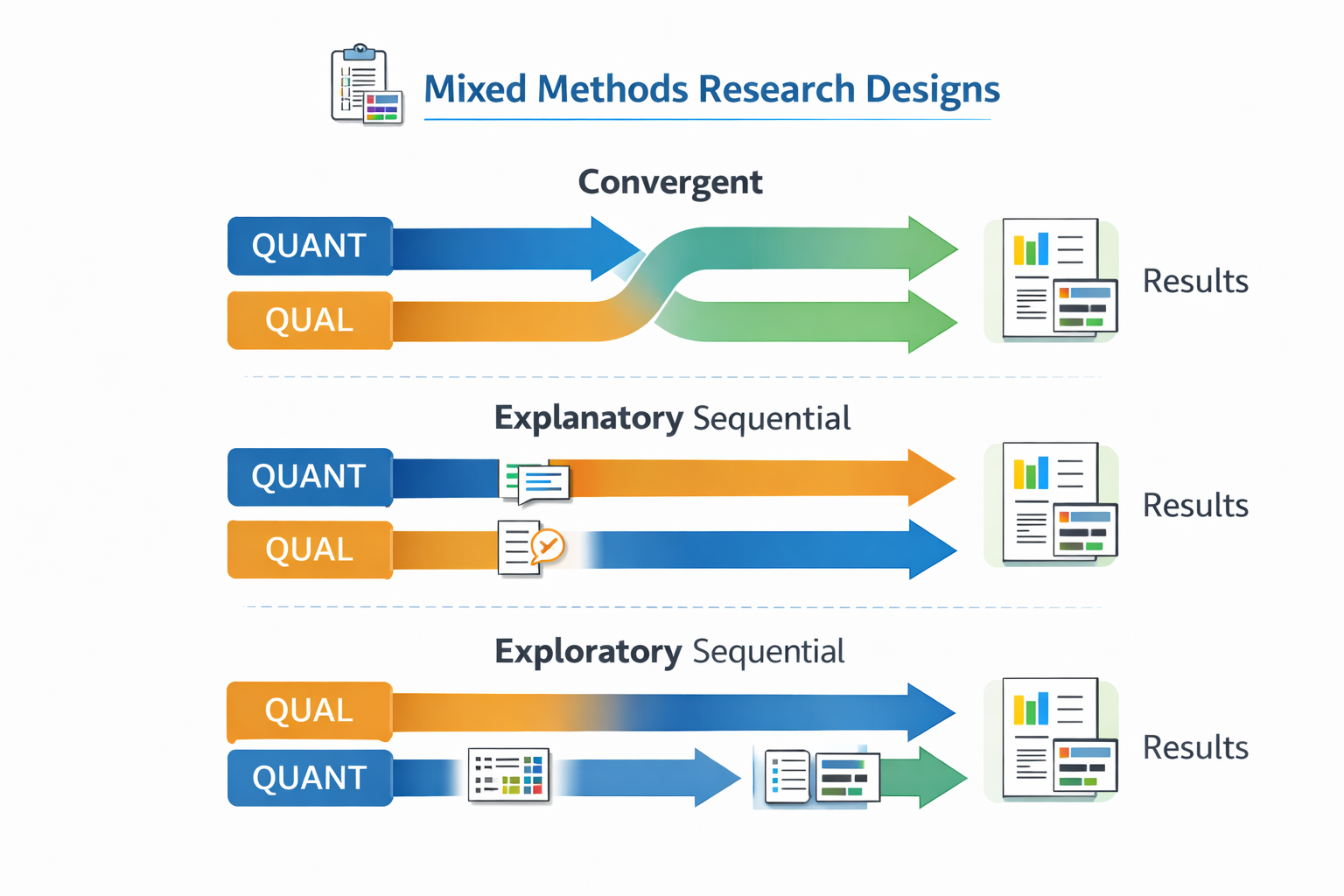
Mixed methods research combines elements of both quantitative and qualitative approaches. This methodology allows researchers to explore research questions from multiple perspectives and gain a more comprehensive understanding of the topic.
For example, a researcher might conduct a survey to collect quantitative data about consumer behavior and then follow up with interviews to explore participants’ motivations in more detail.
Mixed methods research is particularly useful when a single method cannot fully address the research problem. However, this approach requires careful planning because the researcher must integrate different types of data effectively.
How to Choose the Right Research Method for Your Thesis
Selecting appropriate thesis research methods depends on several key factors. The most important consideration is the nature of the research question. Different research questions require different methodological approaches.
Students should consider the following factors when selecting research methods:
- The type of research question being investigated
- The availability of data sources
- The theoretical framework guiding the study
- The resources and time available for research
- The ethical considerations involved in data collection
For instance, a study investigating statistical relationships between economic variables may require quantitative methods, while a study exploring personal experiences of healthcare workers may be better suited to qualitative research.
Explaining Research Methods in the Methodology Chapter
Once the research method has been selected, students must clearly explain their methodology within the thesis. The methodology chapter typically includes several key components.
| Component | Description |
|---|---|
| Research Design | Overall approach used to conduct the study |
| Data Collection Methods | Techniques used to gather research data |
| Sampling Strategy | Explanation of how participants or data sources were selected |
| Data Analysis Techniques | Methods used to interpret collected data |
| Ethical Considerations | Measures taken to protect participants and ensure ethical research |
Clearly describing these components helps ensure that readers understand how the research was conducted and why the selected methods were appropriate.
Common Mistakes Students Make When Choosing Research Methods
Many students struggle with selecting appropriate research methods because they focus primarily on data collection techniques rather than the broader research design. Avoiding common methodological mistakes helps ensure the credibility of the research.
Frequent mistakes include:
- Choosing methods that do not align with the research question
- Failing to justify methodological choices
- Using overly complex methods without sufficient explanation
- Neglecting ethical considerations in data collection
Careful planning and clear explanation help students avoid these issues and produce a stronger methodology chapter.
Before submitting the final thesis, many graduate students review their methodology chapter through professional academic proofreading support, ensuring that the research design and explanations are presented clearly and accurately.
The strongest methodology chapters clearly justify research choices and demonstrate how the methods directly address the research question.
Building Strong Thesis Research Methods for Academic Impact
Developing effective thesis research methods is a critical step in producing meaningful academic research. The methodology determines how evidence is gathered and how conclusions are supported, making it one of the most important chapters of the dissertation.
By selecting appropriate research methods, explaining them clearly, and ensuring that they align with the research question, students can strengthen the overall credibility of their thesis. Careful methodological planning not only improves the quality of the research but also helps readers understand how the findings contribute to the broader academic field.
Ultimately, a well designed methodology allows the research to stand on solid academic foundations, enabling students to present their findings with confidence and clarity.


Comments