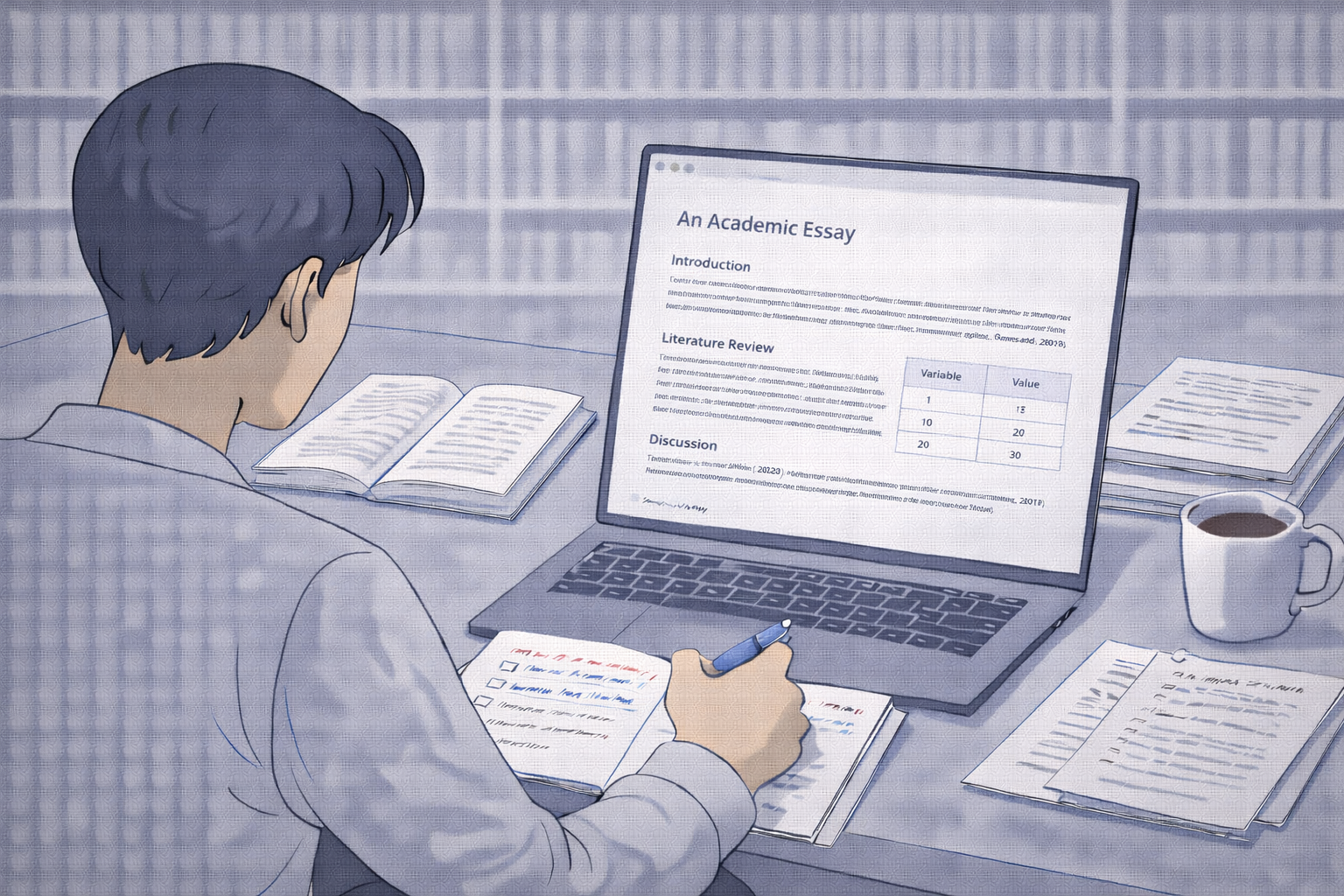
Academic writing is evaluated not only on the quality of ideas and evidence, but also on how clearly and consistently those ideas are presented. Academic formatting guidelines exist to standardise presentation, support readability, and allow examiners to assess work efficiently and fairly. When formatting is applied correctly, it becomes almost invisible, allowing the argument to take centre stage. When applied poorly, it distracts from content and can weaken the overall academic impression of an assignment.
Many students struggle with academic formatting because expectations are often assumed rather than explained. Line spacing, margins, headings, citations, tables, figures, and appendices are frequently treated as technical afterthoughts, despite being integral to assessment criteria. This article provides a structured, student-friendly explanation of academic formatting guidelines, focusing on why they matter, how they are applied in practice, and how to avoid the most common formatting-related penalties in university work.
Why Academic Formatting Guidelines Matter in Assessment
Academic formatting guidelines exist to support clarity, consistency, and fairness. Examiners may read hundreds of assignments within a short period, and standardised formatting helps them navigate content efficiently. When formatting follows expected conventions, examiners can focus on evaluating argument quality, evidence use, and critical thinking rather than deciphering structure.
From an assessment perspective, formatting is often embedded within marking criteria under headings such as “presentation,” “academic conventions,” or “structure and organisation.” Even when not explicitly listed, poor formatting can influence examiner judgement by creating an impression of carelessness or weak academic discipline.
Formatting also signals scholarly credibility. Consistent margins, clear headings, accurate citations, and properly presented tables demonstrate that a student understands how academic knowledge is communicated. These principles align with broader structural expectations outlined in research paper structure and format guidance, where presentation and argument coherence are treated as inseparable.
Core Document Layout Rules Students Are Expected to Follow
Although specific requirements vary by institution and discipline, most academic formatting guidelines share a common foundation. These baseline rules govern how a document appears on the page and how easily it can be read and assessed.
At a minimum, students are usually expected to use a readable academic font, consistent line spacing, and standard margins. These elements create visual balance and ensure sufficient space for examiner annotations.
- Font: Typically a serif or sans-serif academic font such as Times New Roman or Arial.
- Font size: Usually 11 or 12 points for body text.
- Line spacing: Commonly 1.5 or double spaced, unless stated otherwise.
- Margins: Standard margins (often 2.5 cm or 1 inch) on all sides.
While these rules may appear mechanical, inconsistent application can significantly reduce readability. For example, mixing font sizes or spacing styles within the same document creates visual disruption and suggests poor document control.
Headings and Subheadings as Structural Signals
Headings are not decorative elements; they function as navigational tools that guide the reader through the argument. Academic formatting guidelines require headings to be used logically and consistently, reflecting the structure of the discussion rather than fragmenting it.
Effective headings describe content rather than label sections generically. Instead of using vague labels, headings should communicate the focus of the section and its role in the argument. This approach helps examiners quickly identify how ideas are organised and developed.
Consistency is essential. Heading levels should follow a clear hierarchy, with visual distinctions maintained throughout the document. Arbitrary changes in font size, bolding, or alignment undermine structural clarity and are often flagged during proofreading.
Paragraph Formatting and Academic Readability
Paragraph structure is a core but often overlooked component of academic formatting guidelines. Each paragraph should present one central idea, developed through explanation, evidence, and interpretation. Paragraphs that are too short can appear underdeveloped, while overly long paragraphs can overwhelm the reader.
Academic paragraphs benefit from visual rhythm. Clear separation between paragraphs, consistent indentation or spacing, and balanced length all contribute to readability. Examiners tend to respond more positively to work that is visually organised and easy to follow.
Paragraph formatting also interacts with argument quality. When ideas are clearly segmented and developed within well-structured paragraphs, critical thinking becomes more visible and persuasive.
Formatting Tables and Figures According to Academic Standards
Tables and figures are governed by specific academic formatting guidelines because they present information differently from prose. Their purpose is to clarify data or illustrate relationships, not to replace analysis.
All tables and figures must be numbered sequentially and given clear, descriptive captions. They should be introduced in the text before appearing and followed by interpretation that explains their relevance to the argument.
The table below summarises key formatting expectations for tables and figures in academic assignments.
| Element | Formatting Requirement | Academic Purpose |
|---|---|---|
| Numbering | Sequential numbering (Table 1, Figure 1) | Ensures clear referencing in text |
| Caption | Descriptive and specific | Allows standalone interpretation |
| Placement | After first mention in text | Maintains logical reading flow |
| Explanation | Discussed in main text | Demonstrates analytical engagement |
Failure to follow these conventions often results in tables or figures being ignored by examiners, particularly if they are not referenced or explained in the main discussion.
Citation, Referencing, and Formatting Consistency
Referencing is one of the most visible areas where academic formatting guidelines are enforced. Whether using APA, Harvard, Chicago, or another style, consistency is more important than minor stylistic variation.
Common formatting errors include inconsistent in-text citations, mismatched reference list entries, and incorrect indentation or spacing. These issues can undermine academic credibility even when sources themselves are appropriate.
Careful formatting of citations and references is particularly important in higher-level work, where accuracy and attention to detail are closely scrutinised. This is why many students seek support through academic proofreading and editing services, where formatting errors are addressed alongside language and structure.
Appendices and Supplementary Material Formatting
Academic formatting guidelines also apply to appendices, which are often misunderstood. Appendices should be clearly labelled, consistently formatted, and referenced in the main text. They exist to support, not replace, core analysis.
Each appendix should begin on a new page and include a descriptive title. Mixing numbering systems, omitting titles, or including irrelevant material are common mistakes that reduce academic clarity.
In larger projects, such as dissertations, appendices are especially important for demonstrating methodological transparency. Clear formatting ensures that examiners can verify claims without difficulty.
Formatting Expectations in Dissertations and Major Projects
Dissertations and final-year projects are subject to stricter academic formatting guidelines due to their length and complexity. Universities often provide detailed formatting handbooks covering everything from title pages to binding requirements.
Consistency across chapters is essential. Fonts, spacing, heading styles, table formats, and referencing conventions must remain uniform throughout the document. Inconsistencies are often interpreted as signs of rushed or poorly managed work.
Students working on extended research projects benefit from treating formatting as part of the writing process rather than a final-stage task. This approach aligns with expectations outlined in dissertation writing guidance, where structure and presentation are integral to academic success.
Common Academic Formatting Mistakes and Their Consequences
Many formatting issues recur across disciplines. These mistakes are rarely complex but often overlooked due to time pressure or unfamiliarity with guidelines.
- Inconsistent font sizes or spacing across sections.
- Headings that do not reflect content or hierarchy.
- Tables and figures without captions or in-text references.
- References that do not match in-text citations.
Individually, these issues may seem minor. Collectively, they can significantly lower the perceived quality of an assignment and affect overall marks.
Critical reminder: Academic formatting guidelines are part of assessment, not optional presentation advice.
Applying Academic Formatting Guidelines with Confidence
Mastering academic formatting guidelines allows students to present their ideas with clarity, professionalism, and credibility. Formatting should support content quietly and consistently, never competing with the argument for attention.
Before submission, students should review formatting systematically, checking layout, headings, citations, tables, and appendices against institutional requirements. When applied carefully, formatting strengthens academic communication and allows intellectual work to be evaluated on its merits.
By treating formatting as an integral academic skill rather than a technical burden, students position themselves for stronger, more confident performance across all forms of university writing.

Comments