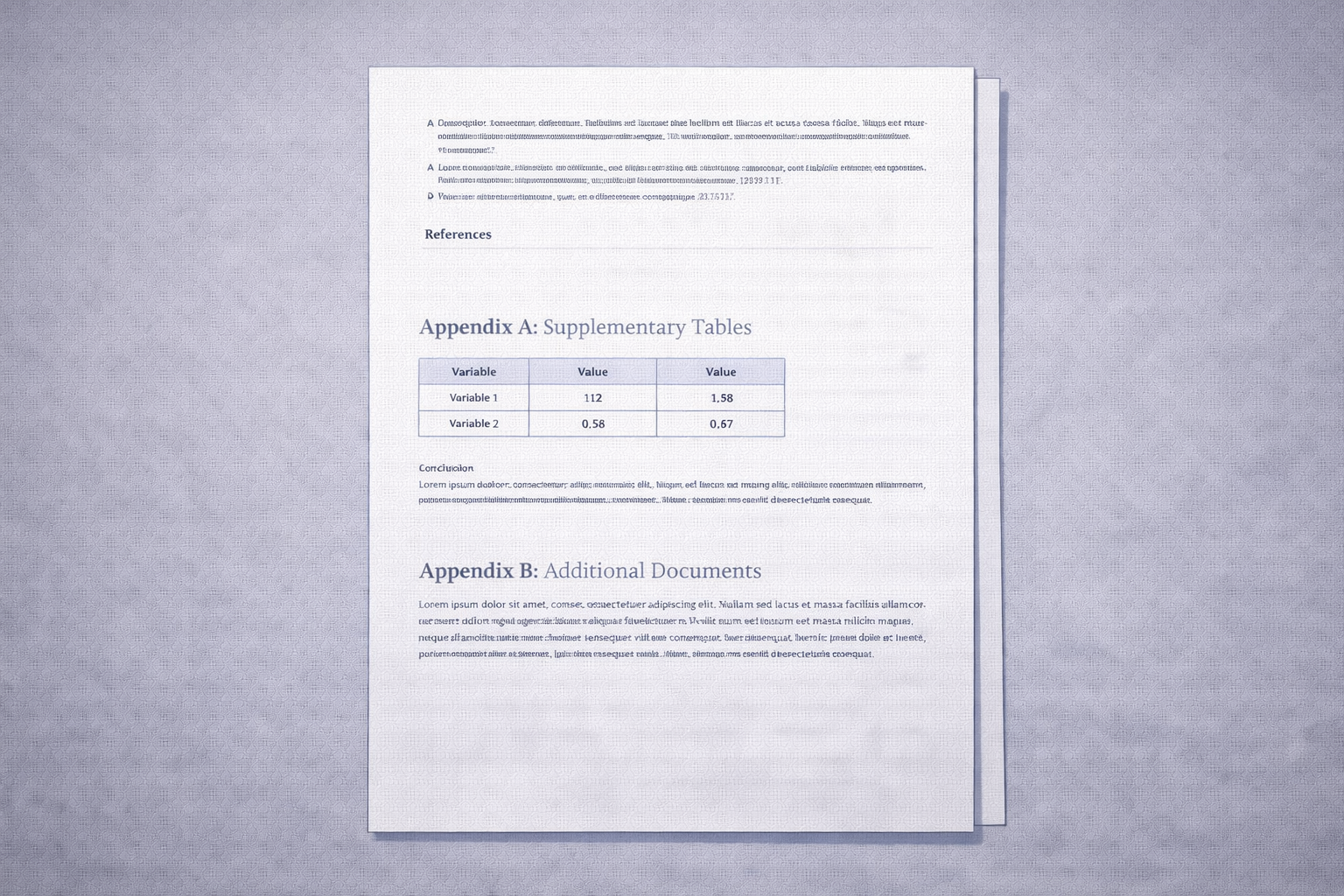
In academic writing, students are often required to balance clarity with depth. While evidence, data, and supplementary materials strengthen an argument, including everything in the main body can overwhelm the reader. The appendix exists to solve this problem by allowing relevant supporting material to be presented separately.
Many students understand that appendices are “extra,” but far fewer understand what appropriate appendix content actually looks like. As a result, appendices are either underused, misused, or formatted incorrectly, leading to confusion for examiners and, in some cases, lost marks.
This article provides clear, discipline-neutral appendix examples and explains how appendices should be structured, labelled, and referenced in academic work.
What Is an Appendix in Academic Writing?
An appendix is a section placed after the reference list that contains supplementary material supporting the main text. Its purpose is to provide additional detail without interrupting the flow of the argument.
Appendices are not a place to hide weak writing or unanalysed data. Instead, they hold material that is useful but not essential for understanding the core argument.
Examiners typically expect appendices to be clearly labelled, referenced in the text, and directly relevant to the assignment.
Key academic rule: An appendix should support the argument, not replace explanation or analysis in the main body.
When Should You Use an Appendix?
Appendices are appropriate when including material in the main body would disrupt clarity or exceed word limits. This commonly occurs in research-based assignments, reports, and dissertations.
Students should only include an appendix if the material is referred to explicitly in the text. An appendix that is never mentioned has no academic function.
Before adding an appendix, students should ask whether the reader needs to see the material immediately or whether it is better consulted separately.
Common Types of Appendix Content
While appendix content varies by discipline, certain categories appear consistently across academic fields.
Understanding these categories helps students decide what belongs in an appendix and what does not.
Raw Data and Extended Results
Large datasets, full survey results, or extended statistical tables are among the most common appendix examples. These materials support claims made in the analysis without cluttering the main text.
For example, a results section might summarise trends, while the appendix contains full output tables.
Raw data should always be clearly labelled and, where necessary, anonymised.
Questionnaires and Research Instruments
In empirical research, appendices often include copies of questionnaires, interview schedules, or experimental protocols.
This allows examiners to evaluate the quality of data collection methods without interrupting the discussion.
Only final versions should be included, not drafts or unused instruments.
Extended Methodological Detail
Some methodological explanations are too detailed for the main body but still academically important.
Appendices can include coding frameworks, technical specifications, or step-by-step procedures referenced briefly in the methods section.
This is particularly common in dissertations and technical reports.
Appendix Examples by Assignment Type
The form an appendix takes depends heavily on the type of academic task being completed.
The examples below illustrate how appendices are used in different contexts.
| Assignment Type | Common Appendix Content | Main Purpose |
|---|---|---|
| Undergraduate essay | Supplementary tables, extended quotations | Support limited analysis |
| Research report | Survey instruments, raw data | Demonstrate methodological rigour |
| Dissertation | Interview transcripts, coding schemes | Evidence transparency |
| Case study | Documents, timelines, supplementary figures | Contextual support |
These examples illustrate that appendices are not generic add-ons but tailored to the assessment type.
How to Label and Structure Appendices
Correct labelling is essential. Appendices must be easy to navigate and clearly linked to the main text.
Most academic conventions label appendices alphabetically (Appendix A, Appendix B) rather than numerically.
Each appendix should contain only one category of material.
Titling Appendices Clearly
Every appendix requires a descriptive title placed at the top of the page.
The title should explain the content without requiring the reader to search the main text.
For example, “Appendix B: Interview Questions for Student Participants” is preferable to vague labels.
Referencing Appendices in the Text
An appendix must always be referenced in the main body of the assignment.
This reference should explain why the reader might consult the appendix.
For example, “Full survey results are provided in Appendix C.”
Formatting Rules for Appendices
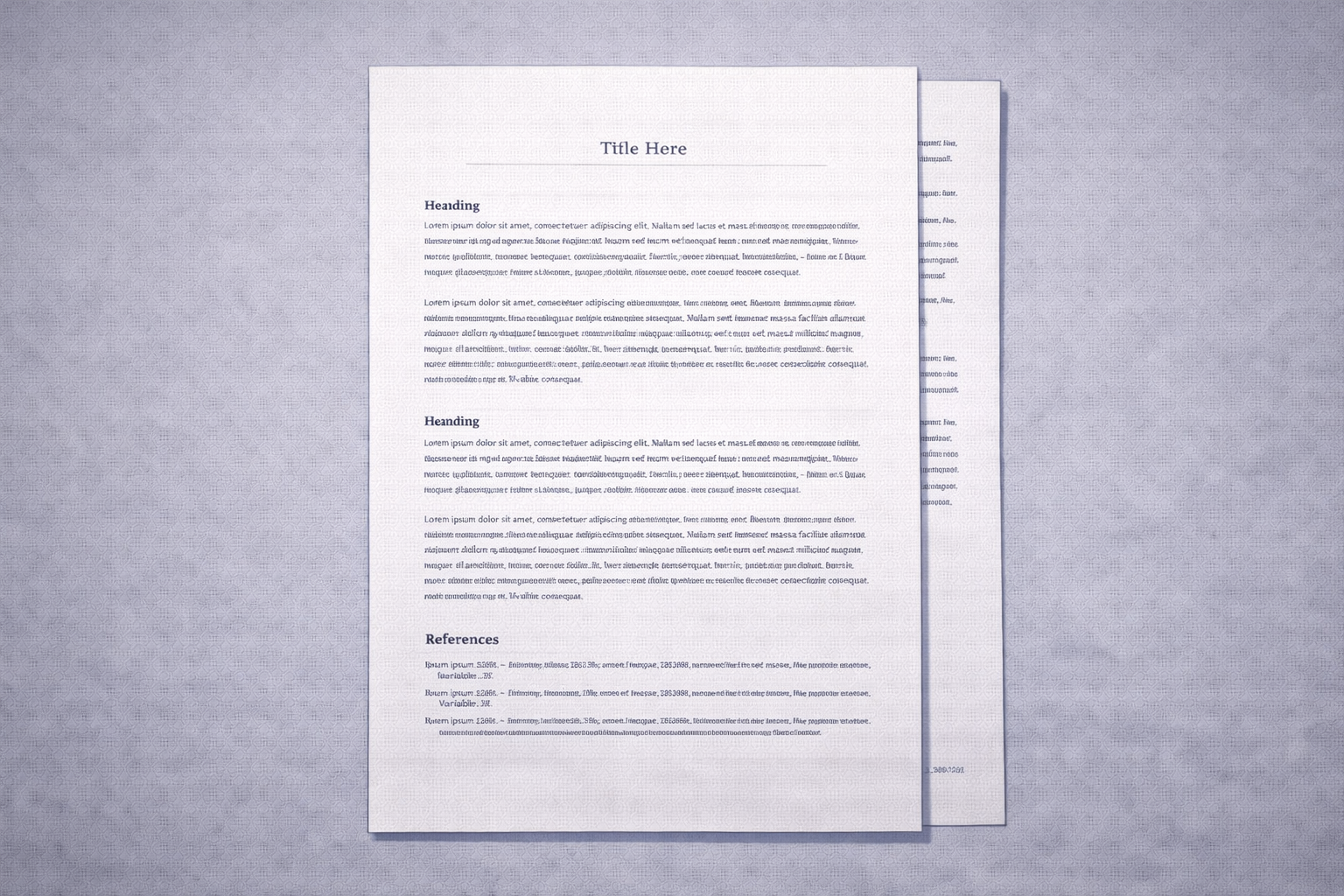
Appendices follow the same general formatting rules as the main document unless specified otherwise.
Margins, font, and spacing should remain consistent to maintain professionalism.
Page numbers usually continue from the main text.
Examiner expectation: Appendices should look like part of the same academic document, not an attachment added at the last minute.
Common Mistakes Students Make with Appendices
Despite their simplicity, appendices are frequently misused.
These mistakes often stem from misunderstanding the appendix’s purpose.
- Including analysis instead of supplementary material
- Failing to reference appendices in the main text
- Overloading appendices with irrelevant content
- Using appendices to bypass word limits improperly
- Inconsistent labelling or formatting
A well-prepared appendix should feel purposeful, not excessive.
Appendices in Dissertations and Large Projects
In dissertations, appendices often play a more substantial role due to the scale of the research.
Interview transcripts, ethics documentation, and extended analyses are commonly placed in appendices.
Students working on major projects often benefit from structured guidance such as dissertation writing support to ensure appendices are used appropriately.
Editing and Reviewing Appendix Content
Appendices should be reviewed with the same care as the main body.
Errors in appendices can undermine credibility, even if the main text is strong.
Professional editing and proofreading support can help ensure appendices are clear, relevant, and correctly formatted.
Using Appendix Examples Effectively
Effective appendices enhance academic credibility by demonstrating transparency and depth.
Students who use appendices thoughtfully show awareness of academic conventions and reader needs.
By following clear appendix examples and formatting rules, students can strengthen their work without distracting from the central argument.

Comments