Argumentative essays are among the most common and most challenging forms of university assessment. They require students not only to present information, but to take a clear position, defend it with evidence, and engage critically with alternative viewpoints. For this reason, many students search for a reliable argumentative essay outline template to guide their planning.
An outline acts as the structural backbone of an argumentative essay. It ensures that claims are logically sequenced, evidence is used effectively, and counterarguments are addressed in a balanced, academically credible way. This article explains how argumentative essay outlines work at university level and provides a comprehensive template that can be adapted across disciplines.
What Is an Argumentative Essay Outline?
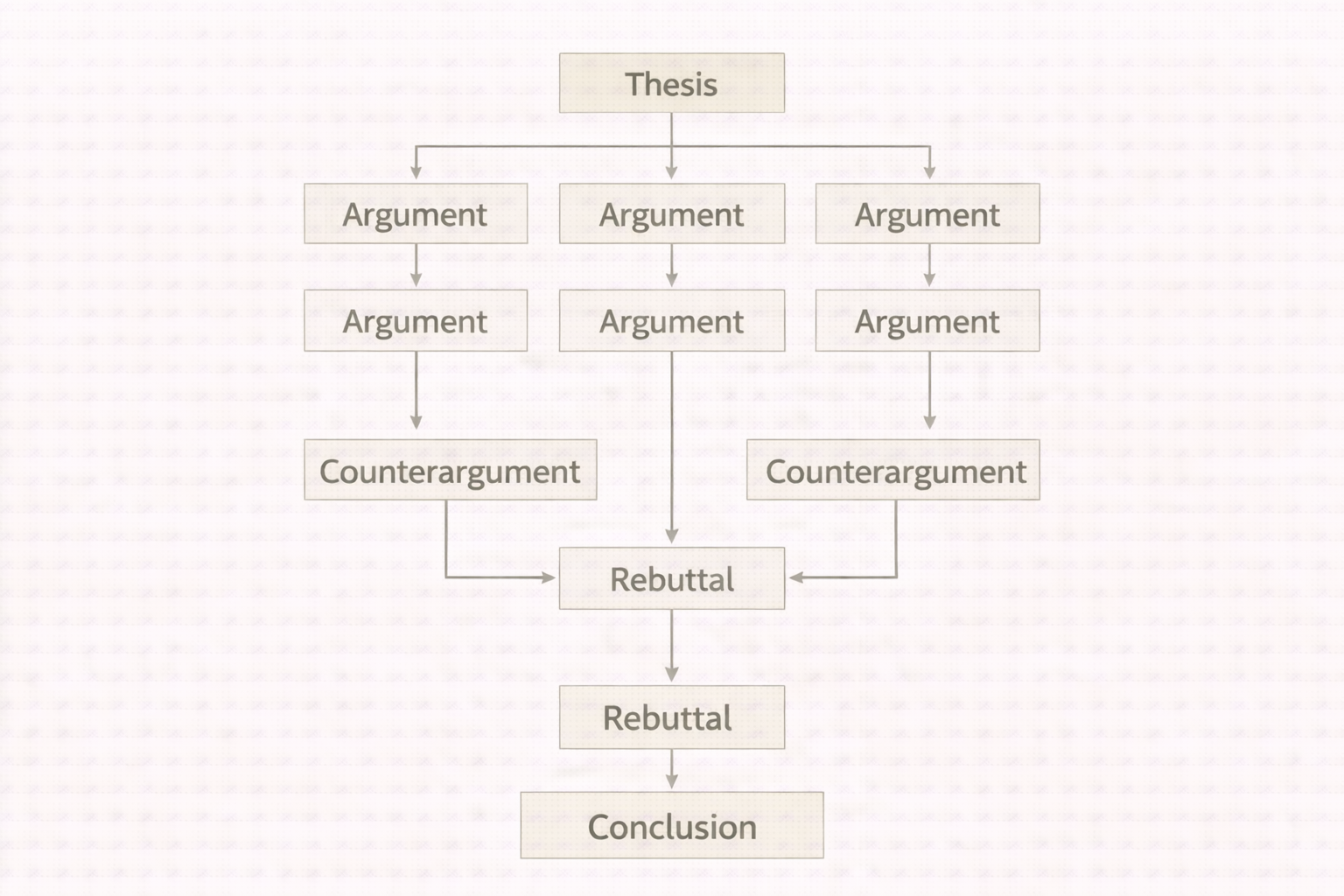
An argumentative essay outline is a structured plan that maps out the flow of an argument before full drafting begins. It identifies the central claim, supporting reasons, counterarguments, and the logical connections between them.
Unlike descriptive or reflective outlines, argumentative outlines prioritise persuasion and critical engagement. They are designed to help the writer anticipate objections, maintain coherence, and meet academic marking criteria that emphasise reasoning and evidence.
An argumentative essay outline ensures that persuasion is built through logic, evidence, and critical balance rather than opinion alone.
Why Argumentative Essays Require Detailed Outlines
University-level argumentative essays are evaluated on clarity of position, strength of reasoning, and quality of evidence. Without a detailed outline, essays often become repetitive, unfocused, or overly descriptive.
An outline allows students to test the strength of their argument before writing. By laying out claims and counterclaims in advance, weaknesses can be identified early, saving time during drafting and revision.
Weak structure is one of the most common reasons argumentative essays lose marks, even when research is strong.
Core Components of an Argumentative Essay Outline
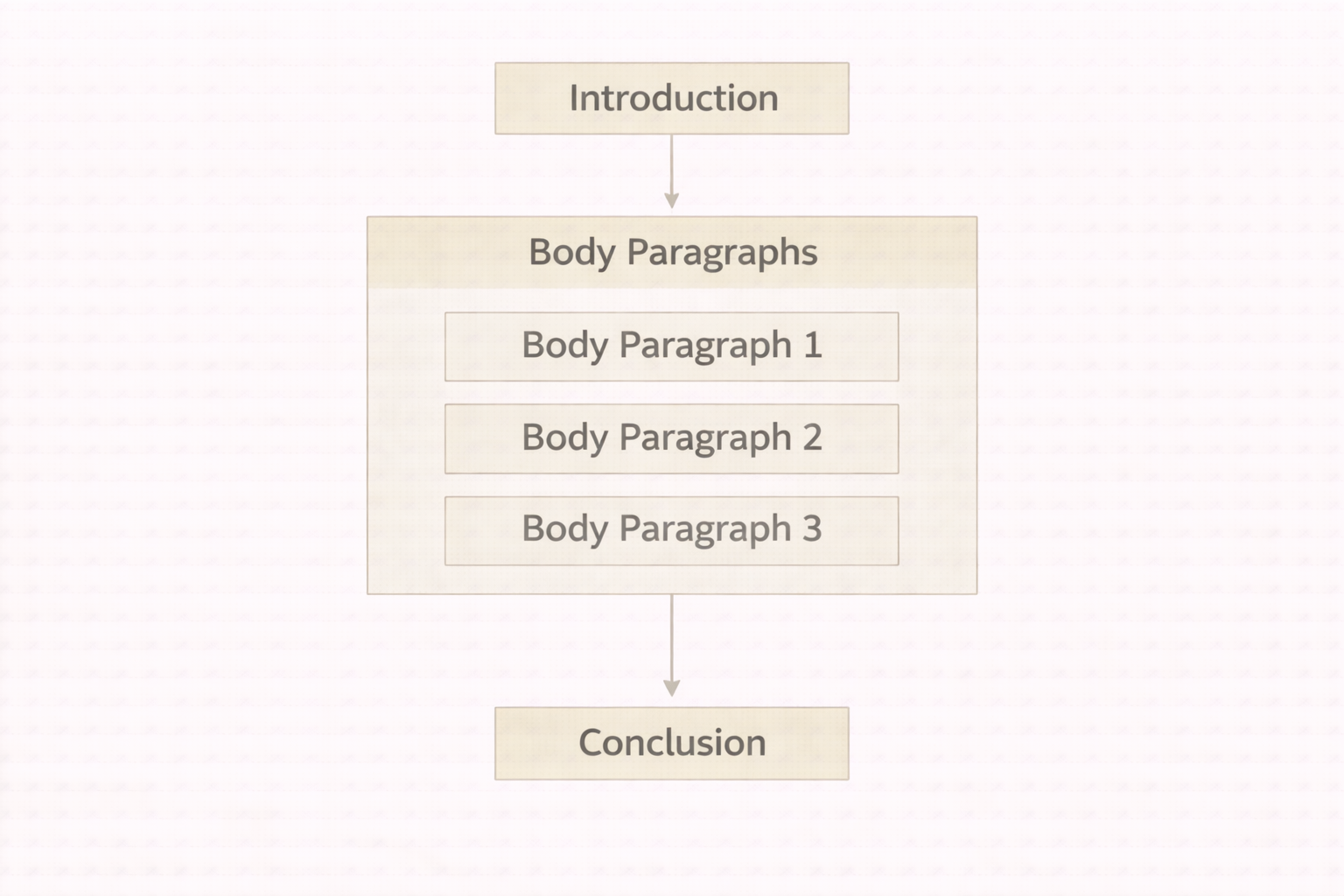
Although argumentative essays vary by subject, most follow a consistent structural pattern. Understanding these components helps students build outlines that meet academic expectations.
| Section | Academic Purpose |
|---|---|
| Introduction | Presents the issue, context, and central argument |
| Body Arguments | Develops claims supported by evidence and analysis |
| Counterarguments | Engages with opposing views critically |
| Conclusion | Reinforces the argument and synthesises findings |
Each component must be planned carefully within the outline to maintain logical progression and persuasive force.
Argumentative Essay Outline Template for University
The template below provides a practical structure suitable for most university argumentative essays. It can be scaled for short essays or expanded for research-based assignments.
Introduction Section
The introduction establishes the academic debate and clearly signals the writer’s position. In the outline, this section should define the issue and articulate a defensible thesis.
- Brief background or contextual overview of the issue
- Explanation of why the topic is contested or significant
- Clear, specific thesis statement stating the argument
Outlining the introduction carefully ensures that the essay begins with focus and academic authority.
Body Paragraph 1: Primary Argument
The first body paragraph typically presents the strongest or most fundamental reason supporting the thesis. It sets the argumentative tone for the essay.
- Clear topic sentence stating the main claim
- Academic evidence (studies, theories, data)
- Critical analysis linking evidence to the thesis
This paragraph should demonstrate how evidence supports the central position rather than merely describing sources.
Body Paragraph 2: Secondary Argument
The second body paragraph develops an additional reason that strengthens the overall argument. It should build logically on the previous point.
- Focused claim aligned with the thesis
- Relevant and credible supporting evidence
- Explanation of the claim’s significance
Outlining this paragraph prevents redundancy and ensures argumentative progression.
Body Paragraph 3: Counterargument
A strong argumentative essay acknowledges opposing views. This paragraph outlines a key counterargument fairly and accurately.
- Presentation of a credible opposing position
- Explanation of why the view is persuasive to some
Including counterarguments in the outline strengthens academic credibility and critical depth.
Body Paragraph 4: Rebuttal
The rebuttal directly responds to the counterargument. It explains why the original thesis remains stronger despite alternative views.
- Logical critique of the counterargument
- Supporting evidence or reasoning
- Reaffirmation of the original position
Planning rebuttals in advance helps avoid emotional or dismissive responses in the final essay.
Conclusion Section
The conclusion synthesises the argument rather than repeating points. In the outline, it should demonstrate how the essay has resolved the debate.
- Restated thesis in refined academic language
- Summary of how key arguments support the thesis
- Broader implication, recommendation, or significance
Adapting the Argumentative Outline to Different Disciplines
While the argumentative structure remains stable, disciplinary conventions influence emphasis. Some subjects prioritise theory, while others emphasise empirical evidence or policy implications.
| Discipline | Outline Emphasis |
|---|---|
| Law | Case analysis and statutory interpretation |
| Social Sciences | Empirical evidence and theoretical frameworks |
| Philosophy | Logical reasoning and conceptual analysis |
| Business | Practical application and real-world examples |
Adapting the outline ensures alignment with subject-specific marking criteria.
Common Mistakes in Argumentative Essay Outlines
One frequent mistake is listing topics instead of arguments. An effective outline focuses on claims and reasoning, not just subject areas.
Another common issue is failing to integrate counterarguments. Essays that ignore opposing views often appear biased or academically weak.
An argumentative outline without counterarguments rarely meets university-level critical standards.
Using Argumentative Outlines to Improve Essay Quality
A well-developed outline streamlines drafting and makes revision more efficient. It also allows students to evaluate the balance and logic of their argument before submission.
Students who need structured guidance may benefit from professional essay writing assistance, especially when tackling complex or high-stakes argumentative assignments.
From Outline to Final Draft: Maintaining Argumentative Consistency
Outlines should remain active tools throughout the writing process. Comparing the draft against the outline helps identify digressions or underdeveloped sections.
For final refinement, academic editing and proofreading support often focuses on strengthening argument clarity and coherence.
Why Mastering the Argumentative Essay Outline Matters
Learning to construct effective argumentative outlines builds transferable academic skills. These include critical thinking, structured reasoning, and persuasive communication.
By consistently using an argumentative essay outline template, students position themselves to produce clearer, stronger, and more academically persuasive essays across their degree programmes.


Comments