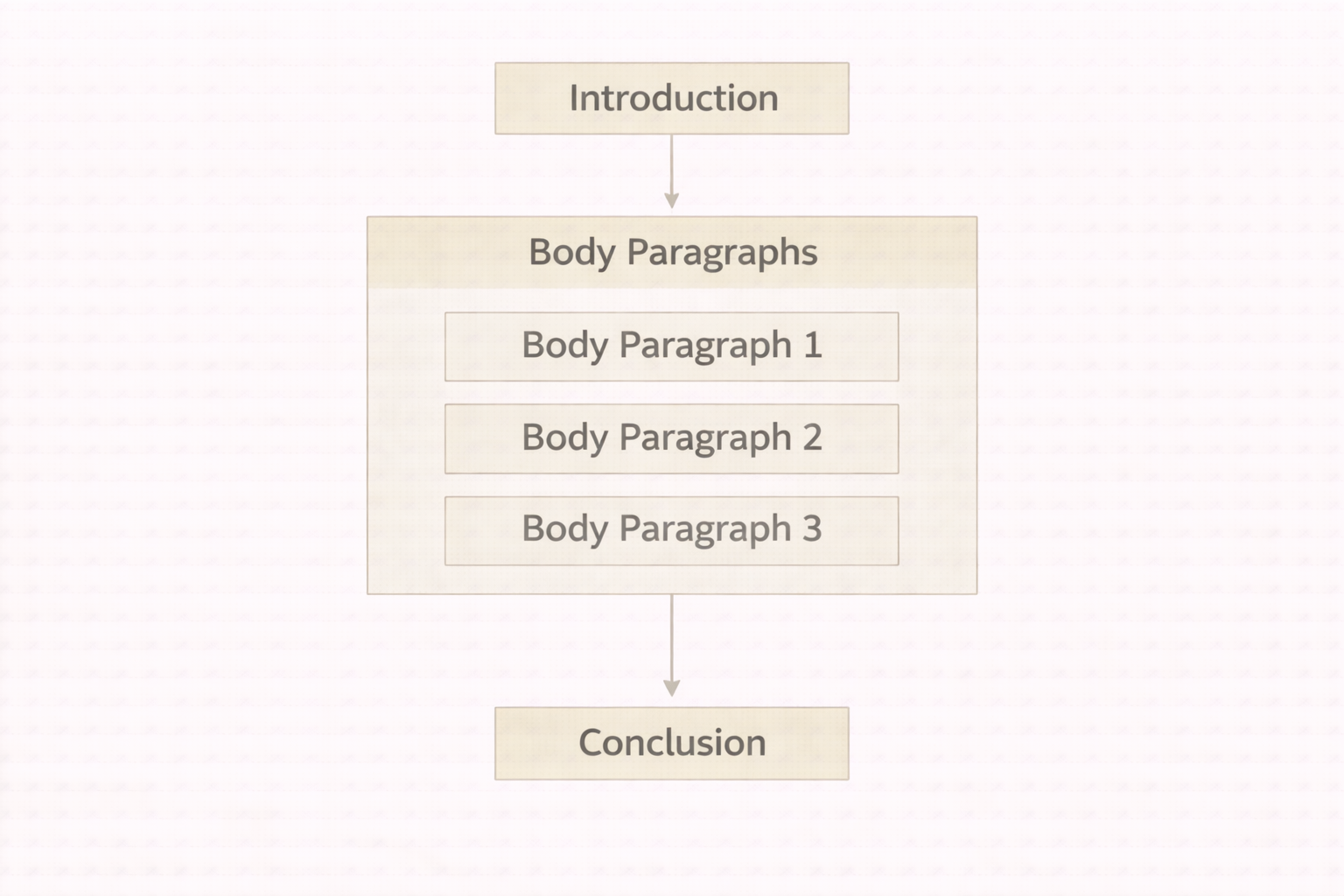
At university level, academic writing is assessed not only on the quality of ideas but also on structure, coherence, and logical development. One of the most reliable ways to achieve these qualities is by working from a clear essay outline before drafting. For this reason, many students actively search for an essay outline template for university assignments.
An outline functions as a structural blueprint. It helps writers organise arguments, balance evidence, and maintain focus on the essay question. This article explains how essay outlines work in university contexts, presents a practical outline template, and shows how it can be adapted to different academic disciplines.
What Is an Essay Outline in University Writing?
An essay outline is a structured plan that maps out the key sections of an academic essay before full sentences are written. It identifies the introduction, body paragraphs, and conclusion, along with the main points and evidence that will appear in each section.
In university assignments, outlines are not optional planning tools but essential academic instruments. They support clarity, logical sequencing, and alignment with marking criteria, particularly in longer or research-based essays.
An academic essay outline ensures that argument, evidence, and analysis develop in a logical and assessable way.
Why University Essays Require Structured Outlines
University essays differ from school-level writing in both depth and expectation. Examiners assess not only what students say but how effectively ideas are organised and developed across paragraphs.
A structured outline helps prevent common academic issues such as repetition, weak transitions, and unfocused arguments. It also allows students to evaluate their reasoning before committing to a full draft.
Poor structure is one of the most common reasons university essays lose marks, even when content knowledge is strong.
Core Components of a University Essay Outline
Although essay topics and disciplines vary, most university essays follow a broadly consistent structure. Understanding these core components allows students to adapt outlines confidently to different assignments.
The table below presents the standard components found in a university essay outline.
| Section | Purpose |
|---|---|
| Introduction | Introduces the topic, context, and thesis statement |
| Body Paragraphs | Develop arguments using evidence and analysis |
| Conclusion | Synthesises arguments and reinforces the thesis |
Each section plays a distinct academic role and should be planned carefully within the outline.
Essay Outline Template for University Assignments
The following template provides a practical structure that can be applied to most university-level essays. It emphasises argument development, coherence, and analytical depth.
Introduction Section
The introduction sets the academic direction of the essay. In an outline, this section should identify the topic, establish context, and clearly state the thesis.
- Brief background or contextual statement
- Definition of key terms if necessary
- Clear and specific thesis statement
Planning the introduction at outline stage helps ensure that the essay remains focused on a central argument.
Body Paragraph 1
The first body paragraph typically introduces the strongest or most foundational argument. It should directly support the thesis.
- Main claim or topic sentence
- Supporting evidence (sources, data, examples)
- Critical analysis linking evidence to the thesis
Outlining these elements prevents descriptive writing and encourages analytical depth.
Body Paragraph 2
The second body paragraph develops a related but distinct argument. It should build logically on the previous paragraph.
- Clear argumentative focus
- Relevant academic evidence
- Explanation of significance
This progression demonstrates coherence and sustained argumentation.
Additional Body Paragraphs
Longer university essays may require several body paragraphs. Each should follow the same internal structure while advancing the argument.
Outlining each paragraph individually helps maintain balance and avoids overlapping points.
Conclusion Section
The conclusion synthesises rather than repeats arguments. In an outline, it should highlight how the essay has answered the question.
- Restatement of thesis in refined terms
- Summary of key arguments
- Final academic implication or recommendation
Adapting the Essay Outline Template to Different Disciplines
While the core structure remains stable, disciplinary expectations influence how outlines are developed. Humanities, sciences, and professional subjects prioritise different forms of evidence and argument.
| Discipline | Outline Emphasis |
|---|---|
| Humanities | Theoretical analysis and textual interpretation |
| Social Sciences | Empirical evidence and critical discussion |
| Business | Application of models and real-world examples |
| Sciences | Methodological clarity and evidence-based reasoning |
Understanding these differences allows students to customise outlines without abandoning academic structure.
Common Mistakes When Creating Essay Outlines
Many students underestimate the importance of outlining or approach it superficially. Common errors include listing topics without argument or failing to link points to the thesis.
Another frequent mistake is creating outlines that are too vague to guide writing effectively.
An outline without clear argumentative direction often leads to unfocused essays.
Using Essay Outlines to Improve Academic Performance
Well-developed outlines make drafting more efficient and revision more targeted. They also help students meet marking criteria related to structure and coherence.
Students who require additional guidance may benefit from professional essay writing support, particularly when working with unfamiliar assignment formats.
Outlining as Part of the Editing and Revision Process
Outlines are not only pre-writing tools. Reviewing an essay against its original outline can reveal gaps in logic or balance.
For students refining final drafts, structured feedback through editing and proofreading services often focuses on alignment between outline and final submission.
Why Essay Outlines Matter for Long-Term Academic Writing Skills
Developing strong outlining habits supports academic growth beyond individual assignments. These skills transfer directly to research papers, dissertations, and professional writing.
By mastering the use of an essay outline template for university work, students build a reliable framework for producing clear, coherent, and high-scoring academic essays.


Comments