
One of the most common reasons argumentative essays underperform is not weak evidence or poor referencing, but an unclear or ineffective thesis statement. In argumentative writing, the thesis statement is not a formality. It is the intellectual centre of the essay and the standard against which coherence, relevance, and analytical depth are judged.
Students are often told to “be argumentative,” yet are rarely shown what a strong argumentative thesis actually looks like in practice. As a result, many essays drift into description, summary, or balanced discussion without a clear position. This creates uncertainty for the reader and limits the essay’s academic impact.
This article explains what an argumentative thesis statement is, how it differs from other types of thesis statements, and why it is essential in university assessment. It then provides carefully constructed argumentative thesis statement examples across common subject areas, alongside guidance on how to evaluate and refine them.
What Is an Argumentative Thesis Statement?
An argumentative thesis statement is a clear, specific, and debatable claim that takes a position on an issue and signals how that position will be defended. Unlike descriptive or explanatory theses, it does not simply outline what the essay will discuss. Instead, it asserts what the writer believes and why that belief is academically defensible.
In university-level essays, an argumentative thesis statement is expected to demonstrate independent thinking. It shows that the student has engaged critically with the question and developed a position based on reasoning rather than repetition of course materials.
Key principle: An argumentative thesis statement must present a claim that a reasonable reader could challenge.
Why Argumentative Thesis Statements Matter in Academic Assessment
Marking rubrics for argumentative essays consistently prioritise clarity of argument, critical engagement, and logical structure. The thesis statement directly influences all three. When the thesis is clear, examiners can easily see how each paragraph contributes to the overall argument.
Weak or absent thesis statements often result in essays that appear unfocused, even if individual sections are well written. From an examiner’s perspective, this signals limited analytical control and uncertainty about the writer’s position.
Strong argumentative thesis statements, by contrast, create a roadmap for both writer and reader. They guide paragraph development, evidence selection, and counterargument handling.
Core Features of Strong Argumentative Thesis Statements
Before examining examples, it is essential to understand the characteristics that distinguish strong argumentative thesis statements from weak ones.
- They directly answer the essay question
- They take a clear and specific position
- They are debatable, not factual
- They signal the scope of the argument
- They can be supported with academic evidence
These features ensure that the thesis functions as an argument rather than a topic announcement.
Argumentative Thesis Statement Examples by Subject Area
Examining examples across disciplines helps clarify how argumentative thesis statements adapt to different academic contexts while maintaining the same underlying principles.
Argumentative Thesis Statement Examples in Social Sciences
In social science essays, argumentative thesis statements often focus on policy, behaviour, or institutional impact. They are expected to demonstrate awareness of complexity while maintaining a clear position.
| Weak Thesis Statement | Strong Argumentative Thesis Statement |
|---|---|
| Social media affects politics. | Social media platforms have intensified political polarisation by prioritising emotionally charged content over deliberative public discourse. |
| Unemployment is a problem for young people. | Youth unemployment in urban areas is driven less by skills shortages than by structural labour market inequalities. |
The stronger examples clearly identify a cause, perspective, or evaluative judgment that can be defended through evidence.
Argumentative Thesis Statement Examples in Humanities
Humanities essays often involve interpretation, critique, or theoretical debate. Argumentative thesis statements in these fields must therefore articulate a clear interpretive stance.
| Weak Thesis Statement | Strong Argumentative Thesis Statement |
|---|---|
| This novel explores identity. | The novel portrays identity as a fluid construct shaped more by social pressure than by individual choice. |
| The film shows class differences. | The film critiques class inequality by exposing how economic power shapes moral authority. |
These examples demonstrate how argumentative theses move beyond observation to interpretation and evaluation.
Argumentative Thesis Statement Examples in Science and Health Essays
Although scientific writing is often associated with objectivity, argumentative thesis statements are still required in essays that evaluate methods, policies, or ethical implications.
| Weak Thesis Statement | Strong Argumentative Thesis Statement |
|---|---|
| Vaccination is important for public health. | Mandatory vaccination policies are ethically justified due to their role in preventing large-scale public health crises. |
| Climate change affects agriculture. | Climate change poses the greatest threat to global food security by destabilising crop yields in developing regions. |
Here, the argumentative element is expressed through evaluation and justification rather than personal opinion.
Common Mistakes in Argumentative Thesis Statements
Despite understanding the concept, students frequently make avoidable errors when drafting argumentative thesis statements. One of the most common mistakes is vagueness. Broad or generic claims lack analytical direction and are difficult to defend.
Another frequent issue is attempting to include too many arguments in a single thesis statement. Overloaded theses dilute focus and lead to shallow analysis across multiple points.
A thesis statement that tries to argue everything usually ends up arguing nothing.
How to Strengthen an Argumentative Thesis Statement
Refining an argumentative thesis statement is an iterative process. Students should revisit their thesis after drafting the body paragraphs to ensure alignment between claim and evidence.
One effective technique is to ask whether every major paragraph clearly supports the thesis. If a section feels disconnected, either the thesis needs refinement or the paragraph should be revised or removed.
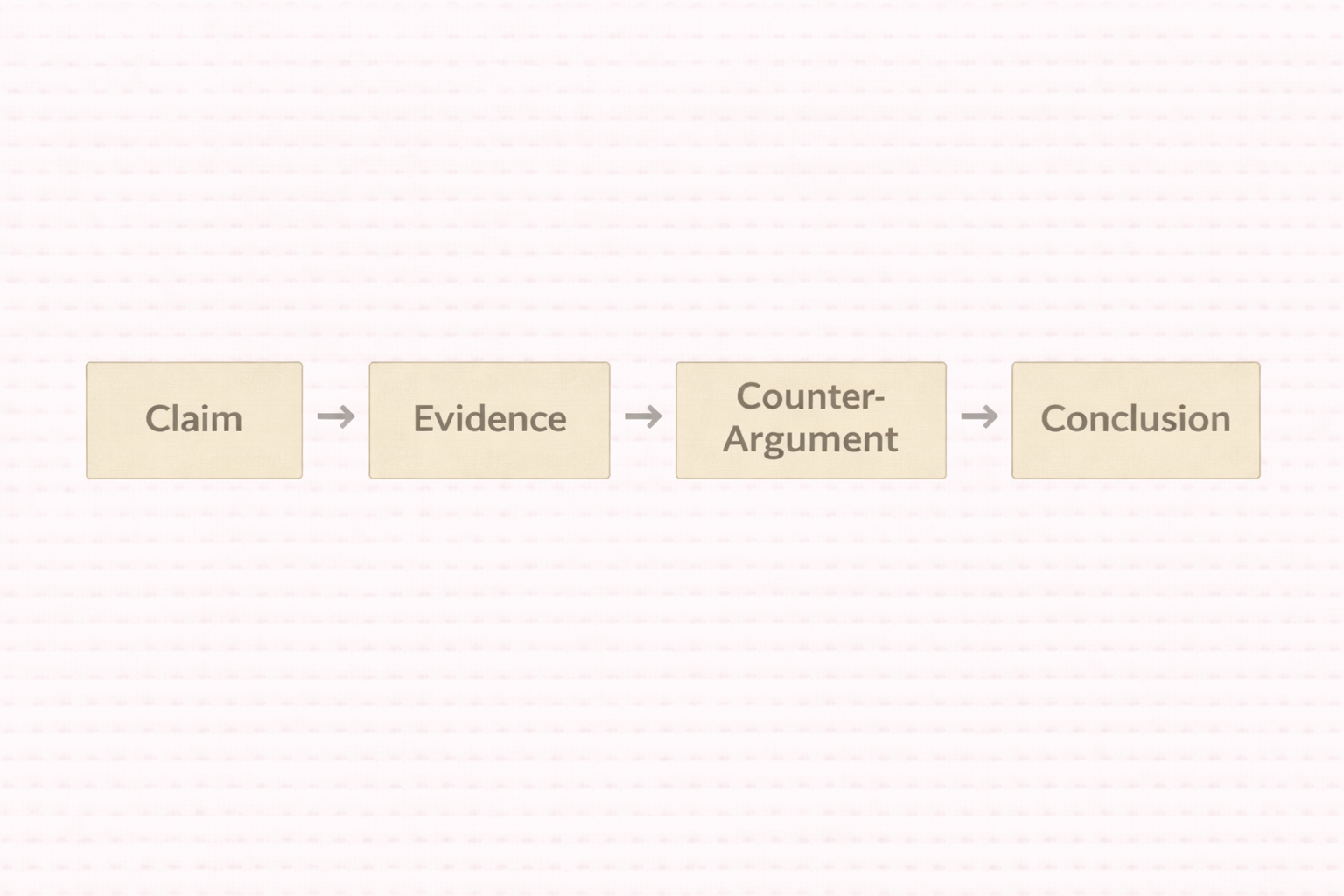
Testing the thesis by considering counterarguments also strengthens its academic credibility. A strong argumentative thesis anticipates challenge rather than avoiding it.
Using Argumentative Thesis Statements to Guide Essay Structure
An effective argumentative thesis statement does more than state a position. It implicitly shapes the essay’s structure by signalling key lines of reasoning.
For example, a thesis that identifies two causes or evaluates a policy’s impact naturally leads to body paragraphs that address each component systematically. This improves coherence and logical progression.
When structure follows directly from the thesis, essays appear purposeful and academically controlled.
Final Guidance on Argumentative Thesis Statement Examples
Argumentative thesis statement examples are valuable not as templates to copy, but as models of academic thinking. They demonstrate how clarity, specificity, and arguability work together to form a defensible claim.
By analysing strong examples, avoiding common mistakes, and refining language through revision, students can develop thesis statements that support rigorous argumentation and meet university assessment standards.
Ultimately, a well-crafted argumentative thesis statement transforms an essay from a collection of ideas into a coherent academic argument with clear intellectual purpose.


Comments