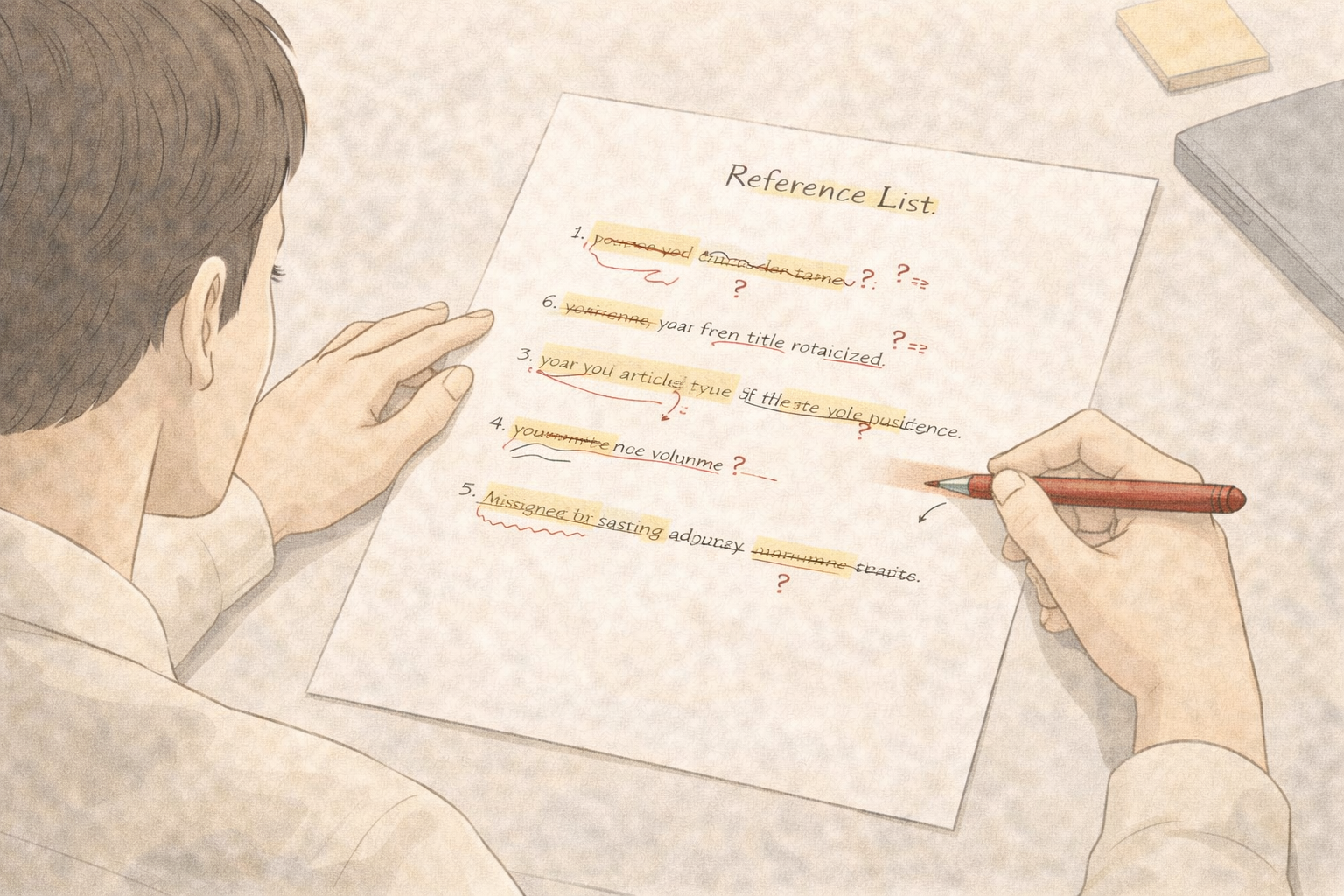
Referencing is one of the most technically demanding aspects of academic writing, yet it is often treated as an afterthought. Many students understand the importance of citing sources but still lose marks due to avoidable referencing mistakes that weaken the presentation and credibility of their work.
This article examines the most common referencing mistakes made in university essays and dissertations. It explains why these errors occur, how examiners interpret them, and what practical steps students can take to ensure their referencing meets academic standards.
Why Referencing Mistakes Matter More Than Students Expect
Referencing is not simply a bureaucratic requirement; it is a core academic skill that demonstrates scholarly integrity. When referencing is inaccurate or inconsistent, it raises concerns about a student’s understanding of academic conventions and, in some cases, about academic honesty.
Markers often use referencing quality as a proxy for overall academic discipline. Even minor errors, when repeated, can suggest carelessness and result in lost presentation or methodology marks, particularly in higher-level coursework.
Examiner expectation: Accurate and consistent referencing signals academic maturity and respect for scholarly standards.
Inconsistent Referencing Style Throughout an Essay
One of the most frequent referencing mistakes is mixing multiple referencing styles within the same assignment. Students may begin using one system and then unintentionally switch conventions after consulting different online sources.
This inconsistency is especially common with Harvard-style variants, where punctuation, capitalisation, and formatting differ slightly between guides. Examiners expect one coherent system to be used consistently from start to finish.
Missing In-Text Citations for Paraphrased Ideas
Many students correctly cite direct quotations but fail to reference paraphrased material. This often stems from the misconception that rewording an idea removes the need for citation.
In academic writing, the source of an idea must be acknowledged regardless of whether the wording is original. Failing to cite paraphrased content can be interpreted as poor academic practice or, in serious cases, plagiarism.
Overusing Direct Quotations
Another common mistake is excessive reliance on direct quotations. While quotations have a legitimate role, overuse can suggest a lack of original analysis or confidence in academic writing.
Most disciplines expect students to engage critically with sources by paraphrasing and synthesising ideas, using quotations sparingly to support key points rather than replace analysis.
Incorrect Formatting of In-Text Citations
Errors in in-text citation formatting are widespread, particularly with punctuation, author names, and dates. These mistakes often occur when students rely on automated citation tools without understanding the underlying rules.
For example, placing punctuation incorrectly in relation to a citation or omitting page numbers where required can undermine technical accuracy, even if the source itself is valid.
| Common Error | Why It Is a Problem | Correct Approach |
|---|---|---|
| Missing year of publication | Prevents source identification | Include author and year consistently |
| No page number for quotations | Fails to meet style requirements | Add page number where required |
| Incorrect punctuation placement | Breaks referencing conventions | Follow style-specific punctuation rules |
These errors are often small individually but damaging when repeated across an assignment.
Reference List Entries That Do Not Match In-Text Citations
A frequent and serious referencing issue occurs when sources cited in-text do not appear in the reference list, or when reference list entries are never cited in the essay.
Examiners expect a direct correspondence between in-text citations and the reference list. Any mismatch suggests poor checking and weak academic control.
Incorrect Formatting of the Reference List
Formatting errors in reference lists are among the most visible mistakes. These include incorrect ordering, inconsistent punctuation, and failure to apply italics or capitalisation rules.
Students often underestimate how closely markers examine reference lists, particularly in dissertations and research-based assignments where referencing carries more weight.
Using Low-Quality or Inappropriate Sources
Referencing mistakes are not limited to formatting. Citing sources that lack academic credibility, such as unverified websites or opinion blogs, can weaken an assignment significantly.
While some online sources are acceptable, students must evaluate authority, publication context, and relevance before including a source in academic work.
Incorrect Citation of Online Sources
Online sources introduce additional complexity, including URLs, access dates, and missing author information. Many students either omit required details or include unnecessary ones.
When citation details are incomplete, examiners may question the reliability of the source or the student’s understanding of referencing conventions.
Relying Uncritically on Citation Generators
Automated citation tools can be useful, but they are not infallible. Many generate references that do not fully comply with institutional guidelines or specific referencing styles.
Students who rely entirely on these tools without manual checking often submit reference lists containing systematic errors.
Critical warning: Citation generators should support, not replace, your understanding of referencing rules.
Failing to Update References During Revision
During the drafting process, students frequently add, remove, or replace sources. A common mistake is failing to update in-text citations and reference lists accordingly.
This leads to outdated or incomplete referencing that could have been corrected with a final systematic check.
Strategies for Avoiding Common Referencing Mistakes
Preventing referencing errors requires a structured and deliberate approach rather than last-minute correction. Developing good habits early significantly reduces technical mistakes.
- Choose and confirm the required referencing style before writing
- Keep detailed notes of sources during research
- Check every in-text citation against the reference list
- Review formatting rules using an official style guide
These practices improve accuracy and reduce revision time.
Proofreading Referencing Separately from Content
One effective strategy is to proofread referencing independently from content. This allows students to focus exclusively on technical accuracy without being distracted by argumentation.
Reading the reference list and citations in isolation often reveals inconsistencies that are easy to miss during general proofreading.
Understanding That Referencing Is an Academic Skill
Many students view referencing as a mechanical task, but it is better understood as a scholarly skill that develops over time. Accuracy improves with practice and attention to detail.
Recognising referencing as part of academic communication helps students approach it more carefully and confidently.
Final Guidance on Avoiding Referencing Errors
Common referencing mistakes are rarely caused by lack of effort; they usually stem from misunderstanding conventions or rushing the final stages of an assignment. By identifying typical errors and applying structured checking methods, students can significantly improve their academic presentation.
Careful, consistent referencing not only protects academic integrity but also strengthens the overall credibility and professionalism of academic writing.

Comments