Managing time is one of the most persistent challenges in academic writing. Students regularly ask whether there is a reliable way to estimate how long an essay will take before they begin. This question has led to growing interest in the idea of an essay writing time calculator.
An essay writing time calculator is not a shortcut or a productivity gimmick. Instead, it is a structured way of understanding the stages of academic writing and assigning realistic time expectations to each stage. This article explains how such calculators work, what factors influence writing speed, and how students can use time estimates to improve planning, quality, and academic confidence.
Why Estimating Essay Writing Time Is So Difficult
Unlike timed exams, coursework essays do not have a fixed duration. Writing happens in stages, often spread across days or weeks, and students rarely track how long each stage actually takes.
Many students focus only on the final drafting phase and ignore the substantial time required for reading, planning, and revision. As a result, they underestimate the total workload and begin writing too late.
An essay writing time calculator exists to correct this misconception by making invisible work visible.
Key academic insight: Most of the time spent on a strong essay happens before the first full draft is written.
What an Essay Writing Time Calculator Actually Measures
An effective essay writing time calculator does not simply divide word count by typing speed. Academic writing is not transcription; it is analytical and evidence-based.
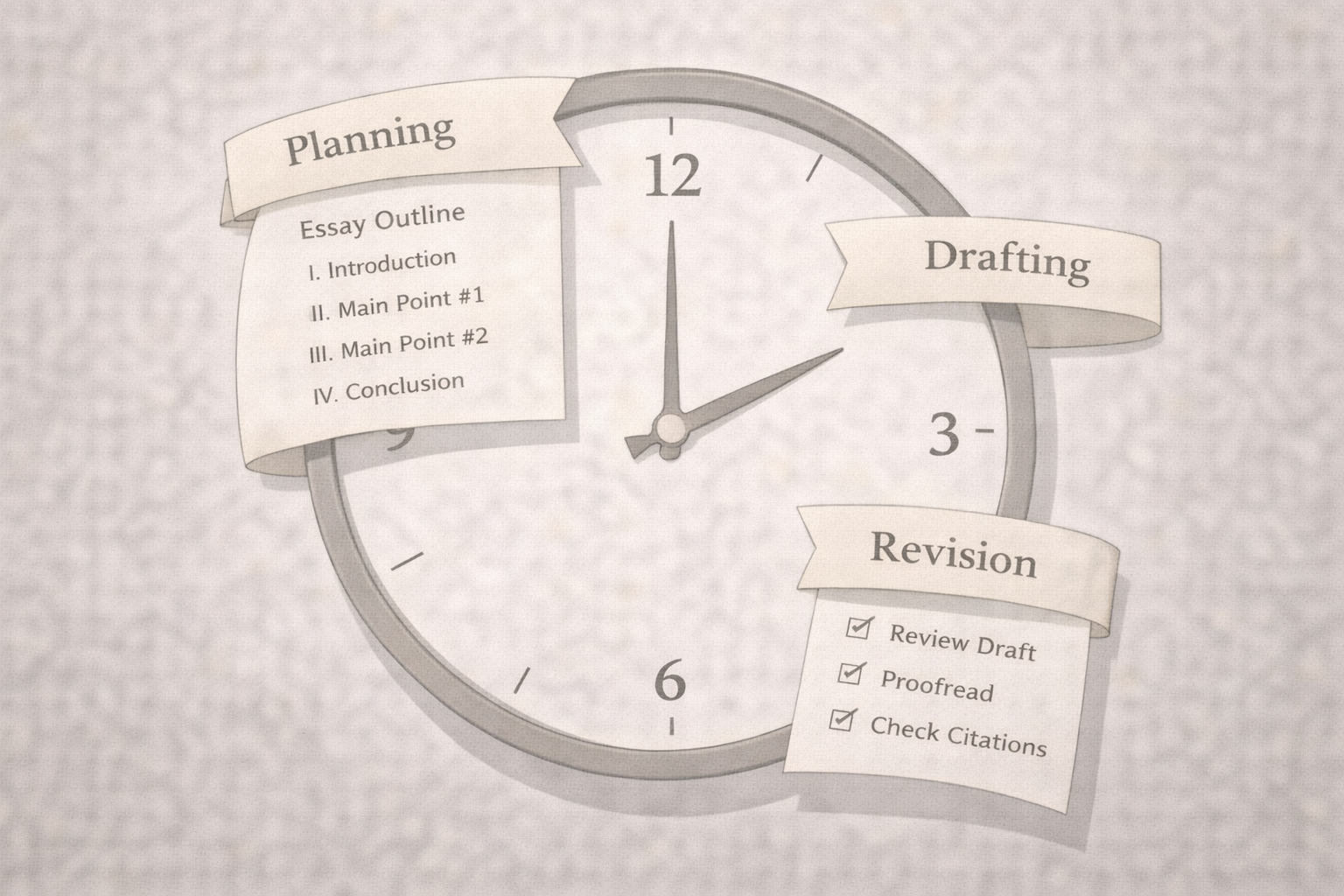
Instead, a meaningful calculator breaks the process into distinct phases, each with its own time demands. These phases reflect how essays are actually produced in university settings.
Understanding these components is essential before relying on any estimated time output.
The Core Stages of Academic Essay Writing
Most essay writing time calculators are built around the same core stages. These stages appear across disciplines, even though expectations may vary slightly.
- Understanding the assignment brief
- Research and reading
- Planning and outlining
- Drafting
- Revising and editing
- Final proofreading and formatting
Each stage contributes directly to the quality of the final submission and should be accounted for when estimating total writing time.
How Word Count Influences Writing Time
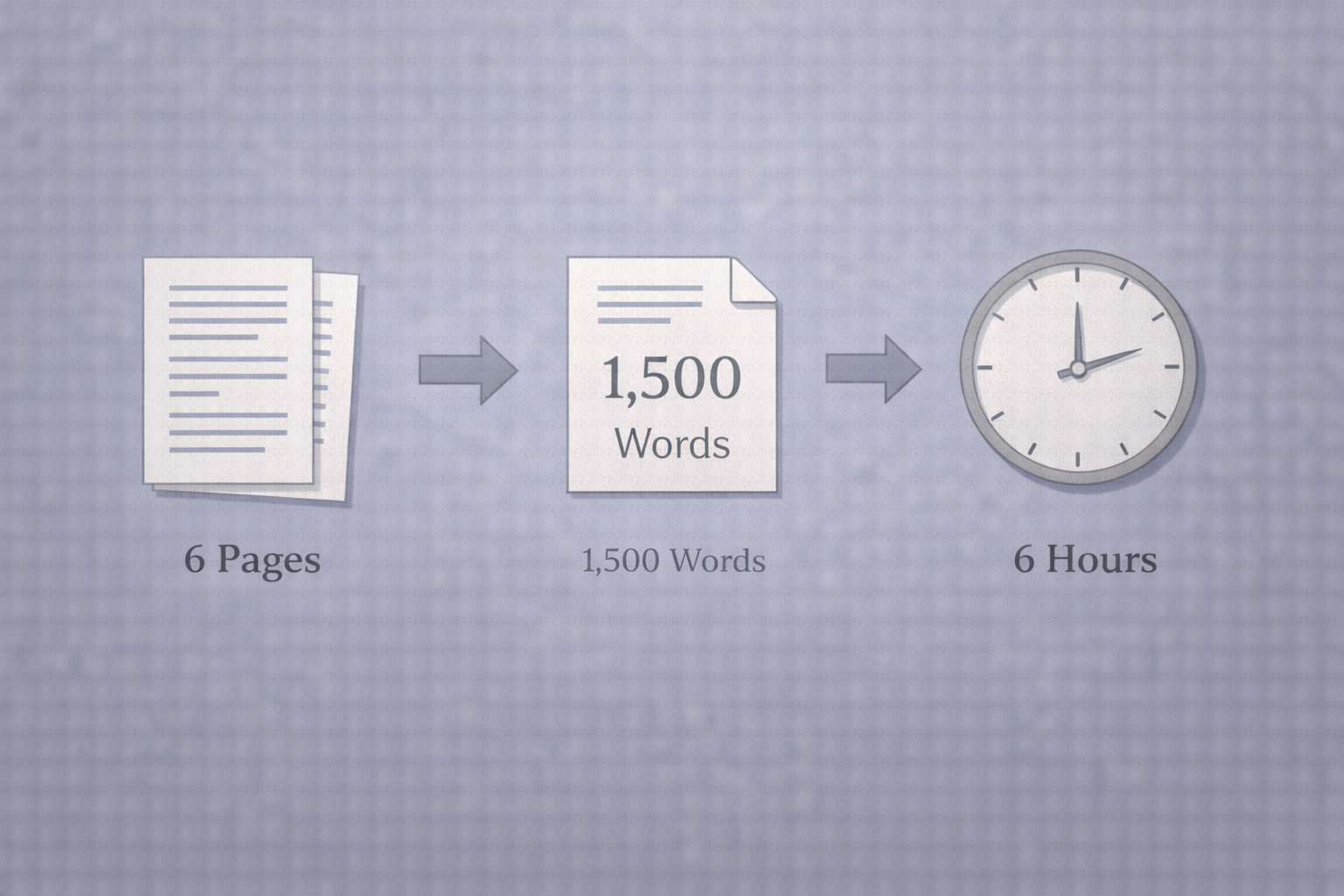
Word count is one of the strongest predictors of writing time, but the relationship is not linear. Writing a 2,000-word essay does not simply take twice as long as writing 1,000 words.
Longer essays require more sources, deeper synthesis, and greater structural control. This increases planning and revision time disproportionately.
Essay writing time calculators therefore use word count as a starting point, not a final determinant.
| Essay Length | Typical Total Time | Primary Time Demand |
|---|---|---|
| 1,000 words | 6–8 hours | Planning and drafting |
| 2,000 words | 12–18 hours | Research and revision |
| 3,000 words | 20–30 hours | Synthesis and structure |
These figures assume focused academic work rather than rushed last-minute writing.
Research Time: The Most Underestimated Component
Research is often treated as a preliminary step, but in reality it consumes a large proportion of total writing time. Locating credible sources, reading critically, and taking structured notes cannot be rushed without consequences.
An essay writing time calculator typically allocates between 30% and 40% of total time to research alone. This is especially true in literature-based disciplines such as social sciences and humanities.
Skipping or compressing research time often leads to weak arguments and superficial analysis.
Planning and Structuring the Argument
Once research is complete, time must be allocated to planning. This includes developing a thesis, organising arguments, and deciding how evidence will be integrated.
Well-planned essays are faster to draft and easier to revise. Poor planning may appear to save time initially but usually results in extensive rewriting later.
Most calculators therefore treat planning as a distinct and essential phase rather than an optional step.
Drafting Speed vs Academic Writing Speed
Typing speed is often mistaken for writing speed. While many students can type quickly, academic writing involves constant decision-making, referencing, and reformulation.
On average, students produce between 250 and 400 polished academic words per hour during drafting. This rate already assumes a clear plan and relevant sources.
Essay writing time calculators use these realistic productivity ranges rather than raw typing metrics.
Critical warning: High typing speed does not compensate for poor planning or weak analysis.
Revision and Editing: Why First Drafts Are Not Enough
Many students assume that finishing the first draft means the essay is nearly complete. In academic practice, this is rarely the case.
Revision involves checking argument coherence, improving clarity, strengthening evidence use, and aligning the essay with marking criteria. This stage often takes as long as drafting itself.
An essay writing time calculator that ignores revision will always underestimate total effort.
Proofreading and Formatting Time
The final stage includes proofreading for grammar and clarity, checking citations, and ensuring formatting compliance. While this stage is shorter, it is still essential.
Rushing proofreading increases the risk of avoidable errors that can undermine otherwise strong work.
Most calculators allocate one to two hours for final checks, depending on essay length.
Discipline-Specific Differences in Writing Time
Not all essays take the same amount of time, even at identical word counts. Subject area significantly affects writing speed and research demands.
For example, reflective essays may require less external research but more conceptual clarity, while empirical reports demand careful data handling and precision.
Advanced calculators often adjust estimates based on discipline and task type.
Experience Level and Writing Efficiency
First-year undergraduates typically take longer to write essays than final-year students. This is not due to lower intelligence but to unfamiliarity with academic conventions.
As students gain experience, planning becomes faster, research more targeted, and revision more strategic.
Essay writing time calculators should therefore be interpreted as flexible guides rather than fixed rules.
Using a Time Calculator for Better Academic Planning
The real value of an essay writing time calculator lies in planning rather than prediction. Knowing that a 2,000-word essay may require 15 hours encourages earlier starts and better scheduling.
Students can divide the estimated time across days, reducing cognitive overload and improving writing quality.
This approach aligns with effective study skills and long-term academic success.
Common Misuses of Essay Writing Time Calculators
Some students use calculators to justify last-minute writing or unrealistic expectations. This defeats their purpose.
Another common misuse is treating the minimum estimate as sufficient for high-quality work. Strong essays often require more time than the minimum projection.
Calculators should inform judgment, not replace it.
Ethical Use of Writing Time Estimates
Using an essay writing time calculator is an ethical academic practice when it supports independent work and realistic planning.
It becomes problematic only when students use time pressure as a justification for academic misconduct or outsourcing assessed work.
Time estimation tools are meant to support learning, not circumvent it.
How Lecturers Expect Students to Manage Writing Time
University instructors design assignments with the assumption that students will distribute work over time. Deadlines are rarely intended to encourage single-session writing.
Understanding the hidden workload behind an essay helps students meet these expectations more effectively.
An essay writing time calculator simply makes this implicit expectation explicit.
Turning Estimates Into Actionable Schedules
Once an estimated total time is known, students should convert it into a concrete schedule. This might involve allocating specific sessions for reading, drafting, and revision.
Breaking the workload into smaller units reduces procrastination and improves focus.
This is where time calculators provide their greatest practical benefit.
What an Essay Writing Time Calculator Cannot Do
No calculator can account for motivation, confidence, or topic familiarity perfectly. Writing speed varies from day to day and task to task.
Unexpected difficulties, such as unclear sources or complex arguments, can extend writing time beyond initial estimates.
Students should always build buffer time into their plans.
Understanding the Results With Academic Maturity
An essay writing time calculator should be read as a planning aid, not a promise. Its purpose is to improve time awareness, not to impose rigid limits.
Students who use these tools thoughtfully tend to experience less stress and produce more coherent work.
Academic writing rewards preparation, patience, and reflection—qualities that no calculator can replace but can help support.
Planning Essays With Confidence and Realism
So how long does an essay really take? The answer depends on length, discipline, experience, and standards of quality. An essay writing time calculator provides a structured way to think about these variables.
By recognising that writing is a process rather than a single act, students can approach assignments with clarity rather than anxiety.
Used wisely, time estimation becomes not a constraint, but a tool for stronger, more confident academic writing.


Comments