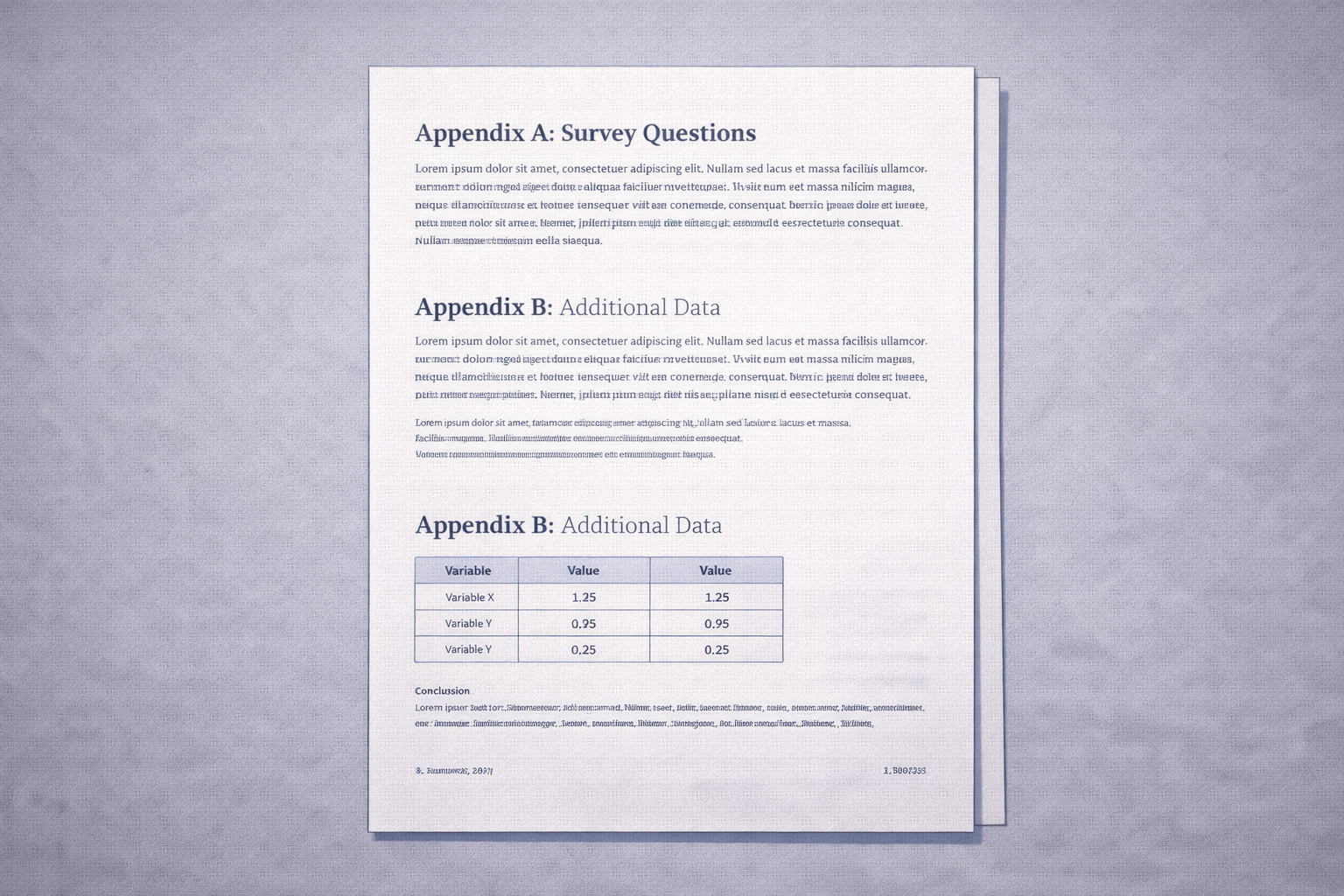
Appendices play a quiet but important role in academic writing. They allow students to include supporting material without overloading the main argument, yet they are frequently misunderstood, mislabelled, or formatted incorrectly. In many cases, the issue is not the quality of the content itself, but how that content is presented.
When students ask how to format appendices, they are usually trying to answer several questions at once: where appendices should appear, how they should be labelled, how they connect to the main text, and what formatting rules apply. These details matter because appendices are assessed as part of the overall academic standard of the work.
This guide explains appendix formatting clearly and systematically, focusing on university-level essays, reports, and dissertations.
What an Appendix Is and Why Formatting Matters
An appendix is a section placed after the reference list that contains supplementary material supporting the main text. The appendix exists to provide additional evidence or detail that would otherwise disrupt the structure or readability of the main argument.
Formatting matters because appendices are still part of the academic document. Examiners expect them to follow consistent conventions, align with the rest of the paper, and be easy to navigate.
Incorrectly formatted appendices can signal poor academic awareness, even when the main content is strong.
Key academic rule: Appendices support the argument, but they do not replace explanation or analysis in the main body.
Where Appendices Should Appear in an Academic Paper
Appendices are always placed at the end of an academic document. They come after the reference list, not before it.
This placement is consistent across most disciplines and ensures that the reader encounters the full argument and sources before consulting supplementary material.
Students should never insert appendices in the middle of the paper or before the conclusion.
How to Label Appendices Correctly
One of the most common questions about how to format appendices concerns labelling. Clear and consistent labels are essential for examiner navigation.
Appendices are typically labelled alphabetically rather than numerically, especially when more than one appendix is included.
Single Appendix
If only one appendix is included, it is labelled simply as “Appendix.”
The title should appear at the top of the appendix page, centred or aligned according to the document’s formatting style.
Multiple Appendices
When more than one appendix is used, each must have a unique label.
Labels usually follow this pattern:
- Appendix A
- Appendix B
- Appendix C
Each appendix should contain only one type of material to maintain clarity.
How to Title Appendices Clearly
Every appendix requires a descriptive title. The title explains what the appendix contains without requiring the reader to search the main text.
Titles should be specific rather than generic. For example, “Appendix B: Survey Questionnaire” is far clearer than “Appendix B: Additional Information.”
Clear titles help examiners quickly assess relevance and organisation.
How to Refer to Appendices in the Main Text
An appendix should never exist in isolation. Every appendix must be explicitly referenced in the main body of the assignment.
The reference should explain why the reader might consult the appendix and what type of information it contains.
For example, a student might write: “The full interview schedule is provided in Appendix A.”
Examiner expectation: If an appendix is not referenced in the text, it may be ignored during marking.
Formatting Rules That Apply to Appendices
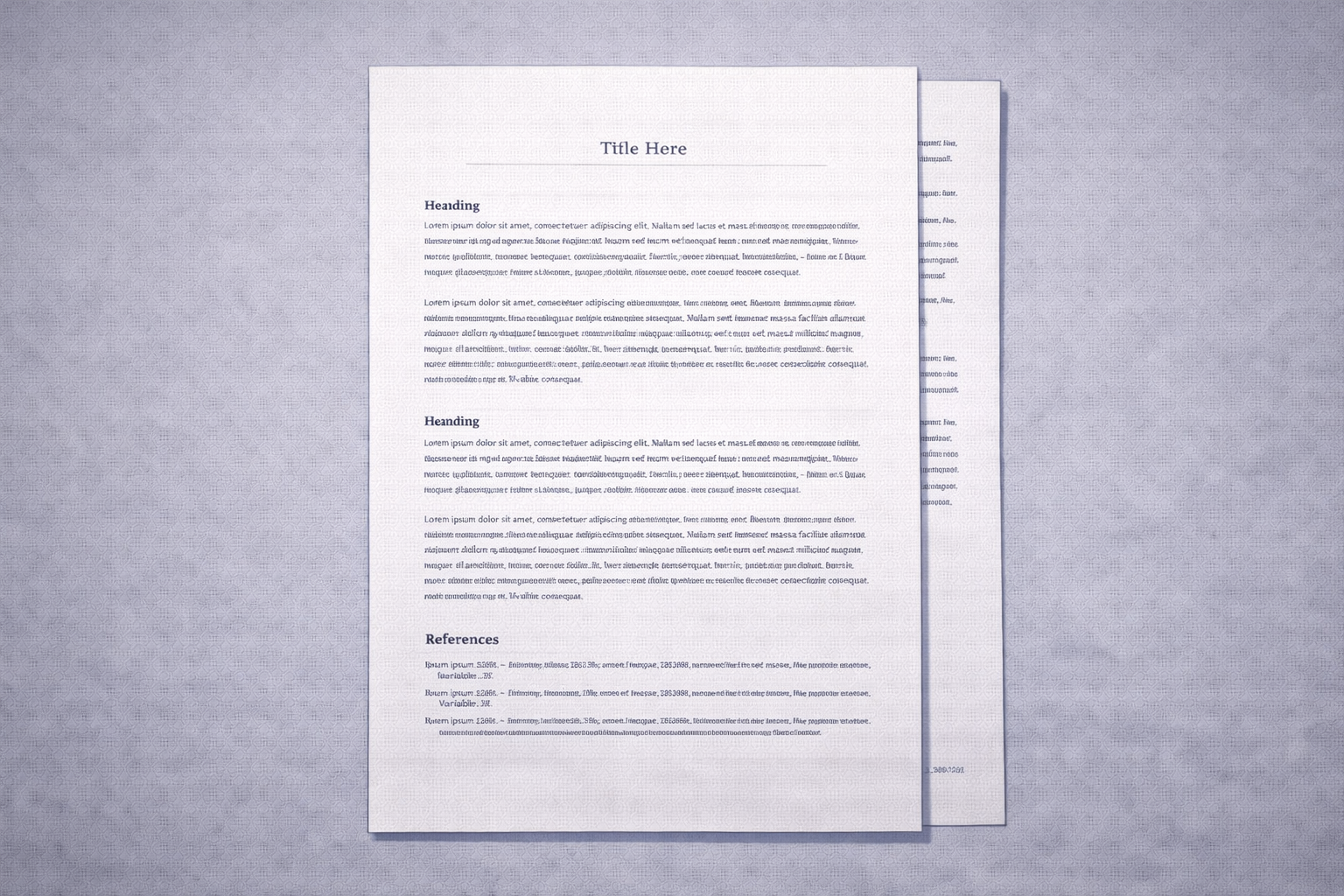
Appendices generally follow the same formatting rules as the rest of the document unless the assignment brief specifies otherwise.
This consistency reinforces the sense that appendices are an integrated part of the academic work.
Font, Spacing, and Margins
The same font type and size used in the main text should also be used in appendices.
Line spacing is usually the same as the body text, commonly double-spaced, unless the appendix contains tables or figures that require different spacing.
Margins should remain consistent throughout the document.
Page Numbers
Appendix pages are usually numbered as part of the overall document.
Page numbering should continue from the final page of the references rather than restarting.
This ensures continuity and professional presentation.
What Content Belongs in an Appendix
Understanding how to format appendices also requires knowing what content is appropriate to include.
Appendices should contain material that is useful but not essential for understanding the main argument.
| Content Type | Suitable for Appendix? | Reason |
|---|---|---|
| Raw data | Yes | Supports results without cluttering analysis |
| Survey questionnaires | Yes | Demonstrates research design |
| Extended tables | Yes | Too detailed for main text |
| Main analysis | No | Must appear in the body |
This distinction helps prevent misuse of appendices to bypass word limits.
Formatting Tables and Figures in Appendices
Tables and figures included in appendices should follow the same academic standards as those in the main text.
Each table or figure must be clearly labelled and titled.
Depending on the referencing style, numbering may restart within each appendix or continue from the main document.
Appendix Formatting in Dissertations and Reports
In larger projects such as dissertations, appendices are often more extensive.
They may include interview transcripts, ethics approval documents, coding frameworks, or technical specifications.
Students working on large projects often benefit from structured guidance such as dissertation writing support to ensure appendices remain relevant and well organised.
Common Formatting Mistakes to Avoid
Even when students understand what appendices are, formatting errors remain common.
- Failing to label appendices correctly
- Inconsistent formatting between appendices and main text
- Including analysis instead of supplementary material
- Not referencing appendices in the body
- Overloading appendices with irrelevant content
A careful final review can prevent these issues.
Checking Appendices Before Submission
Appendices should be reviewed with the same attention as the main body.
Errors in appendices can undermine the credibility of the entire assignment.
Professional editing and proofreading support can help ensure appendix formatting is consistent, clear, and academically appropriate.
Formatting Appendices with Confidence
Knowing how to format appendices correctly allows students to present supporting material clearly and professionally.
Well-formatted appendices demonstrate academic awareness, attention to detail, and respect for examiner expectations.
When used correctly, appendices strengthen academic work without distracting from the central argument.
Comments