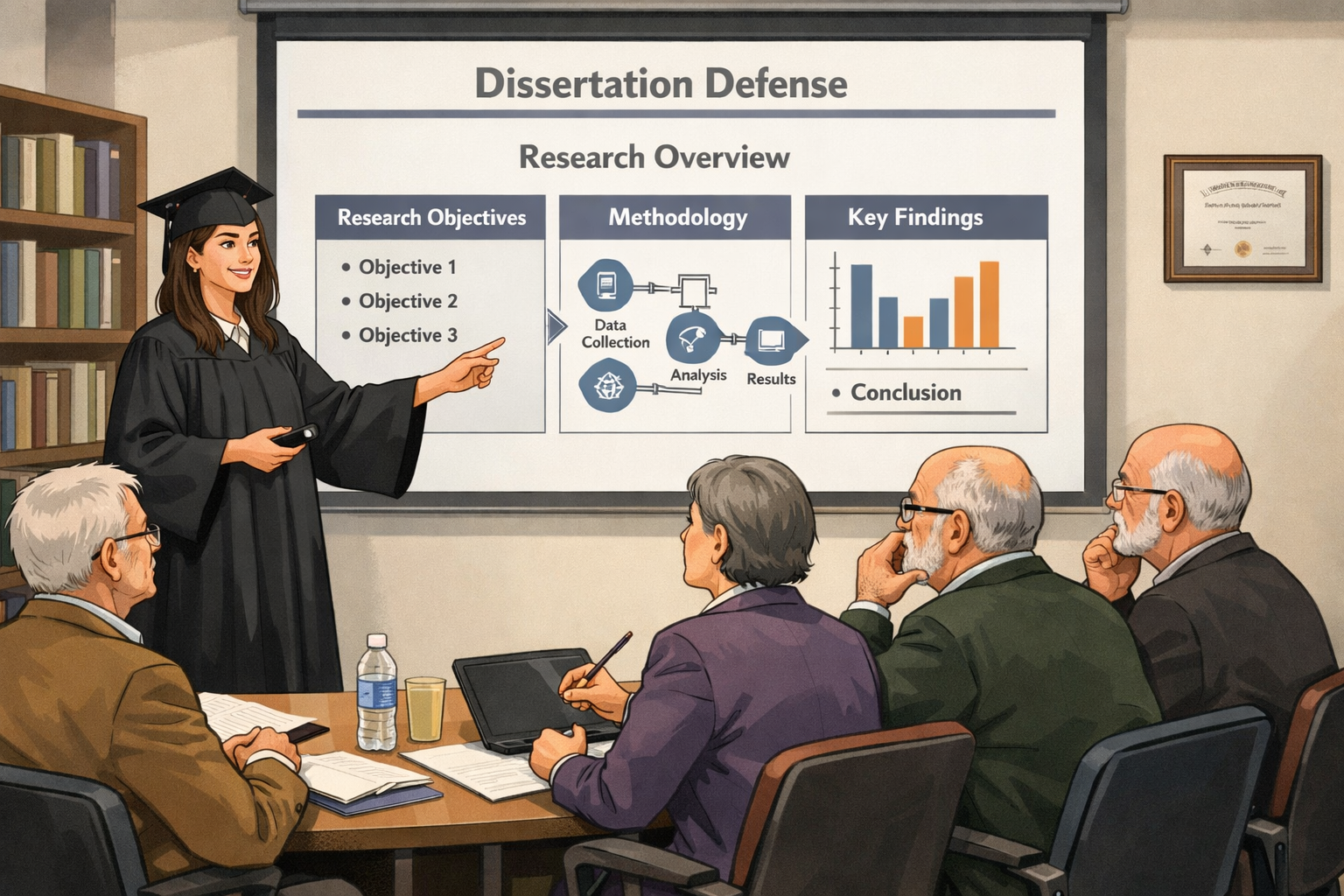
The dissertation defense represents the final stage of a long academic journey. After years of research, analysis, and writing, graduate students must present and justify their work before a panel of academic experts. Understanding how to prepare for dissertation defense is essential for demonstrating research competence and successfully completing a graduate degree.
A dissertation defense evaluates not only the written dissertation but also the candidate's ability to explain, defend, and contextualize their research. During the defense, students must demonstrate that they understand their research topic deeply, can justify methodological decisions, and can engage critically with questions from examiners.
This guide explains how dissertation defenses typically work, what examiners expect, and how graduate students can prepare effectively for this important academic milestone.
Understanding the Purpose of a Dissertation Defense
The dissertation defense serves as a formal examination of the student's research and scholarly understanding. It provides an opportunity for the candidate to present their work, explain the research process, and demonstrate their contribution to the academic field.
Examiners evaluate several aspects of the research during the defense. These include the originality of the research question, the strength of the literature review, the appropriateness of the methodology, and the interpretation of results.
Rather than viewing the defense as an adversarial process, students should understand it as an academic discussion where they demonstrate expertise in their research area.
A dissertation defense evaluates both the quality of the research and the researcher's understanding of their work.
Typical Structure of a Dissertation Defense
Although the exact format may vary between universities, most dissertation defenses follow a similar structure. Knowing what to expect helps students prepare their presentation and anticipate potential questions.
| Stage | Description |
|---|---|
| Research Presentation | The student summarizes the research problem, methodology, and findings. |
| Question and Answer Session | Committee members ask questions about the research. |
| Discussion of Contributions | The candidate explains the significance of the study. |
| Committee Deliberation | Examiners privately discuss the outcome. |
| Final Decision | The committee announces approval or required revisions. |
Understanding this structure helps students organize their preparation effectively.
How to Prepare Your Dissertation Defense Presentation
The defense presentation is often the first part of the examination and plays a crucial role in shaping the discussion that follows. A clear and well structured presentation helps the committee understand the research quickly.
Students should focus on the most important aspects of their research rather than attempting to summarize every detail of the dissertation. The presentation should highlight the research problem, methodology, findings, and contributions.
Key Components of a Strong Defense Presentation
Most successful dissertation presentations include the following elements:
- Introduction to the research problem
- Research objectives or questions
- Overview of the literature and theoretical framework
- Description of the research methodology
- Summary of key findings
- Explanation of the study’s contribution to the field
This structure allows the committee to follow the research narrative clearly.
Reviewing Your Dissertation Before the Defense
Carefully reviewing the dissertation is one of the most important preparation steps. Students should reread their entire dissertation and be prepared to explain each major research decision.
Examiners often ask questions about why certain research methods were chosen, how data were interpreted, and how conclusions were drawn. Being familiar with these aspects of the research allows students to respond confidently.
Students should also review relevant literature to ensure they can discuss how their research relates to existing scholarship.
Common Questions Asked During Dissertation Defenses
While every defense is different, certain types of questions appear frequently during dissertation examinations. Preparing answers to these questions can help students feel more confident.
Examiners often ask about:
- The motivation behind the research topic
- The significance of the research problem
- Theoretical frameworks used in the study
- Reasons for choosing specific research methods
- Interpretation of key findings
- Limitations of the study
- Suggestions for future research
Practicing responses to these questions with supervisors or peers can significantly improve preparation.
Practicing for the Dissertation Defense
Practice is essential for building confidence before the defense. Many universities encourage students to conduct mock defenses where they present their research and answer questions in a simulated environment.
Practicing the presentation helps students refine their explanations and identify areas that may require further clarification. It also helps them manage time effectively during the presentation.
Students should aim to communicate their research clearly and concisely while demonstrating confidence in their work.
Common Mistakes Students Should Avoid
Even well prepared students sometimes make avoidable mistakes during their defense. Being aware of these mistakes can help students maintain clarity and professionalism throughout the examination.
Common mistakes include:
- Presenting too much information in the presentation
- Becoming defensive when answering questions
- Failing to acknowledge limitations of the research
- Memorizing answers instead of understanding the research deeply
- Providing unclear explanations of methodology
Maintaining a calm and thoughtful approach helps students respond effectively to examiner questions.
Strategies for Handling Difficult Questions
Some questions during the defense may be unexpected or challenging. When this happens, students should take a moment to think carefully before responding.
If a question is unclear, it is acceptable to ask the examiner for clarification. This ensures that the response addresses the intended issue. Students should also acknowledge limitations honestly rather than attempting to defend every aspect of the research.
Acknowledging research limitations demonstrates critical thinking and academic maturity.
Responding thoughtfully and respectfully helps create a productive academic discussion.
Building Confidence Before Your Dissertation Defense
Confidence during the defense comes primarily from preparation. Students who understand their research deeply and practice explaining it clearly are better able to respond to examiner questions.
It is also helpful to remember that the defense committee has already reviewed the dissertation. In most cases, the defense is an opportunity for discussion and clarification rather than a confrontation.
Approaching the defense with preparation and confidence allows students to demonstrate their expertise and scholarly development.
Final Preparation Strategies for a Successful Defense
Preparing for a dissertation defense requires careful review of the research, thoughtful preparation of the presentation, and practice responding to potential questions. By understanding the structure of the defense and anticipating examiner expectations, students can approach the examination with greater confidence.
Successful defenses often reflect not only strong research but also clear communication and critical reflection on the study. Students who prepare thoroughly are well positioned to demonstrate the value of their research and complete the final stage of their graduate degree successfully.
Ultimately, learning how to prepare for dissertation defense is an important step in becoming an independent scholar capable of contributing meaningful knowledge to an academic field.


Comments