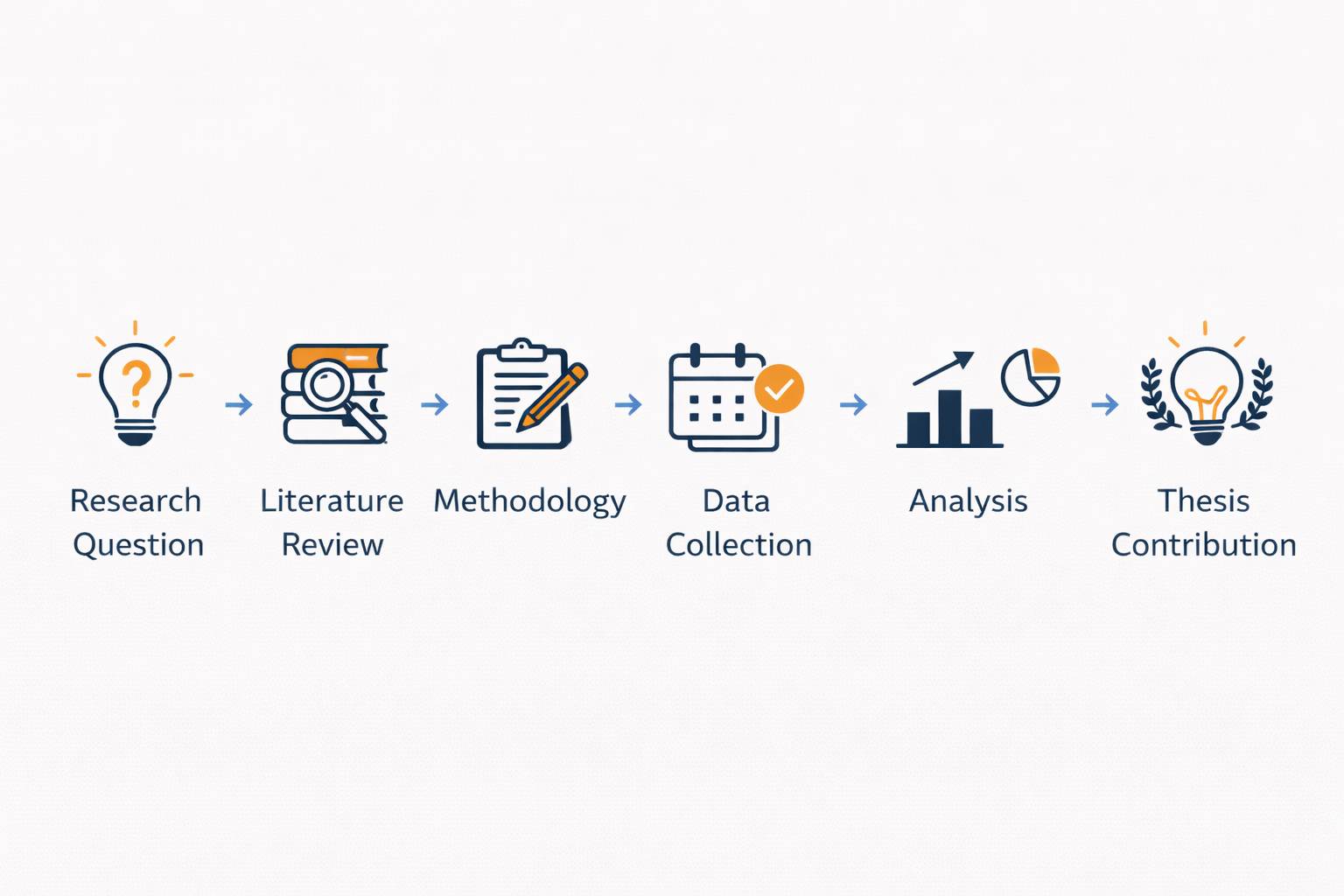
Completing a doctoral dissertation is one of the most intellectually demanding milestones in higher education. A PhD dissertation requires years of sustained research, critical analysis, theoretical contribution, and scholarly writing. Because the expectations are significantly higher than undergraduate or master’s work, many doctoral candidates actively seek PhD dissertation help to navigate the complexity of the research process.
PhD dissertation help does not replace independent scholarship. Instead, it typically involves structured academic support such as research design consultation, literature review guidance, methodological feedback, editing assistance, and formatting review. When used responsibly, this type of support can help doctoral students strengthen their research clarity and academic presentation.
This guide explains what PhD dissertation help involves, the structure of a doctoral thesis, the most common challenges faced by PhD candidates, and how strategic academic support can assist throughout the research journey.
Understanding the Purpose of a PhD Dissertation
A PhD dissertation differs from undergraduate or master’s theses because it must demonstrate an original contribution to knowledge. This means that the research should address an unresolved problem, propose a new theoretical perspective, or generate novel empirical findings within a field of study.
Doctoral research requires extensive engagement with existing scholarship and the development of independent intellectual arguments. The dissertation therefore becomes the primary evidence that the candidate is capable of conducting advanced academic research.
A PhD dissertation must demonstrate originality, methodological rigor, and sustained engagement with scholarly literature.
This level of complexity explains why structured PhD dissertation help can be valuable for many doctoral students.
The Typical Structure of a PhD Dissertation
Although dissertation structures vary across disciplines and universities, most doctoral theses follow a similar academic framework. This structure allows examiners to evaluate the research systematically.
| Section | Purpose |
|---|---|
| Introduction | Defines research problem, objectives, and significance |
| Literature Review | Analyzes existing scholarship and theoretical debates |
| Methodology | Explains research design and data collection methods |
| Research Findings | Presents original data or analytical results |
| Discussion | Interprets findings and connects them to research questions |
| Conclusion | Summarizes contributions and suggests future research |
Each chapter must demonstrate rigorous reasoning, clear argumentation, and consistent methodological justification.
Why Doctoral Candidates Seek PhD Dissertation Help
Even highly capable doctoral researchers encounter difficulties during the dissertation process. Unlike earlier academic work, a PhD dissertation often spans several years of research and writing. During this period, students must balance research responsibilities with teaching duties, conferences, and publication expectations.
Common challenges include:
- Defining a precise and original research question
- Managing large bodies of scholarly literature
- Designing rigorous research methodologies
- Interpreting complex qualitative or quantitative data
- Maintaining writing consistency across long chapters
Professional PhD dissertation help often focuses on addressing these challenges through academic mentoring, editing, or research consultation.
Developing a Strong Research Question
A clear and focused research question is the foundation of a successful PhD dissertation. Many doctoral candidates begin with broad intellectual interests but struggle to transform these into specific research problems.
Effective research questions typically share several characteristics:
- They address a clear gap in existing scholarship
- They are analytically focused rather than descriptive
- They are feasible within the available research timeframe
- They contribute to ongoing theoretical or empirical debates
For example, a broad topic such as “digital media and politics” may evolve into a more focused research question like: “How do algorithmic recommendation systems influence political polarization in online communities?”
Focused research questions guide every stage of dissertation development.
The Importance of the Literature Review
The literature review is one of the most intellectually demanding sections of a doctoral dissertation. Rather than summarizing individual sources, this chapter must demonstrate deep understanding of the field’s theoretical debates, research methodologies, and unresolved questions.
A strong literature review achieves several objectives:
- Situates the research within existing scholarship
- Identifies theoretical frameworks relevant to the study
- Highlights contradictions or gaps in current knowledge
- Justifies the significance of the research project
Doctoral-level literature reviews typically involve hundreds of scholarly sources and extensive synthesis of academic arguments.
Choosing the Right Research Methodology
Methodology plays a central role in demonstrating research credibility. The methodology chapter must clearly explain how data was collected, why particular methods were selected, and how reliability and validity were ensured.
PhD research methodologies commonly fall into several categories:
| Method Type | Typical Research Techniques |
|---|---|
| Qualitative | Interviews, ethnography, thematic analysis |
| Quantitative | Statistical modelling, surveys, experimental design |
| Mixed Methods | Combination of qualitative and quantitative data analysis |
The methodology must align closely with the research question and disciplinary standards.
Maintaining Academic Writing Quality in a PhD Dissertation
Because doctoral dissertations can exceed 80,000 words in many disciplines, maintaining writing clarity across chapters becomes a significant challenge. Even strong researchers may struggle to present complex arguments consistently across such a long document.
PhD dissertation help often focuses on improving academic writing through:
- Logical chapter organization
- Clear explanation of theoretical frameworks
- Consistent academic tone
- Accurate citation and referencing
These improvements ensure that the dissertation communicates ideas effectively to examiners and scholarly readers.
Common Problems in Doctoral Dissertations
Understanding common doctoral research mistakes can help candidates avoid significant setbacks during the dissertation process.
- Research questions that are insufficiently focused
- Literature reviews lacking critical synthesis
- Methodology sections with weak justification
- Disconnect between research findings and theoretical arguments
- Inconsistent academic referencing
Addressing these issues early significantly improves the overall quality of the dissertation.
Using PhD Dissertation Help Responsibly
Responsible use of PhD dissertation help focuses on strengthening academic research rather than replacing the doctoral candidate’s work. Ethical academic support typically involves consultation, editing assistance, and structural feedback rather than producing original research on behalf of the student.
Constructive support may include:
- Methodological feedback from experienced researchers
- Editing and proofreading of dissertation chapters
- Guidance on literature review organization
- Advice on argument development and research clarity
These forms of support complement supervision while maintaining the candidate’s intellectual ownership of the research.
Navigating the PhD Dissertation Journey Successfully
PhD dissertation help can play an important role in supporting doctoral candidates through one of the most challenging research processes in academia. By understanding dissertation structure, developing a clear research question, conducting rigorous literature review, and applying appropriate methodology, candidates can produce research that contributes meaningfully to their field.
The most successful doctoral dissertations combine intellectual independence with strategic academic guidance. With careful planning, sustained research discipline, and targeted support when necessary, doctoral candidates can complete dissertations that demonstrate both originality and scholarly excellence.



Comments