
A PhD thesis is not simply a long research document; it is a structured academic argument that demonstrates originality, methodological competence, and theoretical contribution. Examiners assess not only what you have discovered, but how clearly, logically, and rigorously your research is organised. For this reason, understanding the correct PhD thesis structure is essential from the earliest stages of doctoral study.
Many doctoral candidates struggle not because their research lacks merit, but because their thesis structure fails to communicate that merit effectively. Chapters may feel disconnected, arguments underdeveloped, or contributions unclear. A well-designed structure provides a framework that allows complex research to be understood, evaluated, and defended.
This guide explains the standard PhD thesis structure used across most universities, clarifies the purpose of each chapter, and highlights common structural mistakes to avoid.
What Examiners Expect from a PhD Thesis Structure
At doctoral level, structure is inseparable from scholarly credibility. Examiners read a thesis not as a collection of chapters, but as a single, coherent intellectual project. Each chapter must contribute clearly to answering the central research question or addressing the core research problem.
A strong PhD thesis structure demonstrates control over the research process. It shows that the candidate understands how theory, literature, methodology, analysis, and interpretation interact within their discipline.
Examiner expectation: A PhD thesis must present a logically sequenced argument that culminates in a clear, original contribution to knowledge.
While disciplinary conventions vary, the underlying structural logic of a PhD thesis remains broadly consistent across institutions.
Front Matter of a PhD Thesis
The front matter prepares the reader for the research that follows. Although it does not contain original argumentation, it plays a critical role in professional presentation and academic transparency.
Universities often specify exact formatting requirements for these sections, making careful attention essential.
- Title page
- Abstract
- Declaration of originality
- Acknowledgements
- Table of contents
- List of figures and tables
The abstract, in particular, is scrutinised closely because it summarises the entire thesis in condensed form.
Chapter 1: Establishing the Research Problem
The opening chapter introduces the intellectual context of the study and defines the research problem with precision. This chapter explains why the research matters, what gap it addresses, and how it contributes to existing scholarship.
A strong opening chapter moves from a broad disciplinary context to a narrowly defined research question. It should also outline the thesis structure, providing readers with a roadmap of what follows.
Common elements in this chapter include:
- Research background and context
- Problem statement
- Research aims and questions
- Significance of the study
- Overview of thesis chapters
This chapter sets the intellectual tone for the entire thesis.
Chapter 2: Literature Review and Theoretical Framework
The literature review demonstrates the candidate’s mastery of existing scholarship. It is not a summary of sources, but a critical synthesis that positions the research within ongoing academic debates.
In many disciplines, this chapter also introduces the theoretical framework guiding the study. The framework explains how key concepts are defined and how they shape analysis.
A well-structured literature review:
- Identifies major themes and debates
- Evaluates strengths and limitations of existing studies
- Justifies the research gap
- Connects theory directly to the research question
Weak literature reviews often lack critical engagement or fail to establish a clear rationale for the study.
Chapter 3: Research Design and Methodology
The methodology chapter explains how the research was conducted and why those methods were appropriate. Examiners use this chapter to assess rigor, validity, and ethical awareness.
This chapter should be written with precision and transparency, allowing the study to be evaluated or replicated where appropriate.
Key components typically include:
- Research design and approach
- Data collection methods
- Sampling strategy
- Analytical procedures
- Ethical considerations
Methodological justification is as important as description; candidates must explain why alternatives were not used.
Results or Findings Chapters
Findings chapters present the data generated through the research process. Depending on discipline and methodology, results may appear in a single chapter or across multiple chapters.
The purpose here is clarity rather than interpretation. Data should be organised logically and presented in a way that aligns directly with the research questions.
Quantitative theses may rely on tables and statistical outputs, while qualitative theses often use thematic organisation supported by excerpts or case material.
Analysis and Discussion Chapters
In many theses, analysis and discussion are combined; in others, they appear as separate chapters. Regardless of format, this section is where intellectual contribution becomes most visible.
The discussion interprets findings in relation to theory and literature, explaining what the results mean and why they matter.
Critical warning: Describing findings without interpretation is a common reason for doctoral revisions.
Strong discussion chapters explicitly link results back to the research questions and theoretical framework.
Conclusion Chapter
The conclusion synthesises the entire thesis. It does not introduce new data, but instead consolidates insights and articulates contribution.
This chapter typically addresses:
- Summary of key findings
- Theoretical and practical contributions
- Limitations of the study
- Recommendations for future research
The conclusion reinforces the originality and significance of the doctoral research.
Back Matter: References and Appendices
The final sections of a PhD thesis ensure academic transparency and completeness. All cited works must appear in the reference list, formatted according to the required style guide.
Appendices include supplementary materials such as instruments, extended data, or ethical approvals that support the research but would disrupt the main narrative.
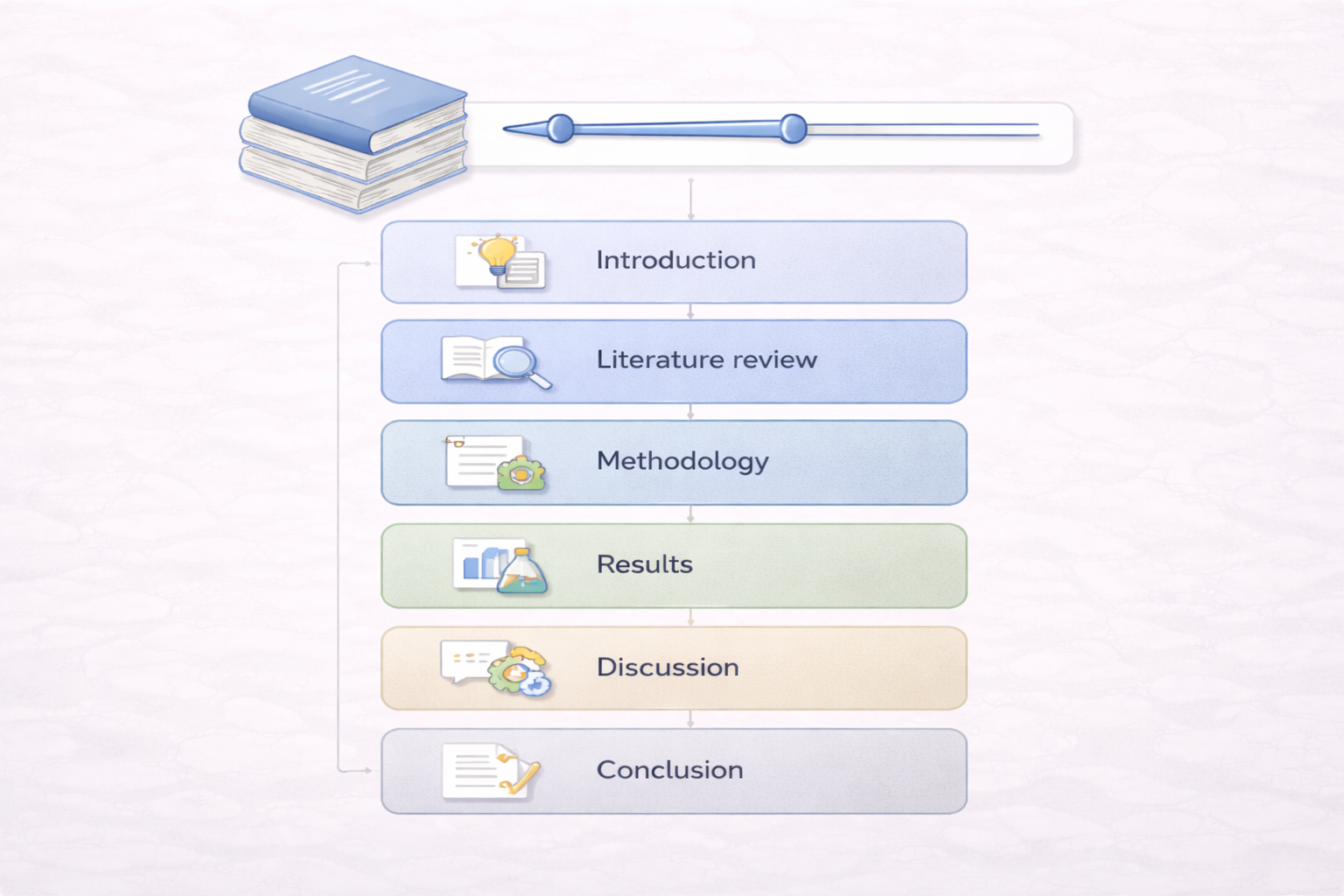
| Section | Purpose |
|---|---|
| Introduction | Defines research problem and scope |
| Literature Review | Positions research within existing scholarship |
| Methodology | Explains research design and methods |
| Findings | Presents data and results |
| Discussion | Interprets findings and contributions |
| Conclusion | Synthesises insights and implications |
This structure may be adapted slightly across disciplines, but the intellectual logic remains consistent.
Final Guidance on Structuring a PhD Thesis
A successful PhD thesis structure is not rigid, but it is intentional. Each chapter must serve a clear purpose and contribute directly to the overall research argument.
Doctoral candidates should view structure as a strategic tool rather than a bureaucratic requirement. When structure is clear, originality becomes visible and persuasive.
By designing and refining structure early, candidates reduce revision cycles and increase the likelihood of a successful viva.


Comments