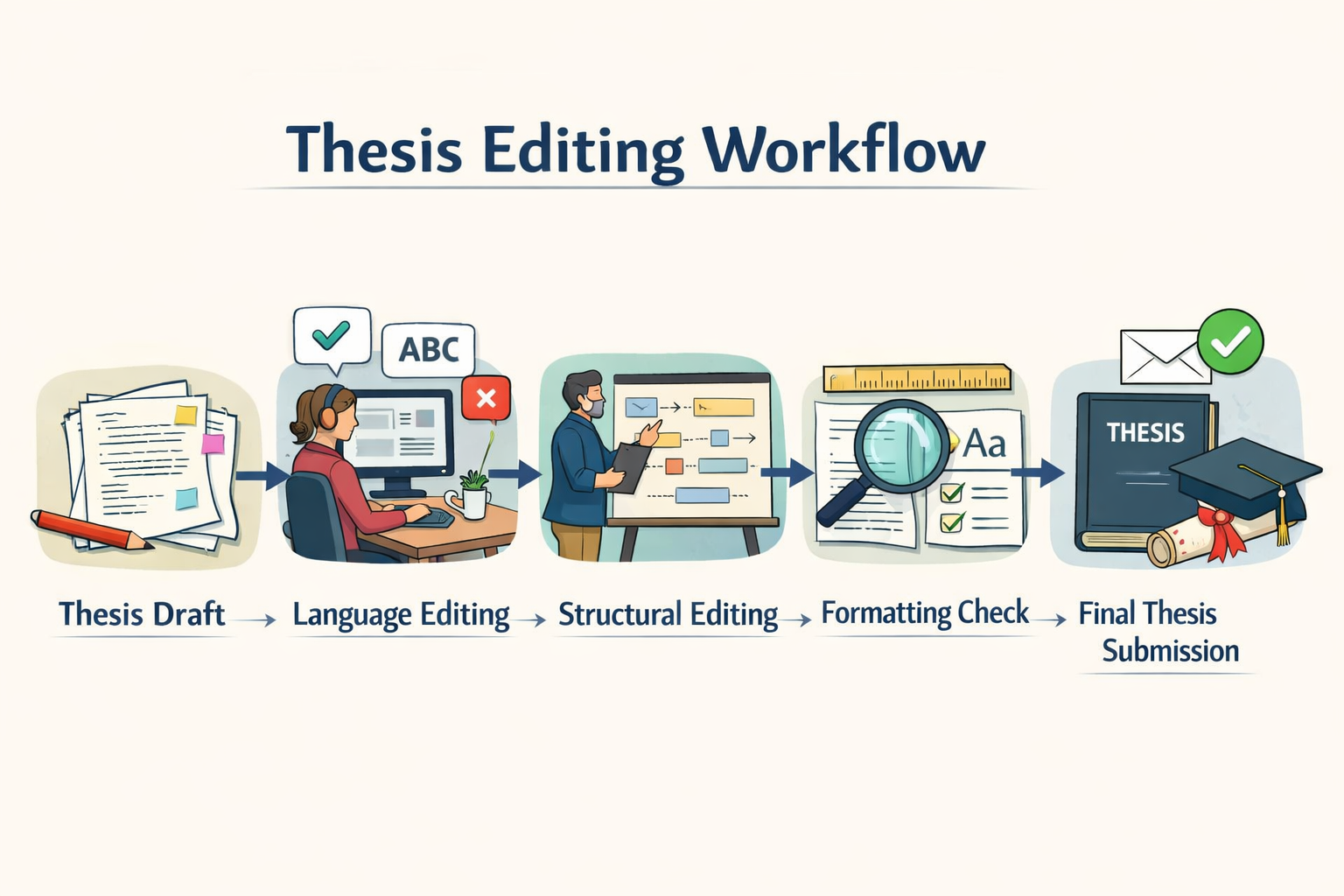
Writing a thesis is one of the most challenging academic tasks students encounter during their university education. Unlike shorter coursework assignments, a thesis requires sustained research, extensive literature review, methodological rigor, and the ability to present complex arguments across a long academic document. Because theses often exceed tens of thousands of words, maintaining consistent clarity and academic tone can be difficult. For this reason, many students seek a thesis editing service to refine their final manuscript before submission.
A thesis editing service focuses on improving the clarity, coherence, and readability of academic writing without altering the original ideas of the author. Professional academic editors review the thesis carefully to correct language errors, improve sentence structure, and ensure that the argument flows logically throughout the document. When used responsibly, editing helps students present their research in the most effective and professional way possible.
This guide explains what thesis editing involves, why it is important for academic success, and how students can benefit from professional editing support when preparing their thesis for final submission.
Understanding the Role of Thesis Editing
Thesis editing takes place after the main research and writing stages are completed. At this point, the focus shifts from developing arguments to refining the way those arguments are presented. Even strong academic writers may overlook language errors or structural inconsistencies when working on a long document.
Editing ensures that the thesis communicates ideas clearly and maintains a consistent academic tone. By improving sentence clarity and correcting grammatical errors, editing helps ensure that examiners can easily understand the research and evaluate it fairly.
Thesis editing improves clarity, readability, and academic presentation while preserving the author’s original research and arguments.
Careful editing therefore strengthens the overall impact of the thesis without changing the intellectual contribution of the work.
What a Thesis Editing Service Typically Includes
A thesis editing service focuses on refining the technical and stylistic aspects of academic writing. The goal is to ensure that the thesis reads clearly and meets the formal standards expected in higher education.
Typical editing tasks include:
- Correcting grammar, spelling, and punctuation errors
- Improving sentence clarity and readability
- Ensuring consistency in terminology and academic tone
- Checking logical transitions between paragraphs and chapters
- Reviewing referencing consistency and citation formatting
These improvements help students present their research in a clear and professional manner.
Different Levels of Thesis Editing
Academic editing services often provide different levels of editing depending on the needs of the student and the stage of the thesis.
| Editing Level | Main Focus |
|---|---|
| Proofreading | Correcting grammar, spelling, and punctuation errors |
| Language Editing | Improving clarity, vocabulary, and sentence structure |
| Structural Editing | Enhancing argument flow and paragraph organization |
| Formatting Review | Ensuring correct citation and referencing style |
The level of editing required depends on the quality of the thesis draft and the expectations of the university.
Why Editing Is Essential for Academic Theses
Academic examiners evaluate theses based not only on research quality but also on clarity of presentation. If a thesis contains unclear sentences, grammatical errors, or inconsistent terminology, it may become difficult for readers to fully understand the research arguments.
Editing improves the overall readability of the thesis and ensures that the research findings are presented clearly. By removing language distractions, editing allows the examiner to focus on the intellectual contribution of the work.
Additionally, universities often require theses to follow strict formatting and citation guidelines. Editing helps ensure that these guidelines are applied consistently across the entire document.
Common Writing Problems Found in Theses
Because theses are long and complex documents, certain writing problems frequently appear during the drafting process. Students who spend months working on their research may overlook these issues when reviewing their own writing.
Typical problems include:
- Repetitive phrasing across chapters
- Unclear connections between paragraphs
- Overly long or complicated sentences
- Inconsistent use of key terminology
- Incorrect citation formatting
Editing helps correct these issues and ensures that the thesis maintains consistent academic quality.
Maintaining Academic Tone and Clarity
Academic writing requires a formal tone and precise language. Informal expressions, ambiguous wording, or inconsistent terminology can weaken the clarity of the thesis argument.
Editors improve academic tone by refining vocabulary and adjusting sentence structure to enhance readability. These improvements help ensure that the thesis communicates complex ideas effectively.
Clear academic writing is especially important in sections such as the literature review, methodology, and discussion chapters, where analytical reasoning must be presented logically.
Ensuring Accurate Referencing and Citation
Referencing accuracy is a critical component of academic writing because it demonstrates proper engagement with scholarly sources and maintains academic integrity. Many theses contain hundreds of citations, which makes consistency essential.
| Referencing Style | Typical Academic Fields |
|---|---|
| APA | Psychology, education, social sciences |
| Harvard | Business, economics, management |
| Chicago | History and humanities |
| MLA | Literature and cultural studies |
Editing services often verify that citations and reference lists follow the correct formatting style required by the university.
Benefits of Professional Thesis Editing
Professional thesis editing offers several advantages for students preparing to submit their research projects. Because editors approach the document with fresh perspective, they can identify errors that the author may overlook.
Key benefits include:
- Improved grammar and language accuracy
- Clearer academic presentation
- Better logical flow between chapters
- Consistent referencing and formatting
These improvements help ensure that the thesis reflects the effort invested in the research process.
Using Thesis Editing Services Responsibly
Using a thesis editing service is widely accepted within academic guidelines when the service focuses on language and formatting improvements rather than producing new research content. Ethical editing preserves the author’s intellectual work while improving the presentation of the document.
Responsible editing services typically provide:
- Grammar and punctuation correction
- Sentence clarity improvements
- Formatting consistency checks
- Minor stylistic suggestions for readability
These forms of support help students prepare their thesis for submission while maintaining academic integrity.
Preparing a Thesis for Final Submission
The final stages of thesis preparation involve carefully reviewing the entire document to ensure that it meets academic standards. Editing represents an essential step in refining the thesis and ensuring that the research is presented clearly and professionally.
A thesis editing service can help students eliminate language errors, improve structural clarity, and ensure consistent formatting across chapters. When the thesis is carefully edited, examiners can focus on evaluating the research itself rather than being distracted by technical writing issues.
For this reason, editing plays an important role in presenting academic research with precision, clarity, and scholarly professionalism.



Comments