
Completing a thesis represents the final stage of many undergraduate and postgraduate programs. After months of research, analysis, and writing, students must ensure that their thesis communicates ideas clearly and professionally. However, long academic documents often contain small language errors, formatting inconsistencies, and unclear sentences that reduce the overall quality of the work. For this reason, many students consider using thesis proofreading services for students before submitting their final manuscript.
Proofreading focuses on correcting surface level language issues such as grammar, punctuation, spelling, and formatting. Unlike editing, proofreading does not change the author's ideas or arguments. Instead, it ensures that the thesis reads smoothly and meets the language standards expected by academic examiners.
This guide explains what thesis proofreading services include, why they are important for academic writing, and how students can choose reliable proofreading support for their final research projects.
Why Proofreading Is Important for Academic Theses
A thesis is typically one of the longest academic documents a student writes during their education. Depending on the degree level, theses may range from 10,000 words for undergraduate projects to over 20,000 words for master's research. Documents of this length are likely to contain minor language errors that the writer may overlook during revision.
Proofreading helps identify these errors and correct them before submission. Even strong research can appear less credible when the writing contains grammatical mistakes or inconsistent formatting. Professional proofreading ensures that the thesis presents research ideas clearly and professionally.
Clear writing also helps examiners evaluate the research more effectively. When language errors are minimized, the focus remains on the quality of the research rather than on technical writing issues.
A well proofread thesis allows examiners to focus on the research rather than language errors.
What Thesis Proofreading Services Typically Include
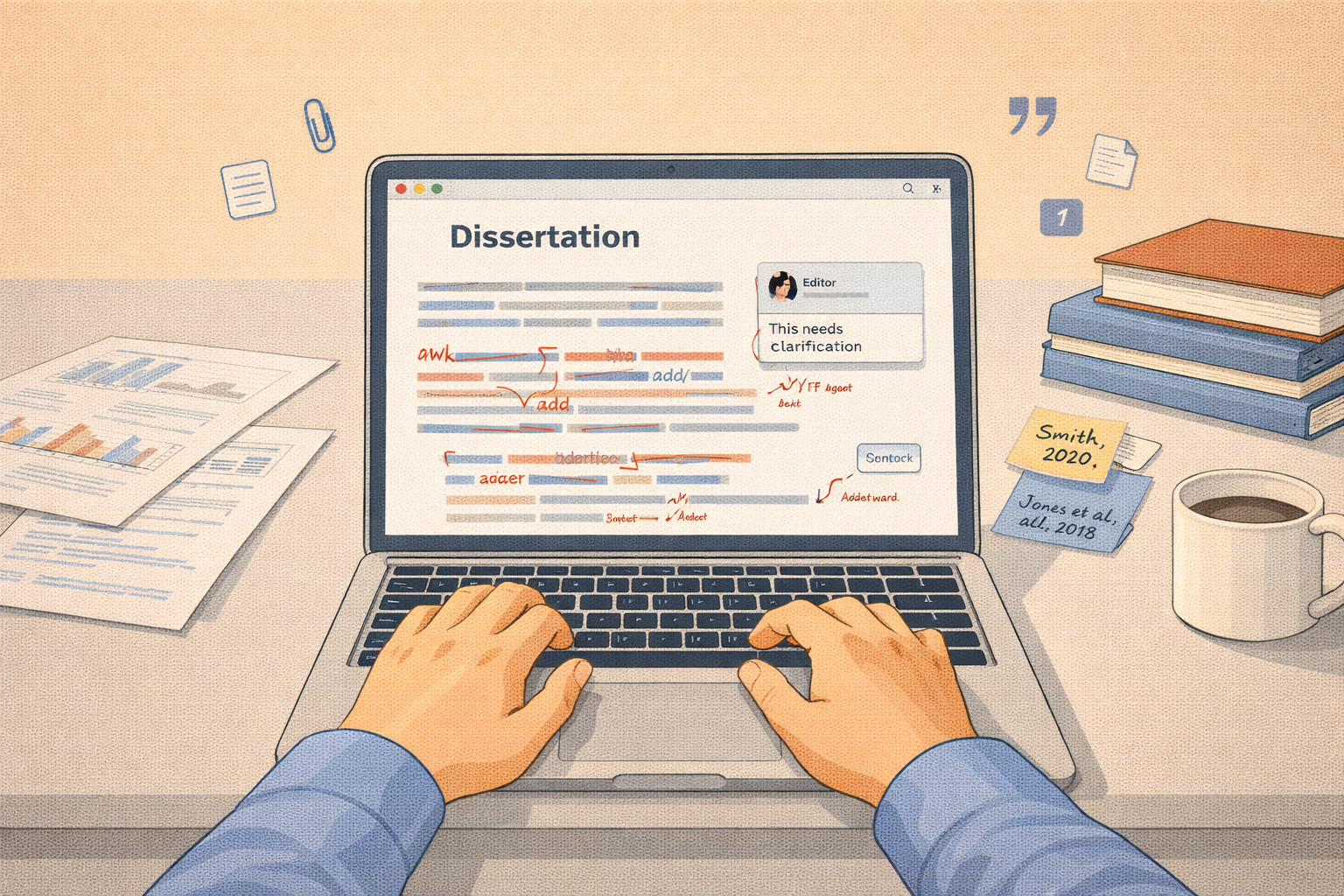
Proofreading focuses on refining the final version of a thesis after the main writing and editing process has been completed. Proofreaders carefully review the document to identify language and formatting issues that may affect readability.
Most thesis proofreading services include the following tasks:
- Correction of grammar and punctuation errors
- Spelling corrections
- Consistency in terminology and language usage
- Sentence clarity improvements
- Formatting consistency checks
- Basic citation and reference formatting verification
These corrections ensure that the thesis appears polished and professional while preserving the author's original research ideas.
Difference Between Proofreading and Thesis Editing
Many students confuse proofreading with editing. Although both processes improve academic writing, they address different aspects of the document.
| Service Type | Main Purpose |
|---|---|
| Proofreading | Corrects grammar, spelling, punctuation, and formatting issues. |
| Copy Editing | Improves sentence clarity and academic writing style. |
| Substantive Editing | Enhances argument structure and overall organization. |
Proofreading is usually the final step in the thesis preparation process, performed after all revisions and supervisor feedback have been incorporated.
Benefits of Professional Thesis Proofreading
Professional proofreading offers several advantages for students preparing their final academic submissions. These benefits extend beyond simple error correction and contribute to the overall quality of the thesis.
Key benefits include:
- Improved readability and clarity
- Consistent academic writing style
- Reduction of grammatical and punctuation errors
- More professional presentation of research
- Greater confidence during thesis submission
These improvements help ensure that the thesis meets university standards and creates a strong academic impression.
When Students Should Use Thesis Proofreading Services
The ideal time to use proofreading services is after completing all major revisions to the thesis. At this stage, the research arguments, methodology, and analysis have already been finalized.
Proofreading is particularly useful before the final submission stage when the thesis must meet strict formatting and language requirements. Some students also request proofreading after receiving feedback from supervisors to ensure that revisions have been implemented correctly.
Using proofreading services at the right stage helps students avoid unnecessary revisions and ensures the thesis is ready for submission.
How to Choose Reliable Thesis Proofreading Services
Because a thesis is an important academic document, students should carefully evaluate proofreading providers before requesting services. Reliable proofreading services should demonstrate professionalism, academic expertise, and respect for student confidentiality.
Several criteria can help students identify trustworthy proofreading support.
| Evaluation Factor | Reason for Importance |
|---|---|
| Academic Proofreading Experience | Ensures familiarity with academic writing standards. |
| Subject Knowledge | Editors understand discipline specific terminology. |
| Confidentiality Protection | Protects student research and personal information. |
| Transparent Pricing | Allows students to plan proofreading within their budget. |
| Original Work Protection | Ensures the student's research remains unchanged. |
Students should prioritize services that focus on language correction rather than rewriting the thesis.
Ethical Considerations in Thesis Proofreading
Academic integrity is essential in higher education. Proofreading services must respect the student's intellectual ownership of their research and avoid making changes that alter the meaning of the thesis.
Ethical proofreading focuses only on language accuracy, readability, and formatting consistency. The proofreader does not add new arguments, change the interpretation of findings, or rewrite sections of the thesis.
Proofreading improves the presentation of research without changing the research itself.
This approach ensures that the thesis remains the student's original academic work.
How Proofreading Improves Examiner Evaluation
Examiners assess theses based on research quality, analytical depth, and clarity of argument. Language errors can make it difficult for examiners to follow complex ideas and may reduce the overall impression of the work.
Proofreading improves readability and ensures that arguments are communicated clearly. When the language is polished and consistent, examiners can focus on evaluating the research contribution rather than identifying technical writing issues.
This clarity can strengthen the impact of the thesis and support a positive evaluation outcome.
Preparing a Thesis That Meets Academic Standards
Thesis proofreading services for students provide valuable support during the final stage of academic writing. By correcting grammar, improving clarity, and ensuring formatting consistency, proofreading helps transform a completed draft into a polished academic document.
Students who combine strong research with careful proofreading are more likely to present their ideas clearly and professionally. When used responsibly, proofreading services help ensure that the quality of the writing reflects the quality of the research itself.
Ultimately, a well proofread thesis allows students to submit their work with confidence and ensures that examiners focus on the significance of the research contributions presented.


Comments