
Completing a thesis is one of the most demanding academic achievements in higher education. After months of research, analysis, and writing, the final stage of the dissertation process often involves careful revision and proofreading. At this point, many postgraduate researchers seek thesis proofreading services for students to ensure that their work meets the highest academic standards before submission.
Proofreading is not simply a cosmetic step. It is a critical stage that refines the presentation of research, eliminates technical writing errors, and ensures that academic arguments are communicated clearly. Even well designed research can appear less credible if the thesis contains grammatical mistakes, inconsistent formatting, or unclear language.
This article explains how thesis proofreading services support students, what professional proofreaders typically review, and why proofreading plays an essential role in preparing a dissertation for final submission.
Why Proofreading Is Essential in Thesis Preparation
During the thesis writing process, students usually focus heavily on research development, data analysis, and argument construction. As a result, language accuracy and stylistic consistency may receive less attention during the drafting stage.
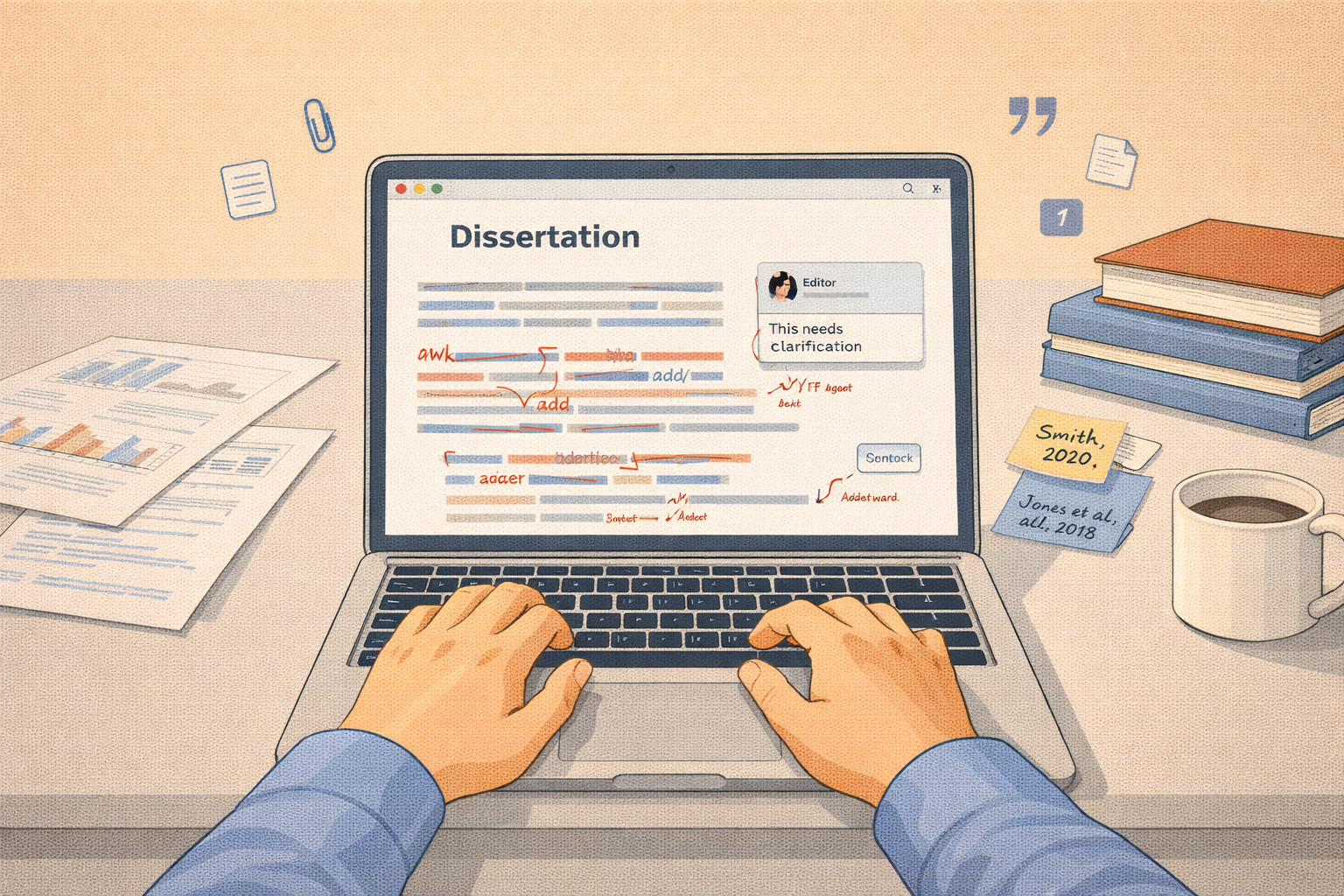
Proofreading helps address these issues by providing a detailed review of the document's language, grammar, punctuation, and formatting. A professional proofreader examines the thesis carefully to ensure that it meets academic writing standards.
Universities expect postgraduate research to demonstrate clarity, precision, and professionalism. A carefully proofread dissertation ensures that examiners can focus on evaluating the research contribution rather than being distracted by writing errors.
Proofreading strengthens the presentation of research by eliminating technical writing errors while preserving the author's original ideas.
What Thesis Proofreading Services for Students Typically Include
Professional proofreading services focus on correcting language issues while preserving the author's academic voice. Unlike editing, which may involve restructuring sentences or reorganizing content, proofreading concentrates on technical accuracy and consistency.
Students preparing final dissertations often benefit from professional support such as the proofreading services available at Epic Essay, which focus on refining academic manuscripts before submission.
| Proofreading Area | Description | Purpose |
|---|---|---|
| Grammar and Syntax | Correcting sentence structure and grammatical errors | Ensures linguistic accuracy |
| Punctuation | Checking commas, apostrophes, and punctuation consistency | Improves readability |
| Spelling | Identifying typographical errors and spelling inconsistencies | Maintains professionalism |
| Citation Formatting | Verifying references follow required citation style | Ensures academic compliance |
| Formatting Consistency | Checking headings, numbering, and layout | Matches university submission guidelines |
These elements collectively ensure that the final dissertation meets institutional formatting and language expectations.
The Difference Between Editing and Proofreading
Many students confuse proofreading with editing, but the two processes serve different purposes within academic writing. Editing typically focuses on improving the structure and clarity of arguments, while proofreading occurs during the final stage of document preparation.
Proofreading focuses on technical corrections rather than conceptual changes. It does not alter the research findings, arguments, or analytical structure of the thesis.
| Feature | Editing | Proofreading |
|---|---|---|
| Main Focus | Improving structure and clarity | Correcting grammar and formatting errors |
| Stage in Writing Process | During revision stage | Final pre submission stage |
| Content Changes | May restructure sentences or paragraphs | No changes to arguments or research |
| Purpose | Improve academic communication | Ensure technical accuracy |
Understanding this distinction helps students choose the appropriate form of academic support for their dissertation.
Common Issues Found During Thesis Proofreading
After working on a thesis for many months, it becomes difficult for authors to identify small writing errors in their own work. Familiarity with the text often causes students to overlook mistakes that a professional proofreader can quickly identify.
Some of the most common issues discovered during thesis proofreading include:
- Repetitive wording or sentence patterns
- Inconsistent citation formatting
- Incorrect verb tense in research descriptions
- Typographical errors in headings or references
- Minor formatting inconsistencies
Correcting these issues ensures that the final dissertation appears polished and professional.
Maintaining Academic Integrity During Proofreading
One of the most important principles of academic proofreading is maintaining the author's intellectual ownership of the work. Proofreading services must never alter the research findings, introduce new ideas, or modify the analytical content of the dissertation.
Instead, proofreaders focus exclusively on technical corrections that improve readability and consistency.
Responsible proofreading services operate according to strict academic ethics, ensuring that the student's research contribution remains unchanged.
Proofreading improves language accuracy without modifying the research arguments or conclusions of the thesis.
Preparing a Thesis for Final Submission
Before submitting a dissertation, students should carefully review their document to ensure it meets all institutional requirements. Universities often provide detailed formatting guidelines for thesis submissions, including requirements for margins, headings, and citation styles.
Students may also benefit from additional academic writing support resources such as the academic writing services provided by Epic Essay, which help students refine complex university assignments and research documents.
A thorough final review process typically includes:
- Checking grammar and punctuation accuracy
- Verifying reference list formatting
- Ensuring consistent chapter structure
- Confirming compliance with university formatting guidelines
- Reviewing headings, figures, and tables
Completing these steps significantly reduces the likelihood of technical issues during thesis evaluation.
Enhancing Your Dissertation with Professional Proofreading
Thesis proofreading services for students provide an essential final quality check before dissertation submission. By refining language accuracy, correcting formatting inconsistencies, and ensuring clarity, proofreading helps present research in its strongest possible form.
A carefully proofread thesis allows examiners to focus entirely on evaluating the intellectual contribution of the research rather than technical writing errors. For postgraduate students, this final stage of revision can significantly improve the overall professionalism of the dissertation.
With careful proofreading and thoughtful revision, students can submit their thesis confidently, knowing that their research is presented clearly, accurately, and professionally.


Comments