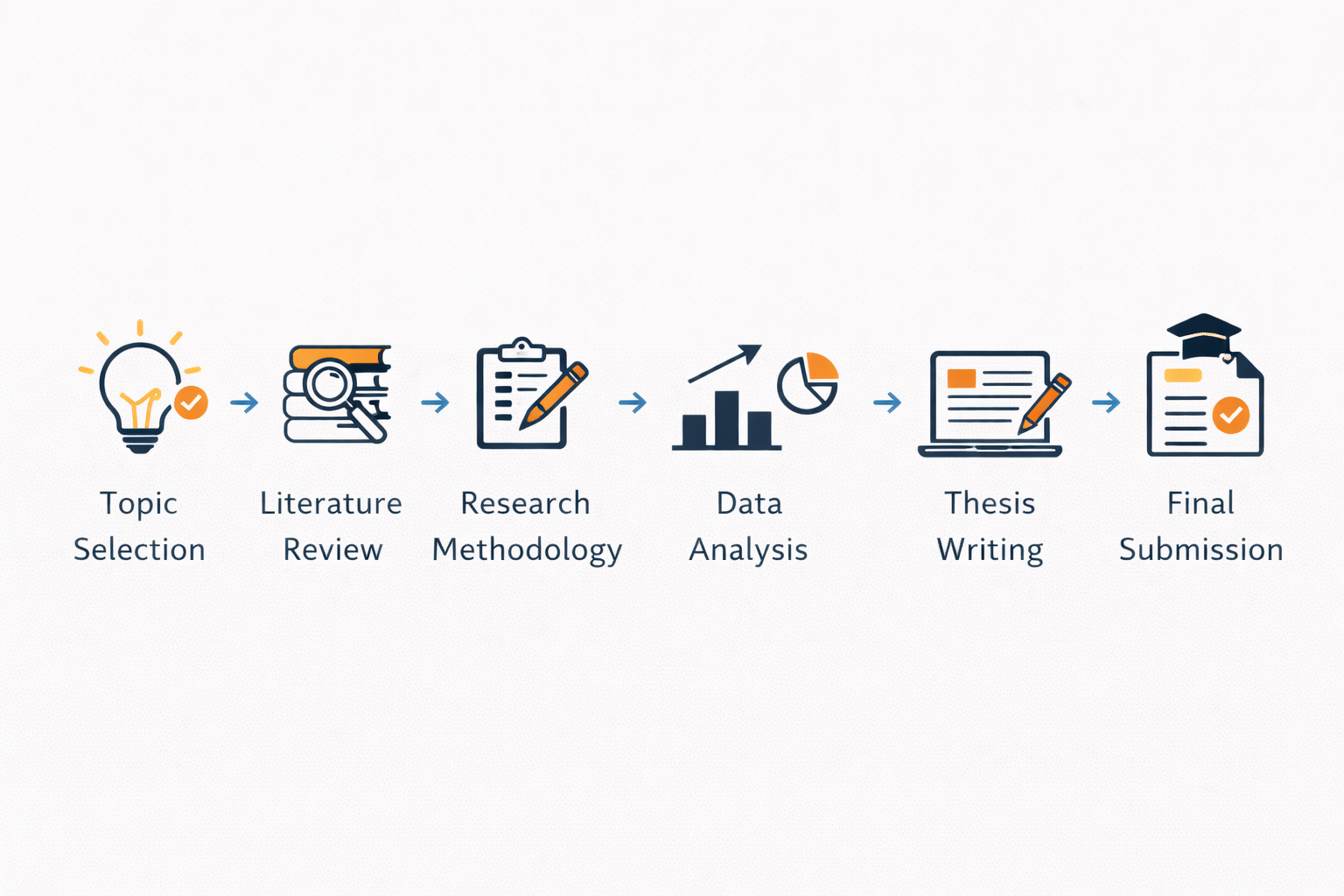
Completing a thesis is one of the most demanding academic requirements at the undergraduate and postgraduate levels. Unlike standard essays or coursework assignments, a thesis requires extensive research, a coherent methodological approach, and the ability to develop sustained academic arguments across a large document. Because of these demands, many students explore the option of a thesis writing service to receive structured academic support throughout the research and writing process.
A thesis writing service does not replace independent academic work. Instead, responsible academic assistance focuses on improving research organization, clarifying arguments, refining methodology, and strengthening the presentation of scholarly writing. When used ethically, these services can help students navigate the complex expectations of academic research.
This guide explains what a thesis writing service typically provides, how a thesis is structured, common challenges students encounter, and how academic support can contribute to stronger research outcomes.
Understanding the Purpose of a University Thesis
A thesis is a substantial research project designed to demonstrate a student's ability to investigate a specific research problem in depth. Universities use thesis projects to assess whether students can apply theoretical knowledge, evaluate scholarly literature, and present original analysis within their field of study.
Although the scale varies across degree levels, the underlying academic objective remains consistent: students must demonstrate critical thinking, research competence, and academic writing proficiency.
A successful thesis must present a clear research question, rigorous methodology, and logically developed academic argument.
Because the thesis integrates multiple research skills, many students seek structured guidance when developing their work.
Typical Structure of an Academic Thesis
Most universities require theses to follow a standardized structure. This structure ensures that examiners can evaluate research systematically and understand how the student developed their argument.
| Section | Purpose |
|---|---|
| Introduction | Introduces the research problem and outlines objectives |
| Literature Review | Analyzes existing research and theoretical frameworks |
| Methodology | Explains research design and data collection methods |
| Results or Findings | Presents research data and analysis |
| Discussion | Interprets findings and connects them to existing literature |
| Conclusion | Summarizes contributions and implications |
Each chapter builds upon the previous one, gradually developing the thesis argument.
Why Students Seek a Thesis Writing Service
Writing a thesis involves far more than simply compiling information. Students must synthesize large volumes of scholarly literature, construct original arguments, and ensure that the final document meets strict academic formatting requirements.
Several challenges commonly arise during this process:
- Difficulty narrowing a broad research topic into a focused question
- Managing large amounts of academic literature
- Designing appropriate research methodologies
- Maintaining coherent argumentation across long chapters
- Applying consistent academic referencing styles
These challenges explain why many students seek professional academic guidance while working on their thesis.
Developing a Strong Research Question
The research question is the foundation of the entire thesis. A poorly defined question can lead to unfocused research, weak arguments, and methodological confusion. Conversely, a well-defined research question provides a clear direction for the entire project.
Effective research questions typically:
- Address a specific problem within a field of study
- Allow for analytical or empirical investigation
- Contribute new insight to existing scholarship
- Remain manageable within the scope of the thesis
For example, a broad topic such as “social media and communication” may evolve into a more focused research question like: “How does algorithmic content curation influence political discourse among university students?”
Clarity at this stage significantly improves the quality of subsequent research chapters.
Conducting a Comprehensive Literature Review
The literature review forms the intellectual foundation of a thesis. Rather than summarizing sources individually, this section must critically evaluate scholarly debates, identify research gaps, and establish the theoretical framework guiding the study.
A well-developed literature review accomplishes several objectives:
- Demonstrates familiarity with key academic debates
- Identifies limitations within existing studies
- Situates the research question within a scholarly context
- Justifies the significance of the research project
Because literature reviews often involve analyzing dozens or even hundreds of academic sources, maintaining organization and clarity becomes essential.
Choosing an Appropriate Research Methodology
The methodology chapter explains how the research was conducted and why particular methods were selected. This section must clearly justify the research design, data collection techniques, and analytical approach used in the study.
Different research questions require different methodological strategies.
| Methodology Type | Examples of Techniques |
|---|---|
| Qualitative | Interviews, case studies, thematic analysis |
| Quantitative | Surveys, statistical modeling, experimental studies |
| Mixed Methods | Combination of qualitative and quantitative approaches |
The methodology must align logically with the research question and theoretical framework presented earlier in the thesis.
Maintaining Clarity in Long Academic Documents
Many theses exceed 10,000–30,000 words depending on the program level. Managing such a large document can be challenging, particularly when trying to maintain consistent argumentation and clear writing style across multiple chapters.
Common writing difficulties include:
- Repetition of ideas across chapters
- Weak transitions between sections
- Overly complex sentence structures
- Inconsistent academic tone
Structured editing and proofreading support can significantly improve readability and coherence in the final thesis document.
Common Mistakes Students Make in Thesis Writing
Understanding common thesis writing mistakes can help students avoid major revisions during the final submission process.
- Research questions that are too broad or vague
- Literature reviews that summarize instead of analyzing sources
- Methodology sections lacking justification
- Weak connections between research findings and arguments
- Improper referencing and citation formatting
Addressing these issues early ensures that the thesis maintains strong academic integrity and analytical clarity.
Using a Thesis Writing Service Responsibly
A responsible thesis writing service focuses on academic support rather than replacing the student’s original research. Ethical academic assistance may include structural feedback, editing, methodological guidance, and advice on literature review development.
Constructive forms of academic assistance may include:
- Reviewing thesis structure and chapter organization
- Editing and proofreading academic writing
- Providing feedback on argument development
- Assisting with formatting and citation accuracy
Such support can help students refine their research while maintaining full ownership of their work.
Successfully Completing a University Thesis
A thesis represents the culmination of a student’s academic development and research capabilities. Successfully completing this project requires careful planning, rigorous research, and sustained academic writing.
When students combine strong research discipline with structured academic guidance, they can produce theses that demonstrate critical insight, analytical depth, and clear scholarly communication. With the right approach, the thesis process becomes not only manageable but also a valuable opportunity to contribute meaningful research within a chosen field.



Comments