
Many students associate brainstorming with informal note-taking or spontaneous idea lists. In academic writing, however, brainstorming for essays is a disciplined intellectual process that determines the depth, direction, and originality of the final argument.
Weak essays often originate not from poor writing skills but from inadequate early thinking. When brainstorming is rushed or skipped, students struggle with unclear arguments, shallow analysis, and poorly structured paragraphs.
This article explains how to approach brainstorming for essays systematically, using methods aligned with university expectations and assessment criteria.
What Brainstorming for Essays Means in Academic Writing
Brainstorming for essays refers to the intentional generation, exploration, and organisation of ideas before drafting begins. It is not about producing polished sentences but about discovering what can be argued, supported, and evaluated.
In academic contexts, brainstorming is guided by the assignment question, disciplinary conventions, and available evidence. Effective brainstorming filters ideas through relevance and analytical potential.
Rather than encouraging unfocused creativity, academic brainstorming narrows intellectual possibilities toward a defensible argument.
Academic definition: Brainstorming is the pre-writing process of generating and evaluating ideas to establish an essay’s analytical direction.
Why Brainstorming Matters More Than Most Students Realise
University essays are assessed on reasoning, evidence, and coherence. Brainstorming directly influences all three by determining what ideas are included and how they relate.
Students who skip structured brainstorming often compensate by over-researching or overwriting, which leads to unfocused discussion.
Effective brainstorming reduces drafting time while increasing analytical clarity.
Preparing for Effective Essay Brainstorming
Before generating ideas, students must prepare intellectually. This preparation ensures brainstorming remains purposeful rather than random.
Preparation begins with careful interpretation of the essay question, including command words, scope, and implicit assumptions.
Brainstorming without understanding the task often results in irrelevant or descriptive content.
Interpreting the Essay Question
Academic brainstorming starts with breaking down the question into manageable components.
Key terms, limitations, and required perspectives should be identified before ideas are generated.
This process prevents students from brainstorming ideas that fall outside assessment boundaries.
Establishing Preliminary Context
Light preliminary reading can support brainstorming by providing conceptual vocabulary.
This stage does not involve deep research but familiarisation with key debates.
Contextual awareness improves idea quality and feasibility.
Core Brainstorming Techniques for Essays
Different brainstorming methods suit different learning styles and assignment types. The most effective approaches remain structured and evaluative.
Concept Mapping for Argument Development
Concept mapping involves visually linking ideas around the essay topic.
This technique reveals relationships between concepts, helping students identify causal links, contrasts, and hierarchies.
It is particularly useful for theoretical or comparative essays.
Question-Based Brainstorming
Instead of listing ideas, students generate analytical questions related to the topic.
Each question prompts exploration of explanation, implication, or evaluation.
This method naturally leads to argumentative paragraph structures.
Evidence-Driven Brainstorming
In research-heavy essays, brainstorming can begin with available sources.
Students note what each source can contribute to an argument rather than summarising content.
This approach ensures early alignment between ideas and evidence.
Moving from Brainstorming to Essay Planning
Brainstorming is only valuable if ideas are refined and organised.
After generating ideas, students must evaluate them for relevance, strength, and originality.
This transition marks the shift from idea generation to essay planning.
Critical warning: Brainstorming that is not filtered leads to unfocused essays.
Eliminating Weak or Redundant Ideas
Not all brainstormed ideas deserve inclusion.
Students should remove ideas that cannot be supported with credible evidence.
This pruning process strengthens the final argument.
Grouping Ideas into Argument Sections
Remaining ideas should be grouped into logical sections.
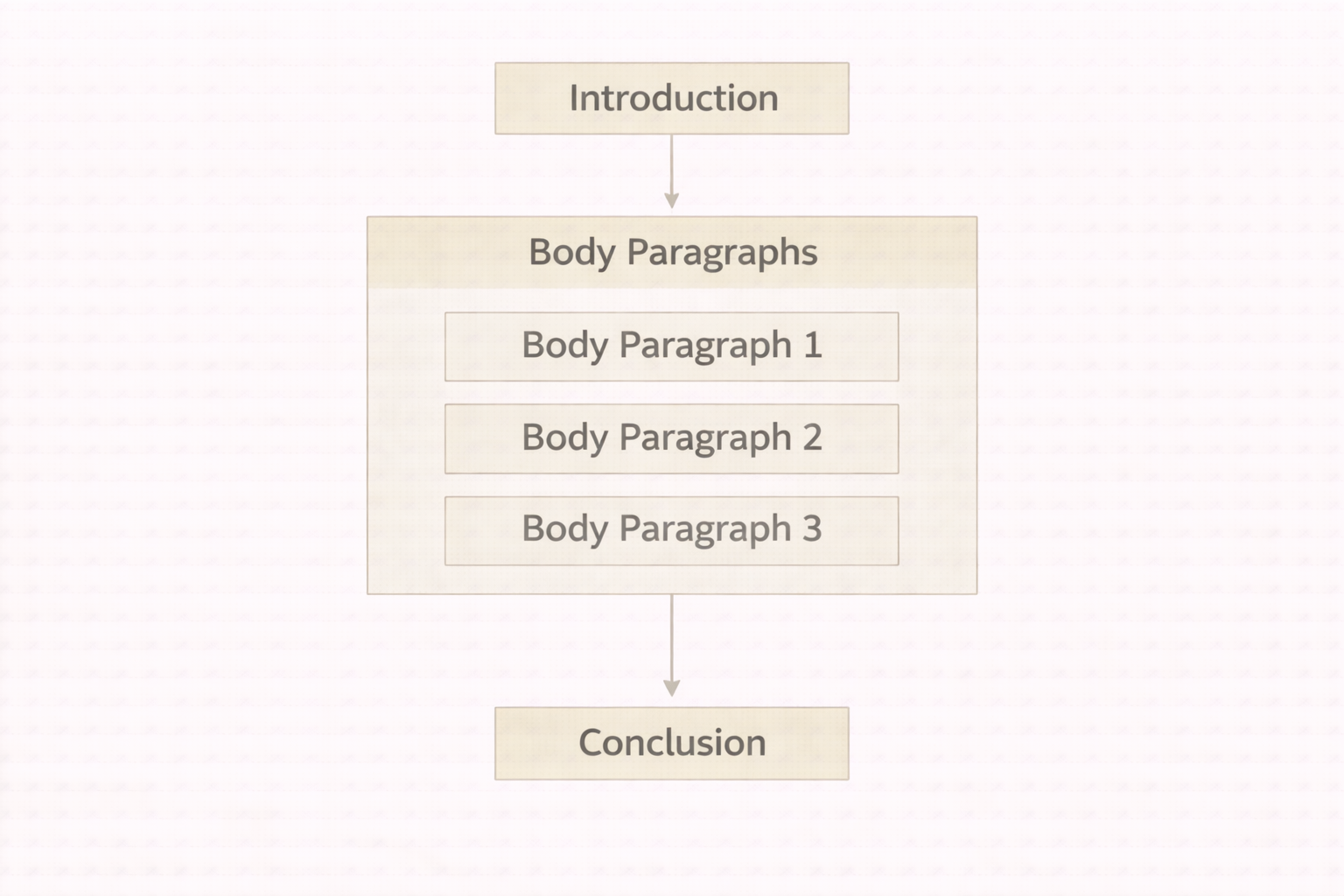
These groups often become body paragraphs or thematic sections.
This step prepares students for formal essay structure planning.
Common Brainstorming Mistakes in University Essays
Despite good intentions, many students misuse brainstorming.
One common mistake is generating ideas without reference to the essay question.
Another is confusing brainstorming with drafting, which limits creative exploration.
- Listing ideas without evaluating relevance
- Brainstorming too narrowly at the start
- Failing to connect ideas to evidence
Avoiding these mistakes improves both efficiency and quality.
Discipline-Specific Approaches to Brainstorming
Different academic fields require different brainstorming emphases.
Understanding these differences helps students tailor their approach.
For example, humanities essays often prioritise interpretive possibilities, while social sciences focus on theoretical application.
Using Brainstorming to Strengthen Academic Arguments
Strong arguments emerge from deliberate idea selection.
Brainstorming allows students to test multiple argumentative paths before committing to one.
This flexibility increases originality and analytical depth.
When Brainstorming Benefits from Academic Support
Complex assignments may require external feedback during the brainstorming stage.
Students sometimes consult academic essay writing services to evaluate idea direction before drafting.
For large projects, early brainstorming support is especially valuable in dissertation writing, where weak conceptual foundations are costly.
Idea clarity can also be refined through editing and proofreading services once drafts begin to form.
Final Guidance on Brainstorming for Essays
Brainstorming for essays is not a casual preliminary step but a core academic skill.
Structured brainstorming improves argument clarity, supports logical structure, and enhances critical depth.
Students who invest time in disciplined brainstorming consistently produce stronger, more focused university essays.


Comments