Completing a dissertation is a major academic achievement, but the final stage of the process often causes the most anxiety for graduate students. The dissertation defense, sometimes referred to as a viva or oral examination, requires students to present and justify their research in front of a panel of academic experts. Understanding effective dissertation defense tips can help students prepare strategically and approach this important milestone with confidence.
A dissertation defense evaluates not only the research itself but also the candidate's ability to explain, defend, and contextualize their work. Examiners typically assess the originality of the research, the strength of the methodology, the clarity of the findings, and the candidate’s understanding of the field. Students who prepare thoroughly are far more likely to perform well and demonstrate their academic expertise.
This guide explains what to expect during a dissertation defense, how to prepare effectively, and the key strategies that help graduate students successfully defend their research.
Understanding the Purpose of a Dissertation Defense
The dissertation defense is designed to evaluate the depth of the student's research and their ability to engage critically with their own work. During the defense, students present a summary of their research and respond to questions from the examination committee.
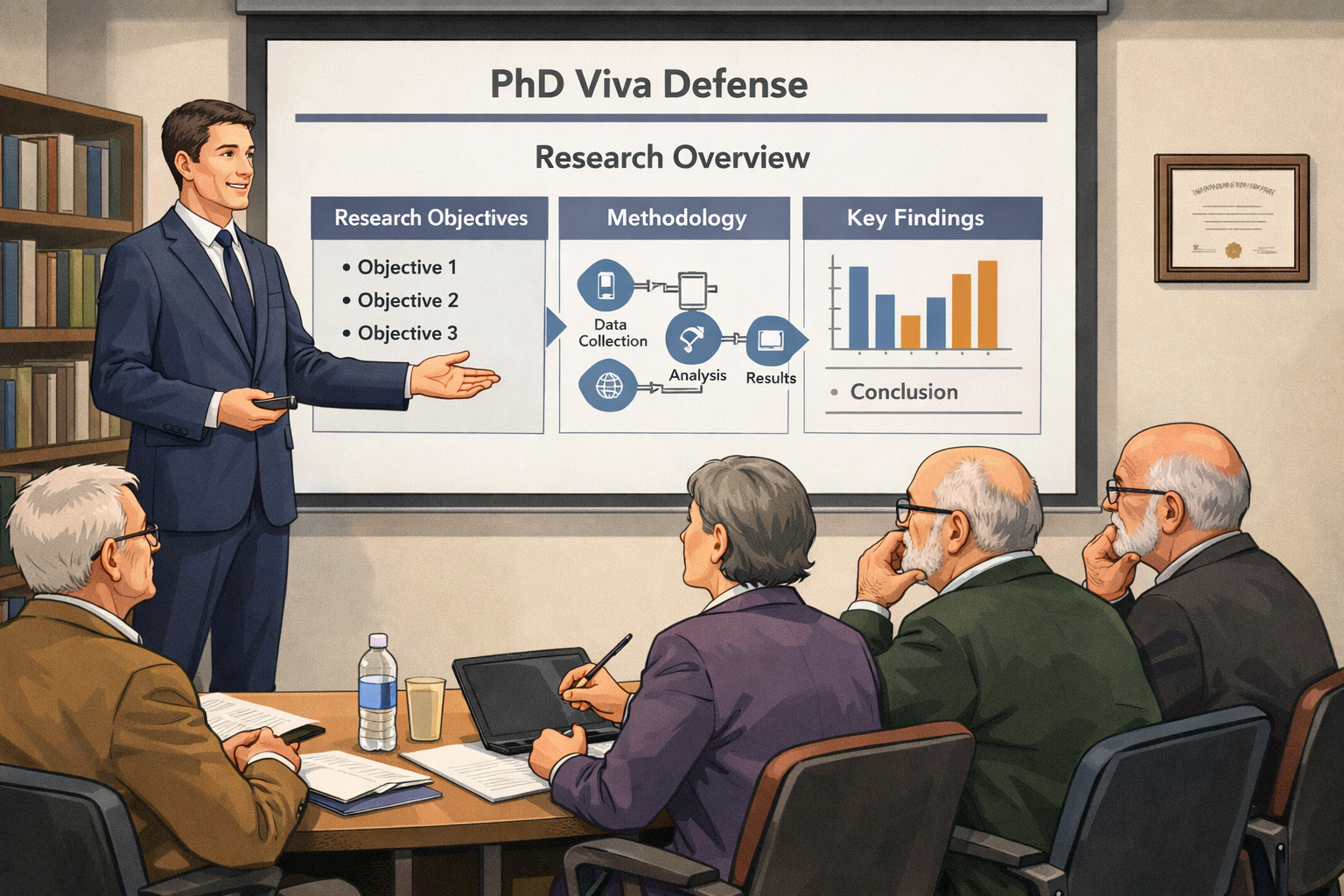
Although the format varies between universities, most dissertation defenses follow a similar structure. The candidate begins with a presentation outlining the research problem, methodology, findings, and contributions to the field. After the presentation, the committee members ask questions that test the candidate's understanding of their research and its academic context.
The goal of the defense is not to attack the research but to ensure that the candidate has conducted rigorous academic work and can explain the reasoning behind their decisions.
A dissertation defense evaluates both the research and the researcher’s ability to justify their academic decisions.
What Happens During a Dissertation Defense
Although procedures vary by institution, most dissertation defenses follow a similar sequence of stages. Understanding this process helps students reduce anxiety and prepare more effectively.
| Stage | Description |
|---|---|
| Opening Presentation | The student summarizes the research topic, objectives, methodology, and findings. |
| Committee Questions | Examiners ask detailed questions about research decisions, theory, and interpretation. |
| Research Clarification | The candidate explains methodological choices and defends conclusions. |
| Private Committee Discussion | The committee deliberates while the candidate waits outside. |
| Final Decision | The committee announces whether the dissertation passes with revisions or approval. |
Knowing this structure allows students to prepare their presentations and anticipate possible questions from examiners.
How to Prepare for Your Dissertation Defense
Preparation is the most important factor influencing dissertation defense success. Students who understand their research deeply and practice explaining it clearly are much more confident during the defense.
Effective preparation involves reviewing the dissertation carefully and identifying areas where examiners may ask questions. These often include research design, theoretical frameworks, data analysis decisions, and limitations of the study.
Students should also prepare a clear and concise presentation that highlights the significance of their research rather than repeating every detail from the dissertation.
Key Preparation Strategies
The following strategies help students prepare systematically for their dissertation defense.
- Review the dissertation carefully and be ready to explain every major decision.
- Prepare a concise presentation summarizing the research contribution.
- Practice answering potential examiner questions with supervisors or peers.
- Understand the strengths and limitations of the research.
- Review relevant literature to reinforce theoretical knowledge.
Practicing answers to common questions significantly improves confidence during the defense.
Common Questions Asked During a Dissertation Defense
Examiners typically focus their questions on key aspects of the research design and interpretation of results. These questions are intended to evaluate the candidate's depth of understanding rather than to challenge them unnecessarily.
Some common areas of questioning include:
- Why the research topic was chosen
- The significance of the research problem
- Theoretical frameworks used in the study
- Methodological choices and data collection methods
- Interpretation of findings
- Limitations of the research
- Future research opportunities
Students should prepare to explain these elements clearly and confidently. Demonstrating awareness of research limitations often strengthens the credibility of the study.
How to Structure Your Defense Presentation
The presentation is the first impression the examination committee receives during the defense. A well structured presentation helps examiners understand the research quickly and encourages constructive discussion.
Students should avoid attempting to summarize every chapter of the dissertation. Instead, the presentation should focus on the key elements that demonstrate the originality and importance of the research.
| Presentation Section | Purpose |
|---|---|
| Research Problem | Explain the academic issue addressed by the research. |
| Research Objectives | Outline the questions or goals guiding the study. |
| Methodology | Describe research design, participants, and analysis methods. |
| Key Findings | Highlight the most important research results. |
| Contribution | Explain how the research advances knowledge in the field. |
This structured approach helps the committee follow the research narrative and focus on the most significant aspects of the study.
Mistakes Students Should Avoid During a Defense
Even strong research can appear weaker if students make avoidable mistakes during the defense. Being aware of these common errors helps candidates maintain clarity and confidence during the examination.
Common mistakes include:
- Overly long or unfocused presentations
- Defensive or argumentative responses to examiner questions
- Failure to acknowledge limitations in the research
- Memorizing answers rather than understanding concepts
- Inadequate preparation for methodological questions
Students should remember that examiners expect thoughtful discussion rather than perfect answers. Demonstrating critical thinking is often more important than defending every aspect of the research.
Strategies for Answering Difficult Questions
During the defense, some questions may be challenging or unexpected. The key to handling these questions is to remain calm and respond thoughtfully rather than rushing to answer.
When facing difficult questions, students can apply several strategies. Taking a moment to think before answering allows the candidate to organize their thoughts clearly. If the question is unclear, politely asking for clarification ensures that the response addresses the examiner's intent.
It is also acceptable to acknowledge limitations or uncertainties in the research. Academic research rarely produces perfect results, and recognizing limitations demonstrates intellectual honesty.
Examiners expect thoughtful reasoning, not flawless research.
Final Dissertation Defense Tips for Success
The dissertation defense represents the final step in a long academic journey. While the process may feel intimidating, students who prepare thoroughly and understand their research deeply usually perform well.
Successful candidates approach the defense as an academic conversation rather than a confrontation. By clearly explaining their research decisions, acknowledging limitations, and demonstrating mastery of their subject area, students can show that they are ready to join the community of scholars in their field.
Ultimately, the best dissertation defense tips focus on preparation, clarity, and confidence. Students who know their research well and communicate it effectively are well positioned to succeed in this important academic milestone.


Comments