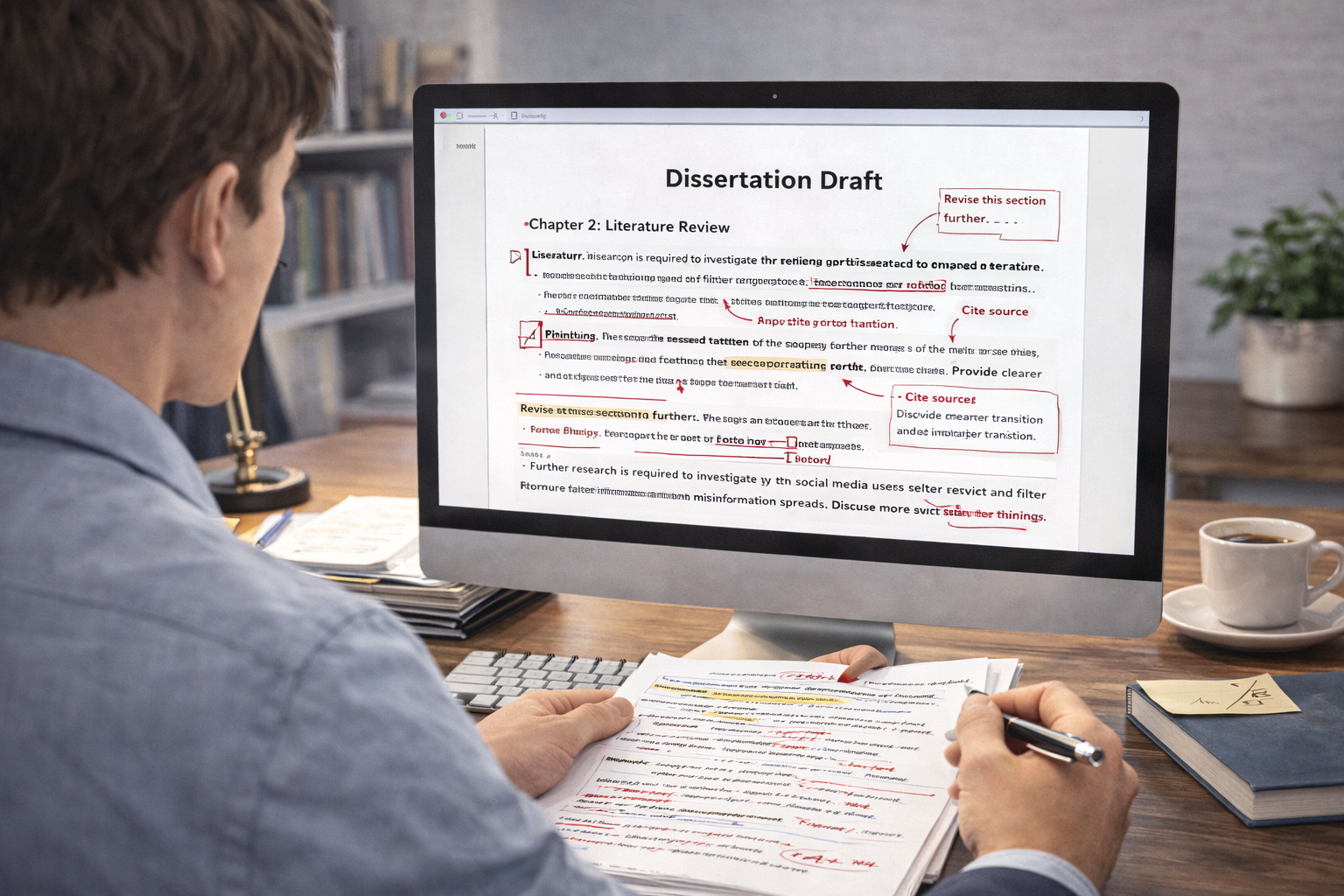
Completing a dissertation is one of the most demanding tasks in higher education. After months or years of research, drafting, and revision, students must ensure their final document reflects academic rigor, clarity, and formal correctness. For many students in the UK, dissertation editing and proofreading UK services provide essential support to elevate a dissertation from draft quality to submission readiness. Understanding what these services entail—and how they differ—is crucial for ensuring your research is both communicatively effective and institutionally compliant.
This article offers a professional, student‑friendly guide to dissertation editing and proofreading within a UK academic context, explaining the differences between each process, what to expect from quality services, and how to choose support that meets your university’s standards. Throughout, we focus on academic integrity, practical steps, and examples relevant to UK postgraduate students.
Why Dissertation Editing and Proofreading Matter in the UK
UK universities set exacting standards for dissertations, with examiners evaluating not only the strength of arguments and quality of evidence but also the clarity of presentation, structure, and adherence to academic conventions. Even well‑researched dissertations can be undermined by unclear writing, inconsistent structure, or poor grammar. Dissertation editing and proofreading interventions are designed to address these challenges systematically.
While drafting a dissertation, students often focus primarily on content and analysis. Later in the process, editing and proofreading help refine the document so that the quality of the writing matches the quality of the research. Many UK students also choose professional support when English is not their first language or when tight deadlines leave little time for self‑revision.
Academic expectation: Examiners expect dissertations to demonstrate clear structure, precise language, and error‑free presentation. Weak writing can obscure strong research and lead to lower marks.
What Dissertation Editing Includes
Dissertation editing is a substantive process that goes beyond surface‑level corrections. It focuses on improving content, coherence, structure, and academic tone. Editing ensures that your arguments are logically organised, chapters flow smoothly, and your writing aligns with disciplinary conventions.
Academic editing typically addresses the following areas:
- Structure and organisation: Ensuring that the dissertation’s chapters follow a logical progression and that transitions between sections are clear.
- Clarity and readability: Refining sentences and paragraphs for coherence, precision, and academic tone.
- Argument strength: Strengthening claims, evidence integration, and critical analysis where needed.
- Consistency of terminology and style: Standardising the use of terms, tense, voice, and academic conventions throughout the dissertation.
For example, a dissertation editor may restructure paragraphs that introduce new concepts abruptly, refine overly verbose passages, or suggest clearer ways to present methodological explanations. Editors may also provide feedback on how well the introduction frames the research, or whether the discussion chapter effectively synthesises findings.
What Proofreading Entails
Proofreading is typically the final step before submission. It focuses on identifying and correcting surface‑level errors that detract from professionalism but do not fundamentally affect your arguments. Proofreading ensures that your dissertation is technically polished and conforms to formatting and style requirements.
Proofreaders address:
- Spelling and grammar: Correcting typos, sentence errors, and punctuation issues.
- Formatting and layout: Ensuring compliance with UK university formatting guidelines, including headings, spacing, and pagination.
- Consistency in referencing: Verifying that citations and references conform to the required style (e.g., Harvard, APA, MLA, or specific UK institutional guidelines).
- Minor stylistic adjustments: Fixing inconsistent capitalisation, hyphenation, or formatting anomalies.
Proofreading does not involve reshaping arguments or restructuring chapters. Instead, it enhances readability and ensures that minor errors do not distract examiners from the substantive quality of your research.
Key Differences Between Editing and Proofreading
Although both services improve a dissertation’s quality, they serve distinct purposes. Understanding the difference helps you decide whether you need one, both, or a sequential combination of services.
| Aspect | Editing | Proofreading |
|---|---|---|
| Primary Focus | Content clarity, structure, academic tone | Grammar, spelling, formatting |
| Depth of Revision | In‑depth, often involving substantive changes | Surface‑level corrections only |
| Stage in Writing Process | Mid‑draft to near‑final | Final draft |
| Typical Outcomes | Improved coherence and argumentation | Error‑free, polished presentation |
| Skill Requirements | Advanced understanding of academic conventions | Strong attention to detail |
This comparison highlights how editing transforms your dissertation conceptually, while proofreading perfects its technical presentation. Both are important, but they play different roles in the revision timeline.
Why UK Students Seek Professional Dissertation Editing and Proofreading
Many UK students opt for professional dissertation support for several reasons. First, academic writing standards in UK universities are high, and small errors can influence examiners’ perceptions. Second, international students who are not native English speakers often benefit from additional linguistic support. Third, tight timelines toward the end of a programme leave little time for thorough self‑revision.
Professional services provide impartial, expert feedback. Dissertation editors and proofreaders familiar with UK academic conventions can help ensure that thesis submissions comply with graduate school requirements and examiner expectations.
How to Choose Quality Editing and Proofreading Support
Selecting the right service requires careful consideration. Here are important criteria to evaluate when seeking dissertation editing and proofreading in the UK:
- Expertise: Choose editors with experience in your discipline and academic writing standards.
- Service inclusions: Confirm whether the service includes substantive editing, proofreading, or both.
- Turnaround time: Ensure that deadlines align with your submission timeline.
- Confidentiality and academic integrity: Reputable providers safeguard your intellectual property and do not write content on your behalf.
- Sample edits or reviews: Some services offer sample edits, which can help you assess quality before committing.
UK students should also verify that services align with institutional policies on external support, as some programmes require declarations of editorial assistance.
Best Practices for Dissertation Revision Workflow
To maximise the impact of editing and proofreading, follow a structured revision workflow:
- Self‑Edit First: Begin by reviewing your dissertation for major conceptual and structural issues.
- Engage Editing Support: After self‑editing, submit your draft to professional editing to improve coherence and academic expression.
- Revise Based on Feedback: Carefully integrate editorial recommendations into your dissertation.
- Final Proofreading: After substantive edits, perform or commission professional proofreading to correct technical errors and formatting issues.
- Final Check: Verify that all changes comply with your university’s formatting and submission requirements.
This sequential approach ensures that each stage builds on the last, resulting in a dissertation that is both academically robust and technically polished.
Common Misconceptions About Dissertation Editing and Proofreading
Students often harbour misconceptions about these services. One common belief is that editing and proofreading are interchangeable; in reality, they require different skill sets and deliver different outcomes. Another misconception is that professional support will rewrite content for you. Ethical editing and proofreading improve clarity and correctness but do not replace the student’s intellectual work.
Understanding these distinctions helps students engage services ethically and effectively, enhancing both their writing skills and their academic performance.
Practical Tips for UK Students
To get the best results from dissertation editing and proofreading:
- Start early to allow sufficient time for multiple revision cycles.
- Clarify your university’s formatting and style requirements before commissioning support.
- Maintain clear communication with your editor or proofreader regarding expectations.
- Review sample edits to ensure the provider’s style aligns with your academic voice.
Closing Guidance on Dissertation Editing and Proofreading UK
Dissertation editing and proofreading are distinct but complementary processes that collectively strengthen the quality of academic writing. Editing enhances your argument’s coherence and academic tone, while proofreading ensures precision and technical correctness. For UK students facing stringent academic standards and tight deadlines, understanding these differences and engaging services strategically can make the final stages of dissertation writing more manageable and effective. By following the guidance above, you can refine your dissertation into a polished, examiner‑ready document that reflects your scholarly effort with precision and professionalism.


Comments