Completing a dissertation involves more than conducting research and presenting findings. One of the most important aspects of academic success is following the correct dissertation format. Universities expect dissertations to follow specific structural and formatting standards so that research can be presented clearly and evaluated consistently by examiners.
A properly formatted dissertation helps readers understand the research process from beginning to end. It ensures that each section of the document appears in the correct order, that citations follow academic conventions, and that the overall presentation meets institutional requirements. Without proper formatting, even strong research may appear unprofessional or difficult to evaluate.
This guide explains the essential components of dissertation format, including the structure of the document, formatting rules, and practical strategies students can use to organise their research effectively.
Why Dissertation Format Is Important in Academic Research
Academic institutions require a specific dissertation format because it allows research projects to be presented in a clear and consistent way. When dissertations follow a standard format, examiners can easily locate key sections such as the research objectives, methodology, and findings.
A well formatted dissertation supports academic communication by ensuring that the research process is transparent and logically organised. It also demonstrates the student's ability to follow scholarly conventions and present research professionally.
Dissertation formatting typically includes guidelines for:
- Document structure and chapter organisation
- Page layout and margins
- Font size and line spacing
- Citation and referencing style
- Placement of tables and figures
Understanding these requirements early in the writing process can help students avoid significant revisions before submission.
Standard Sections Included in a Dissertation Format
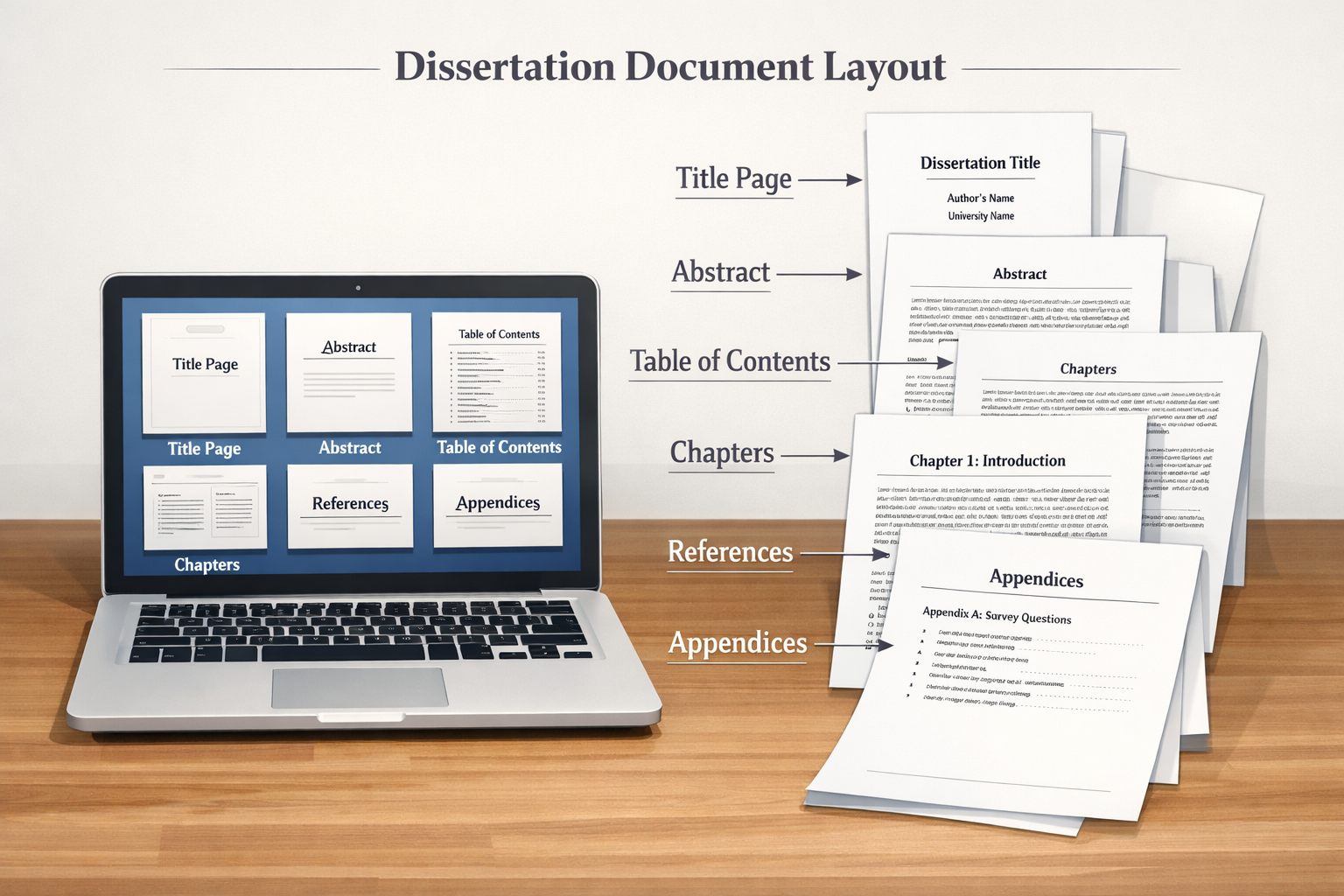
Most universities require dissertations to follow a similar structural order. Although the exact requirements may vary slightly between institutions, the core components of a dissertation remain largely consistent.
| Section | Purpose |
|---|---|
| Title Page | Displays the dissertation title, student name, university, and submission date |
| Abstract | Provides a concise summary of the research and main findings |
| Table of Contents | Lists chapters and sections with page numbers |
| Introduction | Introduces the research topic, objectives, and scope |
| Literature Review | Examines existing academic research related to the topic |
| Methodology | Explains the research design and data collection methods |
| Findings / Results | Presents research outcomes and analysed data |
| Discussion | Interprets findings within the academic context |
| Conclusion | Summarises contributions and research implications |
| References | Lists all academic sources cited in the dissertation |
| Appendices | Includes supporting research materials |
Following this structure ensures that readers can move through the research process logically.
Basic Formatting Rules for a Dissertation
In addition to chapter structure, universities require students to follow specific formatting rules. These rules ensure that dissertations are easy to read and professionally presented.
Common formatting guidelines include:
- Using a readable academic font such as Times New Roman
- Applying double or 1.5 line spacing throughout the document
- Setting consistent margins on all pages
- Numbering pages correctly throughout the dissertation
- Including properly labelled tables and figures
Students should always consult their university's dissertation handbook because formatting requirements may vary depending on the institution.
Structuring the Dissertation Chapters
The central chapters of the dissertation form the core of the research project. Each chapter contributes to explaining how the research was conducted and what conclusions were reached.
| Chapter | Function |
|---|---|
| Introduction | Defines the research question and outlines study objectives |
| Literature Review | Evaluates previous research and theoretical frameworks |
| Methodology | Describes research methods and analytical approach |
| Results | Presents findings obtained through research |
| Discussion | Explains how findings relate to the research question |
| Conclusion | Summarises research contributions and future implications |
Each chapter should connect clearly with the research objectives introduced at the beginning of the dissertation.
Citation and Referencing Format
Another critical element of dissertation format is referencing. Academic research must acknowledge the work of other scholars by citing sources accurately. Referencing styles vary between disciplines, but common formats include Harvard, APA, MLA, and Chicago.
Proper referencing ensures that readers can trace the sources used in the research and verify the credibility of the information presented. It also protects students from accusations of plagiarism.
Students should maintain accurate records of all sources used during their research to ensure that citations are included correctly in the final reference list.
Incorrect or incomplete referencing can significantly reduce the academic credibility of a dissertation.
Formatting Tables, Figures, and Appendices
Dissertations often include visual materials such as tables, charts, graphs, and diagrams. These elements help present research findings clearly, especially when dealing with complex data.
When including tables and figures in a dissertation, students should ensure that:
- Each table or figure is clearly labelled
- A descriptive title is provided
- The source of data is indicated when necessary
- The figure is referenced within the text
Appendices may also be included to present additional research materials such as questionnaires, interview transcripts, or raw data that support the main research findings.
Common Dissertation Formatting Mistakes
Many students encounter difficulties when formatting their dissertation for final submission. These issues often arise because formatting guidelines are overlooked during the writing process.
Common formatting mistakes include:
- Inconsistent citation styles
- Incorrect page numbering
- Improperly formatted headings and subheadings
- Missing table or figure captions
- Incorrect spacing or margins
Carefully reviewing the dissertation before submission can help students identify and correct these errors.
Preparing Your Dissertation for Final Submission
Before submitting a dissertation, students should perform a final review to ensure that the document meets all formatting requirements. This process includes checking the structure, verifying references, and ensuring that the document follows institutional guidelines.
Students preparing their final dissertation should:
- Confirm that all chapters appear in the correct order
- Ensure page numbering is consistent
- Check that citations match the reference list
- Verify formatting rules provided by the university
- Review tables, figures, and appendices for accuracy
This final review helps ensure that the dissertation is ready for academic evaluation.
Mastering Dissertation Format for Academic Success
Understanding dissertation format is essential for presenting research clearly and professionally. A well organised dissertation allows readers to follow the research process logically and evaluate the study effectively.
By following standard formatting rules and structuring the dissertation carefully, students can ensure that their research is presented in the best possible way. Clear formatting not only improves readability but also demonstrates the student's attention to academic standards.
When the structure, formatting, and referencing are carefully prepared, the dissertation becomes a polished academic document that reflects the quality of the research conducted.


Comments