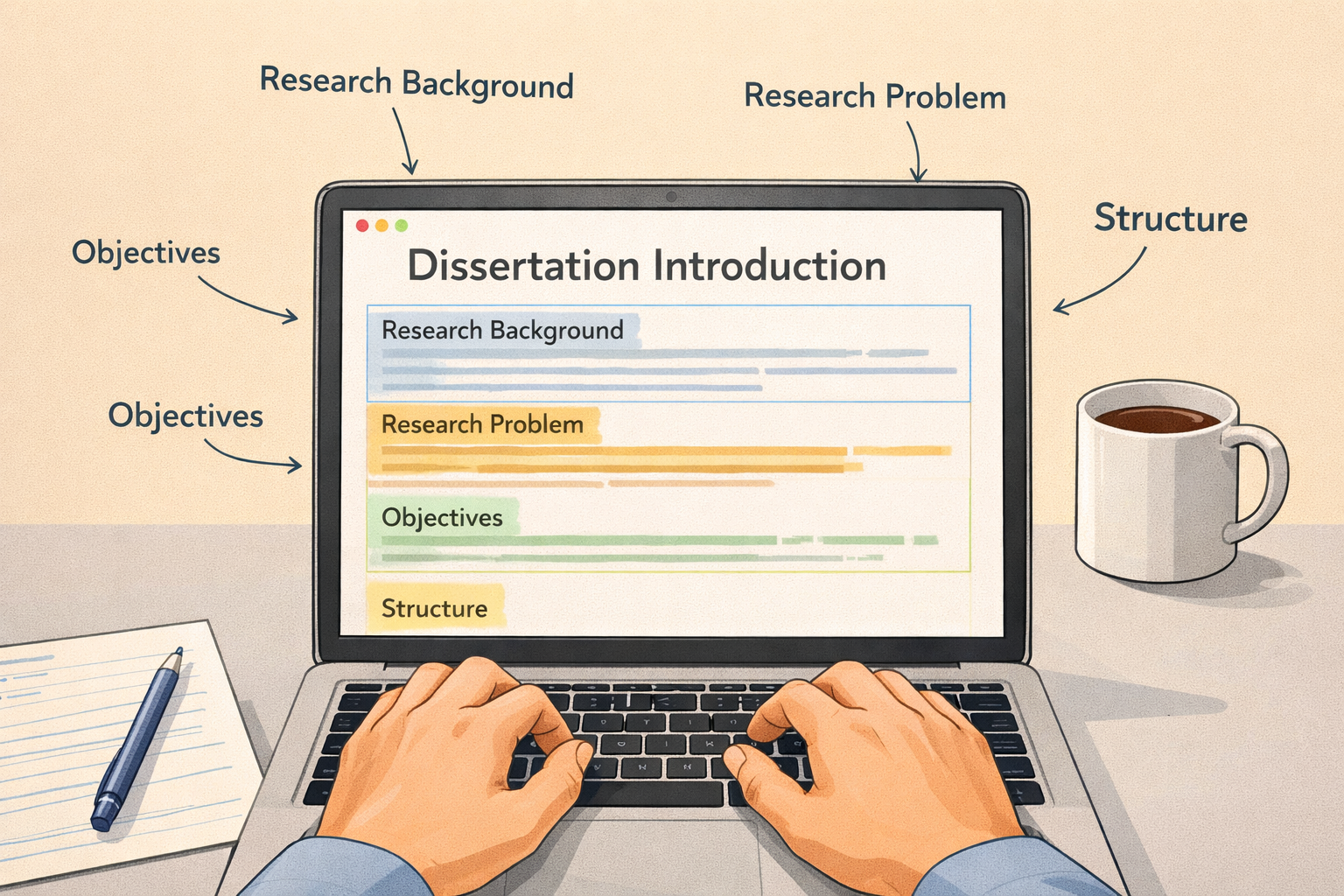
The opening chapter of a dissertation plays a critical role in shaping how readers understand the research project. Students often search for a dissertation introduction example because writing the first chapter can feel overwhelming. The introduction must clearly present the research problem, explain why the topic is important, and provide a roadmap for the entire study.
A well written dissertation introduction helps examiners quickly understand the purpose of the research and how the study contributes to existing academic knowledge. It also establishes the theoretical context of the study and prepares the reader for the chapters that follow. Without a clear introduction, even well conducted research may appear unfocused or difficult to follow.
This guide explains how to write a strong dissertation introduction, the key components that must be included, and provides a practical example to help students understand what a successful opening chapter looks like.
Why the Dissertation Introduction Is Important
The introduction is the foundation of the entire dissertation. It introduces the research topic, identifies the central research problem, and explains the objectives of the study. Examiners often form their first impression of the dissertation based on the clarity and focus of this chapter.
In addition to presenting the research problem, the introduction helps readers understand the broader academic context of the study. It explains how the research relates to existing scholarship and why the topic deserves investigation.
A strong dissertation introduction usually accomplishes several key objectives:
- Introduces the research topic and background context
- Defines the research problem
- Presents the research questions or hypotheses
- Explains the significance of the study
- Outlines the structure of the dissertation
When these elements are clearly explained, readers can easily follow the logic of the research project.
Key Components of a Dissertation Introduction
Most universities expect the introduction chapter to include several essential components. These elements guide readers through the reasoning behind the research and explain how the study will be conducted.
| Component | Purpose |
|---|---|
| Research Background | Provides context and introduces the topic |
| Problem Statement | Defines the issue the research aims to address |
| Research Objectives | Explains the goals of the study |
| Research Questions | Identifies the questions guiding the investigation |
| Significance of the Study | Explains why the research matters |
| Dissertation Structure | Outlines how the thesis is organised |
These components ensure that the introduction provides a clear and logical foundation for the research project.
Example of a Dissertation Introduction
The following example demonstrates how these components can be combined into a coherent introduction section. This example is simplified for clarity but reflects the typical academic structure expected in a dissertation.
Example Introduction:
Over the past decade, social media platforms have transformed the way individuals communicate, share information, and interact with organisations. While these platforms offer new opportunities for communication and marketing, they also raise questions about how digital environments influence consumer behaviour and brand perception.
Previous research has examined the role of social media marketing in shaping customer engagement; however, there remains limited understanding of how different forms of online content influence long term brand loyalty. This gap in the literature highlights the need for further investigation into how digital communication strategies affect consumer relationships with brands.
The purpose of this study is to examine the relationship between social media marketing strategies and consumer brand loyalty within the retail sector. Specifically, the research investigates how different types of online engagement influence customers’ perceptions of brand authenticity and trust.
The study addresses the following research questions: (1) How do social media marketing strategies influence consumer perceptions of brand authenticity? (2) What role does online engagement play in shaping long term brand loyalty? and (3) How do consumers interpret brand communication on digital platforms?
This dissertation is structured into five chapters. Chapter One introduces the research topic and outlines the research objectives. Chapter Two reviews existing literature on social media marketing and consumer behaviour. Chapter Three explains the research methodology used to collect and analyse data. Chapter Four presents the research findings, and Chapter Five discusses the implications of the results and offers recommendations for future research.
This example illustrates how a dissertation introduction gradually moves from broad context to specific research questions while also providing a roadmap for the rest of the study.
How to Structure Your Dissertation Introduction
Writing an effective introduction requires a logical progression of ideas. Students should guide the reader from the broader context of the research topic toward the specific research problem being investigated.
A typical structure for a dissertation introduction includes several stages:
- Begin with the broader academic context of the topic
- Identify the research problem or knowledge gap
- Present the research objectives and questions
- Explain the importance of the research
- Provide an overview of the dissertation chapters
This step by step structure helps ensure that the introduction flows naturally and prepares readers for the rest of the dissertation.
Common Mistakes When Writing a Dissertation Introduction
Many students struggle with writing the introduction because they attempt to include too much information or fail to provide a clear research focus. Avoiding common mistakes can significantly improve the clarity of the opening chapter.
Some frequent problems include:
- Providing too much detailed literature review in the introduction
- Failing to clearly define the research problem
- Writing vague or overly broad research questions
- Not explaining the significance of the study
- Omitting an overview of the dissertation structure
By focusing on clarity and logical progression, students can avoid these issues and produce a strong introduction.
A dissertation introduction should guide readers from the general research context to the specific research problem in a clear and logical sequence.
Tips for Writing a Strong Dissertation Introduction
Writing a strong introduction requires careful planning and revision. Because the introduction establishes the foundation of the research project, students should ensure that it clearly communicates the purpose and direction of the study.
Several strategies can help improve the quality of the introduction:
- Write the introduction after completing the literature review
- Ensure that research questions are specific and focused
- Maintain a clear connection between objectives and methodology
- Revise the introduction after completing the full dissertation
These strategies help ensure that the introduction accurately reflects the final research project.
Building a Strong Start for Your Dissertation
A strong introduction sets the tone for the entire dissertation. It introduces the research problem, explains the importance of the study, and guides readers through the structure of the research project.
By carefully defining the research context, identifying the knowledge gap, and presenting clear research questions, students can create an introduction that effectively prepares readers for the rest of the dissertation.
When written clearly and logically, the introduction becomes a powerful foundation for the entire research study and helps demonstrate the academic value of the dissertation.



Comments