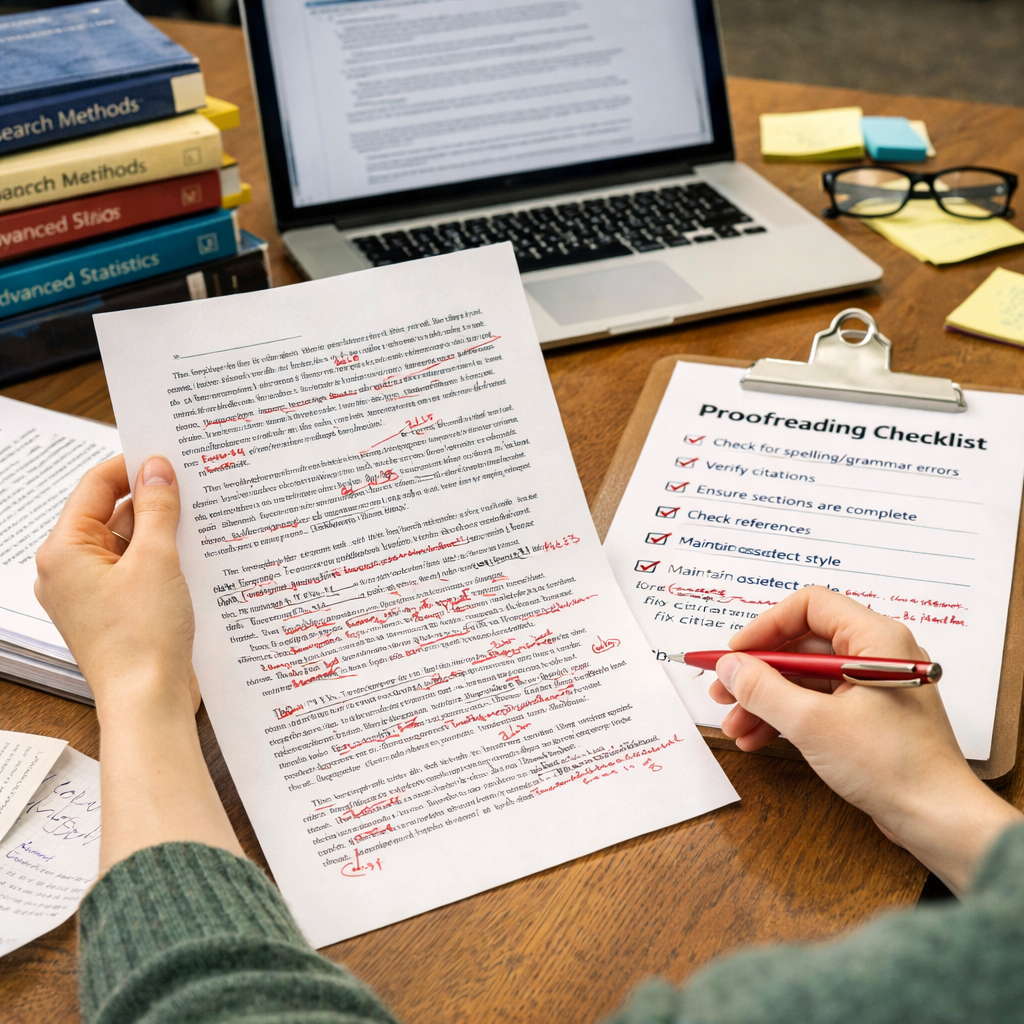
Completing a dissertation requires months or even years of research, writing, and revision. However, before submitting the final document, one critical step remains: proofreading. Using a comprehensive dissertation proofreading checklist helps students identify language errors, formatting inconsistencies, and citation issues that could affect the overall quality of the thesis.
Many students assume that proofreading simply involves checking for spelling mistakes. In reality, effective proofreading requires a systematic review of the entire dissertation, including grammar, clarity, structure, references, and formatting guidelines. Even small errors can reduce the professionalism of an otherwise strong research project.
This guide explains how to proofread a dissertation effectively and provides a structured checklist that students can use to ensure their thesis is polished and ready for submission.
Why Proofreading Is a Critical Final Step
Proofreading represents the final quality control stage in academic writing. By the time a dissertation reaches the proofreading stage, the research and argument structure should already be complete. The goal of proofreading is therefore to eliminate technical errors and improve readability.
Dissertations often contain tens of thousands of words, numerous references, and multiple chapters. Because of this complexity, small mistakes can easily remain unnoticed during earlier drafts. Proofreading ensures that the final document reflects the professionalism expected in academic research.
Careful proofreading also helps examiners focus on the research itself rather than being distracted by avoidable language or formatting errors.
A dissertation that is carefully proofread demonstrates attention to detail and academic professionalism.
Preparing Your Dissertation for Proofreading
Before beginning the proofreading process, students should prepare their dissertation carefully. Attempting to proofread immediately after writing often leads to overlooked errors because the writer is too familiar with the text.
Taking a short break before proofreading allows students to approach their work with a fresh perspective. Printing the dissertation or reviewing it on a different device can also help identify mistakes that might be missed when reading on the same screen used for writing.
Using structured proofreading stages ensures that each aspect of the dissertation receives careful attention.
Grammar and Language Proofreading Checklist
The first stage of proofreading should focus on grammar, spelling, and sentence clarity. Even minor grammatical errors can weaken the credibility of academic writing.
| Area to Check | Common Issues | Proofreading Action |
|---|---|---|
| Spelling | Typographical errors or incorrect spelling | Run spelling checks and read carefully |
| Grammar | Incorrect verb tenses or subject agreement | Review sentence structure |
| Sentence Clarity | Overly complex or unclear sentences | Simplify language where possible |
| Academic Tone | Informal expressions | Replace with formal academic wording |
Students should read sentences slowly and ensure that each paragraph communicates ideas clearly and accurately.
Structure and Organization Checklist
Proofreading should also evaluate the overall structure of the dissertation. Although major structural revisions typically occur during earlier editing stages, proofreading ensures that the final document remains logically organized.
Students should check that chapters follow a clear progression from introduction to conclusion and that each section contributes to the central research question.
- Confirm that the introduction clearly states the research problem.
- Ensure the literature review explains the academic context.
- Check that the methodology chapter justifies research methods.
- Verify that results and discussion chapters interpret findings effectively.
- Confirm that the conclusion summarizes research contributions.
Ensuring structural clarity improves the reader’s ability to follow the research argument.
Referencing and Citation Proofreading Checklist
Accurate referencing is essential for maintaining academic integrity. During proofreading, students must verify that every source cited in the text appears correctly in the reference list.
| Referencing Element | What to Check |
|---|---|
| In-text citations | Ensure all sources are cited correctly |
| Reference list | Confirm every citation appears in the bibliography |
| Formatting style | Apply consistent referencing style (APA, Harvard, etc.) |
| Publication details | Check authors, year, title, and publisher information |
Checking references carefully prevents academic integrity issues and ensures compliance with university guidelines.
Formatting and Presentation Checklist
Universities typically require dissertations to follow strict formatting rules. During proofreading, students should verify that their thesis follows these guidelines consistently.
Formatting errors can create an unprofessional appearance and may require corrections before submission.
- Confirm consistent heading styles across chapters.
- Ensure page numbers are correctly placed.
- Check margins, spacing, and font consistency.
- Verify table and figure numbering.
- Ensure appendices are properly labeled.
Maintaining consistent formatting improves the visual presentation of the dissertation.
Proofreading Tables, Figures, and Data
Dissertations often contain tables, charts, and figures that present research findings. These elements must also be proofread carefully to ensure accuracy and clarity.
Students should verify that all tables and figures are referenced in the text and include appropriate captions. Data presented in tables should match the descriptions provided in the discussion section.
Checking these elements ensures that readers can understand how visual data supports the research findings.
Step-by-Step Dissertation Proofreading Process
Because dissertations are long academic documents, proofreading should be approached systematically. Dividing the process into stages helps prevent errors from being overlooked.
- Review grammar, spelling, and sentence clarity.
- Check logical flow between paragraphs and chapters.
- Verify references and citations.
- Check formatting guidelines.
- Review tables, figures, and appendices.
Following these steps ensures that the entire dissertation receives careful attention.
Common Proofreading Mistakes Students Should Avoid
Even careful writers sometimes make mistakes during the proofreading stage. Understanding these common errors helps students avoid overlooking important details.
- Relying only on automatic spelling checkers
- Proofreading immediately after writing
- Ignoring referencing accuracy
- Skipping formatting checks
- Focusing only on individual sentences rather than overall clarity
A thorough proofreading process requires patience and attention to detail.
Proofreading should be completed slowly and methodically to ensure every detail of the dissertation is correct.
Final Thoughts on Using a Dissertation Proofreading Checklist
A structured dissertation proofreading checklist helps students ensure that their thesis meets academic writing standards before submission. By reviewing grammar, structure, references, and formatting, students can significantly improve the clarity and professionalism of their work.
Proofreading also provides a final opportunity to refine the presentation of research findings and strengthen the readability of the dissertation. When students approach proofreading carefully and systematically, they increase the likelihood that their work will be evaluated on the quality of its research rather than avoidable technical errors.
Ultimately, careful proofreading ensures that the dissertation accurately reflects the effort, knowledge, and scholarly dedication invested in the research project.


Comments