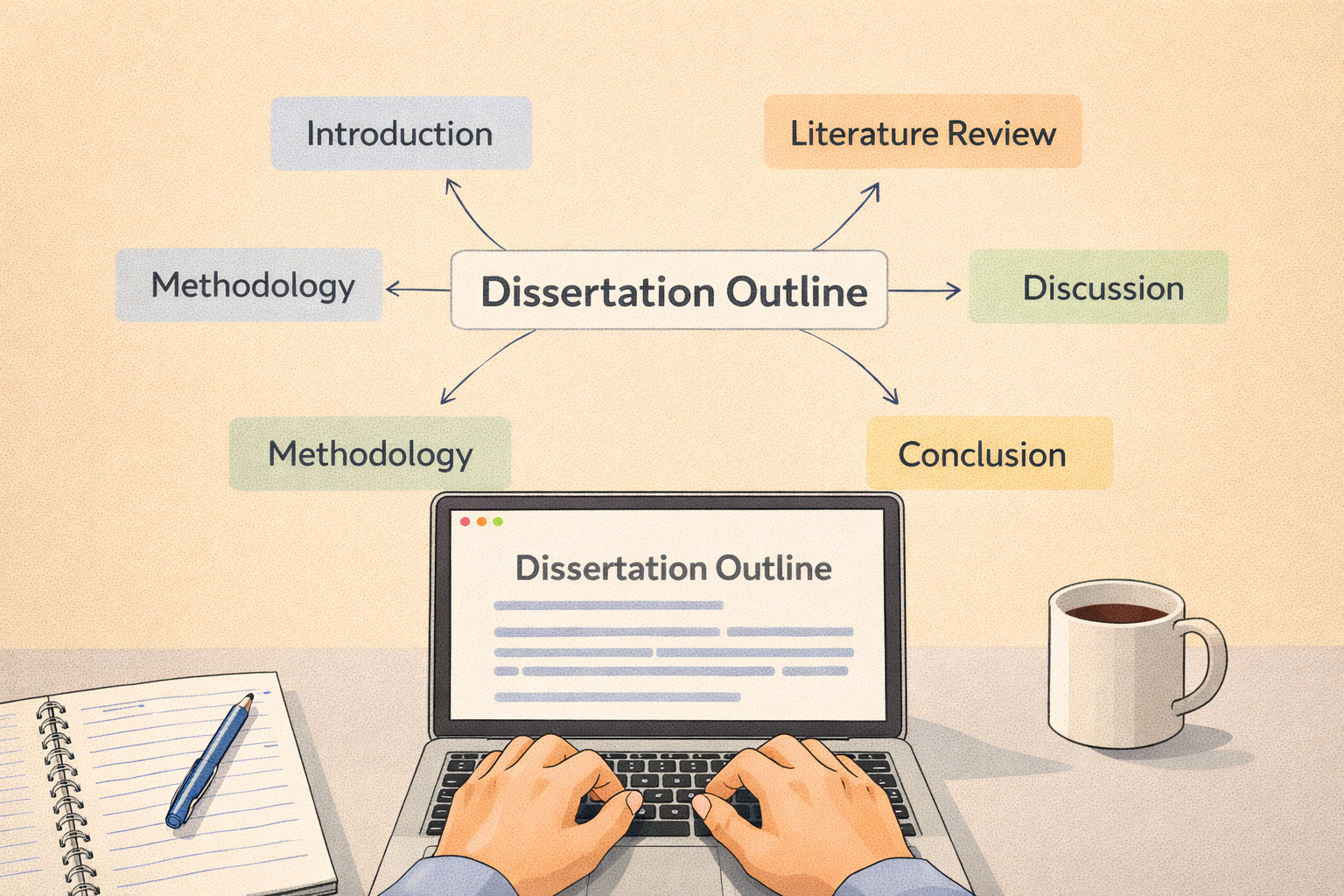
Writing a dissertation requires more than simply conducting research and presenting findings. One of the most important elements of academic success is understanding the correct dissertation structure. A well organised dissertation allows readers to follow the research process logically, from the initial research question to the final conclusions.
Universities expect dissertations to follow a structured format that demonstrates both analytical thinking and academic discipline. Each section of the dissertation has a specific purpose, guiding the reader through the research problem, theoretical background, methodology, findings, and interpretation of results.
For many students, structuring a dissertation can feel challenging because the document often exceeds tens of thousands of words and includes multiple chapters. Understanding how each section fits together helps students organise their research clearly and present their work in a professional academic format.
Why Dissertation Structure Matters in Academic Research
A clear dissertation structure is essential because it ensures that research is presented logically and systematically. Academic examiners evaluate dissertations not only for the quality of the research but also for the clarity with which the research is communicated.
A well structured dissertation allows readers to understand:
- The research problem and its academic significance
- Theoretical background and existing literature
- The research methods used to investigate the topic
- The findings produced by the research
- The broader implications of the study
Without a clear structure, even strong research ideas can become difficult to follow. Proper organisation therefore plays a crucial role in communicating the value of the research.
Overview of the Standard Dissertation Structure
Although universities may vary slightly in their requirements, most dissertations follow a similar chapter structure. Each section builds on the previous one, guiding the reader through the entire research process.
| Section | Purpose |
|---|---|
| Introduction | Introduces the research problem, objectives, and scope of the study |
| Literature Review | Examines existing research related to the topic |
| Methodology | Explains the research design and data collection methods |
| Findings / Results | Presents the outcomes of the research |
| Discussion | Interprets the findings within the academic context |
| Conclusion | Summarises contributions and suggests future research directions |
Each chapter contributes to building a coherent research narrative that leads from the initial research question to the final conclusions.
Writing the Dissertation Introduction
The introduction is the first chapter of the dissertation and establishes the foundation for the entire research project. This section introduces the topic, explains why the research is important, and outlines the objectives of the study.
A strong introduction typically includes several key components. These may include the background of the research topic, the research problem being addressed, and the main research questions or hypotheses guiding the study.
The introduction should also provide an overview of the dissertation structure so that readers understand how the chapters are organised.
Developing the Literature Review
The literature review is one of the most substantial chapters of a dissertation. This section examines existing academic research related to the dissertation topic and identifies gaps in current knowledge.
Rather than simply summarising sources, the literature review should critically evaluate previous studies. Students should analyse the strengths and limitations of existing research while demonstrating how their dissertation contributes new insights to the field.
By synthesising multiple sources and theoretical perspectives, the literature review provides the intellectual foundation for the research project.
Designing the Methodology Chapter
The methodology chapter explains how the research was conducted. This section outlines the research design, data collection methods, and analytical techniques used to investigate the research question.
Students must clearly justify why specific methods were chosen and explain how these methods help answer the research question. Transparency in the research process is essential because it allows other scholars to evaluate the reliability and validity of the study.
Common research approaches include:
- Qualitative research methods such as interviews or case studies
- Quantitative research using surveys or statistical analysis
- Mixed methods combining qualitative and quantitative approaches
The methodology chapter ensures that the research process is academically credible and clearly documented.
Presenting the Research Findings
The findings chapter presents the results obtained from the research process. This section focuses on describing the outcomes of data analysis without extensive interpretation.
Depending on the research design, findings may include statistical results, thematic analysis of qualitative data, or comparisons between different research variables. Clear presentation of results helps readers understand the evidence produced by the study.
| Presentation Method | Purpose |
|---|---|
| Tables | Organise numerical or categorical data |
| Charts and Graphs | Illustrate patterns and relationships within the data |
| Thematic Summaries | Highlight patterns in qualitative research |
| Statistical Results | Present quantitative research outcomes |
These formats help make complex research results easier for readers to understand.
Interpreting Results in the Discussion Chapter
The discussion chapter explains what the research findings mean in relation to the research question and existing academic literature. Students must interpret their results and explain how the findings contribute to broader academic debates.
This section often connects the findings back to the literature review, demonstrating whether the research supports or challenges previous studies. Critical reflection is essential because examiners expect students to demonstrate analytical insight rather than simply reporting data.
The discussion chapter therefore bridges the gap between empirical findings and theoretical interpretation.
Writing the Dissertation Conclusion
The conclusion is the final chapter of the dissertation and summarises the overall research project. This section highlights the main findings of the study and explains their academic significance.
A well written conclusion should also discuss the limitations of the research and suggest directions for future studies. These reflections demonstrate that the student understands the broader implications of their research.
A strong dissertation conclusion emphasises the contribution of the research rather than simply repeating earlier chapters.
Additional Components of a Dissertation
In addition to the main chapters, most dissertations include several supporting sections that provide important contextual information.
| Section | Purpose |
|---|---|
| Abstract | Provides a brief summary of the entire dissertation |
| Acknowledgements | Recognises individuals who supported the research |
| Table of Contents | Lists chapters and sections with page numbers |
| References | Lists all academic sources cited in the dissertation |
| Appendices | Includes supplementary research materials |
These sections help readers navigate the dissertation and verify the research sources used in the study.
Organising Your Dissertation Effectively
Understanding dissertation structure allows students to present their research clearly and logically. By following a structured framework, students can guide readers through their research process while demonstrating academic discipline and analytical ability.
A successful dissertation structure connects each chapter to the overall research objective. When the introduction, literature review, methodology, findings, discussion, and conclusion work together coherently, the dissertation becomes easier to read and evaluate.
Careful organisation therefore plays a vital role in ensuring that research contributions are clearly communicated. By planning the dissertation structure early in the writing process, students can develop a strong academic document that effectively presents their research and supports their academic success.



Comments