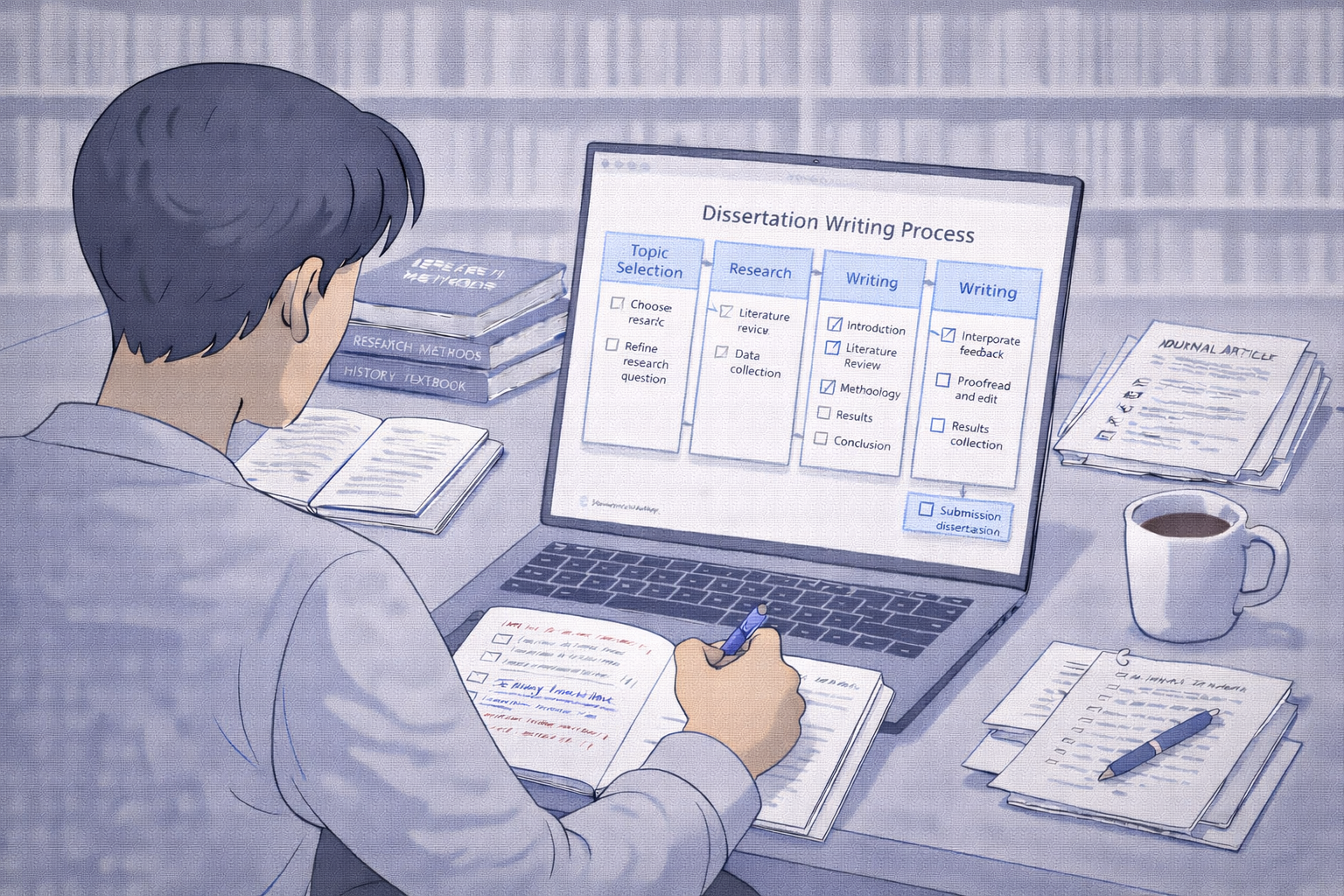
The dissertation writing process represents the most substantial academic task many university students will undertake. Unlike essays or coursework assignments, a dissertation requires long-term planning, independent research, and the ability to sustain a coherent argument across thousands of words. Success depends not only on subject knowledge, but on understanding how each stage of the process contributes to the final academic outcome.
Students often struggle not because they lack ability, but because the dissertation writing process feels unclear and overwhelming. Questions about where to begin, how to progress, and how to manage time and structure can create anxiety and delays. This guide breaks the dissertation writing process into clear, manageable stages, explaining what examiners expect at each point and how students can work strategically rather than reactively.
Understanding the Dissertation Writing Process as an Academic Framework
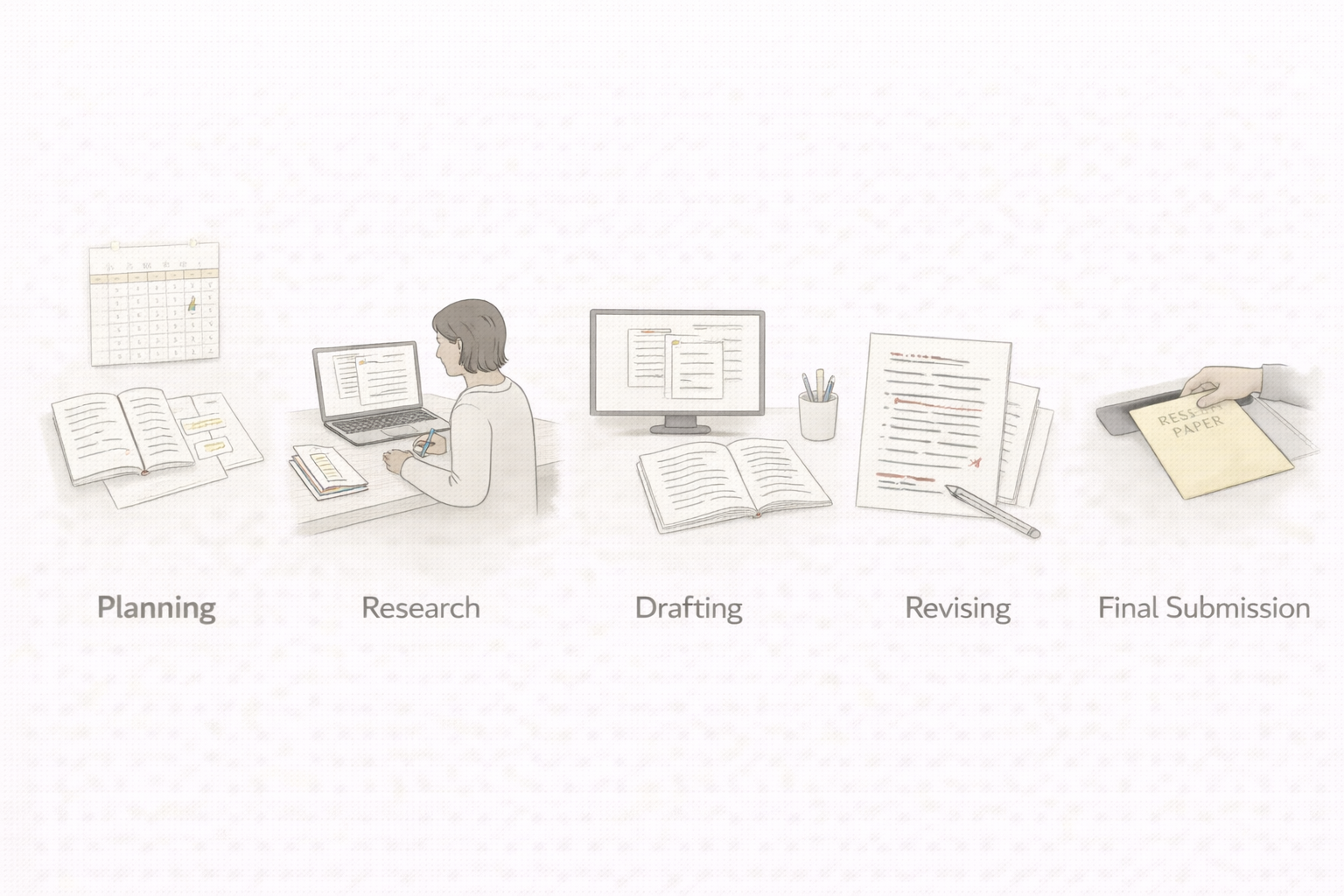
The dissertation writing process is best understood as a structured academic framework rather than a single writing task. Each stage builds on the previous one, creating a logical progression from idea development to final evaluation. Skipping or rushing stages often leads to weak research design, unfocused arguments, and extensive rewriting later.
Universities design the dissertation to assess a range of academic skills simultaneously, including research planning, literature engagement, methodological reasoning, analysis, and formal academic writing. The process therefore rewards organisation and foresight as much as intellectual insight.
Students who approach the dissertation writing process systematically tend to experience fewer setbacks and produce more coherent, defensible work.
Stage One: Topic Selection and Research Focus
The first stage of the dissertation writing process involves selecting a viable research topic. A strong topic is specific, researchable, and aligned with programme requirements. Overly broad topics often become unmanageable, while topics that are too narrow may lack sufficient academic material.
At this stage, students should assess the availability of academic literature, data sources, and methodological feasibility. A good topic is not necessarily the most original idea, but one that allows for sustained critical engagement.
Refining the topic into a clear research focus helps prevent scope creep later in the dissertation writing process.
Academic rule: A dissertation topic should be narrow enough to analyse deeply, but broad enough to support critical discussion.
Stage Two: Developing Research Questions and Objectives
Once a topic is selected, the dissertation writing process moves toward defining research questions or objectives. These statements guide the entire project and determine what literature, methods, and analysis are appropriate.
Effective research questions are focused, clear, and analytically oriented. They should invite investigation and evaluation rather than simple description. Weak research questions often result in unfocused dissertations that struggle to demonstrate academic depth.
Clear objectives provide a practical roadmap, helping students maintain alignment between different chapters of the dissertation.
Stage Three: Proposal Writing and Approval
Many programmes require a formal dissertation proposal as part of the writing process. The proposal outlines the research topic, questions, preliminary literature, and intended methodology. Its purpose is to demonstrate feasibility and academic relevance.
Proposal approval is a critical checkpoint. Feedback received at this stage often highlights potential weaknesses that are easier to address early than during full drafting.
Students who take the proposal seriously often experience a smoother dissertation writing process overall.
Stage Four: Literature Review Planning and Reading
The literature review phase is one of the most intellectually demanding stages of the dissertation writing process. It involves identifying, evaluating, and synthesising existing scholarship relevant to the research questions.
Rather than summarising sources individually, students should organise literature thematically, identifying debates, patterns, and gaps. This analytical approach strengthens the academic foundation of the dissertation.
Extensive reading at this stage reduces the risk of superficial analysis later and supports stronger argument development.
Stage Five: Methodology Design and Justification
Methodological planning is a central stage in the dissertation writing process, particularly for empirical research. Students must decide how data will be collected or analysed and justify these choices academically.
This stage requires careful consideration of research design, sampling, data sources, and ethical issues. Methodological decisions should align clearly with the research questions.
Poorly justified methods are a common reason for examiner criticism, even when results appear sound.
Stage Six: Data Collection and Organisation
For dissertations involving primary or secondary data, the writing process includes a distinct data collection stage. This phase requires accuracy, consistency, and careful record-keeping.
Students should organise data systematically to support later analysis. Disorganised data often leads to confusion and weak analytical structure.
Time management is especially important here, as delays in data collection can compress later writing stages.
Stage Seven: Structuring the Dissertation Before Writing
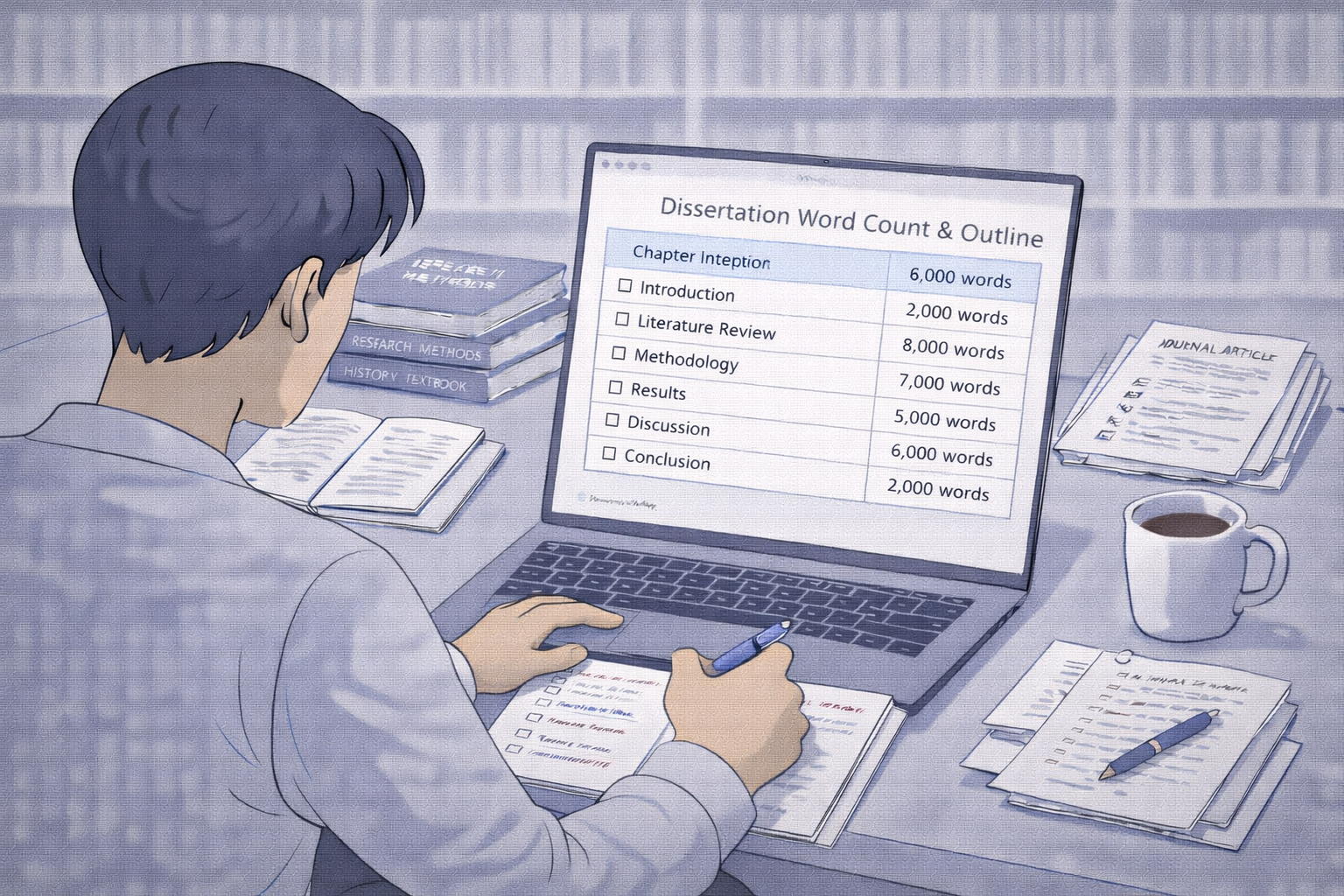
Before drafting begins, the dissertation writing process benefits greatly from detailed structural planning. Creating a chapter outline with provisional word counts helps maintain balance and focus.
This stage transforms the dissertation from an abstract idea into a concrete academic project. It also reduces the risk of overdeveloping some sections while neglecting others.
Clear structure supports efficient writing and clearer argumentation.
Stage Eight: Drafting Chapters Systematically
The drafting stage is where many students feel pressure to write everything at once. In reality, effective dissertation writing involves drafting chapters incrementally, revising as understanding deepens.
Writing does not need to be perfect at this stage. The goal is to develop content that can be refined through revision. Maintaining momentum is more important than stylistic polish.
Regular progress at this stage prevents last-minute crises and improves overall coherence.
Managing Productivity During Drafting
Students often benefit from setting realistic writing targets and deadlines for each chapter. Breaking the work into smaller tasks reduces cognitive overload.
Drafting alongside ongoing reading and reflection allows ideas to evolve organically rather than forcing premature conclusions.
This flexible approach supports stronger analytical depth.
Stage Nine: Revision, Editing, and Refinement
Revision is a distinct and essential stage in the dissertation writing process. It involves evaluating argument coherence, structural balance, and clarity rather than surface-level corrections alone.
Editing improves precision, removes redundancy, and strengthens academic tone. Many students underestimate the importance of this stage and submit work that is conceptually sound but poorly refined.
Targeted support such as proofreading and editing services can help identify issues that are difficult to spot independently.
Critical warning: Submitting without thorough revision often undermines otherwise strong research.
Stage Ten: Final Checks and Submission Preparation
The final stage of the dissertation writing process involves ensuring compliance with formatting, referencing, and submission requirements. These technical details affect professionalism and examiner perception.
Students should confirm word count rules, referencing style, and submission procedures well in advance. Small errors at this stage can cause unnecessary stress or penalties.
A final review of alignment between research questions, analysis, and conclusions helps ensure academic coherence.
| Stage | Main Focus | Academic Purpose |
|---|---|---|
| Topic selection | Define research area | Ensure feasibility and relevance |
| Literature review | Engage scholarship | Position research academically |
| Methodology | Design research approach | Demonstrate rigour and validity |
| Analysis | Interpret findings | Answer research questions |
| Revision | Refine argument | Strengthen clarity and coherence |
This staged approach highlights how each part of the process contributes to overall academic quality.
Common Pitfalls in the Dissertation Writing Process
Several common problems recur across dissertations. These include starting to write too early without sufficient reading, delaying writing until research feels “complete,” and underestimating the time needed for revision.
Another frequent issue is losing sight of the research questions during drafting, leading to descriptive sections that lack analytical purpose.
Awareness of these pitfalls allows students to take corrective action early.
Using Academic Support Strategically
Seeking academic support during the dissertation writing process is common and appropriate when used ethically. Support can clarify structure, improve language, and strengthen argument coherence.
Services such as dissertation writing support focus on guiding students through complex stages rather than replacing independent work.
Used responsibly, such support enhances learning and academic confidence.
Managing the Dissertation Writing Process with Confidence
The dissertation writing process is demanding, but it is also highly structured. Understanding each stage transforms the task from an overwhelming challenge into a series of manageable academic decisions.
By planning carefully, working incrementally, and revising thoroughly, students can maintain control over both content and time. The process rewards consistency, reflection, and academic discipline.
When approached strategically, the dissertation writing process becomes not only a requirement for graduation, but a demonstration of advanced academic capability.

Comments