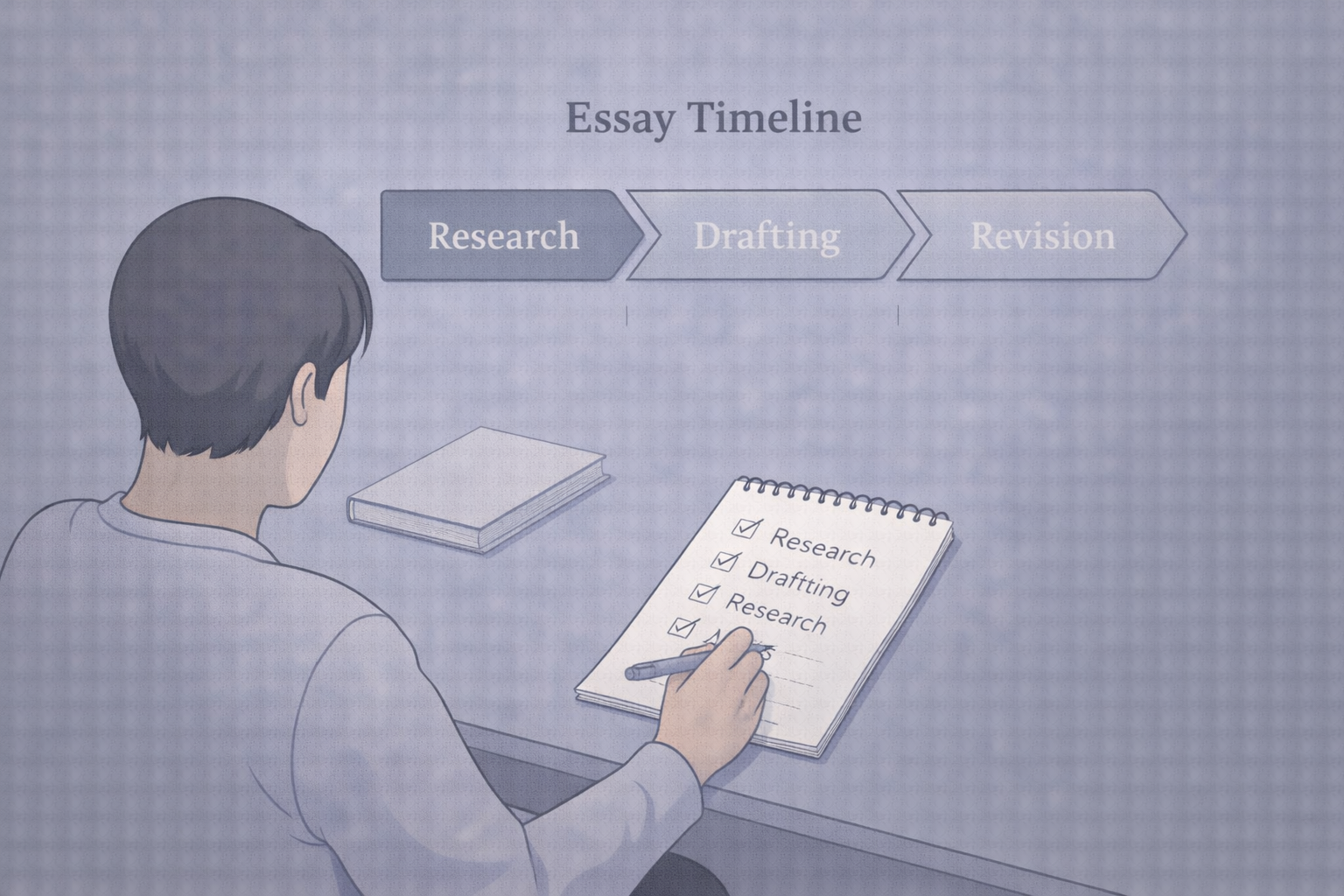
Essay writing time is rarely determined by typing speed alone. In academic contexts, the time required to produce a high-quality essay is shaped by research demands, analytical depth, referencing standards, and revision expectations. Many students underestimate this complexity and assume that essays can be completed quickly once they “sit down to write.”
In reality, academic essays are the result of a structured process that unfolds over multiple stages. Understanding how long each stage takes is essential for realistic planning, effective time management, and sustained academic performance. This article explains how essay writing time works, what influences it, and how students can plan their work more strategically.
What “Essay Writing Time” Really Includes
Essay writing time does not begin when a student opens a blank document, nor does it end when the final sentence is typed. It encompasses a sequence of intellectual and technical tasks that collectively determine the quality of the submission.
These tasks include interpreting the question, locating credible sources, planning an argument, drafting, editing, proofreading, and formatting references. Each stage contributes meaningfully to the final outcome and requires dedicated time.
Ignoring any of these stages often leads to rushed arguments, weak structure, or technical errors that affect grades.
Academic principle: Writing time is cumulative. Skipping early stages does not save time; it shifts pressure to later stages and increases error rates.
Average Essay Writing Time by Word Count
While writing time varies by discipline and task, word count provides a useful baseline for estimation. Longer essays require not only more writing but deeper research and more complex synthesis.
The table below illustrates typical time ranges for academic essays under standard undergraduate conditions.
| Word Count | Estimated Total Time | Primary Time Drivers |
|---|---|---|
| 500 words | 4–6 hours | Question analysis, basic research, drafting |
| 1,000 words | 8–12 hours | Source integration, argument development |
| 2,000 words | 20–30 hours | Critical analysis, structured planning, revision |
| 3,000+ words | 35–50+ hours | Extended research, synthesis, advanced referencing |
These estimates assume careful academic work rather than rushed completion.
Key Factors That Increase or Reduce Essay Writing Time
Two essays of identical length can require very different amounts of time. The difference lies in contextual and academic variables that shape complexity.
Understanding these variables allows students to predict workload more accurately and avoid unrealistic expectations.
Complexity of the Essay Question
Descriptive essays generally take less time than analytical or evaluative tasks. Questions that require comparison, critique, or application of theory significantly increase writing time.
This is because higher-order tasks demand deeper engagement with sources and more careful argumentation.
Research Requirements
Essays that require peer-reviewed sources, recent studies, or discipline-specific methodologies take longer to prepare. Locating, reading, and synthesising academic literature is time-intensive.
Students unfamiliar with academic databases often underestimate this stage.
Referencing Style and Accuracy
Different referencing systems impose different technical demands. Harvard, APA, Chicago, and OSCOLA all require careful formatting.
Ensuring consistency and accuracy across citations and reference lists can add several hours to the writing process.
Breaking Essay Writing Time into Manageable Stages
Effective time management begins by breaking the writing process into discrete stages. This approach transforms a large, intimidating task into achievable steps.
The following breakdown illustrates how time is typically distributed across stages.
| Stage | Percentage of Total Time | Purpose |
|---|---|---|
| Understanding the brief | 5–10% | Clarifying task requirements and scope |
| Research and reading | 30–40% | Gathering and evaluating sources |
| Planning and outlining | 10–15% | Structuring the argument |
| Drafting | 25–30% | Writing the main content |
| Editing and proofreading | 10–15% | Improving clarity, coherence, and accuracy |
Students who allocate time deliberately across these stages tend to produce stronger work with less stress.
Why Last-Minute Writing Rarely Works
Many students attempt to compress essay writing time into a single session. While this may produce text, it rarely produces strong academic writing.
Time pressure limits critical thinking, increases referencing errors, and reduces opportunities for revision. These weaknesses are often visible to examiners.
Short-term time savings often lead to long-term grade penalties.
Examiner warning: Essays written in a single sitting frequently show weak structure, limited critical depth, and technical inaccuracies.
How Discipline Affects Essay Writing Time
Essay writing time varies significantly across academic fields. Humanities essays often prioritise argument and interpretation, while science-based essays emphasise evidence and methodology.
As a result, students may need to adjust time expectations depending on their subject area.
- Humanities and social sciences: extended reading and conceptual synthesis
- Business and management: application of models and case analysis
- Health and science disciplines: accuracy, terminology, and evidence integration
Recognising these differences prevents unrealistic cross-discipline comparisons.
Improving Efficiency Without Reducing Quality
Reducing essay writing time does not mean lowering academic standards. Instead, it involves improving efficiency through better planning and focused work.
Strategies such as early outlining, targeted reading, and staged drafting can significantly reduce wasted effort.
Over time, students who practice structured writing develop faster decision-making without sacrificing rigour.
Time Planning for Multiple Assignments
When managing multiple essays, cumulative writing time becomes critical. Overlapping deadlines amplify stress and reduce available revision time.
Creating a writing schedule that accounts for research intensity and word count prevents overload.
Effective academic planning treats writing time as a fixed resource that must be distributed strategically.
Understanding Essay Writing Time as an Academic Skill
Time management in essay writing is not merely a productivity concern; it is an academic skill developed through experience and reflection.
Students who understand how long quality work takes are better equipped to negotiate deadlines, plan workloads, and maintain academic integrity.
Realistic expectations protect both performance and wellbeing.
Managing Essay Writing Time with Confidence
Essay writing time reflects the intellectual demands of academic work rather than inefficiency or weakness. Recognising this helps students plan realistically and avoid unnecessary pressure.
By understanding time requirements, breaking tasks into stages, and respecting the full writing process, students can approach essays with greater control and confidence.
Strong academic writing is not rushed; it is built deliberately, one structured stage at a time.



Comments