![Clean academic diagram illustrating the structure of an APA 7 YouTube citation, with labeled components for author, date, title, [Video], platform, and URL.](https://files-storage-l.nyc3.digitaloceanspaces.com/epic-essay/ZlqvQU1sbHpxgCUeT7iBNuYstxTGl6KMKG6rlgjS.png)
Knowing how to cite a YouTube video in APA 7 has become increasingly important in modern academic writing. University students frequently use educational videos, recorded lectures, expert interviews, documentaries, and institutional content hosted on YouTube. However, many lose marks because they format references incorrectly or misunderstand how authorship works for online videos.
APA 7th edition provides clear guidance for citing audiovisual materials, including YouTube videos. This guide explains the correct structure for reference list entries, in-text citations, timestamps for direct quotations, and special situations such as channels without real names. By the end, you will understand exactly how to cite a YouTube video in APA 7 with confidence and precision.
When Should You Cite a YouTube Video in Academic Writing?
You should cite a YouTube video when it contributes directly to your argument, provides data, expert commentary, or theoretical explanation. In disciplines such as media studies, psychology, education, business, and sociology, video content can be a legitimate academic source if it is credible and relevant.
However, not all YouTube content is academically appropriate. Always evaluate the authority of the creator, the purpose of the content, and whether it aligns with scholarly expectations.
Only cite YouTube videos in academic work if they are credible, relevant, and academically appropriate.
APA 7 Reference Format for a YouTube Video
The general APA 7 format for citing a YouTube video is:
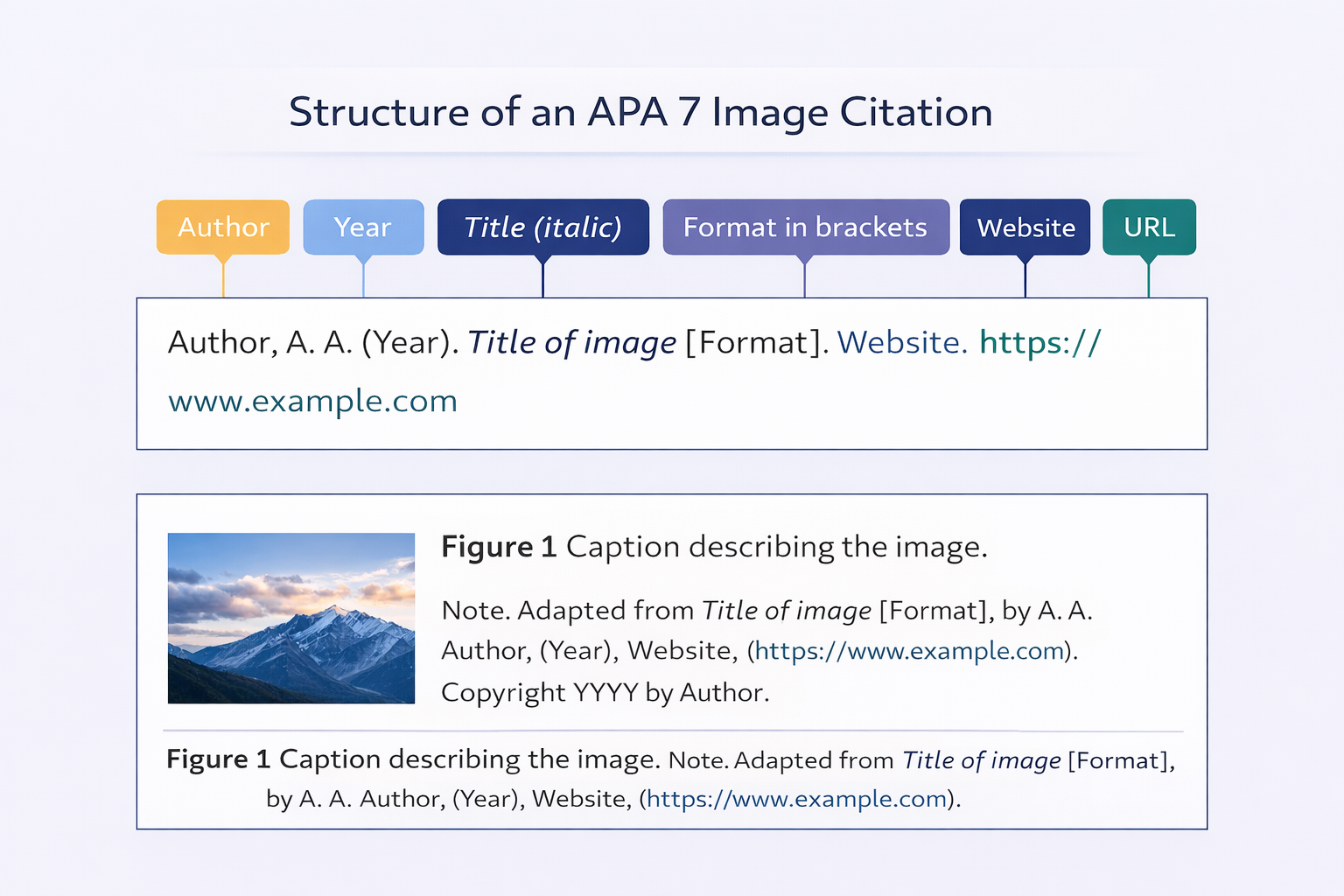
Author or Channel Name. (Year, Month Day). Title of video [Video]. YouTube. URL
Each element must appear in the correct order. The person or organisation that uploaded the video is treated as the author. The exact upload date is required, not just the year. The video title is written in sentence case and italicised. The format descriptor “[Video]” appears in square brackets after the title.
| Element | Example |
|---|---|
| Author/Channel | CrashCourse |
| Date | (2021, March 15). |
| Title (Italicised) | The history of psychology |
| Format | [Video]. |
| Platform | YouTube. |
| URL | https://www.youtube.com/xxxxx |
This structured approach ensures consistency and alignment with APA 7 requirements.
Full APA 7 Reference Example
CrashCourse. (2021, March 15). The history of psychology [Video]. YouTube. https://www.youtube.com/xxxxx
If the uploader’s real name is available and differs from the channel name, APA recommends using the real name followed by the channel name in brackets.
Example:
Smith, J. [Psychology Simplified]. (2022, July 10). Understanding cognitive bias [Video]. YouTube. https://www.youtube.com/xxxxx
How to Write In-Text Citations for YouTube Videos
When citing a YouTube video in-text, use the author or channel name and year.
Parenthetical citation: (CrashCourse, 2021)
Narrative citation: CrashCourse (2021) explains that psychological theory evolved through multiple schools of thought.
If quoting directly from the video, include a timestamp instead of a page number.
Example:
(CrashCourse, 2021, 4:32)
Use timestamps (e.g., 4:32) instead of page numbers when quoting from videos.
This helps readers locate the exact moment referenced.
What If There Is No Individual Author?
If the video is uploaded by an organisation, use the organisation name as the author. For example, TED, World Health Organization, or BBC News would appear as the author in the reference list.
If no clear author exists, use the channel name exactly as it appears on YouTube. Do not invent or guess author names.
Citing Live Streams and Recorded Lectures
For recorded lectures uploaded to YouTube, follow the same structure. The key difference is ensuring you use the full upload date and correct title formatting.
Example:
Johnson, M. (2023, September 5). Introduction to research methods lecture 1 [Video]. YouTube. https://www.youtube.com/xxxxx
The content type remains “[Video]” even if it was originally a live stream.
Common Mistakes When Citing a YouTube Video in APA 7
- Using “YouTube” as the author instead of the uploader.
- Capitalising every word in the title.
- Forgetting to include the format descriptor [Video].
- Using page numbers instead of timestamps.
- Omitting the full upload date.
APA 7 requires precision. Small formatting errors may result in lost marks, especially in disciplines with strict referencing standards.
Is a Retrieval Date Required?
In most cases, retrieval dates are not required when citing YouTube videos because the content is not expected to change over time. However, if your instructor specifically requests retrieval dates or if the content is likely to be updated, follow institutional guidelines.
Ensuring Academic Credibility When Using YouTube Sources
While APA 7 provides clear formatting rules, academic credibility depends on source quality. Prefer videos created by universities, recognised scholars, reputable organisations, or established educational channels. Avoid informal opinion-based content unless your assignment specifically requires media analysis.
If you are unsure whether a YouTube source is appropriate, consult your module handbook or lecturer.
Mastering How to Cite a YouTube Video in APA 7
Learning how to cite a YouTube video in APA 7 involves understanding five essential components: author or channel name, full upload date, italicised title in sentence case, format descriptor “[Video],” and direct URL. In-text citations follow the standard author-date format, with timestamps used for direct quotations.
Accurate referencing strengthens academic integrity and demonstrates professional writing standards. By applying these structured guidelines consistently, you ensure clarity, credibility, and compliance with APA 7 requirements.
Comments