In academic writing, evidence and ideas from existing research form the backbone of arguments. However, simply using evidence is not enough; students must show clearly where each idea comes from. This is the purpose of in-text citations—a system of acknowledging sources within the body of your work. While citation rules may seem technical, they reflect fundamental academic expectations about intellectual honesty, evidence use, and scholarly conversation.
Despite their importance, many students struggle with when, how, and why to include in-text citations. Errors in citation can reduce credibility, confuse readers, and even lead to allegations of plagiarism. This guide provides a deep, structured explanation of in-text citations, including how different styles implement them, common pitfalls, and best practices for confident academic writing.
What In-Text Citations Are and Why They Matter
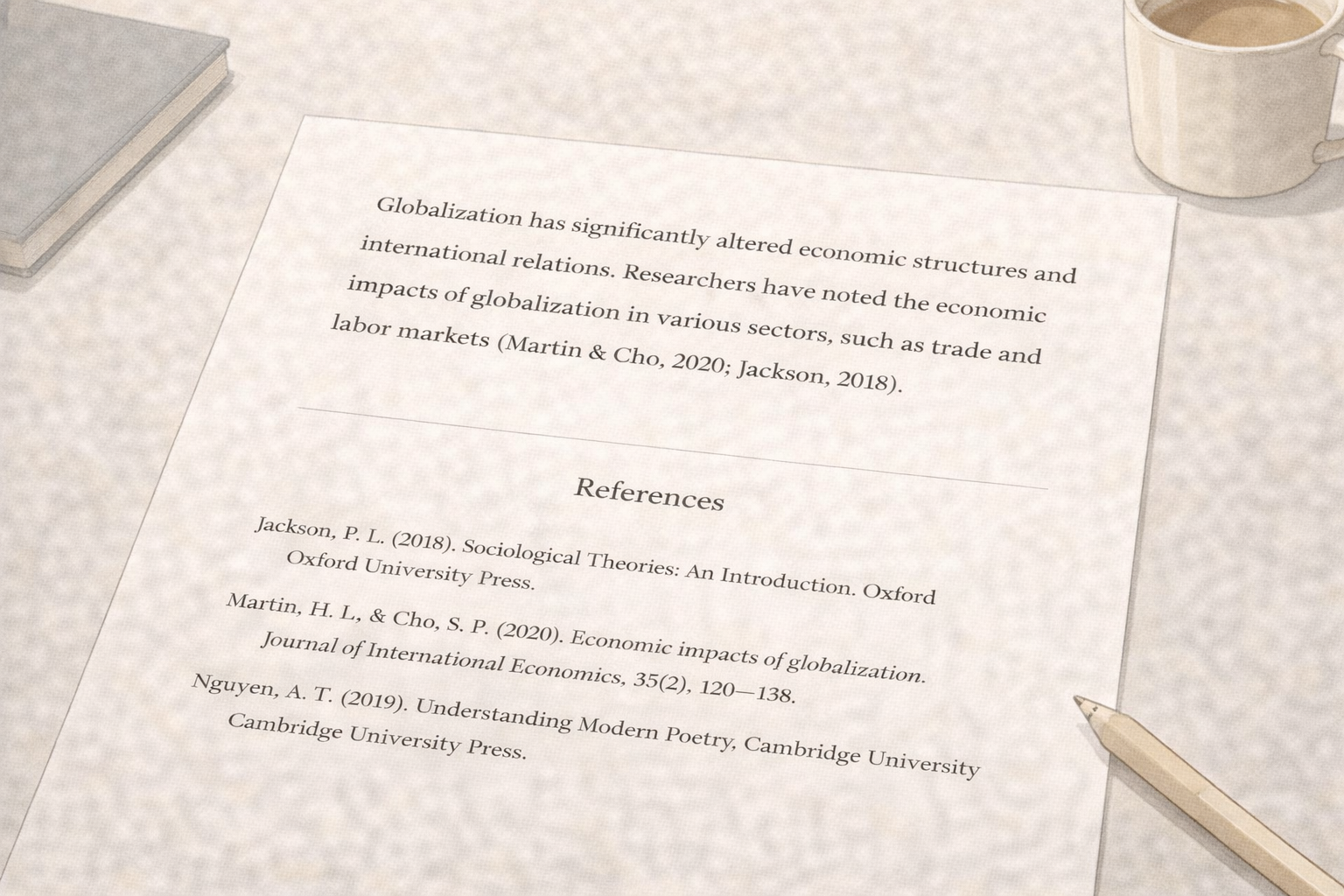
In-text citations are brief acknowledgements within the body of a text that point the reader to a source in the reference list. They provide a transparent link between the ideas you present and the research from which they are drawn. Without in-text citations, readers cannot verify claims, trace evidence, or understand where your own thinking ends and others’ begins.
In-text citations matter for academic integrity because they prevent plagiarism—presenting someone else’s ideas as your own. They also signal to markers that you have engaged with relevant literature in a disciplined and critical way. Correct citation strengthens argumentation, supports analytical claims, and situates your work within broader scholarly conversations.
In short, in-text citations make your academic writing credible, traceable, and respectful of intellectual property.
Academic rule: Whenever you use an idea, data, or wording that is not your own, you must include an in-text citation.
Key Functions of In-Text Citations in Academic Writing
In-text citations serve several essential functions that contribute to scholarly rigor. First, they offer immediate source acknowledgment at the point of use, reducing ambiguity about origin. Second, they guide readers to the full reference details at the end of the document. Third, they demonstrate that your claims are grounded in evidence, which is central to academic persuasiveness.
Without in-text citations, even well-written analysis appears unsupported. Proper citation reflects careful research habits and a disciplined approach to evidence, both of which are integral to high-quality academic writing.
General Rules for Using In-Text Citations
Although citation rules vary by referencing style, the fundamental principles of in-text citations are similar across systems. An in-text citation should appear as close as possible to the material it acknowledges. It should include enough information to direct the reader to the corresponding entry in the reference list. Finally, it should follow the punctuation and formatting conventions of the required citation style.
Failing to include an in-text citation for sourced material is treated as a serious academic error, even if a reference list is provided. Citations must always reflect the specific source used, not a general idea from the field.
Common Referencing Styles and Their In-Text Citation Formats
Different academic communities prefer different citation systems, and each has its own in-text citation conventions. Below is an overview of common styles and how they handle in-text citations.
| Referencing Style | In-Text Citation Example | Typical Disciplines |
|---|---|---|
| Harvard | (Smith, 2021) | Social sciences, business |
| APA | (Smith, 2021) | Psychology, education |
| MLA | (Smith 45) | Humanities |
| Chicago (Author-Date) | (Smith 2021, 45) | Social sciences |
| Chicago (Notes) | ¹Smith, Title, 45. | History, arts |
Each style balances brevity and traceability differently, so it is essential to use the precise format required by your institution or instructor.
Harvard and APA: Author-Date In-Text Citations
Harvard and APA both use author–date systems, which emphasise the currency of sources—a priority in evidence-based disciplines. These styles place the author’s surname and year of publication in parentheses following the sourced idea. Page numbers are included for direct quotations or specific references.
For example, a paraphrased point would be cited as (Smith, 2021), while a direct quote would be (Smith, 2021, p. 88). In narrative citations, the author’s name appears in the sentence, with the year and page details in parentheses.
This format promotes readability by integrating source attribution directly into the flow of the argument.
MLA: Author and Page Number Emphasis
MLA style, common in humanities, emphasises the location of specific information through page numbers. In-text citations typically include the author’s surname and page number without a comma, as in (Smith 45). This format prioritises textual precision, which is important when analysing literature, philosophy, or historical texts.
MLA’s approach reflects disciplinary preferences for pinpointing exact locations of arguments or passages within sources.
Chicago Style: Notes vs. Author-Date
Chicago style offers two systems. The author–date system resembles APA and Harvard, suitable for social sciences. The notes and bibliography system uses footnotes or endnotes, which can incorporate additional commentary alongside source details. This system is common in history and some arts disciplines.
Footnote citations can be numbered sequentially and provide detailed source information at the bottom of the page. This enables an uninterrupted reading experience while still acknowledging sources thoroughly.
Rules for Quoting vs. Paraphrasing
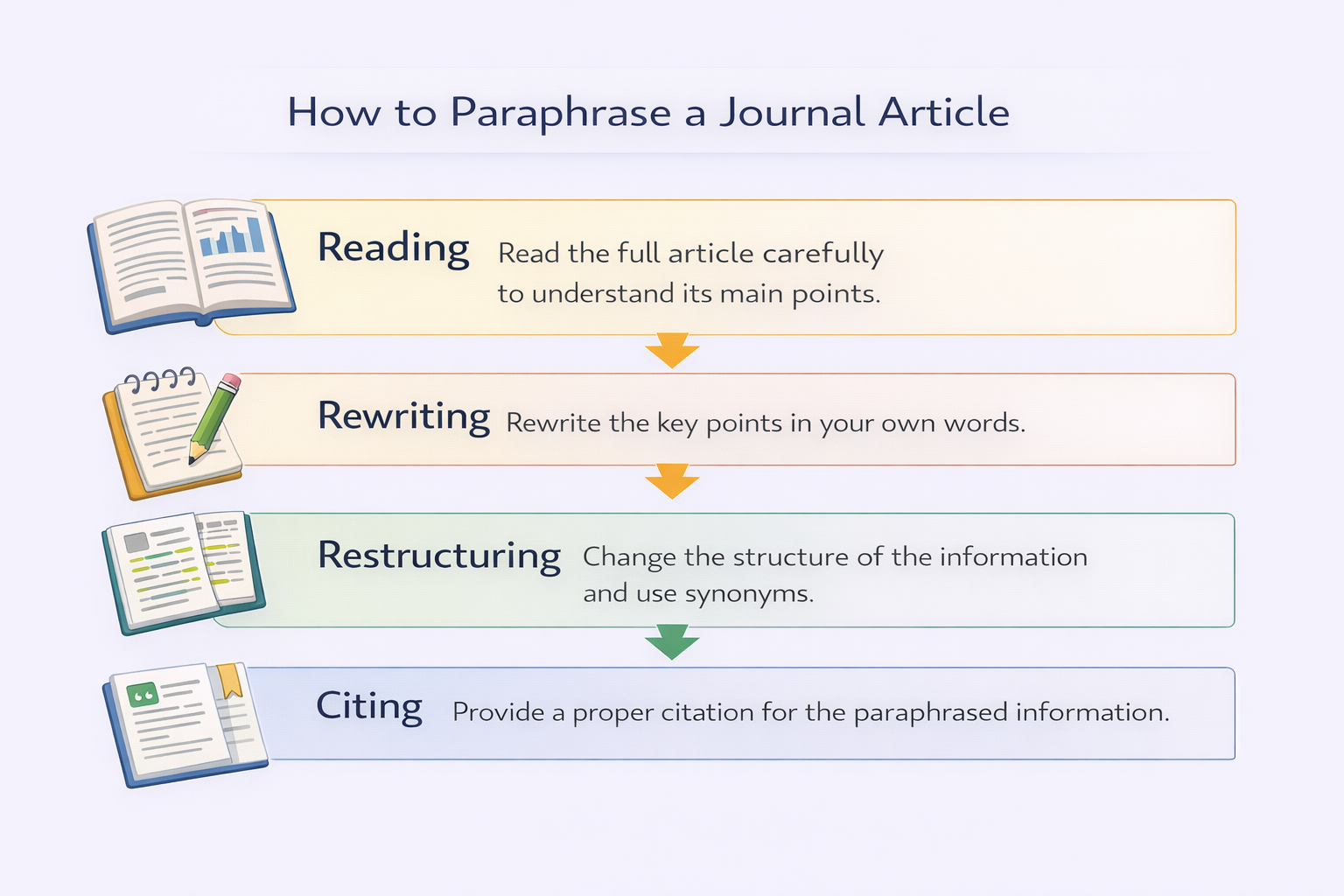
In-text citation rules differ slightly depending on whether material is quoted directly or paraphrased. Direct quotations require quotation marks (or block formatting for long quotes) and a precise page reference. Paraphrased material, which restates ideas in your own words, still requires an in-text citation but does not need quotation marks.
Critical warning: Changing a few words from the original without citation or proper paraphrasing still counts as plagiarism.
Effective paraphrasing involves reworking the structure and expression of the idea while preserving its original meaning, followed by an accurate citation.
When to Include In-Text Citations
Students must include in-text citations whenever they use evidence, ideas, statistics, theories, or phrases from sources. This applies to:
- Direct quotations
- Paraphrased ideas
- Summaries of arguments
- Specific data or figures
Even widely accepted facts may need citation if they are contested or central to your argument. Understanding what requires citation is a key academic skill that develops with experience.
Multiple Sources in a Single Citation
When a statement is supported by more than one source, in-text citations can list multiple references together, usually separated by semicolons. In author–date systems, the order is typically alphabetical by author surname.
This practice demonstrates broad engagement with literature and strengthens the evidence for your claim.
Common In-Text Citation Errors and How to Fix Them
Even experienced students make in-text citation errors. The most frequent issues include mismatches between in-text citations and reference list entries, missing page numbers for direct quotes, and incorrect formatting.
- Missing or incorrect year in author–date systems
- No page number for a direct quotation
- Citing secondary sources without original verification
- Failing to cite paraphrased ideas
Regular cross-checking between your in-text citations and reference list prevents such errors.
How In-Text Citations Affect Assessment
In-text citations are often explicitly assessed as part of “use of sources” or “academic conventions” criteria in marking rubrics. Even analytically strong essays can lose marks if citation practices are inconsistent or incorrect.
Markers view accurate in-text citations as evidence of rigorous research and responsible academic practice.
Practical Tips for Mastering In-Text Citations
Mastery of in-text citations requires systematic habits rather than last-minute correction. Students should record full reference details at the point of research and insert in-text citations during drafting rather than after.
- Capture source details immediately during research.
- Insert in-text citations as you write, not retrospectively.
- Use official style guides rather than generic online examples.
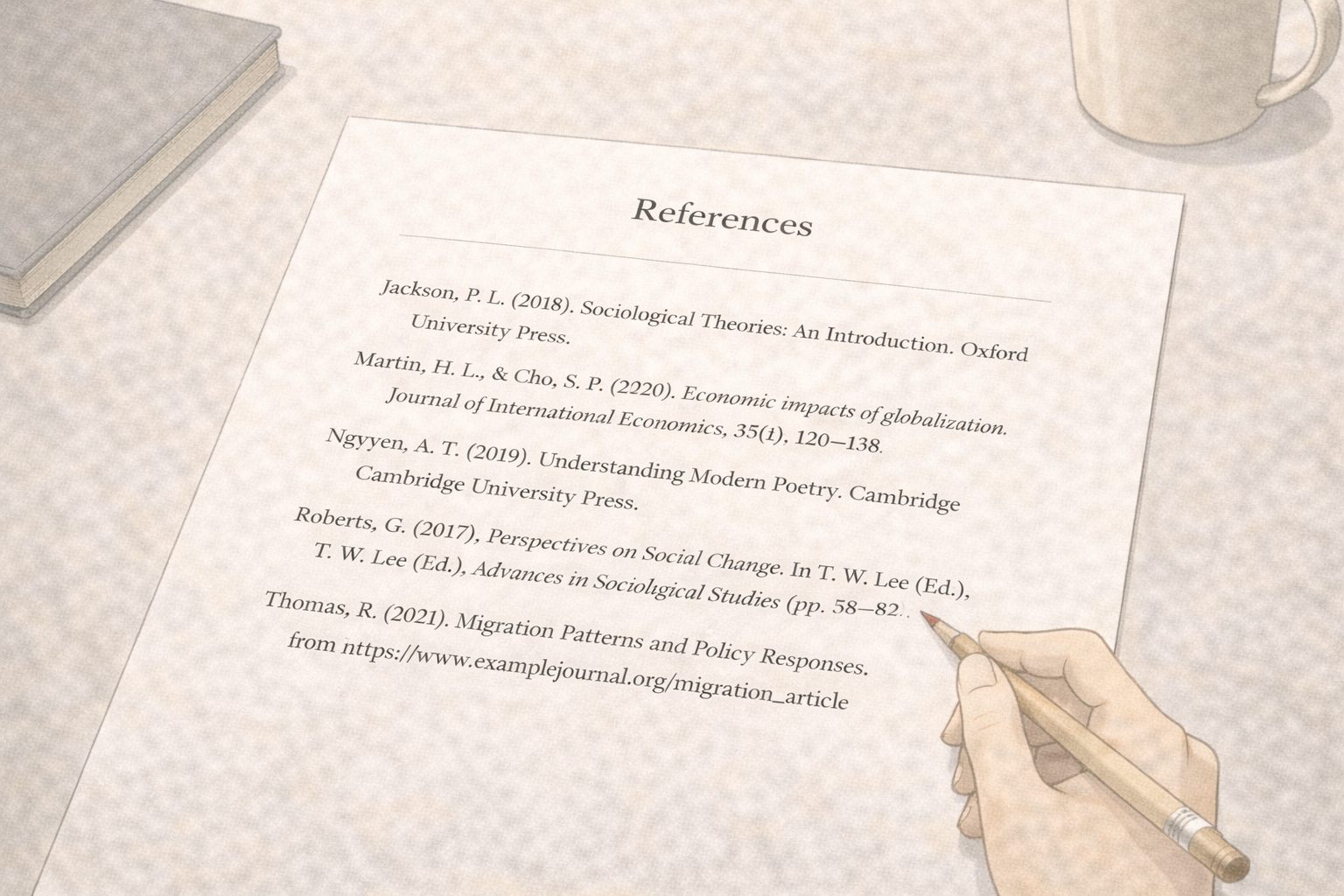
- Proofread all citations against the reference list.
- Seek feedback on citation accuracy early in the drafting process.
These practices reduce errors and reinforce disciplined writing habits.
In-Text Citations as a Tool for Academic Credibility
Ultimately, in-text citations are more than technical requirements; they are tools that enhance the credibility and transparency of academic work. They show that your arguments are grounded in evidence, that you respect the work of other scholars, and that your writing participates responsibly in scholarly dialogue.
Students who master in-text citations strengthen both the clarity and the persuasiveness of their writing.
Closing Advice on In-Text Citation Mastery
In-text citations are fundamental to academic writing. While their rules vary by style, the underlying purpose is consistent: to acknowledge sources transparently and support your arguments with evidence. By understanding when, how, and why to cite, you enhance your credibility and academic integrity.
With practice and attention to detail, in-text citations become an intuitive part of writing rather than a stumbling block, enabling you to produce work that is both credible and compelling.

Comments