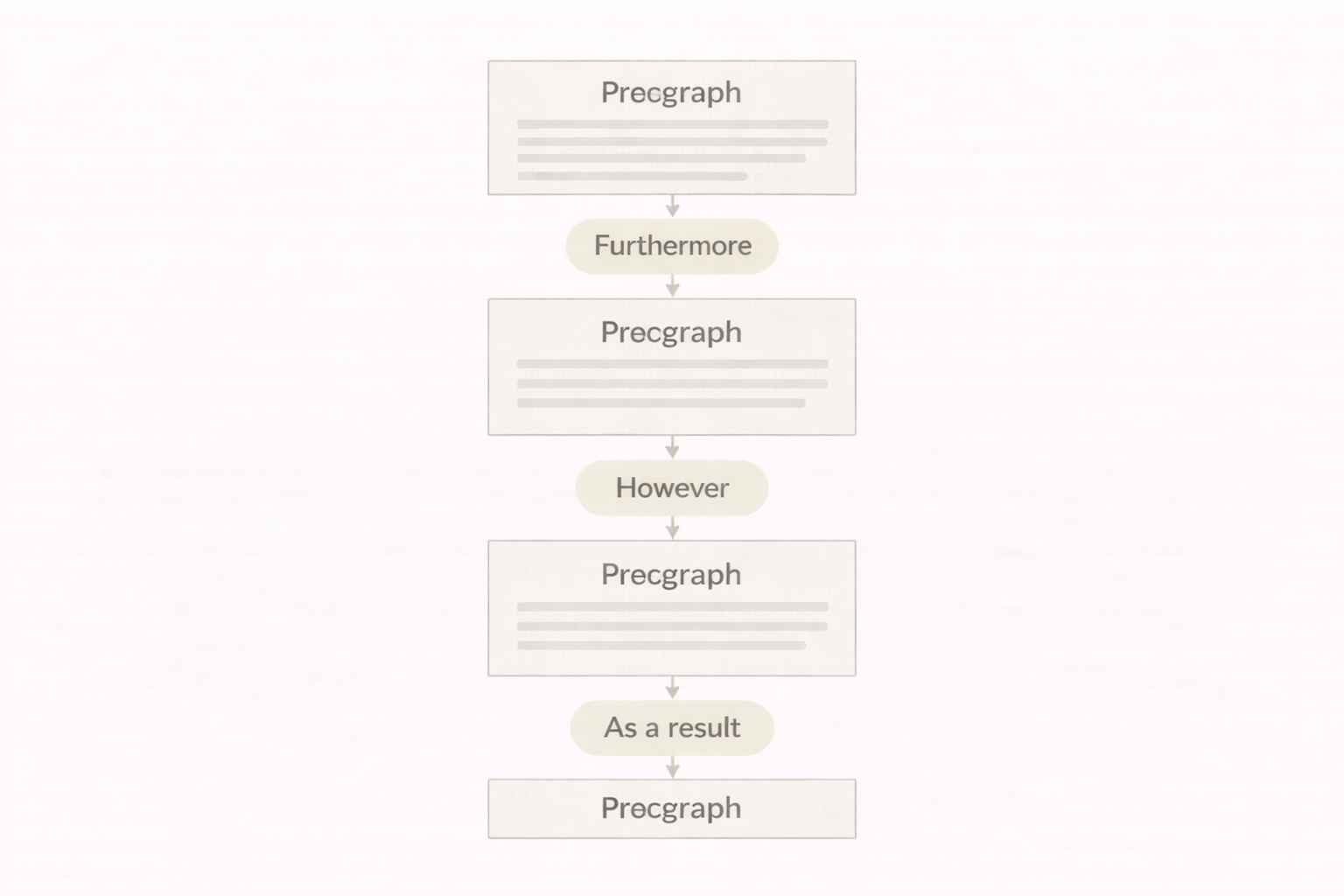
Academic writing is judged not only by the quality of ideas presented but also by how effectively those ideas are connected. Even strong arguments can lose impact if paragraphs feel disjointed or logic appears fragmented. This is where linking words for academic writing become essential.
Linking words, also known as transition words or connectors, guide readers through an argument by signalling relationships between sentences, paragraphs, and sections. This article explains what linking words are, how they function in academic contexts, and how university students can use them to achieve clarity, coherence, and higher assessment scores.
What Are Linking Words in Academic Writing?
Linking words are words or phrases used to show relationships between ideas. They help readers understand whether information is being added, contrasted, exemplified, sequenced, or concluded.
In academic writing, linking words serve a structural role rather than a stylistic one. They act as signposts that clarify logical progression and ensure arguments unfold in a clear and disciplined manner.
Linking words do not add content; they clarify relationships between content.
Why Linking Words Matter at University Level
University marking criteria frequently assess coherence, cohesion, and logical flow. These elements are directly influenced by how well ideas are connected across sentences and paragraphs.
Appropriate use of linking words demonstrates control over academic argumentation. It shows examiners that the writer understands not only what to say, but how ideas relate within a broader analytical framework.
Poor transitions are a common reason for otherwise strong essays receiving lower marks.
Linking Words vs. Informal Transitions
Not all transitions are suitable for academic writing. Conversational connectors such as “and then,” “plus,” or “on top of that” may be acceptable in informal contexts but weaken academic tone.
Academic linking words are precise, neutral, and logic-driven. Choosing discipline-appropriate connectors ensures writing remains formal and credible.
Categories of Linking Words in Academic Writing
Linking words can be grouped according to the logical function they perform. Understanding these categories helps students select the most appropriate transition for each context.
Addition and Expansion
Additive linking words introduce additional information that supports or develops an idea. They are common in literature reviews and body paragraphs.
| Linking Word | Academic Function |
|---|---|
| Furthermore | Adds supporting evidence |
| Moreover | Strengthens an argument |
| In addition | Introduces related points |
| Additionally | Extends discussion |
These linking words signal continuation without redundancy.
Contrast and Comparison
Contrastive linking words show differences, limitations, or opposing viewpoints. They are essential in critical analysis and evaluative writing.
| Linking Word | Usage Context |
|---|---|
| However | Introduces contrast |
| In contrast | Highlights differences |
| Nevertheless | Maintains argument strength |
| Whereas | Compares opposing ideas |
Overusing contrastive words can weaken flow, so they should be used purposefully.
Cause and Effect
Causal linking words explain why something happens or what results from an action. These are common in scientific, social science, and policy-based essays.
- Therefore
- As a result
- Consequently
- Thus
These transitions clarify logical reasoning and strengthen analytical clarity.
Example and Illustration
Illustrative linking words introduce examples that support an argument. They help move from abstract claims to concrete evidence.
| Linking Word | Function |
|---|---|
| For example | Introduces illustration |
| For instance | Clarifies abstract ideas |
| Such as | Lists representative cases |
Examples should always be followed by explanation to maintain analytical depth.
Sequence and Structure
Sequencing linking words help organise arguments, especially in methodological writing or step-based explanations.
- Firstly / Secondly
- Subsequently
- Finally
- In the following section
These are particularly useful in long essays or reports with multiple sections.
Concession and Limitation
Concessive linking words acknowledge limitations or opposing arguments without weakening the central claim.
This category is especially important in critical and evaluative academic writing.
| Linking Word | Purpose |
|---|---|
| Although | Acknowledges limitation |
| Despite | Introduces contrastive evidence |
| Nonetheless | Maintains argument authority |
Linking Words at Paragraph Level
Linking words do not operate only within sentences. They are crucial at paragraph level, where transitions guide readers between ideas.
Paragraph-opening linking phrases such as “Building on this argument” or “In contrast to the previous discussion” help maintain essay-wide coherence.
Common Mistakes When Using Linking Words
Many students misuse linking words by overusing them or choosing connectors that do not accurately reflect the relationship between ideas.
Using a linking word incorrectly is worse than not using one at all.
- Overloading sentences with multiple transitions
- Using informal connectors in academic essays
- Repeating the same linking word excessively
- Forcing transitions where ideas are not logically connected
Effective use requires precision and restraint.
Discipline Sensitivity in Linking Words
Different disciplines favour different types of linking words. Scientific writing prioritises cause-and-effect transitions, while humanities essays often rely more on contrast and evaluation.
Students should always consider disciplinary conventions and marking rubrics when selecting transitions.
Revising Linking Words for Academic Precision
Revision is the best stage to refine linking words. Reading an essay aloud often reveals weak or missing transitions.
Many students improve coherence significantly through academic editing and proofreading, where transitions are checked for accuracy, consistency, and tone.
How Linking Words Improve Academic Grades
Clear transitions improve readability, logical flow, and examiner comprehension. Essays that guide the reader smoothly are easier to evaluate positively.
Effective linking words demonstrate academic maturity and control, which directly supports higher marks for structure and argumentation.
Using Linking Words with Academic Confidence
Linking words for academic writing are tools of logic, not decoration. When used strategically, they strengthen arguments, clarify relationships, and enhance scholarly tone.
By understanding their function and applying them with precision, university students can produce essays that are coherent, persuasive, and academically robust.

Comments