
Literary analysis sits at the heart of literature-based disciplines because it trains students to read texts critically, construct evidence-based arguments, and engage with meaning beyond surface-level understanding. Unlike summary or personal response, literary analysis demands precision, contextual awareness, and analytical control.
This guide provides a comprehensive academic framework for literary analysis. It explains what literary analysis involves, how to approach different genres, and how to translate close reading into coherent, well-structured academic writing suitable for essays, coursework, and examinations.
What Literary Analysis Means in Academic Contexts
In academic study, literary analysis refers to the systematic examination of a text’s language, structure, form, and context in order to explain how meaning is constructed. It is not about personal opinion, but about making defensible claims grounded in textual evidence.
Examiners assess literary analysis based on clarity of argument, depth of interpretation, and effective use of evidence. A strong analysis shows not only what a text means, but how its formal and stylistic features produce that meaning.
Core academic principle: Literary analysis explains how textual features generate meaning, not simply what the text appears to say.
Close Reading as the Foundation of Literary Analysis
Close reading is the primary method underpinning all literary analysis. It involves detailed attention to language, patterns, and textual features rather than relying on plot recall or secondary commentary.
Students should read texts multiple times, noting repetitions, contradictions, shifts in tone, and significant word choices. Interpretation should emerge gradually from these observations rather than being imposed in advance.
Distinguishing Summary from Analysis
One of the most common academic weaknesses is confusing summary with analysis. Summary recounts what happens in a text, while analysis explains why and how it happens.
Effective literary analysis assumes the reader is familiar with the text and focuses instead on interpretation. Brief references to events or passages should always serve an analytical purpose.
Understanding Theme Without Oversimplification
Themes represent recurring ideas or concerns within a literary text, but academic analysis requires nuance rather than broad generalisation. Simply identifying a theme is insufficient without explanation.
Students should demonstrate how themes develop through language, imagery, characterisation, or structure, and how they interact with each other across the text.
Analysing Language and Diction
Language choice is central to literary meaning. Diction, syntax, and figurative language shape how readers interpret characters, events, and ideas.
Literary analysis examines why particular words are chosen, what connotations they carry, and how they contribute to tone or perspective. Precision in language analysis distinguishes strong academic work.
Imagery and Symbolic Meaning
Imagery appeals to the senses and often functions symbolically within literary texts. Academic analysis should explain how images reinforce themes, emotions, or ideological positions.
Rather than listing examples, students should explore patterns of imagery and consider how these patterns evolve or contrast throughout the text.
| Element | Analytical Purpose | Key Questions |
|---|---|---|
| Language | Meaning construction | Why these words and not others? |
| Imagery | Emotional and symbolic effect | What ideas do images reinforce? |
| Structure | Narrative or thematic progression | How is meaning organised? |
This table highlights analytical categories, but each essay must apply them directly to the specific text under discussion.
Structure and Form in Literary Texts
Form refers to the overall shape of a literary work, including genre conventions, narrative organisation, and stylistic constraints. Structure concerns how a text unfolds over time.
Academic literary analysis connects form and structure to meaning. For example, fragmented narration may reflect psychological instability, while linear progression may suggest control or inevitability.
Characterisation and Perspective
Characters in literary texts are constructed through dialogue, description, and narrative perspective. Analysis should explore how characters function symbolically or thematically, not merely as individuals.
Perspective, including narrative voice and focalisation, shapes how readers interpret events. Identifying who controls the narrative and whose viewpoints are privileged is crucial for critical interpretation.
Contextual Analysis Without Losing Focus
Historical, social, or cultural context can deepen literary analysis when used carefully. Context should illuminate the text rather than replace close reading.
Effective academic writing integrates context selectively, showing how external factors inform themes, language, or ideological positions within the text.
Developing a Coherent Analytical Argument
Literary analysis essays require a clear central argument rather than a series of disconnected observations. This argument should be articulated early and developed consistently.
Each paragraph should contribute to the overall claim, using textual evidence to advance interpretation rather than merely illustrating points.
Structuring a Literary Analysis Essay
Clear structure enhances analytical clarity. While formats vary by discipline, most literary analysis essays benefit from logical progression and focused paragraphs.
- Introduction presenting the analytical focus
- Body paragraphs analysing specific textual features
- Contextual integration where relevant
- Synthesised conclusion reinforcing the argument
This structure supports academic coherence and reader engagement.
Using Evidence Effectively
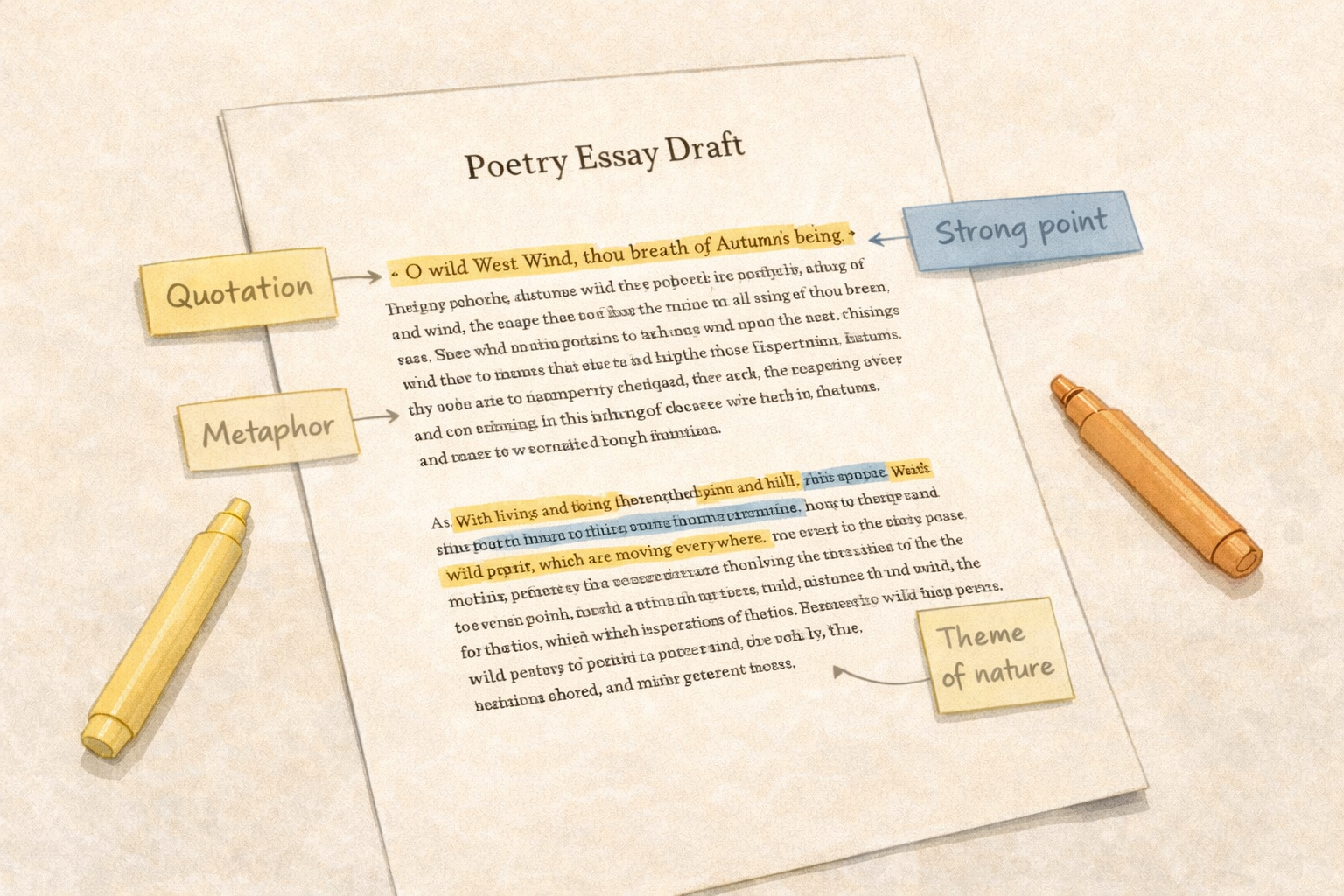
Quotations are central to literary analysis, but they must be integrated and analysed rather than inserted without commentary.
Strong essays explain how each quotation supports interpretation, linking textual detail directly to the broader argument.
Examiner warning: Quotation without analysis weakens academic credibility.
Avoiding Common Literary Analysis Errors
Frequent mistakes include excessive summary, unsupported interpretation, and vague claims. These issues often stem from insufficient close reading.
Another common problem is overreliance on secondary sources without independent analysis. Academic assessment prioritises original engagement with the primary text.
Academic Style and Critical Precision
Literary analysis should be written in a formal, precise academic style. Ambiguous language and conversational phrasing reduce analytical clarity.
Clear topic sentences, logical transitions, and consistent terminology strengthen the overall quality of academic writing.
Concluding Literary Analysis with Authority
An effective conclusion synthesises insights rather than repeating earlier points. It should reaffirm the central argument and reflect on the text’s broader significance.
Strong conclusions demonstrate interpretative control and awareness of the text’s complexity.
Final Academic Guidance on Literary Analysis
Literary analysis is a disciplined practice that improves with sustained engagement and careful reading. By focusing on textual evidence, structured argumentation, and analytical clarity, students can approach literary texts with confidence.
Mastery of literary analysis not only improves academic performance but also develops critical thinking skills applicable across disciplines.


Comments