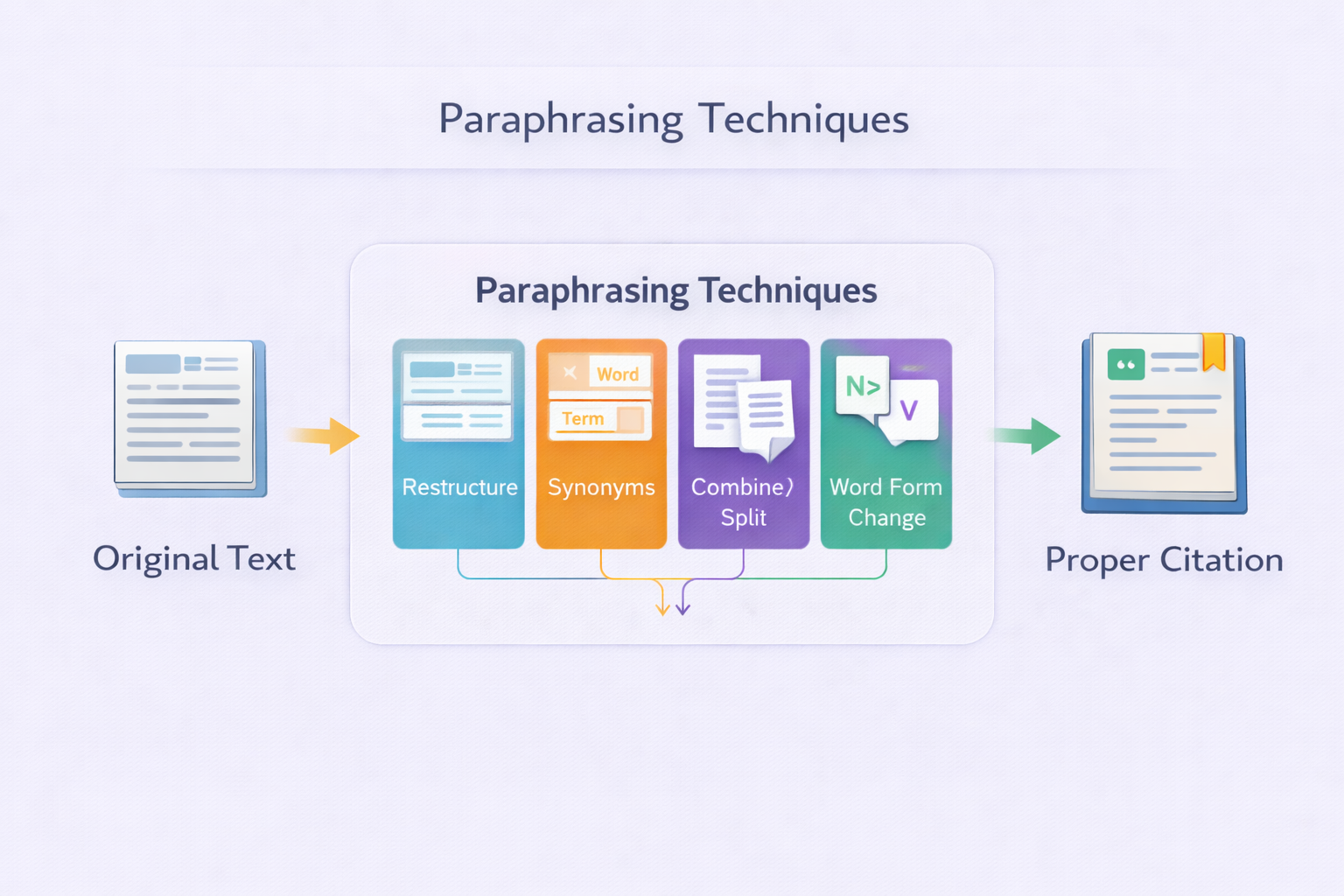
Mastering paraphrasing techniques for academic writing is essential for producing original, credible, and well-integrated scholarly work. In university assignments, students are expected to engage with academic sources, interpret ideas, and present them in their own voice. However, many students struggle to distinguish effective paraphrasing from accidental plagiarism.
Paraphrasing is not simply replacing words with synonyms. It involves restructuring ideas, demonstrating comprehension, and correctly citing sources. When done well, paraphrasing enhances analytical depth and strengthens academic argumentation. This guide explores practical paraphrasing techniques, common errors, and strategies for maintaining academic integrity.
Why Paraphrasing Is Important in Academic Writing
Academic writing requires engagement with scholarly literature. Direct quotations are useful in some contexts, but overusing them can weaken your academic voice. Paraphrasing allows you to integrate research smoothly while maintaining control over your argument.
Effective paraphrasing demonstrates understanding, originality, and academic integrity.
Strong paraphrasing supports clearer analysis, reduces excessive quotation, and ensures that your writing flows cohesively rather than appearing fragmented.
Core Principles of Effective Paraphrasing
Before exploring specific techniques, it is important to understand the principles that guide academic paraphrasing:
- Comprehend the original idea fully.
- Rewrite the idea using different wording and structure.
- Preserve the original meaning accurately.
- Cite the source appropriately.
These principles ensure that paraphrasing remains ethical and academically acceptable.
Paraphrasing Techniques for Academic Writing
Below are practical techniques students can use to paraphrase effectively.
1. Change Sentence Structure
Restructuring sentences is more effective than merely substituting words. This may involve changing active voice to passive voice, combining or breaking sentences, or altering clause order.
Original: “Critical thinking is essential for developing analytical skills in higher education.”
Paraphrased: Analytical skills in university settings depend significantly on the development of critical thinking abilities (Author, Year).
This version changes both wording and structure while maintaining meaning.
2. Use Synonyms Thoughtfully
Replacing key terms with appropriate synonyms can be useful, but this technique should not be the only change. Excessive synonym substitution without structural change can still resemble the original text too closely.
Replacing a few words with synonyms does not constitute proper paraphrasing.
Synonym use should complement deeper restructuring.
3. Break Complex Sentences into Simpler Ones
Long, complex sentences can be divided into shorter sentences to improve originality and clarity.
Original: “The rapid expansion of digital technology has significantly altered communication patterns in contemporary society.”
Paraphrased: Digital technology has expanded quickly in recent years. This growth has transformed how people communicate in modern society (Author, Year).
This technique simplifies structure while preserving meaning.
4. Combine Short Sentences
Conversely, multiple short sentences can be merged into one more complex sentence. This structural adjustment enhances originality and flow.
Restructuring at this level shows deeper engagement with the material.
5. Change Word Forms
Changing word classes (e.g., noun to verb, adjective to noun) can effectively transform sentence structure.
Original: “The implementation of policy reforms improved institutional efficiency.”
Paraphrased: When institutions implemented policy reforms, their efficiency improved (Author, Year).
This method reshapes the sentence while retaining its core idea.
Comparing Weak and Strong Paraphrasing
| Type | Characteristics | Outcome |
|---|---|---|
| Weak Paraphrasing | Minor word changes, same structure | Risk of plagiarism |
| Strong Paraphrasing | Significant restructuring and citation | Original and credible writing |
Strong paraphrasing demonstrates deeper cognitive processing rather than superficial editing.
Step-by-Step Paraphrasing Process
To ensure effective paraphrasing, follow a structured approach:
- Read the original text carefully.
- Identify the central idea.
- Set the text aside temporarily.
- Rewrite the idea from memory in your own words.
- Compare with the original to check originality.
- Add appropriate citation.
This process reduces the likelihood of accidental plagiarism.
Citation and Referencing: The Essential Component
Even when paraphrasing correctly, citation is mandatory. Failing to cite a paraphrased idea still constitutes plagiarism. Different disciplines require specific referencing styles such as APA, Harvard, or MLA.
For example, in APA style:
(Smith, 2023)
Correct referencing reinforces academic integrity and protects your work from misconduct accusations.
Common Mistakes to Avoid
Students frequently encounter the following challenges:
- Over-reliance on direct quotations.
- Incomplete citation after paraphrasing.
- Over-simplifying complex ideas inaccurately.
- Maintaining identical sentence structure.
- Using paraphrasing software without understanding content.
Avoiding these errors enhances both originality and analytical strength.
Maintaining Academic Voice While Paraphrasing
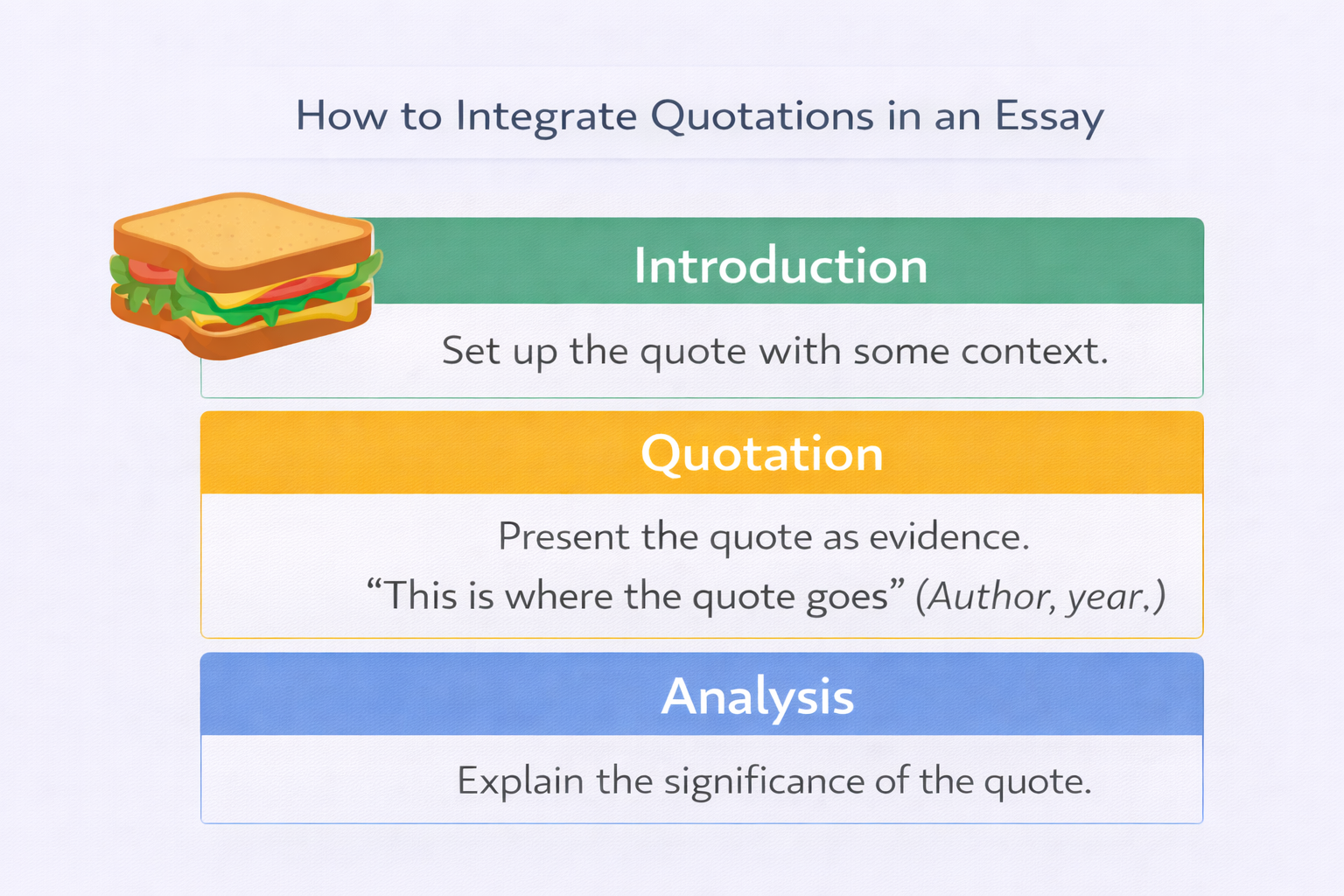
Effective paraphrasing should blend seamlessly with your own analytical commentary. It should support your argument rather than dominate it. Integrating paraphrased material with critical reflection strengthens coherence and intellectual authority.
For example:
Previous research suggests that structured feedback improves academic performance (Author, Year). This finding aligns with the present study’s emphasis on formative assessment strategies.
This integration demonstrates analytical engagement rather than passive reporting.
Mastering Paraphrasing Techniques for Academic Writing
Developing strong paraphrasing techniques for academic writing is a fundamental skill for university success. It requires comprehension, structural transformation, and accurate citation. When applied correctly, paraphrasing strengthens argumentation, enhances clarity, and safeguards academic integrity.
By following structured techniques, practising consistently, and maintaining ethical standards, students can produce original, credible, and analytically robust academic work. Mastery of paraphrasing not only improves grades but also cultivates long-term scholarly competence.


Comments