Learning how to integrate quotations in an essay is one of the most important academic writing skills at university level. Quotations provide credibility, demonstrate engagement with scholarly sources, and strengthen arguments. However, many students insert quotes awkwardly, without analysis, or without clear connection to their argument. When this happens, quotations weaken rather than enhance academic writing.
Effective quotation integration requires more than copying and pasting sentences from sources. It demands contextual framing, grammatical alignment, analytical commentary, and correct citation. This guide explains how to integrate quotations in an essay step by step, provides clear examples, and outlines academic best practices to ensure your writing remains coherent, persuasive, and credible.
Why Proper Quotation Integration Matters in Academic Essays
In academic writing, quotations serve as evidence. They allow you to support claims with authoritative voices, whether from journal articles, books, policy documents, or primary texts. However, quotations should never replace your own reasoning. Your voice must remain dominant.
Quotations support your argument; they do not substitute for it.
Examiners look for evidence of critical engagement. This means that quotations must be introduced, interpreted, and connected clearly to the essay’s central argument. Simply inserting a quote without explanation demonstrates weak analytical control.
Understanding the “Quote Sandwich” Method
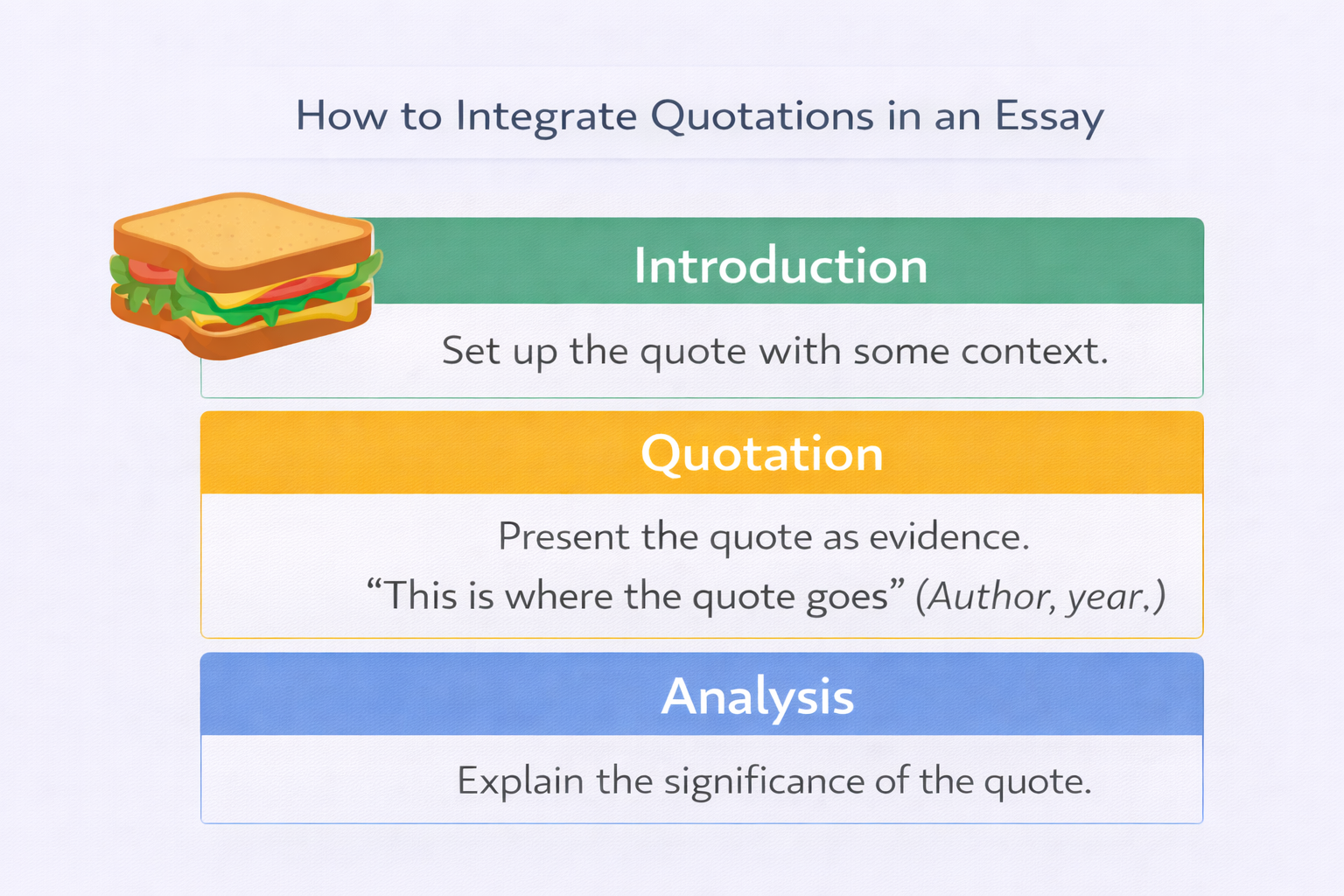
A reliable technique for integrating quotations in an essay is the “quote sandwich” structure. This method ensures that quotations are framed properly and followed by analysis.
| Step | Purpose | What You Do |
|---|---|---|
| 1. Introduce | Provide context | Explain who is speaking and why the quote is relevant |
| 2. Quote | Present evidence | Insert the quotation with correct formatting and citation |
| 3. Analyse | Interpret meaning | Explain how the quote supports your argument |
This structure prevents quotations from appearing disconnected or abrupt.
How to Introduce Quotations Smoothly
Strong quotation integration begins with effective introduction. Avoid dropping quotations into a paragraph without context. Instead, use signal phrases that establish credibility and relevance.
- According to Smith (2021),
- As Johnson argues,
- Research conducted by Brown suggests that
- In discussing educational inequality, Lee observes that
These introductory phrases create grammatical flow and help readers understand why the quotation is included.
Never insert a quotation without introducing its source or relevance.
Examples of Weak vs Strong Quotation Integration
Weak Example (Dropped Quote):
Social media affects mental health. “Adolescents who use social media excessively report higher levels of anxiety” (Jones, 2020).
This example presents a quotation without context or analysis.
Improved Example (Integrated and Analysed):
Recent studies highlight the psychological consequences of digital overexposure. Jones (2020) notes that “adolescents who use social media excessively report higher levels of anxiety,” suggesting that prolonged online engagement may contribute to emotional distress. This finding supports the argument that digital regulation policies are increasingly necessary.
The second example introduces, presents, and interprets the quotation effectively.
Integrating Short vs Long Quotations
Short Quotations
Short quotations (typically under 40 words in APA style) should be embedded directly within your sentence and enclosed in quotation marks. They must fit grammatically within your sentence structure.
Example:
Economic inequality has been described as “a persistent structural imbalance within global markets” (Taylor, 2019, p. 45).
Block Quotations
Long quotations require block formatting. They are indented and usually do not use quotation marks. Block quotations should be used sparingly, as excessive use can reduce analytical voice.
Block quotations should only be used when the original wording is essential and cannot be paraphrased effectively.
Balancing Quotations with Paraphrasing
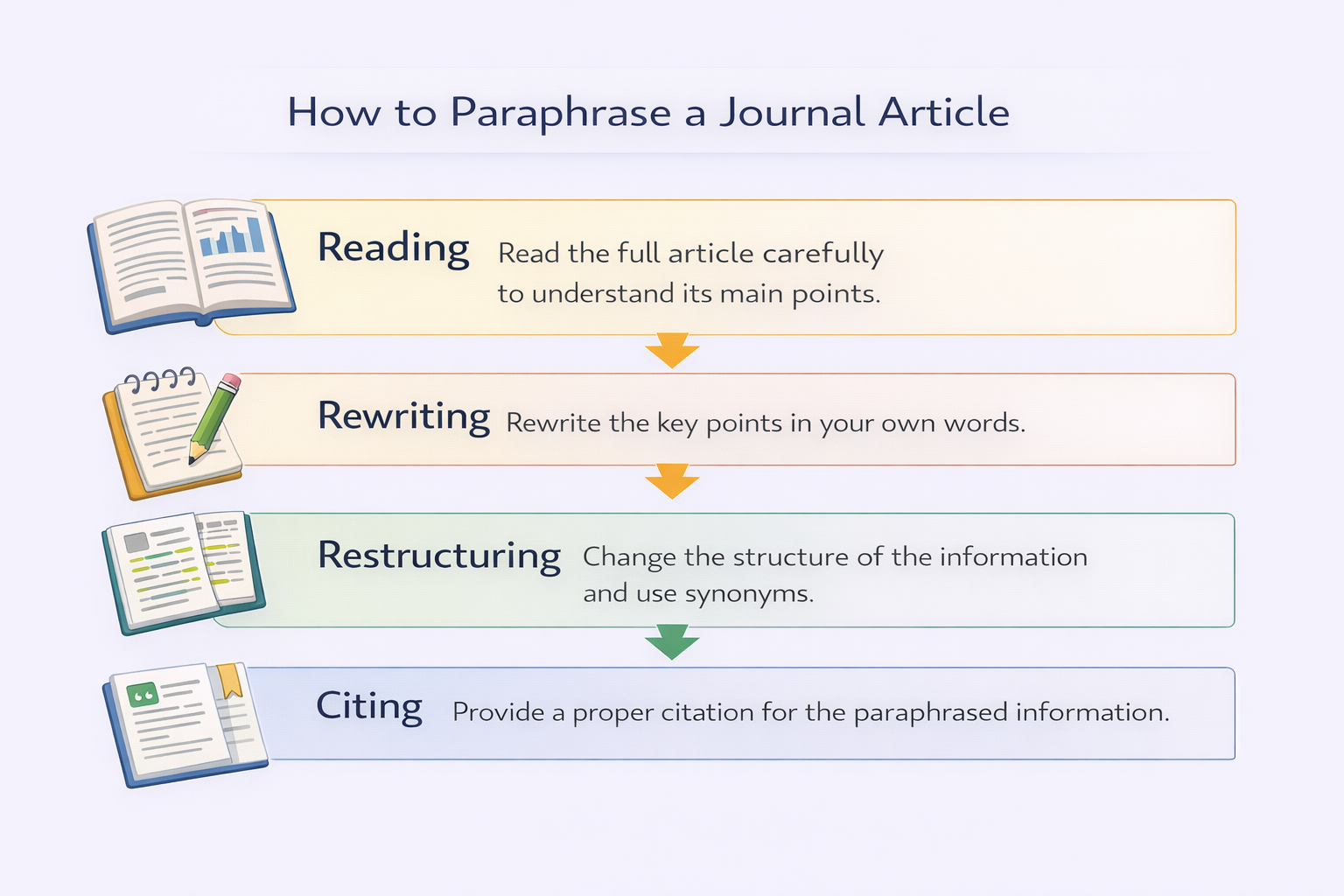
While quotations are valuable, overusing them can make an essay appear fragmented. Academic writing should demonstrate your ability to interpret sources independently. In many cases, paraphrasing may be more appropriate than quoting directly.
Use quotations when:
- The wording is especially powerful or precise.
- The statement is controversial or highly specific.
- You are analysing language directly (e.g., literature essays).
Otherwise, paraphrasing often creates smoother integration.
Common Mistakes When Integrating Quotations
- Using quotations without explanation.
- Inserting quotes that do not directly support the argument.
- Overusing block quotations.
- Failing to match grammatical structure.
- Incorrect citation formatting.
Each of these mistakes weakens coherence and may affect grading.
Maintaining Your Academic Voice
One of the biggest challenges students face is allowing quotations to dominate their writing. Academic essays should maintain a clear authorial presence. Your analysis should outweigh direct quotations.
| Component | Recommended Proportion |
|---|---|
| Your Analysis | Majority of paragraph |
| Quoted Material | Supporting evidence only |
| Paraphrased Material | Integrated where appropriate |
This balance ensures your argument remains central.
Citation and Academic Integrity
Proper citation is essential whenever you use quotations. The format depends on your referencing style, such as APA, MLA, Harvard, or Chicago. Ensure page numbers are included when required.
Failure to cite quoted material constitutes plagiarism.
Accurate citation not only protects academic integrity but also strengthens credibility by allowing readers to verify sources.
Advanced Techniques for Sophisticated Integration
At higher academic levels, quotation integration becomes more nuanced. Instead of relying solely on introductory phrases, advanced writers weave quotations into complex analytical sentences.
Example:
By characterising modern bureaucracy as “a system of calculated impersonality” (Weber, 1922/1978), the text highlights how institutional structures prioritise efficiency over individual autonomy.
Here, the quotation is embedded within analytical commentary, maintaining flow and sophistication.
Mastering How to Integrate Quotations in an Essay
Understanding how to integrate quotations in an essay is fundamental to producing strong academic writing. Quotations should be contextualised, grammatically integrated, analytically interpreted, and correctly cited. When used effectively, they enhance authority and persuasiveness.
By applying structured techniques such as the quote sandwich, maintaining analytical dominance, and avoiding common errors, students can transform quotations from isolated fragments into powerful argumentative tools. Mastery of quotation integration strengthens academic clarity, credibility, and confidence in scholarly writing.

Comments