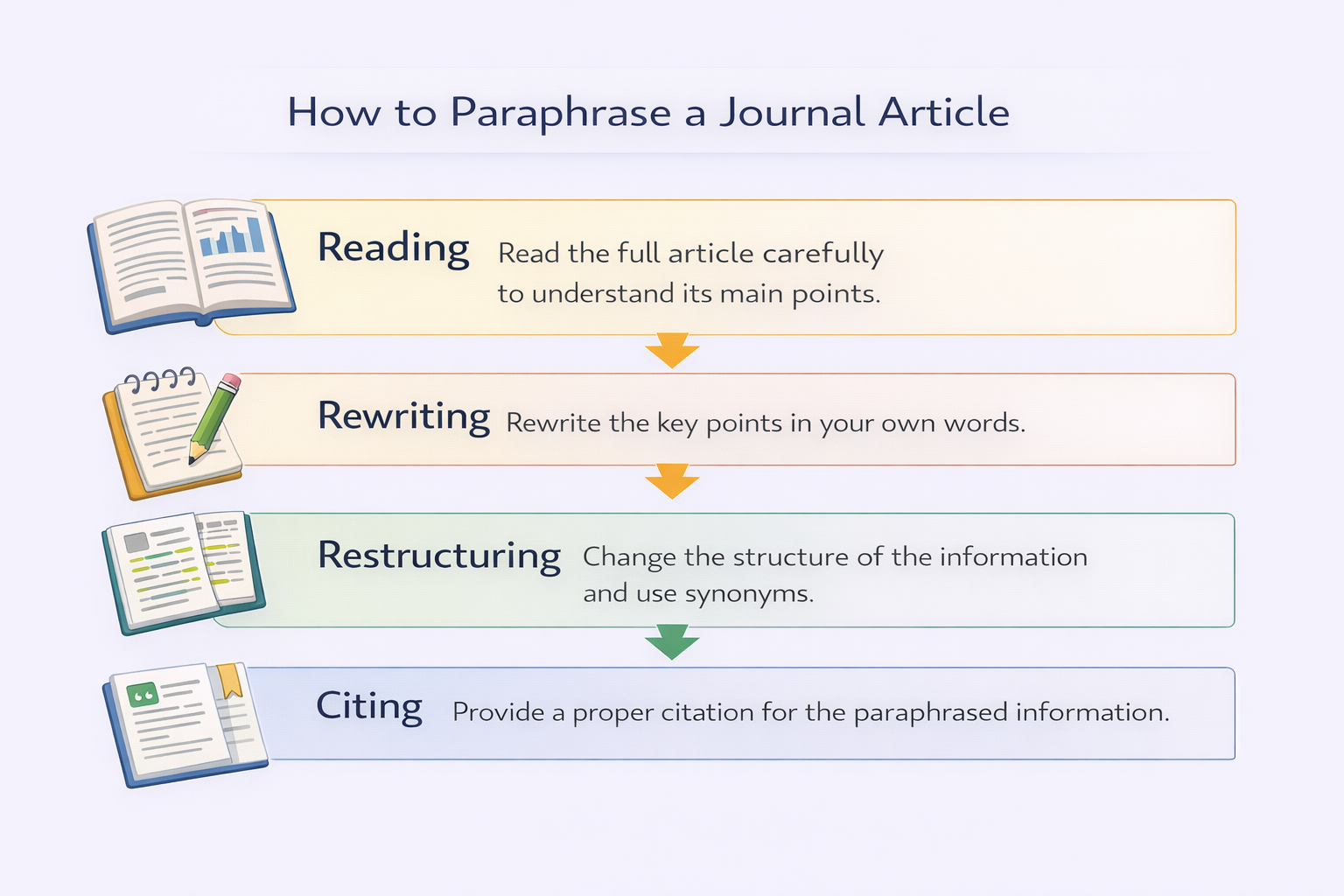
Knowing how to paraphrase a journal article is one of the most important academic skills at university level. Students are expected to engage with peer-reviewed research, interpret scholarly arguments, and integrate evidence smoothly into essays, reports, and dissertations. However, paraphrasing journal content is far more complex than simply replacing words with synonyms.
A journal article is dense, technical, and often structured around theory, methodology, and empirical findings. Poor paraphrasing can distort meaning, weaken analysis, or result in accidental plagiarism. This guide explains how to paraphrase a journal article step by step, provides practical examples, and outlines academic best practices that align with university standards.
What Does It Mean to Paraphrase a Journal Article?
Paraphrasing a journal article means restating specific ideas, arguments, or findings from a scholarly source in your own words while preserving the original meaning. Unlike summarising, paraphrasing retains similar detail and depth. It transforms structure and expression without changing the intellectual content.
Effective paraphrasing demonstrates comprehension, not just word substitution.
In academic writing, paraphrasing allows you to maintain your own scholarly voice while still supporting your argument with credible evidence. It shows that you understand the research rather than merely copying it.
Why Paraphrasing Journal Articles Is Academically Essential
Journal articles are primary sources of academic evidence. Whether writing a literature review, research proposal, or dissertation chapter, you must demonstrate engagement with peer-reviewed scholarship. Direct quotations are sometimes appropriate, but overusing them weakens analytical authority.
When you paraphrase effectively, you:
- Integrate evidence smoothly into your argument.
- Maintain consistent academic tone.
- Demonstrate critical understanding.
- Avoid excessive quoting.
- Reduce plagiarism risk.
Strong paraphrasing strengthens intellectual ownership of your writing.
Step-by-Step Process: How to Paraphrase a Journal Article Correctly
Paraphrasing should follow a deliberate and structured process. Rushing increases the risk of copying structure or vocabulary too closely.
- Read the passage carefully until you fully understand it.
- Identify the key idea and its purpose within the article.
- Set the original text aside.
- Rewrite the idea using your own academic vocabulary and structure.
- Compare with the original to ensure accuracy and sufficient difference.
- Add proper citation according to required referencing style.
Each step ensures both conceptual accuracy and originality of expression.
Structural Transformation Techniques
High-quality paraphrasing involves structural change, not superficial editing. The following techniques improve transformation quality:
- Change sentence structure (active to passive or vice versa).
- Reorganise clauses or sentence order.
- Replace phrases with equivalent academic terminology.
- Combine or divide sentences where appropriate.
- Shift emphasis while maintaining meaning.
Merely replacing a few words while retaining the original structure is insufficient.
Changing vocabulary without altering sentence structure is not proper paraphrasing.
Example: Paraphrasing a Journal Article Passage
Original Journal Sentence:
"The findings indicate a statistically significant relationship between socioeconomic status and access to preventive healthcare services."
Weak Paraphrase (Problematic):
The results show a statistically important connection between socioeconomic status and preventive healthcare access.
This version changes only a few words and keeps the structure nearly identical.
Strong Paraphrase:
The study demonstrates that individuals from different economic and social backgrounds experience measurable disparities in their ability to obtain preventive medical care (Author, Year).
This version restructures the sentence, shifts emphasis, and uses new phrasing while preserving meaning.
Difference Between Paraphrasing and Summarising in Journal Writing
Students often confuse paraphrasing with summarising. The difference becomes clearer when compared directly.
| Feature | Paraphrasing | Summarising |
|---|---|---|
| Length | Similar to original passage | Much shorter than original |
| Detail | Full detail retained | Main ideas only |
| Purpose | Explain specific concept | Provide overview |
| Structural Change | Rewritten fully | Condensed version |
| Citation Required | Yes | Yes |
Understanding this distinction helps students choose the appropriate method for their assignment.
How to Paraphrase Different Sections of a Journal Article
Paraphrasing Theoretical Frameworks
Theoretical sections often contain dense conceptual definitions. Focus on understanding the theory before rewriting it in accessible academic language. Avoid simplifying to the point of distortion.
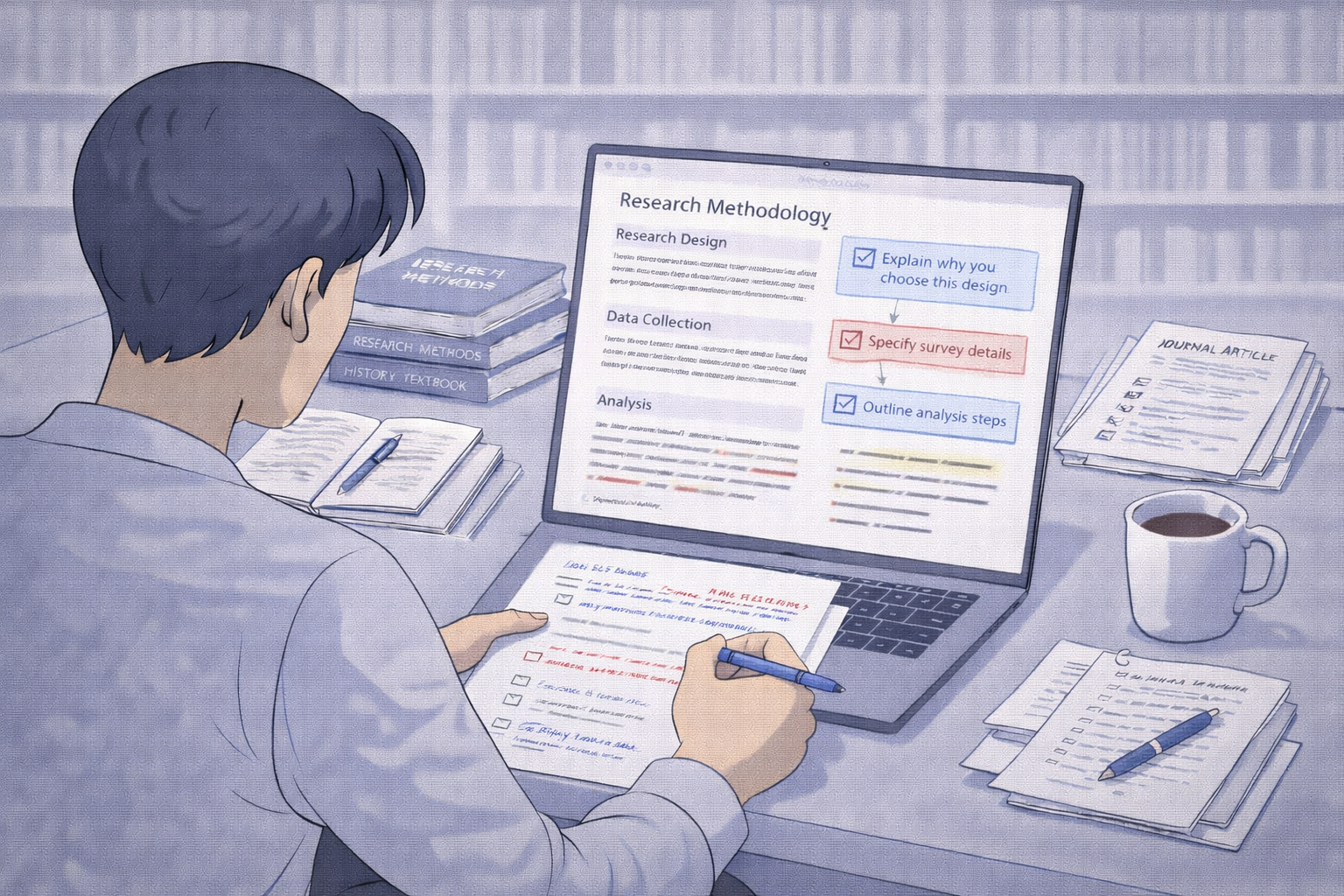
Paraphrasing Methodology
Methods sections require precision. When paraphrasing research design, sample size, or statistical analysis, maintain technical accuracy. Avoid changing terminology that has specific scientific meaning.
Paraphrasing Findings and Results
When paraphrasing results, preserve numerical accuracy and statistical conclusions. Do not reinterpret findings unless you are critically analysing them in your own discussion.
Common Paraphrasing Mistakes to Avoid
- Copying sentence structure with minor word substitutions.
- Failing to cite the original source.
- Changing meaning unintentionally.
- Over-simplifying complex arguments.
- Using paraphrasing tools without understanding content.
Automated paraphrasing tools often produce grammatically correct but conceptually inaccurate sentences. Academic integrity requires comprehension.
How Proper Citation Protects You from Plagiarism
Even when you paraphrase completely in your own words, you must cite the source. The intellectual idea still belongs to the original author.
Paraphrased ideas without citation are still plagiarism.
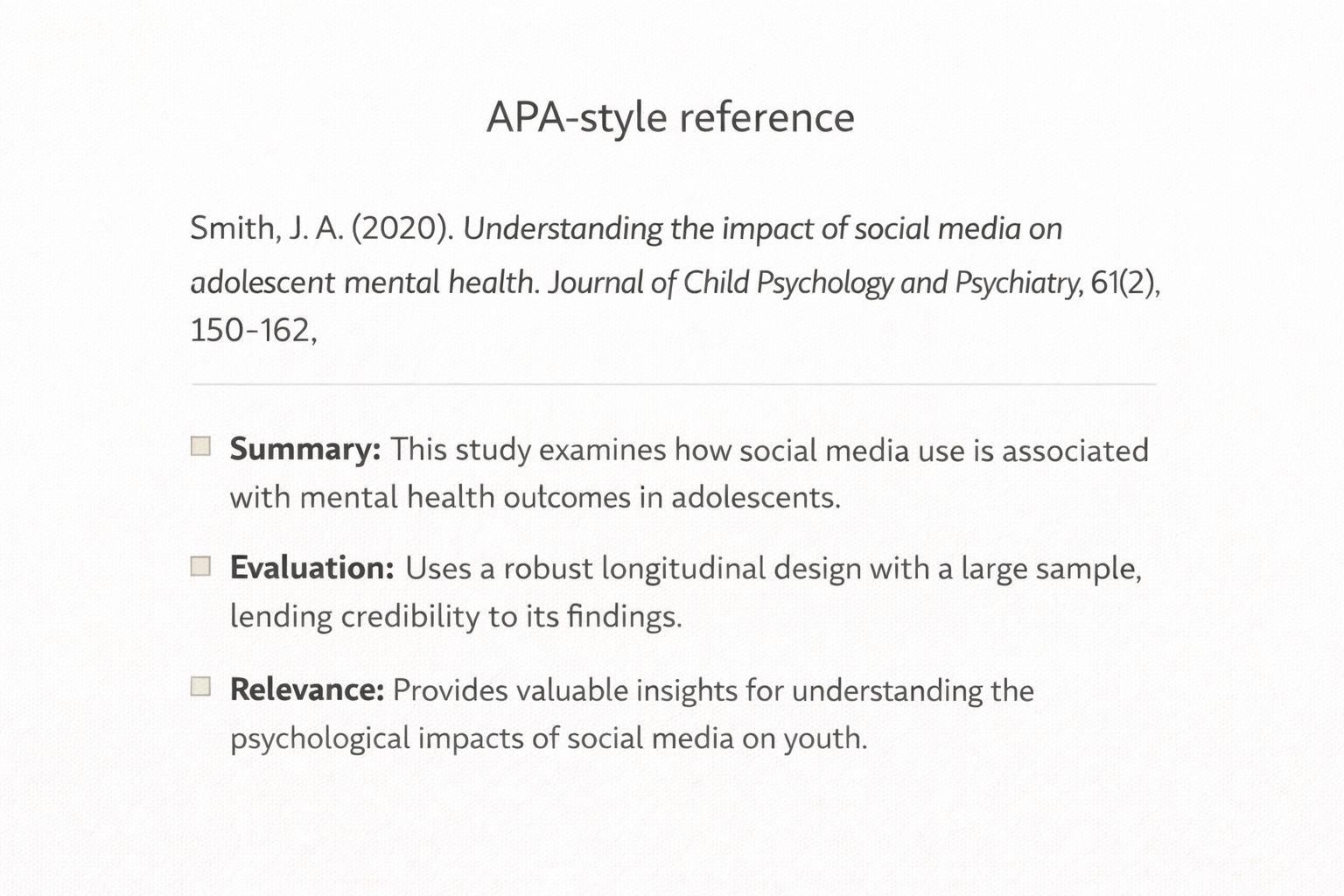
Depending on your discipline, this may require APA, Harvard, MLA, or another referencing style. Always follow your university’s guidelines.
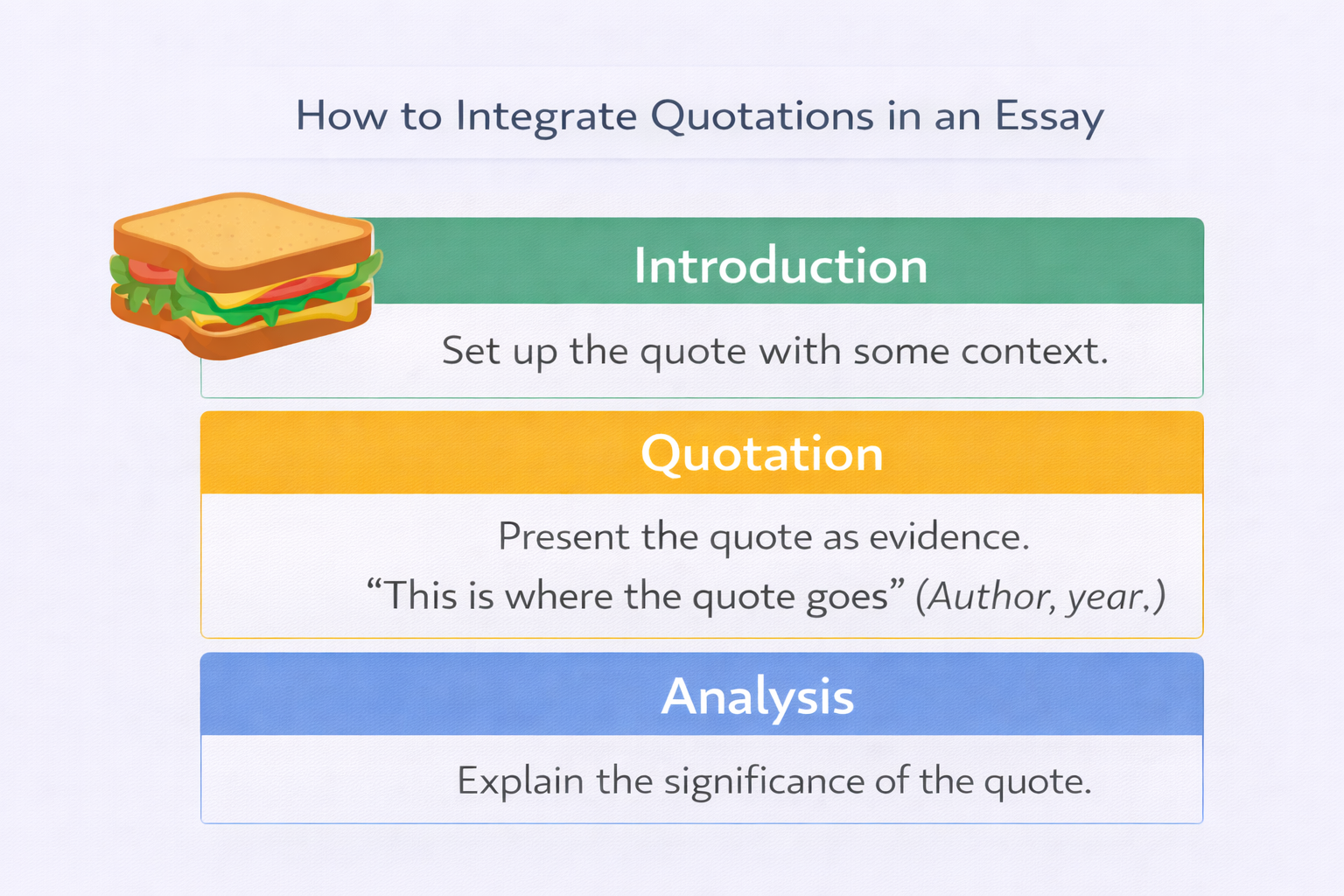
Integrating Paraphrased Material into Your Argument
Strong academic writing integrates paraphrased evidence using signal phrases and critical commentary. For example:
Recent research suggests that digital literacy significantly shapes academic outcomes (Author, Year). This finding supports the argument that structured technological training should be embedded within higher education curricula.
The first sentence paraphrases a finding. The second sentence adds analytical interpretation. This structure strengthens academic depth.
Mastering How to Paraphrase a Journal Article
Learning how to paraphrase a journal article is not simply a technical writing skill; it is an intellectual discipline. Effective paraphrasing demonstrates comprehension, analytical maturity, and academic integrity. It requires structural transformation, careful attention to meaning, and consistent citation.
By following a structured process, applying deep comprehension, and avoiding superficial rewriting, students can engage confidently with scholarly research. Mastery of paraphrasing enhances academic credibility, strengthens argumentation, and supports long-term success in research-based writing.
Comments