
Choosing between qualitative and quantitative research methods is one of the most important methodological decisions students make in academic research. This choice affects how research questions are framed, how data are collected and analysed, and how findings are interpreted. Examiners consistently evaluate whether the selected method aligns logically with the research aim.
Despite their importance, qualitative and quantitative methods are frequently misunderstood or incorrectly applied. Students often select a method based on familiarity rather than suitability, leading to weak methodological justification and reduced academic credibility. These mistakes are especially costly in dissertations, research proposals, and final-year projects.
This article provides a structured, academically rigorous comparison of qualitative vs quantitative research methods. It explains how each approach works, when it should be used, and how students can justify their methodological choices with confidence and clarity.
Understanding the Purpose of Research Methods in Academic Study
Research methods define how knowledge is generated and validated within a study. They translate abstract research questions into practical, systematic procedures that allow evidence to be gathered and evaluated. In academic contexts, the credibility of findings depends as much on methodological appropriateness as on theoretical insight.
Universities do not assess research methods in isolation. Instead, examiners look for coherence between the research problem, theoretical framework, methodology, and analysis. A well-chosen method strengthens the entire research design, while a poorly matched method undermines otherwise strong work.
Qualitative and quantitative research methods represent two fundamentally different ways of understanding social, behavioural, and empirical phenomena. Recognising this distinction is essential before comparing them directly.
What Qualitative Research Methods Are and How They Work
Qualitative research methods focus on understanding meaning, experience, and context. Rather than measuring variables numerically, qualitative research explores how individuals interpret events, relationships, and social processes. This approach is particularly valuable when research aims to capture complexity, nuance, or subjective perspectives.
Common qualitative data sources include interviews, focus groups, observations, and textual materials such as policy documents or media content. Data are typically analysed through thematic, narrative, or discourse analysis, allowing patterns of meaning to emerge inductively from the data.
Qualitative research prioritises depth over breadth, seeking rich insight rather than generalisable measurement.
In academic assignments, qualitative methods are widely used in disciplines such as sociology, education, psychology, health studies, and cultural research, where understanding lived experience is central to the research question.
What Quantitative Research Methods Are and How They Work
Quantitative research methods are designed to measure variables, test relationships, and evaluate hypotheses using numerical data. This approach is rooted in statistical analysis and aims to identify patterns that can be generalised across larger populations.
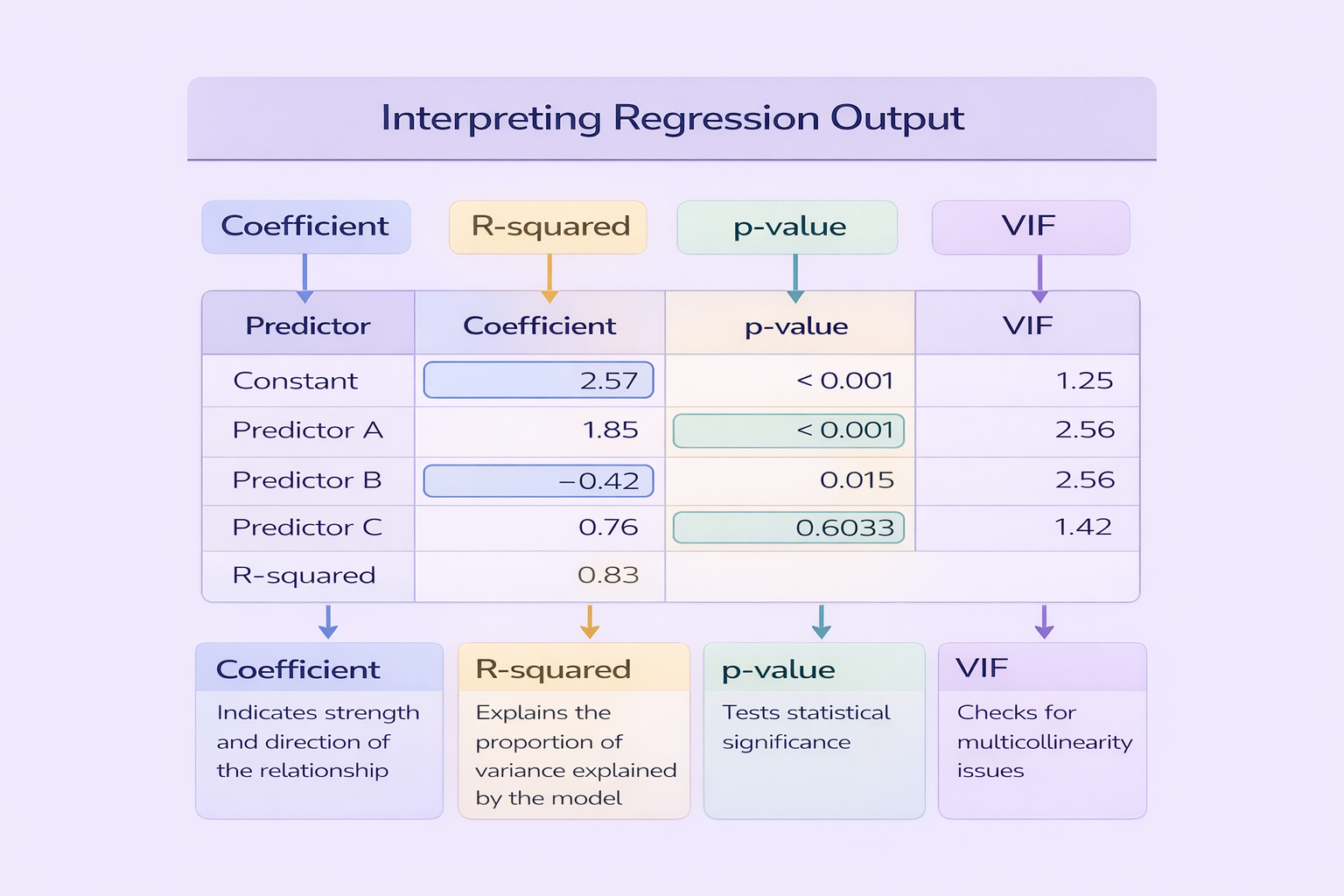
Surveys, experiments, structured questionnaires, and secondary datasets are common quantitative data sources. Data analysis typically involves descriptive and inferential statistics, often conducted using software such as SPSS, R, or Excel.
Quantitative research emphasises objectivity, measurement, and replicability as markers of scientific rigour.
Quantitative methods are especially prominent in fields such as economics, business, epidemiology, and the natural sciences, where numerical comparison and prediction are central to research goals.
Key Differences Between Qualitative and Quantitative Research Methods
Although both approaches aim to produce valid knowledge, they differ significantly in their assumptions, procedures, and outcomes. Understanding these differences helps students avoid methodological mismatch and weak justification.
The table below provides a structured comparison of qualitative and quantitative research methods across key academic dimensions.
| Dimension | Qualitative Research | Quantitative Research |
|---|---|---|
| Primary Aim | Explore meanings and experiences | Measure variables and test relationships |
| Data Type | Textual or visual | Numerical |
| Sample Size | Small and focused | Large and representative |
| Analysis Style | Interpretive and thematic | Statistical and numerical |
| Outcome | Contextual understanding | Generalisable findings |
This comparison highlights why the choice between qualitative and quantitative methods must be driven by the research question rather than personal preference.
When to Use Qualitative Research in Academic Assignments
Qualitative research methods are most appropriate when the research seeks to understand how or why phenomena occur. They are particularly useful when existing theories are limited or when the research context is complex and socially embedded.
For example, a study exploring students’ experiences of online learning during a crisis would benefit from interviews or reflective narratives rather than numerical surveys alone. The richness of qualitative data allows researchers to capture emotions, perceptions, and contextual factors.
However, qualitative research requires careful reflexivity and transparent analytical procedures. Students must demonstrate how interpretations were derived from data to avoid accusations of subjectivity.
When to Use Quantitative Research in Academic Assignments
Quantitative research methods are best suited to studies that aim to test hypotheses, compare groups, or identify trends across populations. They are especially effective when variables can be clearly defined and measured.
An example would be a study examining the relationship between study hours and academic performance across a cohort of university students. Numerical data allows for statistical testing and clearer claims about correlation or causation.
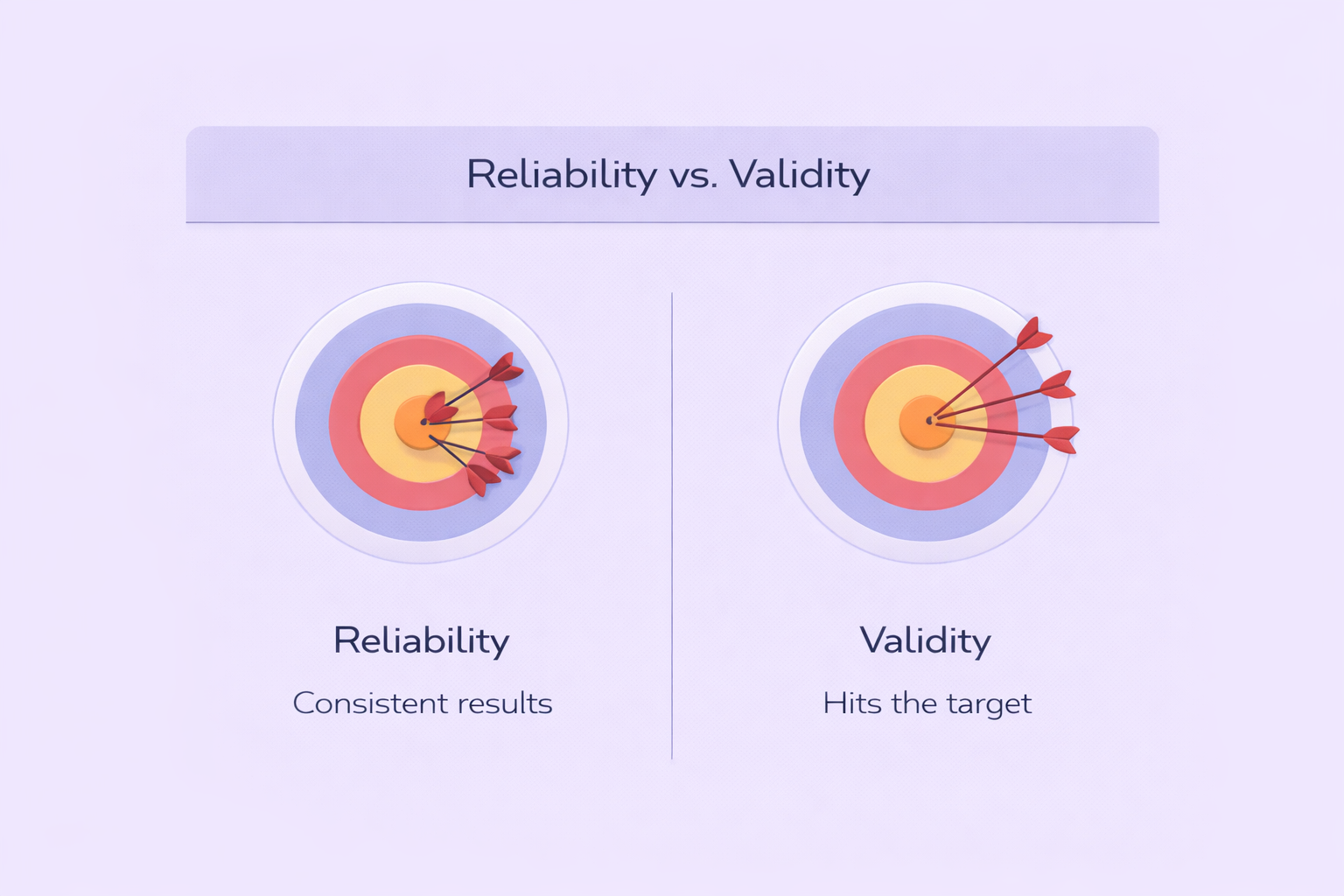
That said, quantitative research depends heavily on instrument design and data quality. Poorly constructed surveys or inappropriate statistical tests can invalidate results, regardless of sample size.
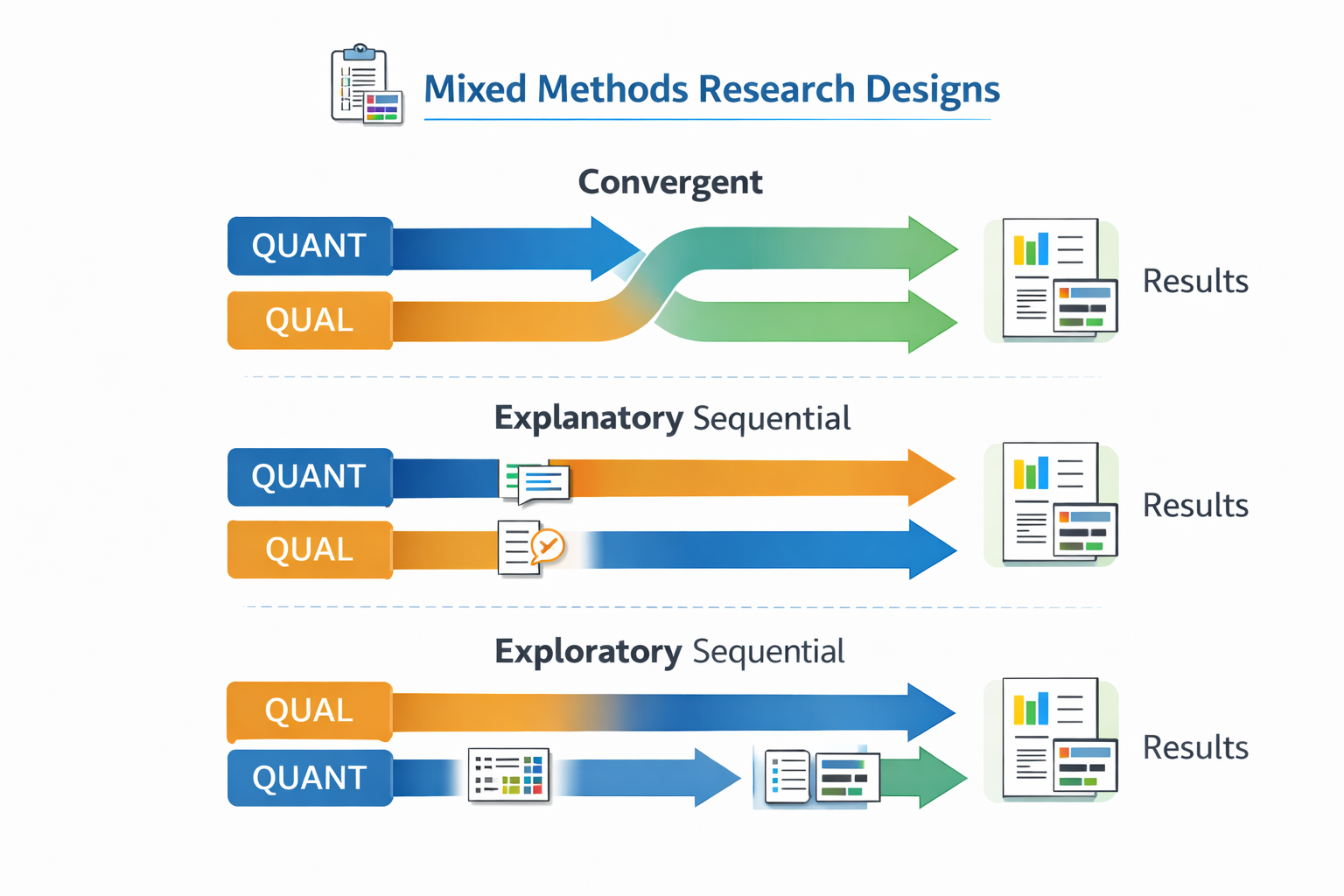
Using Mixed Methods as a Strategic Academic Choice
In some cases, neither qualitative nor quantitative methods alone fully address a research problem. Mixed methods research intentionally combines both approaches to provide complementary perspectives.
For instance, a study might use surveys to identify patterns in student engagement and follow up with interviews to explore underlying reasons. This integration strengthens validity by triangulating findings.
Mixed methods must be justified explicitly and not treated as a shortcut for indecision.
When used correctly, mixed methods demonstrate methodological sophistication and are well received in postgraduate research.
Common Academic Mistakes When Comparing Qualitative and Quantitative Methods
One frequent error is presenting qualitative and quantitative research as a hierarchy, with quantitative methods framed as inherently superior. Examiners assess suitability, not perceived scientific prestige.
Another mistake is mixing methods without integration, such as adding interview quotes to a quantitative study without explaining their analytical role. This weakens coherence and raises methodological concerns.
Students should also avoid vague justifications such as “qualitative methods were chosen for deeper understanding” without explaining what depth means in relation to the research question.
Making a Methodologically Sound Choice with Confidence
Choosing between qualitative and quantitative research methods is ultimately about alignment. The method must match the research aim, questions, and theoretical framework. When this alignment is clear, methodological justification becomes straightforward.
Strong academic work does not depend on using complex methods, but on using appropriate ones transparently and critically. By understanding the strengths and limitations of each approach, students can design research that meets examiner expectations and produces credible findings.
When in doubt, methodological clarity should always take precedence over ambition. A well-executed simple design will outperform a poorly justified complex one in academic assessment.
Comments