For many university students, the idea of writing a research paper feels abstract until they see a concrete example. Instructions often describe expectations in broad terms, yet assessment success depends on how those expectations are translated into an actual academic document.
A well-explained research paper example provides clarity by showing how theory, evidence, and analysis are integrated into a coherent scholarly argument. This article breaks down a complete research paper example, explains the function of each section, and highlights the academic standards markers expect at undergraduate and postgraduate levels.
What Is a Research Paper in Academic Context?
A research paper is a structured academic document that presents an original argument supported by scholarly evidence. Unlike reflective or descriptive assignments, research papers prioritise critical engagement with existing literature and systematic analysis.
At university level, research papers are used to assess a student’s ability to investigate a focused question, synthesise sources, apply appropriate methodology, and communicate findings clearly and objectively.
A research paper is not a summary of sources; it is a reasoned argument built from evidence.
Why Students Need a Research Paper Example
Many students struggle not because they lack ideas, but because they are unsure how those ideas should appear in academic form. A research paper example makes abstract requirements visible.
Examples also help students understand proportionality. They show how much space is typically devoted to background, analysis, and discussion, reducing the risk of imbalance that often leads to lower grades.
Misjudging section length is a common cause of weak research papers.
Overview of a Standard Research Paper Structure
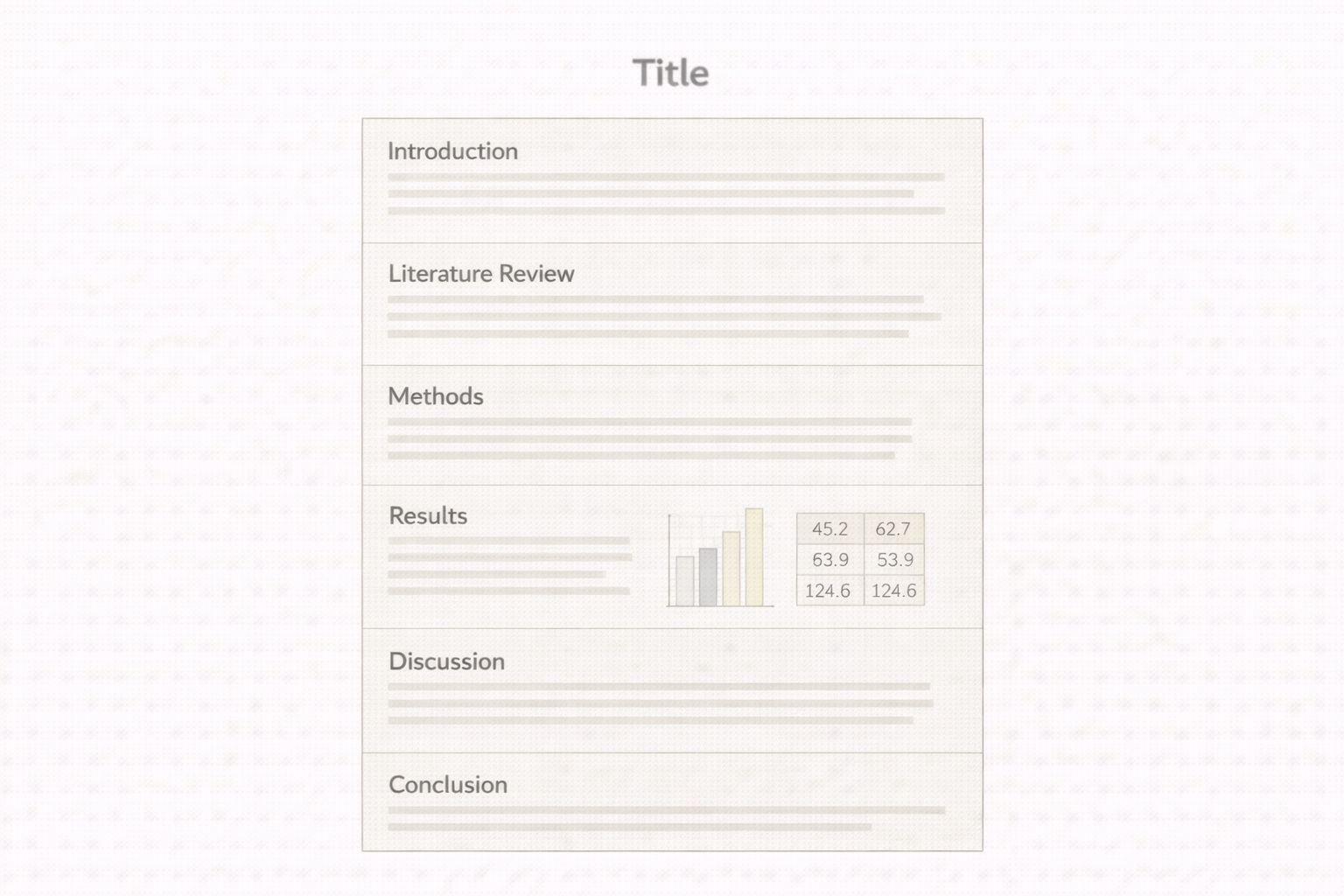
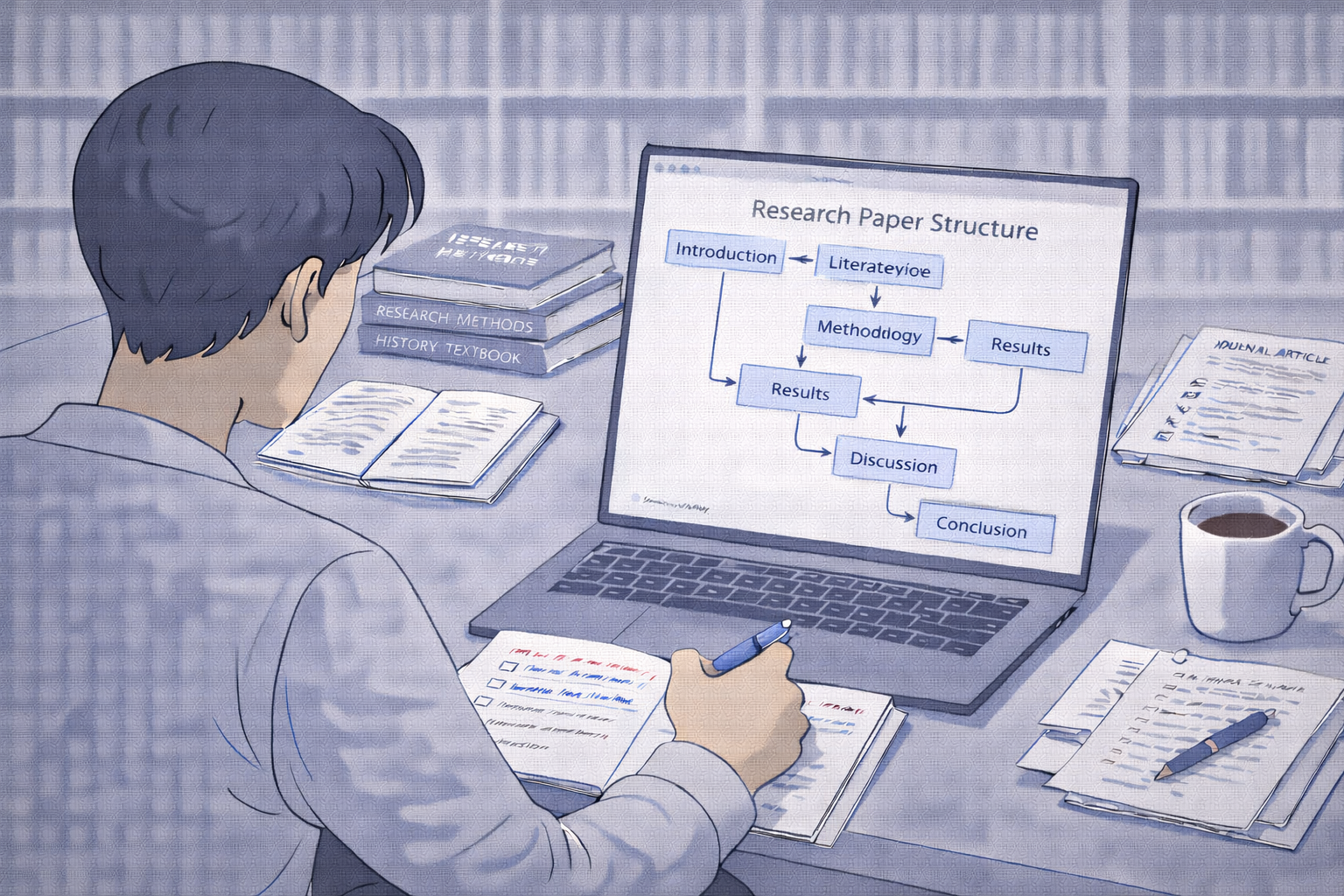
Although formats vary by discipline, most research papers follow a recognisable structure. This structure supports logical progression and academic readability.
| Section | Primary Purpose |
|---|---|
| Title and Abstract | Summarise focus and findings |
| Introduction | Present research problem and aim |
| Literature Review | Position study within existing research |
| Methodology | Explain research design and methods |
| Results / Analysis | Present and analyse findings |
| Discussion | Interpret results and implications |
| Conclusion | Summarise contributions and significance |
This structure ensures clarity and allows examiners to assess each academic skill independently.
Research Paper Example: Title and Abstract
In a strong research paper example, the title is precise and informative rather than creative. It clearly indicates the topic, variables, or theoretical focus.
The abstract functions as a concise overview of the entire paper. It briefly outlines the research problem, methodology, key findings, and conclusion without citations or extended discussion.
An abstract should describe what was done and what was found, not justify or evaluate the study.
Research Paper Example: Introduction Section
The introduction in a research paper example moves from broad context to specific research focus. It establishes why the topic matters academically and practically.
A strong introduction clearly states the research problem, research question or hypothesis, and the objectives of the study. It often ends with a brief outline of the paper’s structure.
Research Paper Example: Literature Review
The literature review demonstrates engagement with existing scholarship. In a high-quality research paper example, this section is analytical rather than descriptive.
Sources are compared, contrasted, and grouped thematically to show patterns, gaps, and debates. The review justifies the research by identifying what remains unresolved in the field.
| Weak Review | Strong Review |
|---|---|
| Summarises sources individually | Synthesises themes across studies |
| Limited critical evaluation | Evaluates strengths and limitations |
| No clear research gap | Clearly identifies research gap |
This section is often where students benefit from structured academic guidance or research paper writing support.
Research Paper Example: Methodology
The methodology section explains how the research was conducted. In a research paper example, clarity and transparency are critical.
This section typically includes research design, data collection methods, sampling strategy, and analytical approach. The aim is to allow replication or evaluation of reliability.
- Qualitative, quantitative, or mixed-methods design
- Data sources and sampling criteria
- Ethical considerations
- Limitations of the chosen method
Methodological justification demonstrates academic rigour and ethical awareness.
Research Paper Example: Results or Analysis
In empirical research papers, the results section presents findings objectively, often using tables or figures. In theoretical or humanities papers, this section may be framed as analysis.
A strong research paper example separates presentation of findings from interpretation, avoiding premature discussion of implications.
Blending results and discussion is a frequent structural error.
Research Paper Example: Discussion Section
The discussion interprets findings in relation to the research question and existing literature. This is where analytical depth is most visible.
In effective examples, students explain what the findings mean, why they matter, and how they confirm or challenge previous studies.
Research Paper Example: Conclusion Section
The conclusion synthesises the entire paper without introducing new evidence. It restates the research purpose, summarises key findings, and highlights academic contributions.
Strong conclusions often include implications for theory, practice, or future research, demonstrating scholarly awareness beyond the immediate study.
Referencing and Academic Integrity in Research Paper Examples
Accurate referencing is non-negotiable in academic research papers. Examples that score highly follow the required citation style consistently.
Proper citation demonstrates academic honesty and allows readers to verify claims. Many students refine this area through academic editing and proofreading before submission.
Common Mistakes Seen in Research Paper Examples
Analysing weak research paper examples reveals recurring problems that students should avoid.
- Overly broad research questions
- Descriptive literature reviews
- Unjustified methodology choices
- Lack of critical discussion
- Inconsistent referencing
Awareness of these issues significantly improves research paper quality.
Using Research Paper Examples as Learning Tools
Research paper examples should be studied strategically, not copied. Their value lies in structure, argument flow, and academic tone.
Students writing advanced projects, such as dissertations or extended research papers, often consult exemplars alongside dissertation-level guidance to meet higher expectations.
What a Strong Research Paper Example Ultimately Demonstrates
A strong research paper example shows clarity of purpose, logical structure, critical engagement, and academic discipline. These qualities consistently align with high marking criteria.
By understanding how each section functions and how ideas connect, students can move from uncertainty to confident academic writing.

Comments