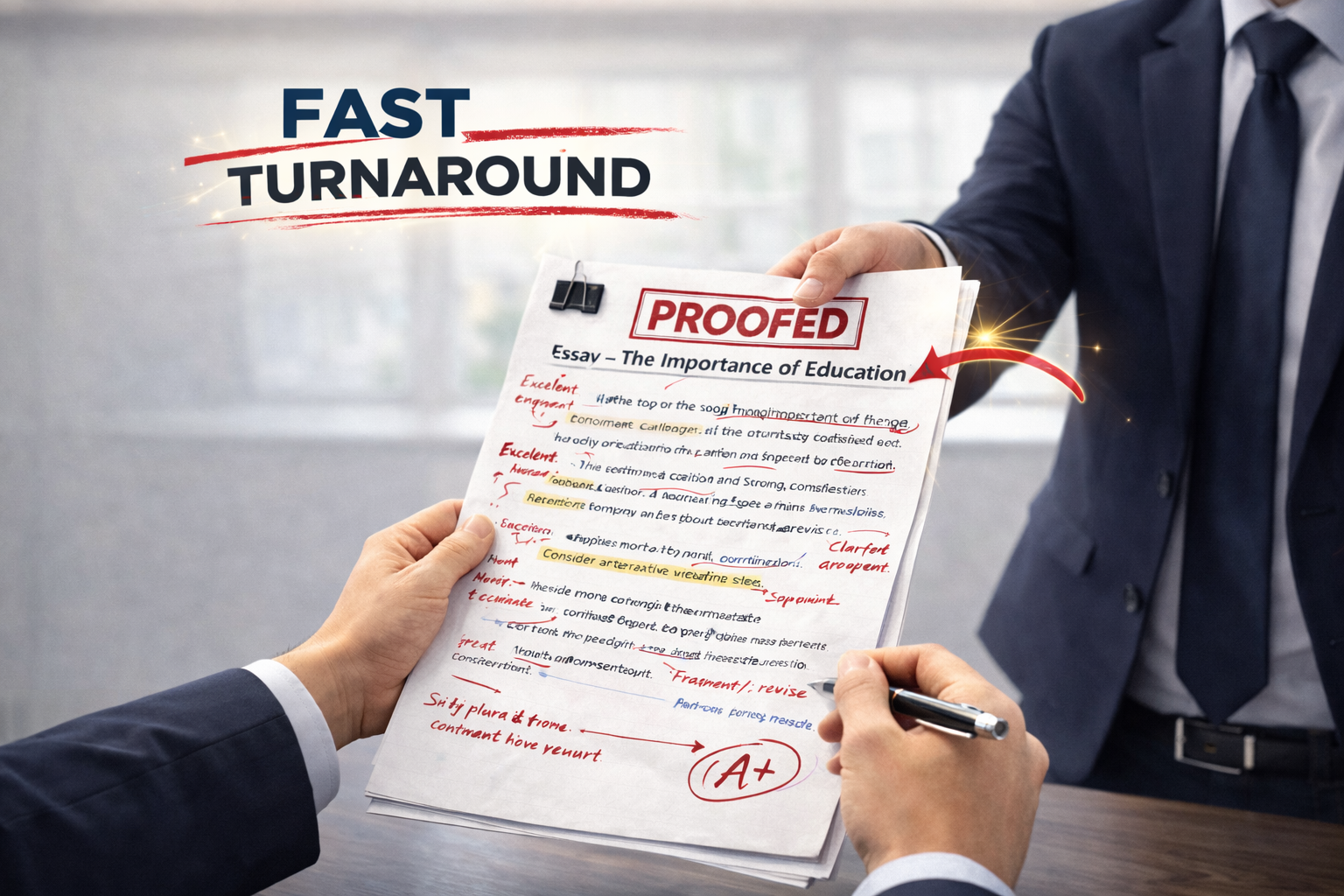
University and college students often face situations where deadlines loom but their essays still need polish. When time is limited, a same day essay proofreading service can be a valuable resource for ensuring clarity, accuracy, and professional presentation. However, using such a service effectively requires understanding its purpose, limitations, and how it fits into the broader process of academic writing revision. This article explores how same day proofreading works, what it can and cannot fix, and how to use it strategically to improve your essay before submission.
Proofreading is the final stage of the writing process, distinct from content editing. A same day turnaround adds urgency, and not all services deliver consistent quality under time pressure. This guide helps students differentiate between surface‑level error correction and deeper revision needs, allowing them to make informed decisions about when a same day proofreading service is appropriate and how to leverage it efficiently.
What “Same Day Proofreading” Actually Means
In academic contexts, proofreading refers to the final stage of revision that focuses on correcting surface‑level errors such as spelling, grammar, punctuation, and formatting. A same day essay proofreading service guarantees that these corrections are completed within 24 hours—or sometimes within a few hours of submission. The goal is to catch technical errors that could undermine the professionalism or readability of your essay.
However, same day proofreading does not typically involve substantial rewriting, reorganisation, or substantive editing. It does not replace the deeper cognitive work of refining arguments, improving structure, or clarifying ideas. These more involved tasks are part of editing, which often requires more time and detailed engagement with the text.
When time is scarce, proofreading is ideal for fixing mechanical flaws and formatting issues that could distract examiners or reduce clarity. At the same time, students must understand its boundaries—especially when their essays contain significant conceptual or organisational problems.
Academic note: Proofreading corrects mechanical errors but does not replace content revision or editing for academic coherence and argument strength.
Core Functions of Same Day Essay Proofreading
A same day proofreading service typically focuses on the following areas:
- Spelling and grammar: Correcting misspellings, incorrect verb forms, subject‑verb agreement, and other grammatical issues.
- Punctuation: Fixing misplaced commas, semicolons, apostrophes, and other punctuation errors that affect readability.
- Typographical errors: Addressing typos and repeated words that may detract from the essay’s professionalism.
- Formatting consistency: Ensuring that headings, paragraph spacing, font style, and margins comply with academic guidelines.
- Reference formatting: Checking citation style consistency (e.g., APA, MLA, Harvard) and ensuring reference list accuracy.
These functions help make your writing clean and easier to read, which positively affects examiner perception. Proofreading typically uses tools (e.g., grammar checkers) and expert human review to catch errors that automated tools alone might miss.
When Same Day Proofreading Is Most Useful
Same day proofreading services are especially valuable when:
- A deadline is imminent (e.g., within 24 hours).
- You have completed content revision but need final polishing.
- Your submission requires strict adherence to formatting guidelines.
- You are a non‑native English speaker seeking clarity improvements.
In these scenarios, final proofreading can enhance readability and ensure that small errors do not detract from your substantive content. However, if your essay still needs major content restructuring, argument refinement, or additional research, same day proofreading alone will not be sufficient.
Editing vs Proofreading: Understanding the Difference
Students often confuse proofreading with editing. Although both improve writing, they address different levels of revision. Editing involves deeper engagement with your text to improve argument structure, coherence, and academic tone. It may involve reorganising paragraphs, refining thesis statements, and strengthening evidence integration. In contrast, proofreading focuses strictly on surface‑level accuracy.
The table below highlights the key differences between editing and proofreading, helping students decide which service they truly need when time is limited:
| Revision Aspect | Editing | Proofreading |
|---|---|---|
| Primary Focus | Argument strength, structure, clarity | Grammar, spelling, punctuation |
| Depth of Changes | Substantive (rewriting and reorganisation) | Surface‑level (corrections only) |
| Typical Timing | Earlier in revision process | Final step before submission |
| Turnaround | Longer, depending on depth | Often short, including same day |
Understanding these differences ensures you choose the right support. Only choose same day proofreading if your essay is structurally sound and only needs final technical corrections.
How Same Day Proofreading Works: Step by Step
While specifics vary by provider, most same day proofreading services follow a structured workflow that ensures timely delivery without sacrificing accuracy. The following steps outline the typical process:
- Submission: You upload your essay draft with clear instructions and formatting requirements.
- Initial Review: A proofreader scans the document for obvious errors and identifies potential issues.
- Correction: The proofreader implements corrections for grammar, punctuation, and formatting based on academic standards.
- Quality Check: The revised essay undergoes a secondary review to ensure all identified errors are addressed.
- Delivery: The final proofread version is returned within the agreed same‑day timeframe.
This structured approach helps maintain quality even under tight deadlines, balancing speed with accuracy. Proofreaders often use academic style guides to ensure citation and formatting standards are upheld, which is particularly important for student assignments.
Common Mistakes to Avoid When Using Same Day Proofreading
Even with professional proofreading, students can make choices that undermine the benefits of the service. Common mistakes include:
- Submitting incomplete drafts: Proofreading an unfinished draft can result in corrected typos but leave deeper structural issues unresolved.
- Requesting proofreading instead of editing: If your essay needs structural improvement, proofreading alone will not address argument or organisation problems.
- Not specifying style requirements: Failing to provide clear instructions regarding citation style or formatting guidelines can lead to inconsistent corrections.
- Over‑reliance on automated tools: Grammar checkers help but cannot replace expert human proofreading, especially for academic nuances.
Avoiding these mistakes ensures that same day proofreading delivers genuine improvement rather than superficial correction.
How to Choose a Quality Same Day Essay Proofreading Service
Selecting the right proofreading service is crucial for academic success. Students should consider the following criteria:
- Proofreader expertise: Choose services with proofreaders experienced in academic writing and subject‑specific conventions.
- Turnaround guarantee: Verify that the service can reliably meet same‑day deadlines without compromising quality.
- Customization: Ensure that instructions regarding style guides, formatting, and specific requirements are accommodated.
- Revisions policy: A reputable service will offer revisions if corrections are inconsistent with your academic guidelines.
- Confidentiality and ethics: Your work should remain private and secure; reputable providers respect academic integrity.
Careful selection based on these criteria helps ensure that your essay receives accurate proofreading that aligns with your university’s expectations.
Integrating Proofreading into Your Revision Workflow
To make the most of same day proofreading, integrate it into your broader revision workflow effectively. Begin by drafting your essay with attention to ideas and structure. Once your content is complete and logically coherent, revise independently or with peer feedback. Only after substantial revision should you engage same day proofreading to correct remaining technical issues.
This sequence—draft → revise → proofread—ensures that proofreading enhances quality rather than masking deeper issues. It also preserves your academic voice by focusing on surface corrections at the appropriate stage.
Final Practical Advice for Students
Same day essay proofreading services can be valuable when used strategically and ethically. They provide a final layer of refinement that enhances readability and presentation. However, they should not replace critical self‑revision or deep editing. Students who balance content development, revision, and final proofreading will submit work that is not only correct on the surface but compelling in substance.
Approach proofreading as part of a broader academic revision strategy, and choose services that respect academic standards and deadlines. With careful planning, same day proofreading can be a powerful tool for improving your essay’s clarity, coherence, and professional presentation.

Comments