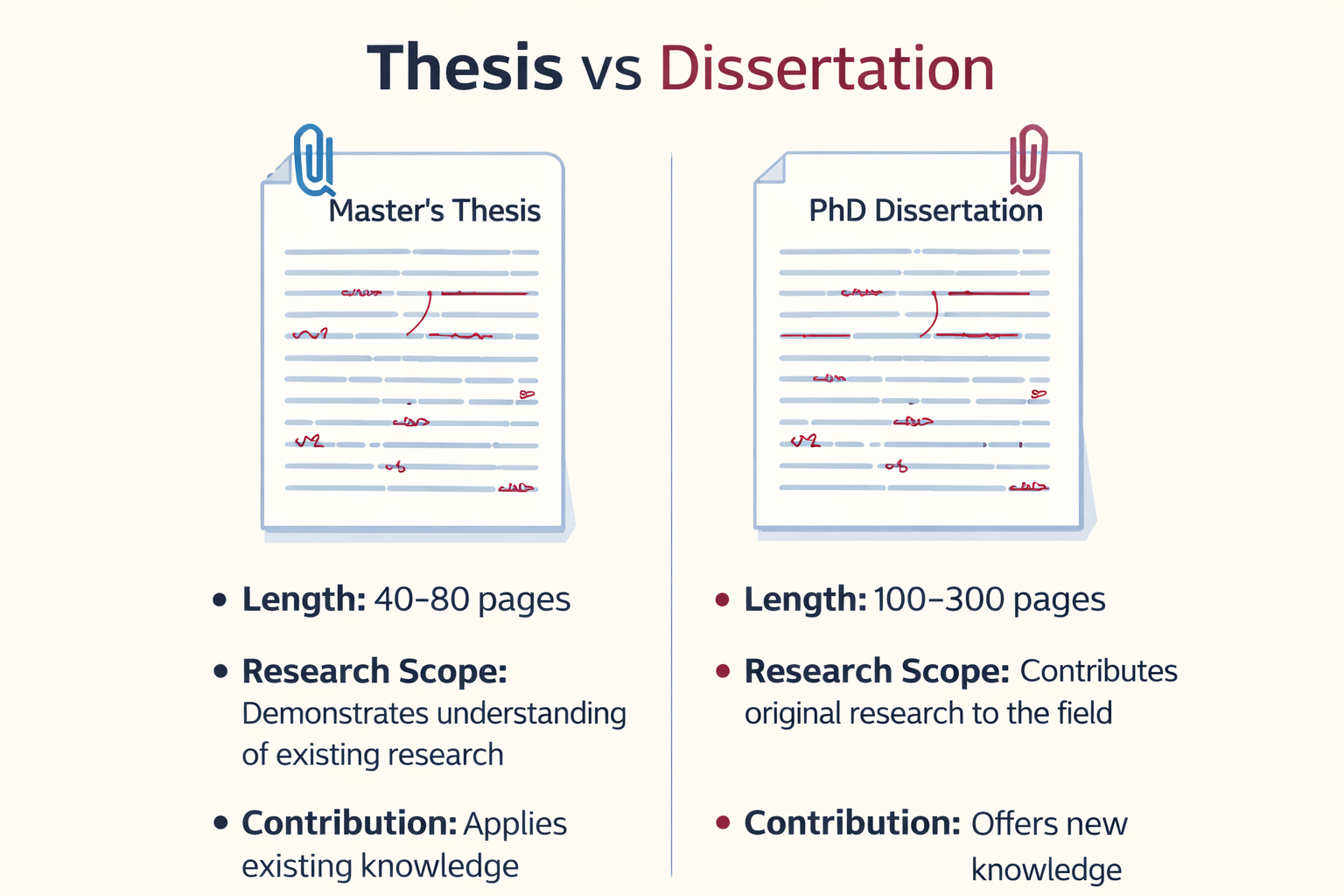
Graduate students frequently encounter confusion when discussing major academic research projects because the terms thesis vs dissertation are used differently across universities and countries. In some educational systems, a thesis refers to a master's level research project, while a dissertation refers to doctoral research. In other contexts, the meanings may be reversed.
Understanding the distinction between a thesis and a dissertation is important for students preparing for advanced academic work. These projects represent the culmination of graduate study and require extensive research, critical analysis, and academic writing. Although both involve independent research, they differ in scope, purpose, and expectations depending on the degree level.
This guide explains the differences between theses and dissertations, outlines their structures, and helps students understand how these major research projects fit into higher education.
What Is a Thesis in Academic Research?
A thesis is typically a substantial research project completed as part of a master's degree program. The purpose of a thesis is to demonstrate that a student has developed advanced knowledge of a subject and can conduct independent research within that field.
Master's theses usually involve analysing existing research, applying theoretical frameworks, and presenting original insights related to a specific topic. Although they contribute to academic knowledge, the primary goal of a thesis is to show that the student can apply research methods effectively and engage critically with scholarly literature.
Most master's theses require students to identify a research problem, conduct a literature review, collect or analyse data, and present conclusions based on their findings. The project demonstrates the student's readiness for professional practice or further academic study.
What Is a Dissertation?
A dissertation is typically associated with doctoral level research, particularly within PhD programs. Unlike a master's thesis, a dissertation must make an original contribution to academic knowledge. This means the research should address a gap in existing scholarship and produce new insights within the field.
Doctoral dissertations require extensive research, often conducted over several years. Students must design a rigorous research methodology, collect and analyse data, and present findings that advance understanding of the research topic.
The dissertation also demonstrates the candidate's ability to conduct independent scholarly work at the highest academic level. For this reason, doctoral dissertations are usually much longer and more detailed than master's theses.
Key Differences Between a Thesis and a Dissertation
Although theses and dissertations share similar research processes, several important differences distinguish these academic projects. These differences reflect the varying expectations placed on master's and doctoral students.
| Feature | Thesis | Dissertation |
|---|---|---|
| Degree Level | Usually completed for a master's degree | Typically required for a doctoral degree |
| Research Goal | Demonstrates mastery of existing knowledge | Contributes original knowledge to the field |
| Length | Generally shorter | Significantly longer |
| Research Scope | Limited to a focused research problem | Involves extensive and original research |
| Academic Contribution | Applies existing theories or methods | Develops new theories, models, or insights |
While these distinctions are common, students should always consult their university guidelines because terminology can vary between institutions.
Differences in Length and Research Scope
Another major difference between theses and dissertations involves their length and complexity. Because doctoral research requires original contributions to knowledge, dissertations tend to be significantly longer and more detailed than master's theses.
The typical word count ranges illustrate this difference:
| Research Project | Typical Word Count |
|---|---|
| Master's Thesis | 15,000 – 25,000 words |
| PhD Dissertation | 70,000 – 100,000 words |
The longer length of a dissertation reflects the depth of research required for doctoral study. Students must conduct extensive analysis, develop theoretical frameworks, and present substantial evidence supporting their conclusions.
Structural Similarities Between Theses and Dissertations
Despite the differences in scope and purpose, theses and dissertations generally follow similar structural frameworks. Both documents organise research into several chapters that guide readers through the research process.
Common structural components include:
- Introduction
- Literature review
- Research methodology
- Results or findings
- Discussion
- Conclusion
These sections allow researchers to present their work systematically and explain how their findings relate to existing scholarship.
How Expectations Differ at the Master's and Doctoral Level
Academic expectations increase significantly when moving from master's level research to doctoral research. Master's theses demonstrate that students can apply research skills, analyse academic literature, and produce structured arguments.
Doctoral dissertations, however, require students to demonstrate originality and scholarly independence. Examiners expect doctoral candidates to develop new theoretical perspectives, identify previously unexplored research questions, and produce findings that influence future academic work.
Because of these expectations, doctoral students often spend several years conducting research before completing their dissertations.
A dissertation must contribute new knowledge to the academic field, while a thesis typically demonstrates mastery of existing research.
Why the Terms Can Be Confusing
One reason students struggle with the thesis vs dissertation distinction is that terminology differs between countries. In many European universities, the term “dissertation” may refer to master's level research, while “thesis” may describe doctoral research.
In contrast, universities in the United States often use the opposite terminology. A thesis is associated with master's degrees, while a dissertation refers to PhD research.
This variation means that students should always review the terminology used by their specific institution to avoid misunderstandings.
Choosing the Right Research Approach for Your Degree
Whether a student is writing a thesis or a dissertation, the research process requires careful planning, structured writing, and rigorous academic analysis. Understanding the expectations of the research project helps students organise their work effectively.
Successful research projects share several key characteristics:
- A clearly defined research question
- A comprehensive literature review
- A well justified research methodology
- Clear presentation of findings
- Critical interpretation of results
These elements form the foundation of high quality academic research regardless of the degree level.
Understanding the Thesis vs Dissertation Difference
Understanding the difference between a thesis and a dissertation helps students prepare for advanced academic research and meet the expectations of their degree program. Although both involve independent research, the scope and objectives differ significantly depending on the academic level.
A thesis demonstrates mastery of a subject area and the ability to apply research methods effectively, while a dissertation represents original scholarly contribution at the doctoral level. By understanding these distinctions, students can approach their research projects with clearer expectations and stronger preparation.
Ultimately, both theses and dissertations play an important role in academic development, allowing students to contribute meaningful insights to their fields of study.



Comments