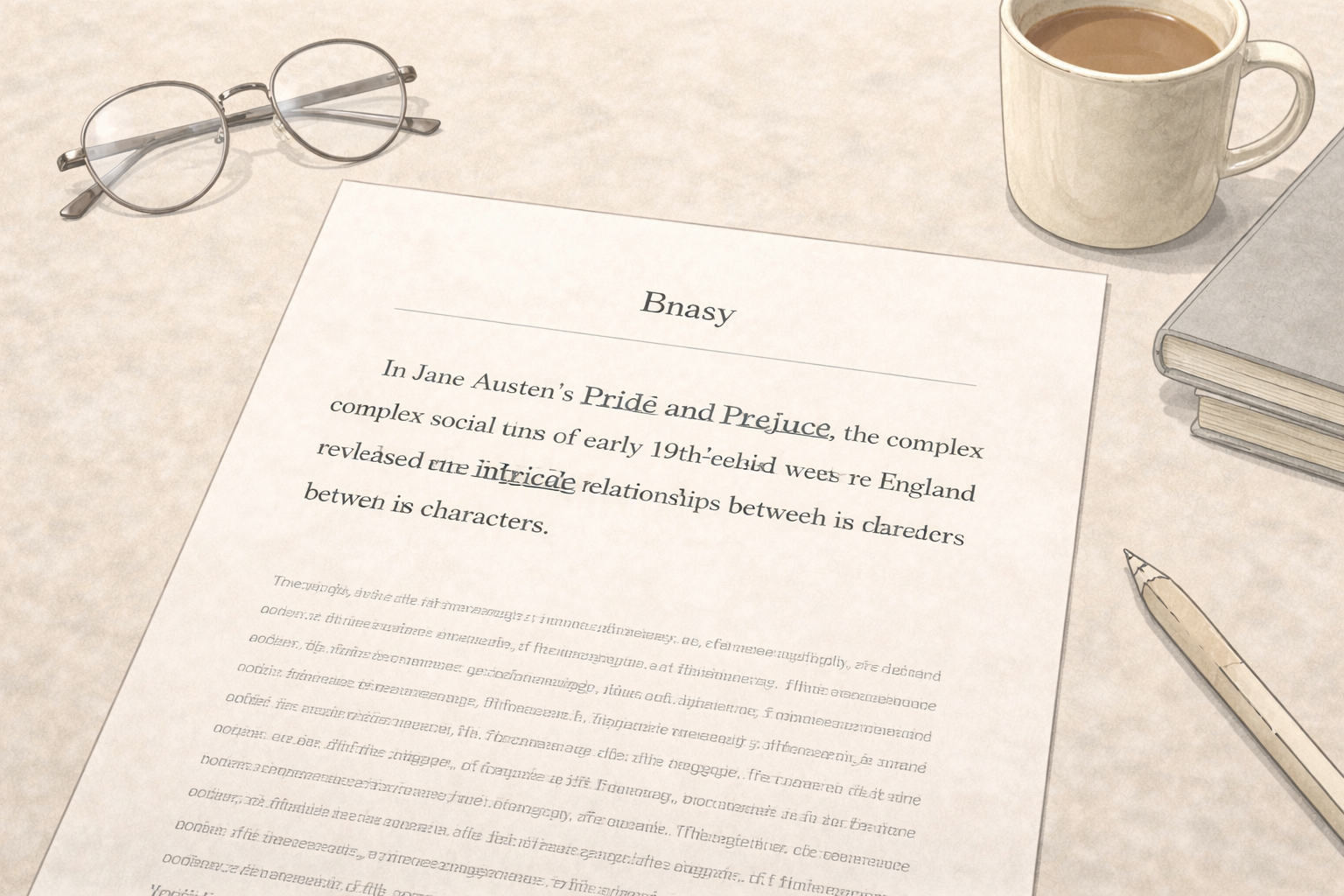
Formatting book titles correctly is a small detail that carries significant academic weight. Examiners often interpret inconsistent or incorrect title formatting as a sign of weak academic control, even when the content of an essay is strong.
This guide explains when and why book titles are italicised in essays, how rules vary across referencing styles, and how to apply these conventions consistently in academic writing. The focus is on clarity, accuracy, and alignment with university-level expectations.
Why Book Title Formatting Matters in Academic Essays
Academic writing relies on shared conventions to ensure clarity and professionalism. Italicising book titles is not merely a stylistic preference; it is part of a broader system that helps readers distinguish between different types of sources.
When these conventions are applied consistently, they signal academic competence and attention to detail. Conversely, inconsistent formatting can distract the reader and weaken the credibility of the work, particularly in humanities and social science disciplines.
Key academic principle: Formatting choices in essays are governed by disciplinary and referencing-style conventions, not personal preference.
The General Rule: Are Book Titles Italicised?
In most academic writing conventions, book titles are italicised when they appear in the body of an essay. This applies to complete, standalone works such as monographs, textbooks, and edited volumes.
The purpose of italicisation is to distinguish full-length published works from shorter texts, such as journal articles, book chapters, poems, or essays, which are usually placed in quotation marks instead.
Distinguishing Books from Other Text Types
Understanding what counts as a book is essential for applying the rule correctly. A book is a self-contained publication, typically issued by an academic or commercial publisher and assigned an ISBN.
By contrast, chapters within edited books, journal articles, and online essays are not italicised in-text. Confusing these categories is one of the most common formatting errors students make.
| Text Type | In-Text Formatting |
|---|---|
| Book (standalone work) | Italicised |
| Edited book | Italicised |
| Book chapter | Quotation marks |
| Journal article | Quotation marks |
| Poem or short story | Quotation marks |
This distinction applies regardless of whether the source is accessed in print or online.
Book Titles in the Body of an Essay
When a book title appears in the main body of an essay, it should normally be italicised and written in title case, unless the referencing style specifies otherwise. Title case means capitalising major words while leaving articles and prepositions in lower case.
For example, a philosophy essay discussing Kant’s work would italicise Critique of Pure Reason each time it appears in the text.
Book Titles in Reference Lists
In reference lists or bibliographies, book titles are also italicised in most referencing styles. However, capitalisation rules may change depending on the system used.
Some styles require sentence case in reference lists, even though title case is used in the body of the essay. This difference often causes confusion but must be followed carefully.
How Referencing Styles Affect Italicisation Rules
While the general principle of italicising book titles is widely shared, referencing styles impose additional, style-specific rules. Students must always prioritise the style required by their department or module.
Ignoring these variations can result in technical marking penalties, even if the core rule of italicisation is followed.
APA Referencing and Book Titles
In APA style, book titles are italicised both in-text and in the reference list. However, APA uses sentence case for titles in the reference list, meaning only the first word and proper nouns are capitalised.
In the body of the essay, italicisation remains mandatory, but capitalisation may follow normal grammatical rules.
Harvard Referencing and Book Titles
Harvard referencing also requires book titles to be italicised. Capitalisation conventions may vary slightly between institutions, but italicisation is consistently applied.
Students should always consult their university’s Harvard guide, as local variants are common.
Chicago Referencing and Book Titles
Chicago style italicises book titles in both notes and bibliographies. It typically uses headline-style capitalisation, especially in bibliographic entries.
Because Chicago often relies on footnotes, consistency between notes and bibliography entries is particularly important.
When Book Titles Are Not Italicised
There are limited situations where book titles are not italicised. These usually arise from technical constraints or alternative formatting conventions.
For example, handwritten examinations may not permit italicisation. In such cases, underlining is sometimes used as an equivalent, though this practice is increasingly rare in digital submissions.
Common Student Mistakes with Book Titles
Many formatting errors occur not because students are unaware of the rule, but because they apply it inconsistently. This inconsistency often appears during editing or revision.
- Italicising book chapters instead of the full book
- Switching between italics and quotation marks
- Forgetting to italicise repeated mentions of the same book
- Applying italics in the reference list but not in-text
These errors are easy to correct but noticeable to markers.
Digital Submissions and Italicisation
In word-processed essays, italicisation should always be applied using proper formatting tools rather than manual spacing or symbols. This ensures clarity and accessibility.
Copying text from external sources can sometimes strip formatting, so students should check book titles carefully during final proofreading.
Consistency as an Academic Skill
Consistency in formatting is a core academic skill. Italicising book titles correctly once is not enough; the rule must be applied every time the title appears.
This consistency demonstrates control over academic conventions and reduces the likelihood of avoidable technical deductions.
Critical warning: Inconsistent formatting of book titles can lower presentation marks even when referencing is otherwise correct.
Applying the Rule Confidently in Essays
Once students understand that book titles are italicised because they are complete, standalone works, the rule becomes intuitive. The key is distinguishing books from shorter texts.
Developing a habit of checking title formatting during revision ensures accuracy and improves overall academic presentation.
Final Guidance on Book Titles in Essays
In most academic essays, book titles should be italicised both in-text and in reference lists, in line with standard scholarly conventions. Variations in capitalisation and layout depend on the referencing style, but italicisation remains the norm.
By applying this rule consistently and attentively, students strengthen the professionalism, clarity, and credibility of their academic writing.

Comments