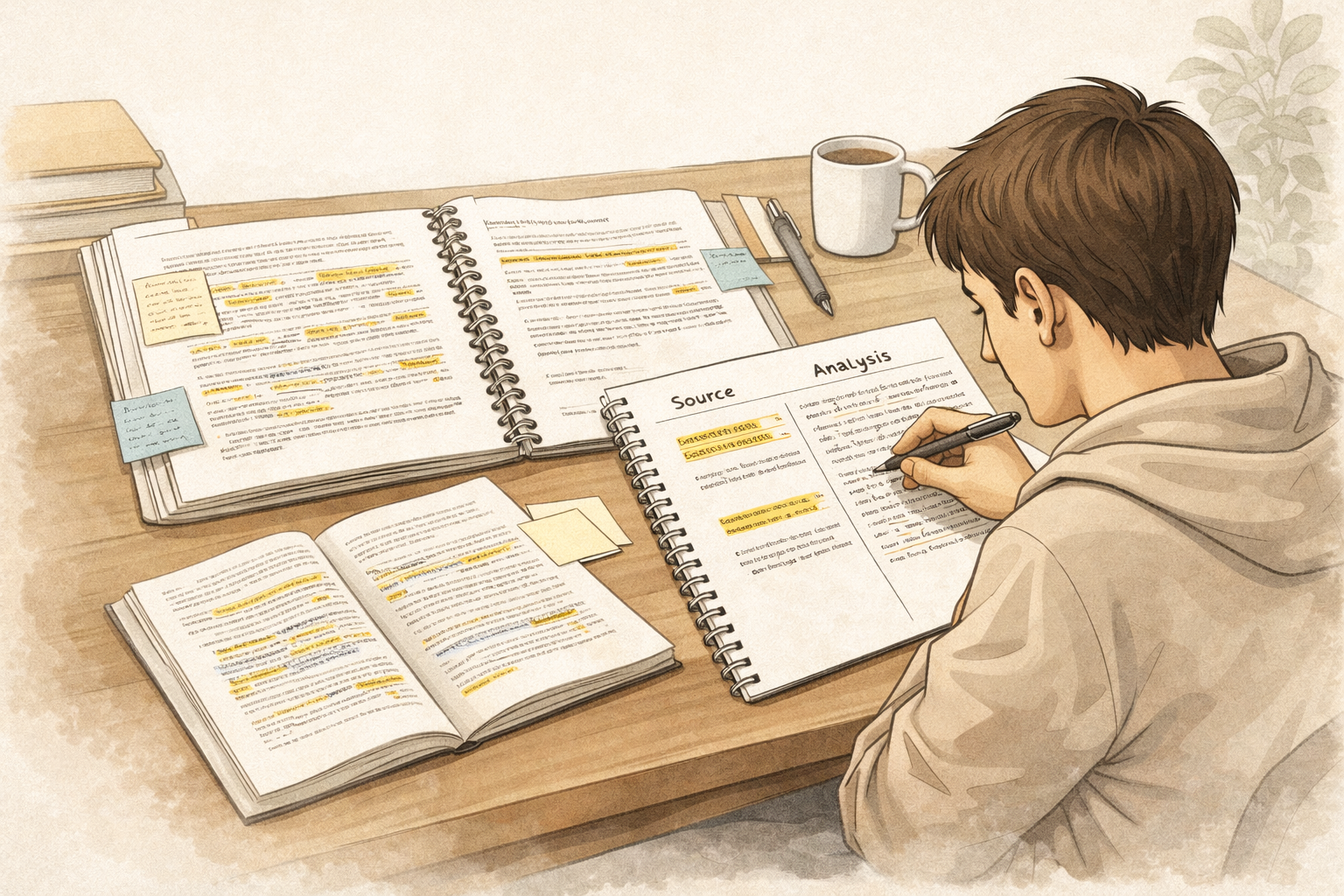
Plagiarism remains one of the most common and consequential issues in higher education. Universities treat it not merely as a technical error, but as a breach of academic integrity that undermines the credibility of assessment and scholarship. Yet, for many students, plagiarism occurs unintentionally, often due to weak source management, poor paraphrasing, or uncertainty about referencing rules.
Avoiding plagiarism is therefore not about fear or mechanical compliance, but about developing disciplined academic habits. This article explains what plagiarism looks like in practice, why it happens, and how students can systematically avoid it while producing confident, original academic work.
Why Avoiding Plagiarism Is a Core Academic Skill
Academic writing is built on engagement with existing knowledge. Students are expected to read, interpret, and respond to scholarly sources, not to reproduce them. Plagiarism disrupts this process by presenting borrowed ideas, structures, or language as original work.
Learning how to avoid plagiarism is therefore inseparable from learning how to think and write academically. It demonstrates respect for intellectual labour, protects academic standing, and strengthens analytical credibility across disciplines.
Academic principle: Originality in university writing lies in analysis and synthesis, not in the absence of sources.
What Plagiarism Looks Like in Practice
Plagiarism is often misunderstood as direct copying alone. In reality, most institutional policies define plagiarism broadly, encompassing both deliberate and accidental misuse of sources.
Students may plagiarise by failing to cite paraphrased ideas, relying too closely on source wording, or submitting work that mirrors the structure of a source even when the wording differs.
Common Forms of Plagiarism
The following practices frequently trigger academic misconduct concerns, even when students believe they have written “in their own words”.
- Copying text without quotation marks and citation
- Paraphrasing too closely to the original phrasing
- Using ideas or arguments without attribution
- Recycling previous assignments without permission
- Submitting work produced by another person or tool
Recognising these forms is the first step toward avoiding them.
Why Students Plagiarise Without Intending To
Unintentional plagiarism often results from time pressure, unfamiliarity with academic conventions, or weak note-taking practices. Students may also struggle to distinguish between common knowledge and source-specific ideas.
Another frequent cause is over-reliance on source material during drafting. When students write while looking directly at a text, they are more likely to reproduce its language and structure.
The Role of Paraphrasing in Avoiding Plagiarism
Effective paraphrasing is one of the most important skills for avoiding plagiarism. It requires more than altering vocabulary; it involves reprocessing an idea and expressing it from a new analytical position.
Good paraphrasing demonstrates understanding. Weak paraphrasing, by contrast, often retains the original sentence structure and argumentative flow, which similarity detection tools and examiners can easily identify.
Examiner expectation: A paraphrase should reflect your understanding of a source, not its wording.
Citation as a Non-Negotiable Safeguard
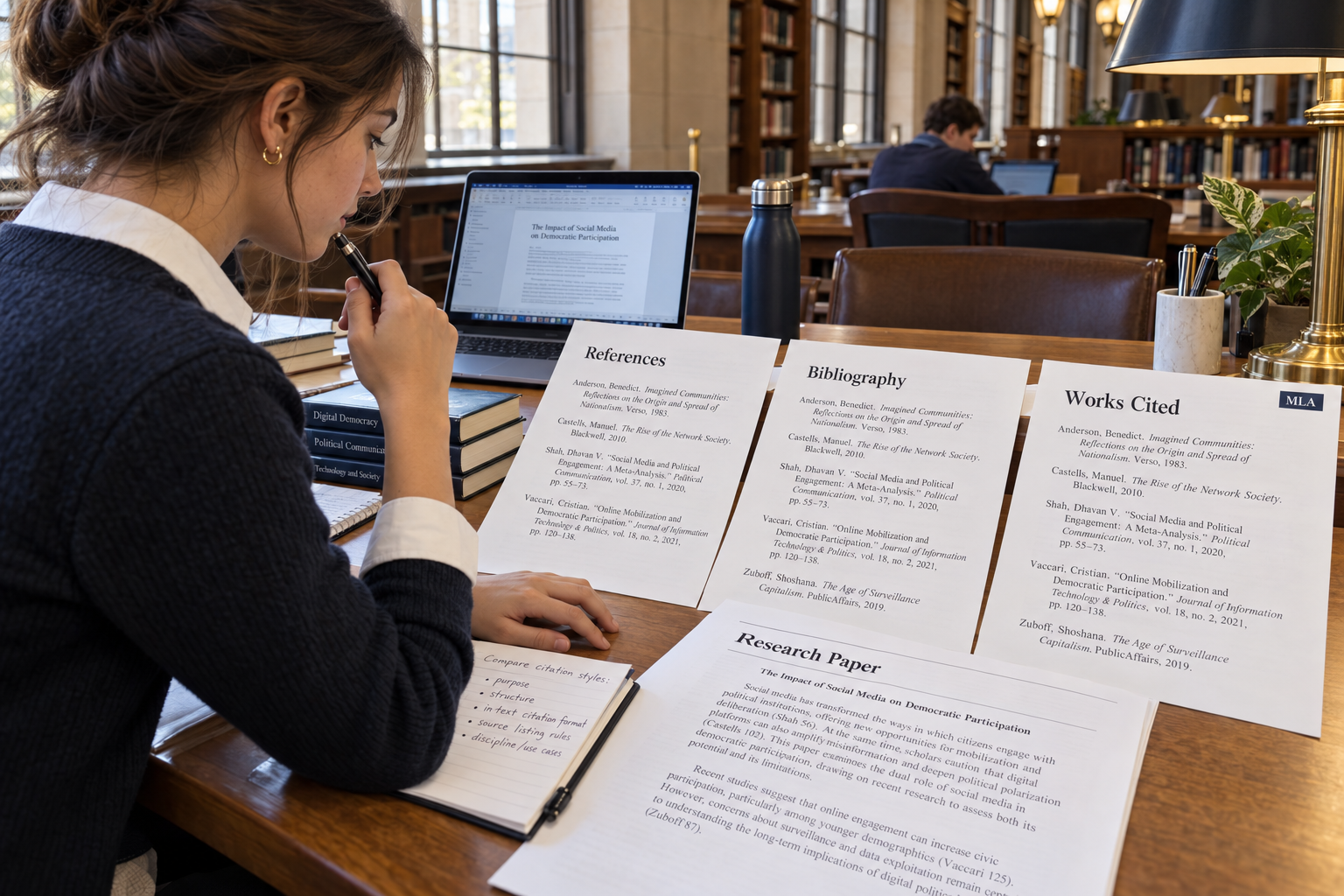
Citation is central to avoiding plagiarism. Regardless of how well an idea is paraphrased, its intellectual origin must be acknowledged using the required referencing style.
Errors in citation, such as missing in-text references or incomplete reference lists, are among the most common reasons students face plagiarism queries. Careful review or professional editing and proofreading support can help ensure accuracy and consistency.
Understanding Similarity Reports Without Panic
Similarity detection software is widely used to flag overlapping text. However, a similarity percentage alone does not determine plagiarism. Examiners interpret reports contextually, focusing on the nature and location of matches.
Quotations, references, and commonly used phrases often contribute to similarity scores. The key issue is whether the matched text represents inappropriate borrowing.
| Similarity Feature | Typical Cause | Academic Concern |
|---|---|---|
| References section | Standard formatting | None |
| Short phrases | Common terminology | Low |
| Long matched passages | Close paraphrasing or copying | High |
| Repeated structural matches | Source-dependent writing | Moderate to high |
This distinction helps students use similarity reports constructively rather than fearfully.
Note-Taking Strategies That Prevent Plagiarism
Many plagiarism issues originate during the research phase. Effective note-taking separates source language from personal interpretation.
Students who record notes in their own words and clearly label quotations reduce the risk of later confusion during drafting.
Best Practices for Ethical Note-Taking
Adopting structured research habits significantly lowers plagiarism risk.
- Record full bibliographic details immediately
- Use quotation marks for verbatim notes
- Write summary notes without viewing the source
- Separate interpretation from description
- Review notes before drafting
These practices create a clear audit trail between sources and original writing.
Discipline-Specific Expectations for Avoiding Plagiarism
Plagiarism standards apply across all disciplines, but expectations differ in practice. Scientific writing often involves standardised language, while humanities writing prioritises interpretive voice.
Understanding these disciplinary norms helps students avoid both under-citation and unnecessary quotation.
Avoiding Plagiarism in Large Research Projects
Extended assignments such as dissertations and research projects involve sustained engagement with sources, increasing the risk of accidental plagiarism.
Supervisors expect careful synthesis rather than descriptive repetition. Structured guidance, such as dissertation writing support, helps students maintain originality while engaging deeply with literature.
The Limits of Automated Tools
Paraphrasing tools and AI writing assistants may reduce textual similarity, but they do not guarantee academic integrity. Automated outputs can still reproduce source logic, structure, or arguments without proper attribution.
Universities increasingly hold students accountable for the intellectual content of their submissions, regardless of drafting assistance.
Critical warning: Reducing similarity scores without improving academic substance can weaken your work and increase scrutiny.
Building Confidence Through Ethical Writing
Avoiding plagiarism is not about writing in isolation; it is about engaging responsibly with existing knowledge. When students understand sources, integrate them critically, and cite accurately, plagiarism ceases to be a constant concern.
Developing these habits strengthens both academic performance and long-term scholarly confidence.
Academic Integrity as a Long-Term Skill
Mastering plagiarism avoidance prepares students for postgraduate study, research, and professional writing. Ethical source use is a transferable skill valued well beyond the university classroom.
By focusing on understanding, attribution, and analytical voice, students can meet academic standards with clarity and assurance.
Comments