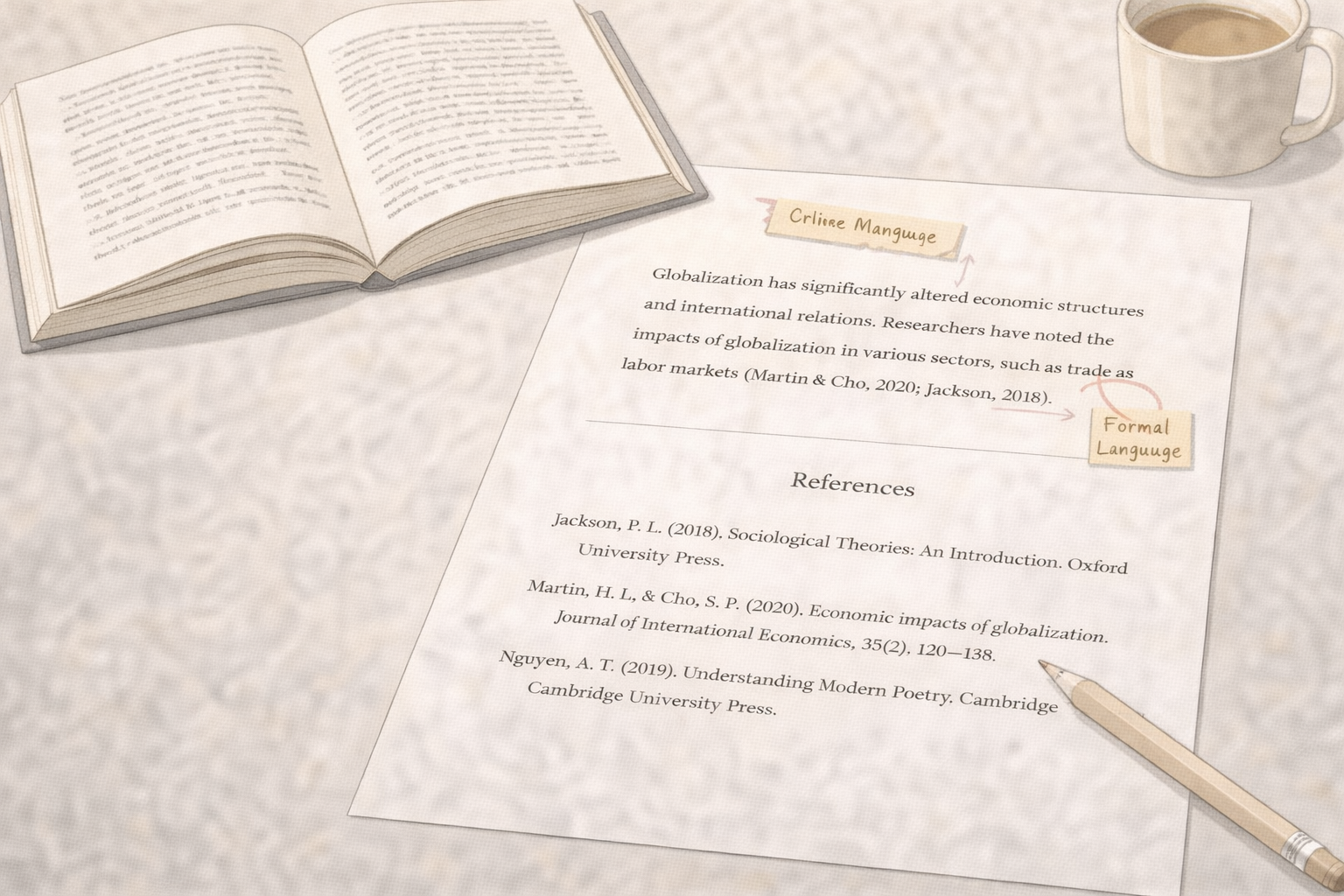
Citation rules are a cornerstone of academic writing, yet many students encounter confusion when applying them in essays, research reports, and dissertations. Proper citation ensures that sources are acknowledged transparently, intellectual property is respected, and arguments are supported by credible evidence. Despite being technical, citation rules reflect core academic values such as integrity, accountability, and scholarly dialogue.
This article explores citation rules in depth, clarifying why they matter, how they function across common referencing systems, and how students can apply them confidently and consistently in their work. Understanding citation rules is not merely about avoiding penalties—it is about participating responsibly in academic communities.
Why Citation Rules Matter in University Writing
Citation rules are not arbitrary formatting guidance; they embody the ethical principles of academic work. When a student cites a source correctly, they demonstrate awareness of the intellectual landscape that shapes their topic. This allows readers—whether lecturers, peers, or future researchers—to locate sources, verify claims, and assess the student’s engagement with relevant literature.
Moreover, citation rules help differentiate a student’s original contribution from existing knowledge. Without clear citation, ideas may be misattributed or misunderstood, leading to allegations of plagiarism. In this sense, citation rules are safeguards of academic integrity rather than bureaucratic requirements.
Markers consistently emphasise citation accuracy because it is tightly linked to evidence quality and academic rigour.
Fundamental principle: Any idea, data point, theory, or direct wording that is not your own must be cited according to the relevant citation rules.
The Core Functions of Citation Rules
At their most basic level, citation rules serve several interrelated functions that reinforce the scholarly process.
- Acknowledgement: Recognising the intellectual contributions of other authors.
- Verification: Allowing readers to locate the original source.
- Contextualisation: Positioning your argument within existing research.
- Transparency: Distinguishing between your ideas and sourced material.
Each of these functions contributes to the credibility and utility of academic writing.
Two Parts of Citation Rules: In-Text and Reference List
Citation rules typically operate in two domains: in-text citations and the reference list (or bibliography). Both parts must function as a coherent system to meet academic expectations.
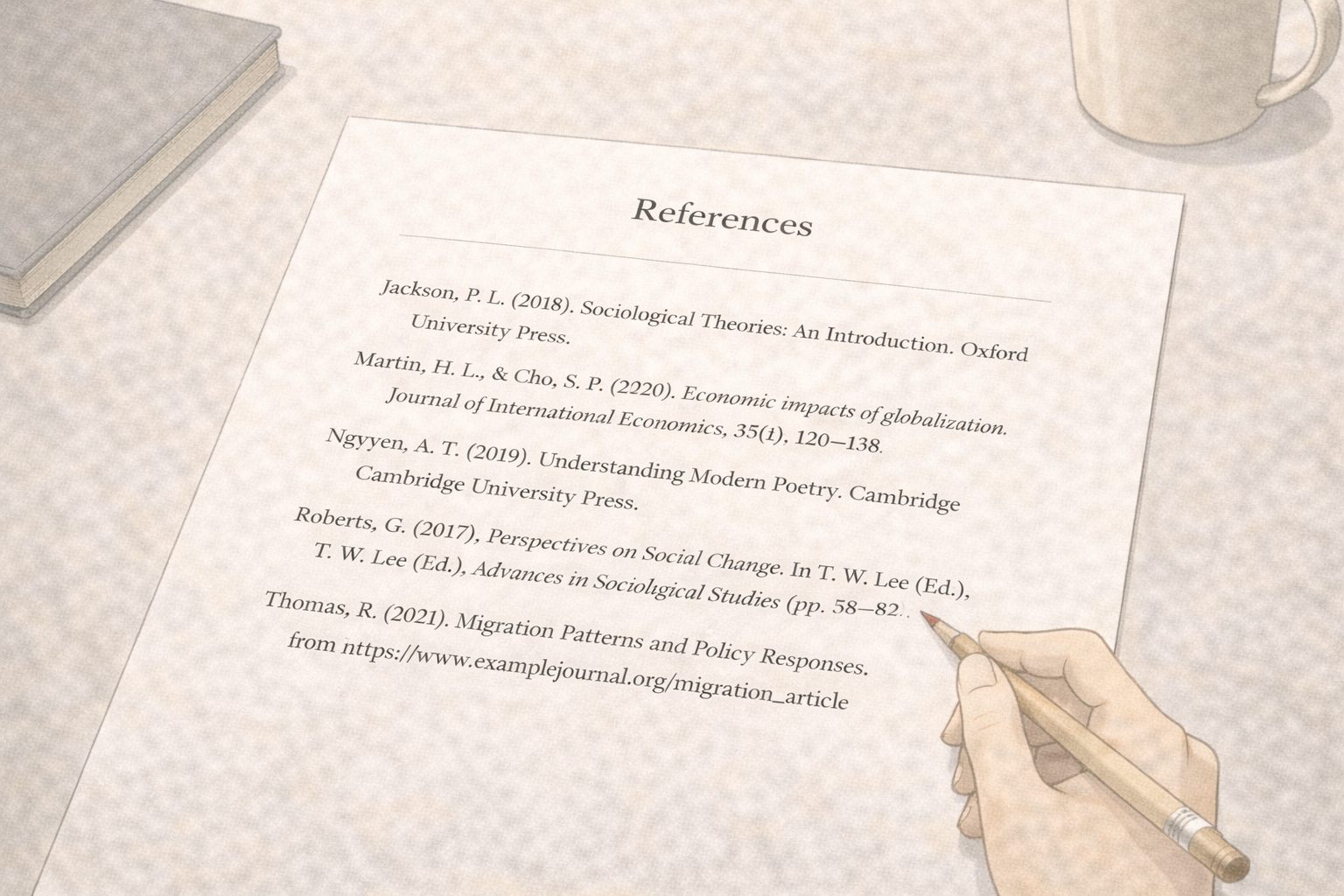
In-text citations briefly indicate when a source is used within the body of text. The corresponding reference list provides full details so that readers can locate the source independently.
A mismatch between in-text citations and the reference list—such as a source cited in text but missing from the list—is a common citation error that markers penalise.
Common Citation Styles and Their Rule Sets
Citation rules vary by referencing style, each developed to align with disciplinary norms. While many citation principles overlap, details—such as punctuation, order of information, and presentation—differ. The most common styles in higher education include Harvard, APA, MLA, and Chicago.
Understanding differences between these citation systems is essential because incorrectly applying the rules of one style in a context that requires another can lead to unnecessary penalties.
Harvard Citation Rules
Harvard is widely used in UK and many international universities. It uses an author–date system for in-text citations (e.g., (Smith, 2022)) and an alphabetical reference list. Harvard’s rules emphasise clarity and accessibility while accommodating various source types.
Despite its widespread use, Harvard has no single official manual, so institutional guidelines take precedence.
APA Citation Rules
APA (American Psychological Association) is common in psychology, education, and the social sciences. Its citation rules focus on recent literature and evidence-based sources. In-text citations follow an author–date format similar to Harvard, but APA has detailed rules for DOIs, electronic sources, and punctuation within references.
APA also influences layout and running headers, so citation rules are embedded within broader style requirements.
MLA Citation Rules
MLA (Modern Language Association) is often used in literature and humanities. Its in-text citations emphasise page numbers (e.g., (Smith 45)), and bibliographic entries follow a distinctive format prioritising author names and titles.
MLA rules are particularly detailed about formatting works such as plays and poems, which are common in humanities assignments.
Chicago Citation Rules
Chicago style offers two systems: author–date (similar to APA/Harvard) and notes–bibliography, which uses footnotes or endnotes. The latter is common in history and some arts disciplines.
Chicago’s note-based approach provides space for explanatory comments alongside citations, which can be useful for contextualising sources.
Rules for In-Text Citations Across Styles
Although formatting details differ, all citation systems follow core rules for in-text acknowledgement: clarity, brevity, and consistency. A citation must immediately show that material is sourced rather than original.
In-text citations typically include the author’s surname and a date or page number, depending on the style. They are placed as close as possible to the borrowed material without disrupting the sentence flow.
Students often need guidance on where to place citations—after a quoted sentence, at the end of a paraphrase, or within complex sentence structures. When in doubt, cite as soon as the sourced material appears.
Rules for Reference Lists and Bibliographies
The reference list, bibliography, or works cited page must follow citation rules meticulously. Elements such as author order, title capitalization, publication details, and electronic identifiers must be presented according to style-specific rules.
For example, APA uses sentence case for article titles but title case for journal names, while MLA uses title case for both. These distinctions matter in formal assessment.
Reference entries are usually organised alphabetically by the first author’s surname, and superfluous entries—sources not cited in the text—are excluded.
Rules for Quoting and Paraphrasing
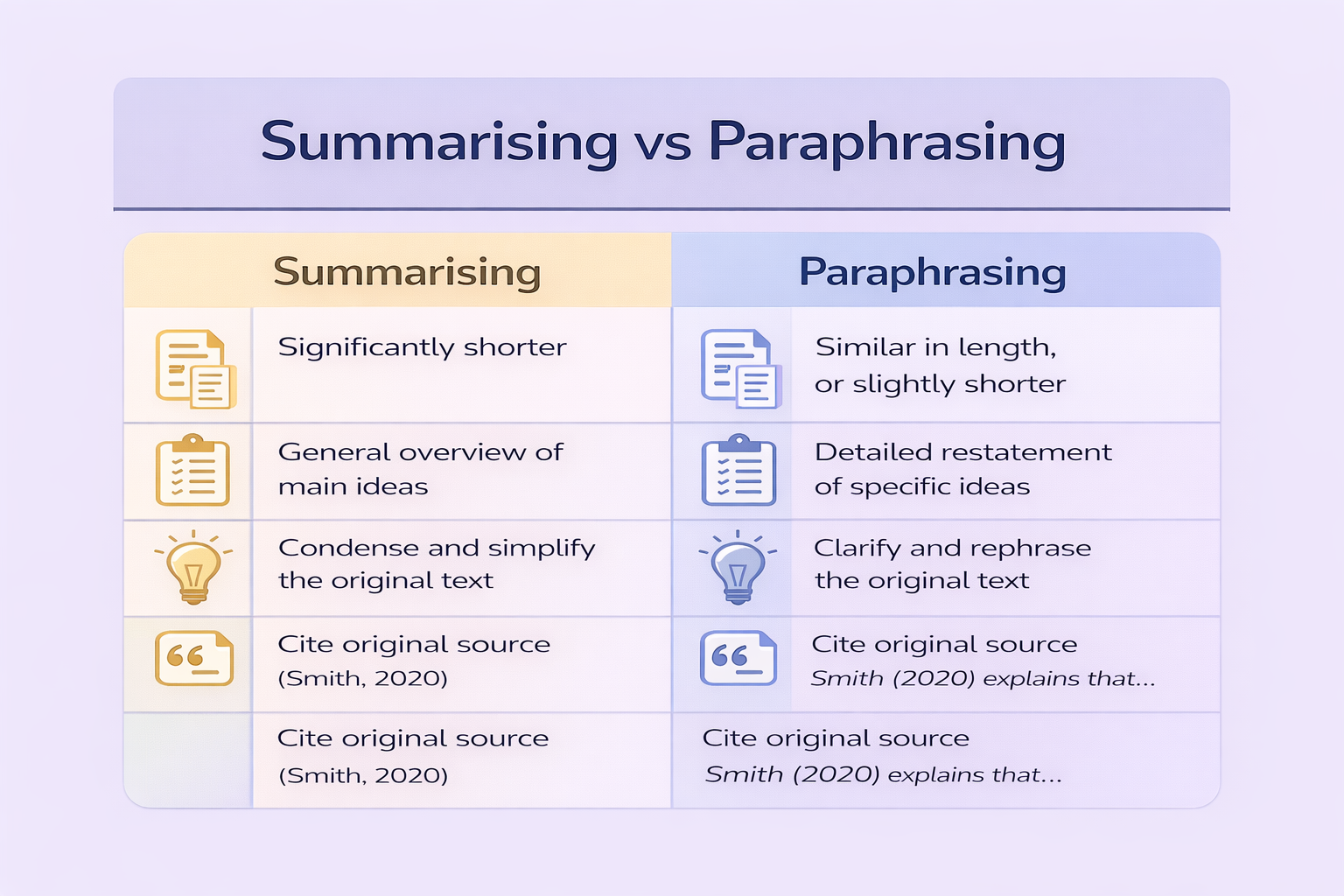
Citation rules distinguish between direct quotations and paraphrased ideas. Direct quotations—exact wording from a source—must be enclosed in quotation marks (or formatted as block quotes if long) and always require page numbers or paragraph identifiers.
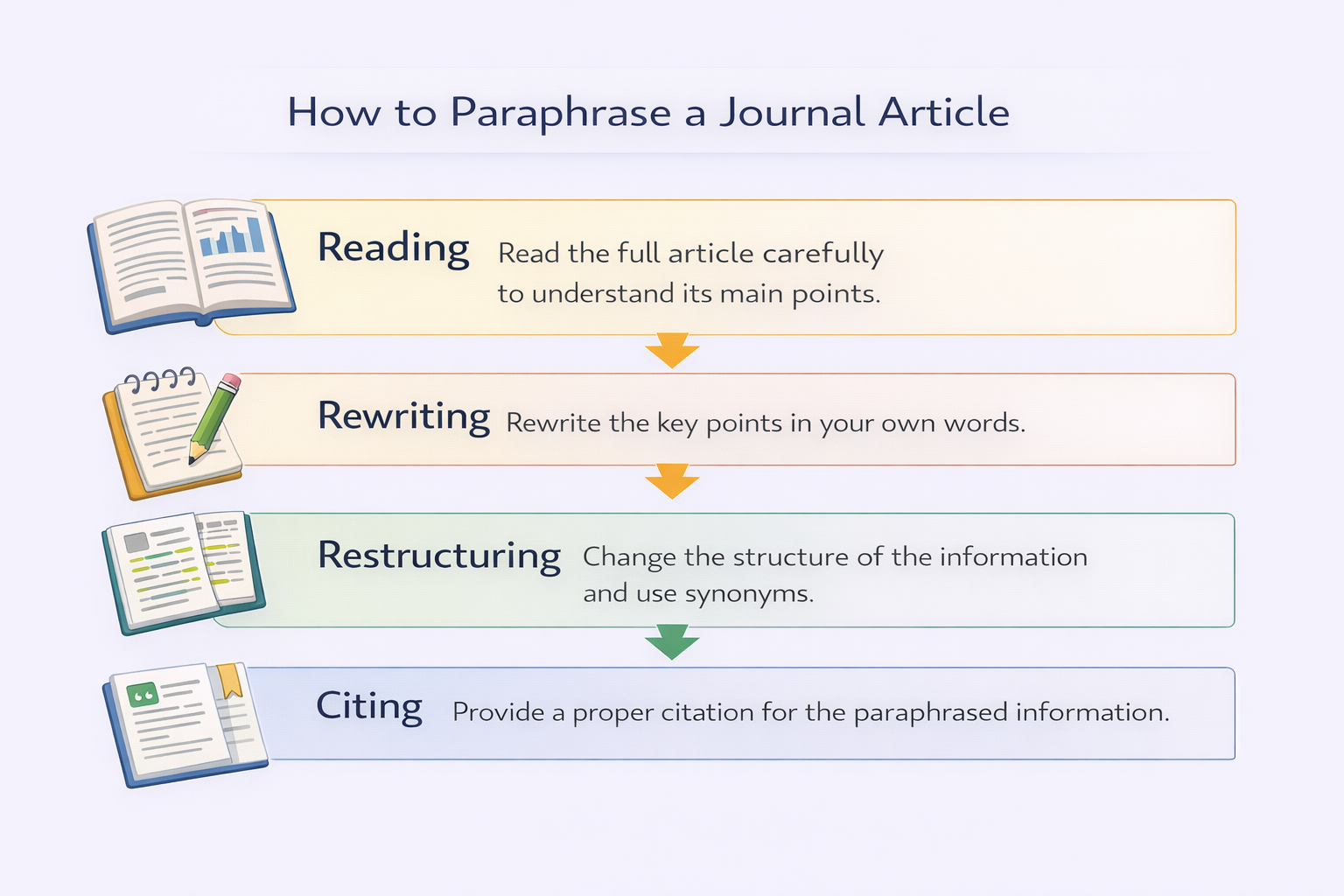
Paraphrasing involves rewriting ideas in your own words. Citation rules require that paraphrased material also be acknowledged, even though quotation marks are not used.
Critical warning: Paraphrased material without citation still constitutes plagiarism under academic policies.
Rules for Citing Electronic and Digital Sources
Increasingly, students access sources online—journals, reports, datasets, and multimedia. Citation rules for digital sources include elements such as DOIs (Digital Object Identifiers), URLs, and access dates (where required by style).
Accurate citation of digital sources requires attention to stability and retrievability. A source without a DOI should include a URL, and some styles require the date the material was accessed if the content is likely to change.
Students should prioritise peer-reviewed and institutional sources over informal web content.
Rules for Citing Secondary Sources
Secondary referencing—citing a source that is cited within another—is generally discouraged unless the original work is inaccessible. Citation rules require clarity that the reference is indirect.
Where possible, students are expected to consult original sources to strengthen evidence quality.
Rules for Multiple Sources in One Citation
When multiple sources support a statement, citation rules allow listing them together, usually separated by semicolons. The ordering of multiple sources is typically alphabetical within parentheses.
This practice shows breadth of reading without cluttering the text excessively.
Common Citation Errors and How to Avoid Them
Even when students understand citation rules in principle, errors are frequent in practice. These include mismatches between in-text citations and reference lists, inconsistent formatting, missing elements, and incorrect punctuation.
- Omitting page numbers for direct quotes
- Using outdated style rules
- Inconsistent author name formats
- Incorrect handling of multiple authors
- Failing to include DOIs or URLs where required
Systematic proofreading and reference management tools can help, but students must verify output against official style guides.
Practical Steps to Apply Citation Rules Accurately
Applying citation rules successfully requires planning and attention to detail. Students should capture full reference details during research rather than after drafting. This reduces errors and saves time during revision.
- Record complete bibliographic details at source collection.
- Apply correct in-text citation immediately when using a source.
- Build the reference list incrementally rather than post-draft.
- Use official style guides to check formatting.
- Proofread references separately from content.
This structured approach aligns with academic work patterns rather than ad hoc citation correction.
Why Strong Citation Practices Improve Academic Work
Citation rules are not just about compliance but about strengthening arguments. When sources are cited correctly, they support claims credibly and transparently.
Strong citation practices reflect careful research, critical evaluation, and respect for scholarly communication. These qualities are central to assessment criteria across disciplines.
Synthesising Citation Rules With Confidence
Mastering citation rules takes time, practice, and systematic attention. Students who understand the logic behind citation conventions are better equipped to apply them consistently and confidently.
Rather than viewing citation rules as a hurdle, students can see them as tools that enhance clarity, credibility, and academic voice.
Accurate citation contributes directly to academic success and professional credibility.
Comments