Online sources are now embedded in almost every university assignment, from journal articles accessed through databases to official reports published on institutional websites. While these sources are academically legitimate, they must be cited correctly to meet scholarly standards and avoid penalties for poor referencing.
This guide explains how to cite online sources in a rigorous academic manner. It focuses on credibility assessment, in-text citation rules, reference list formatting, and style-specific conventions, helping students use online material confidently and correctly in assessed work.
Why Citing Online Sources Requires Special Care
Unlike traditional print sources, online materials vary widely in quality, permanence, and authorship. Academic institutions therefore expect students to demonstrate judgement when selecting and citing digital content. Proper citation signals that an online source is reliable, traceable, and relevant to scholarly discussion.
Incorrect or incomplete citation of online sources can undermine an otherwise strong argument. Examiners may question the credibility of evidence if URLs are missing, dates are unclear, or authorship is not properly identified.
Examiner expectation: Online sources must be cited with the same precision and transparency as books and journal articles.
What Counts as an Online Source in Academic Work
An online source is any material accessed digitally rather than in print. This includes academic journal articles accessed via databases, government and institutional reports, official organisational websites, and reputable online books or datasets.
Not all online content is suitable for academic citation. Blogs, social media posts, and general websites may only be acceptable if they come from authoritative organisations or are explicitly permitted by the assignment brief.
Assessing the Credibility of Online Sources
Before citing an online source, students must evaluate its academic reliability. Credible sources are typically produced by universities, academic publishers, government bodies, or recognised professional organisations.
Indicators of reliability include named authors, publication dates, institutional affiliations, and stable URLs. Sources lacking these features should be treated with caution or avoided altogether.
Core Elements Required When Citing Online Sources
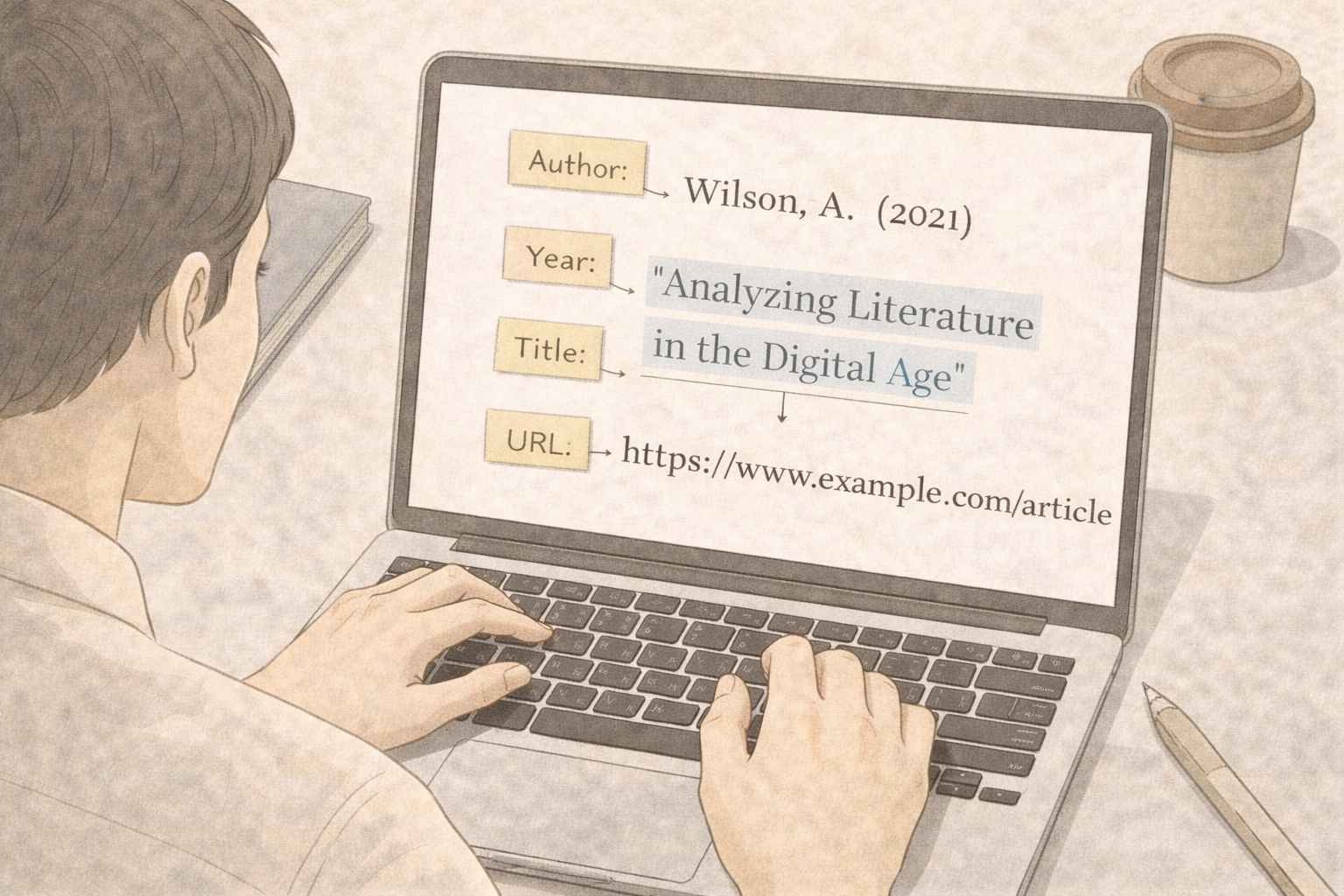
Regardless of referencing style, online citations are built from a consistent set of elements. These details allow readers to locate the source and assess its authority.
- Author or responsible organisation
- Year of publication or last update
- Title of the page, article, or document
- Name of the website or publisher
- URL or DOI
- Date accessed (where required)
Missing elements should be handled according to the rules of the referencing style rather than omitted without explanation.
In-Text Citation of Online Sources
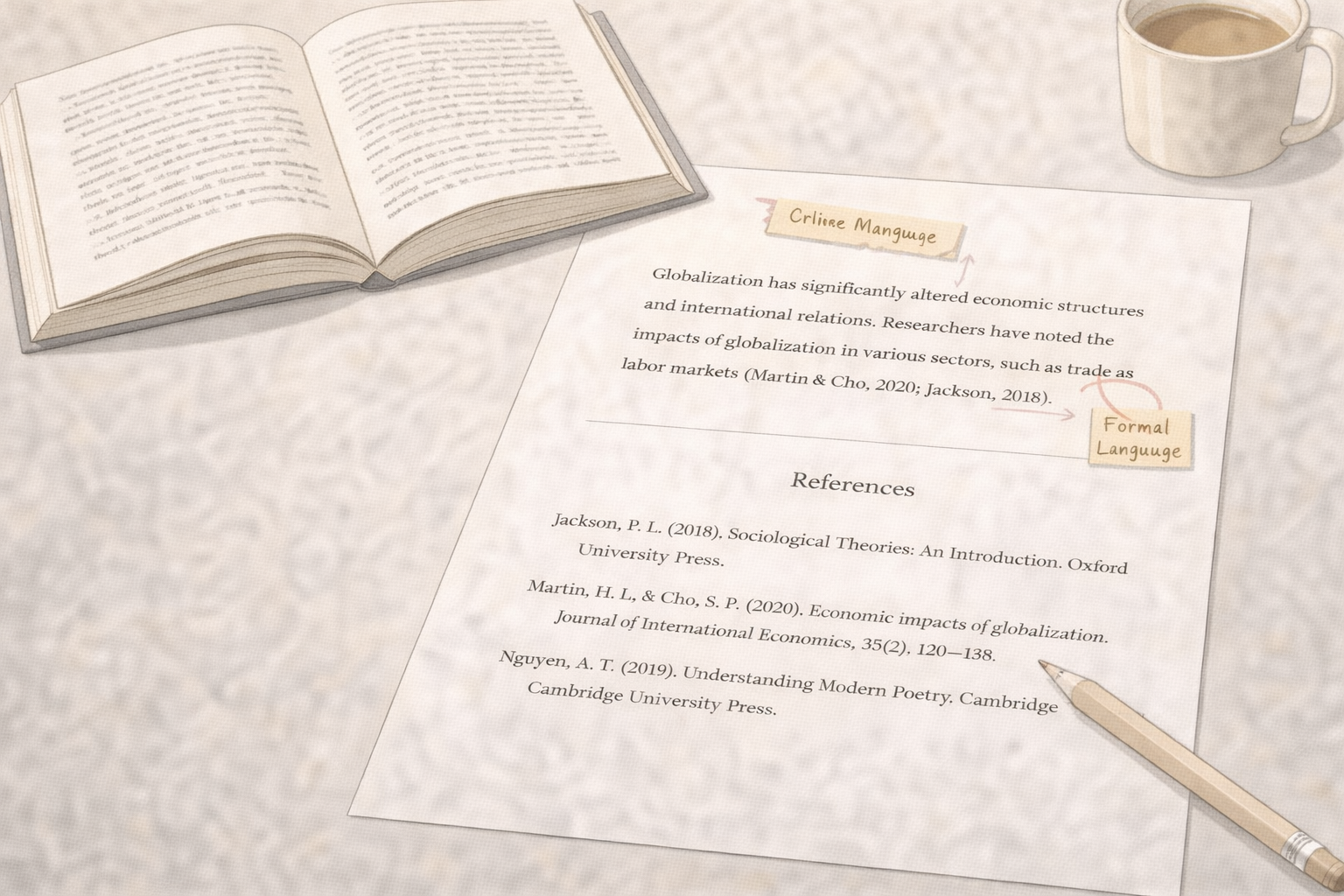
In-text citations acknowledge online sources at the point where they are used in the text. These citations link directly to the full reference entry and demonstrate academic integrity.
The format of in-text citations depends on the referencing style, but the principle remains consistent: readers must be able to identify the source clearly and unambiguously.
Using Author-Based In-Text Citations
When an online source has a named author, the author’s surname and year are used in the citation. This applies equally to online journal articles and web-based reports.
For example, an online policy report authored by an organisation should be cited using the organisation’s name rather than the website URL.
Citing Online Sources Without Authors
If no individual author is listed, the organisation responsible for the content is used as the author. Where neither is available, the title may be shortened for in-text citation purposes.
Anonymous online sources are generally discouraged in academic work unless they are official publications with clear institutional responsibility.
Reference List Formatting for Online Sources
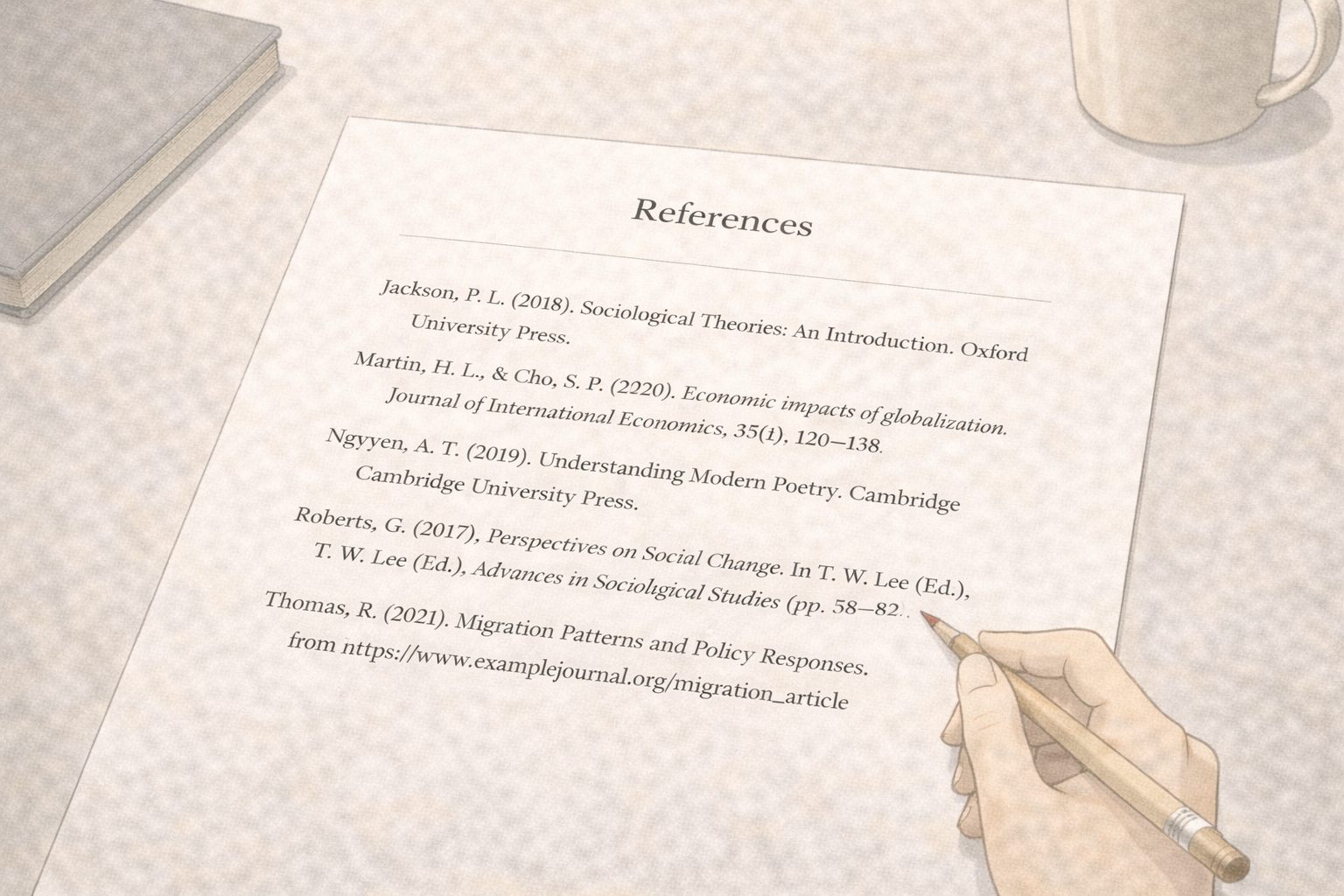
The reference list provides full publication details for every source cited in the text. Online sources must be formatted consistently and placed in alphabetical order according to the chosen referencing style.
Unlike in-text citations, reference list entries include full URLs or DOIs, allowing direct access to the source.
| Component | Purpose |
|---|---|
| Author / Organisation | Identifies responsibility for the content |
| Year | Indicates currency of the source |
| Title | Specifies the exact document used |
| URL / DOI | Provides direct access |
Each component plays a role in ensuring academic transparency and traceability.
Citing Online Sources in Different Referencing Styles
While the underlying principles of citation remain consistent, formatting rules differ across referencing styles. Students must always follow the style specified in their assignment brief.
Failure to follow the correct style is treated as a technical error and may result in avoidable mark deductions.
APA Style for Online Sources
APA emphasises author, year, and retrieval information. DOIs are preferred over URLs, and access dates are only included when content is likely to change.
Webpages are cited similarly to reports, with the site name included as the publisher.
Harvard Style for Online Sources
Harvard referencing requires clear authorship, year, title, and URL, usually accompanied by an access date. Consistency in punctuation and formatting is critical.
University-specific Harvard variants may impose additional rules, so institutional guidance should always be followed.
Chicago Style for Online Sources
Chicago style distinguishes between notes and bibliography formats. Online sources are often cited in footnotes with full URLs provided at first mention.
Bibliography entries then consolidate this information in a standardised format.
Common Mistakes When Citing Online Sources
Many citation errors arise from misunderstanding how online sources differ from print materials. Recognising these pitfalls helps students avoid unnecessary penalties.
- Using raw URLs in the main text
- Omitting authors or organisations
- Failing to match in-text citations to reference entries
- Mixing referencing styles
- Using non-academic websites without justification
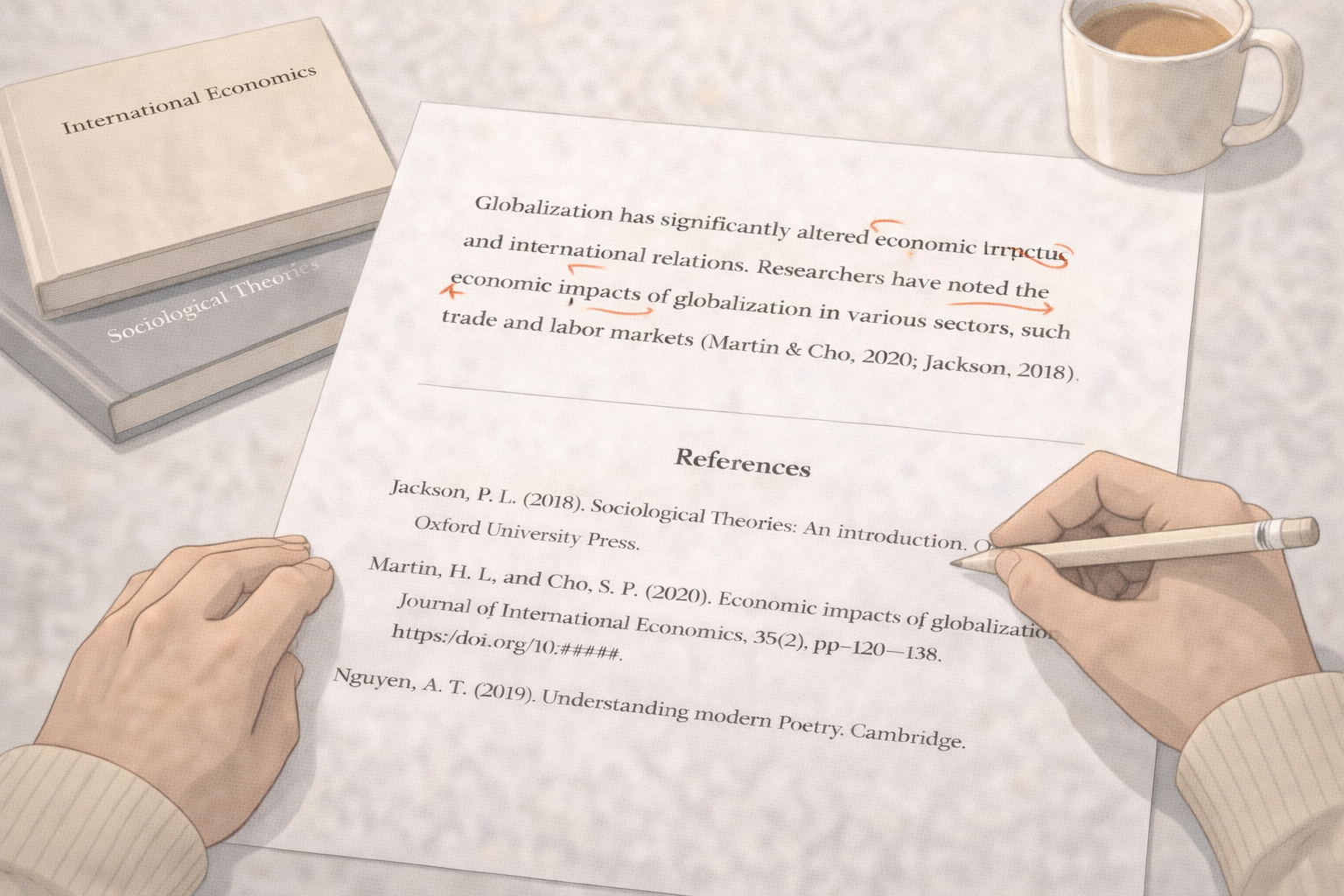
Each of these issues signals weak academic practice and should be corrected during proofreading.
Using Online Journal Articles Correctly
Online journal articles accessed through databases are treated as scholarly sources, not websites. They should be cited as journal articles, with DOIs included where available.
Students should avoid citing the database homepage URL and instead use the article’s permanent link or DOI.
Access Dates and Why They Matter
Access dates indicate when an online source was consulted. They are particularly important for content that may change over time, such as policy pages or statistical dashboards.
Some referencing styles require access dates for all web-based sources, while others restrict their use. Always follow the prescribed style guide.
Academic Integrity and Online Sources
Proper citation of online sources is central to academic integrity. It acknowledges intellectual ownership and allows others to verify claims.
Failure to cite online sources accurately may be treated as poor scholarship or, in severe cases, academic misconduct.
Non-negotiable rule: Every online source that informs your work must be cited in-text and listed in the reference section.
Developing Confidence in Citing Online Sources
Confidence in citation comes from understanding principles rather than memorising examples. Once students grasp how authorship, dates, and access information function, applying different styles becomes manageable.
Consistent practice, careful checking, and early attention to referencing reduce last-minute errors and improve overall academic presentation.
Final Guidance on Citing Online Sources
Citing online sources correctly is an essential academic skill in modern higher education. By evaluating credibility, applying style-specific rules, and maintaining consistency, students can use digital sources effectively and ethically.
Approached carefully, online sources strengthen academic arguments rather than weaken them, supporting clear, credible, and well-referenced university work.
Comments