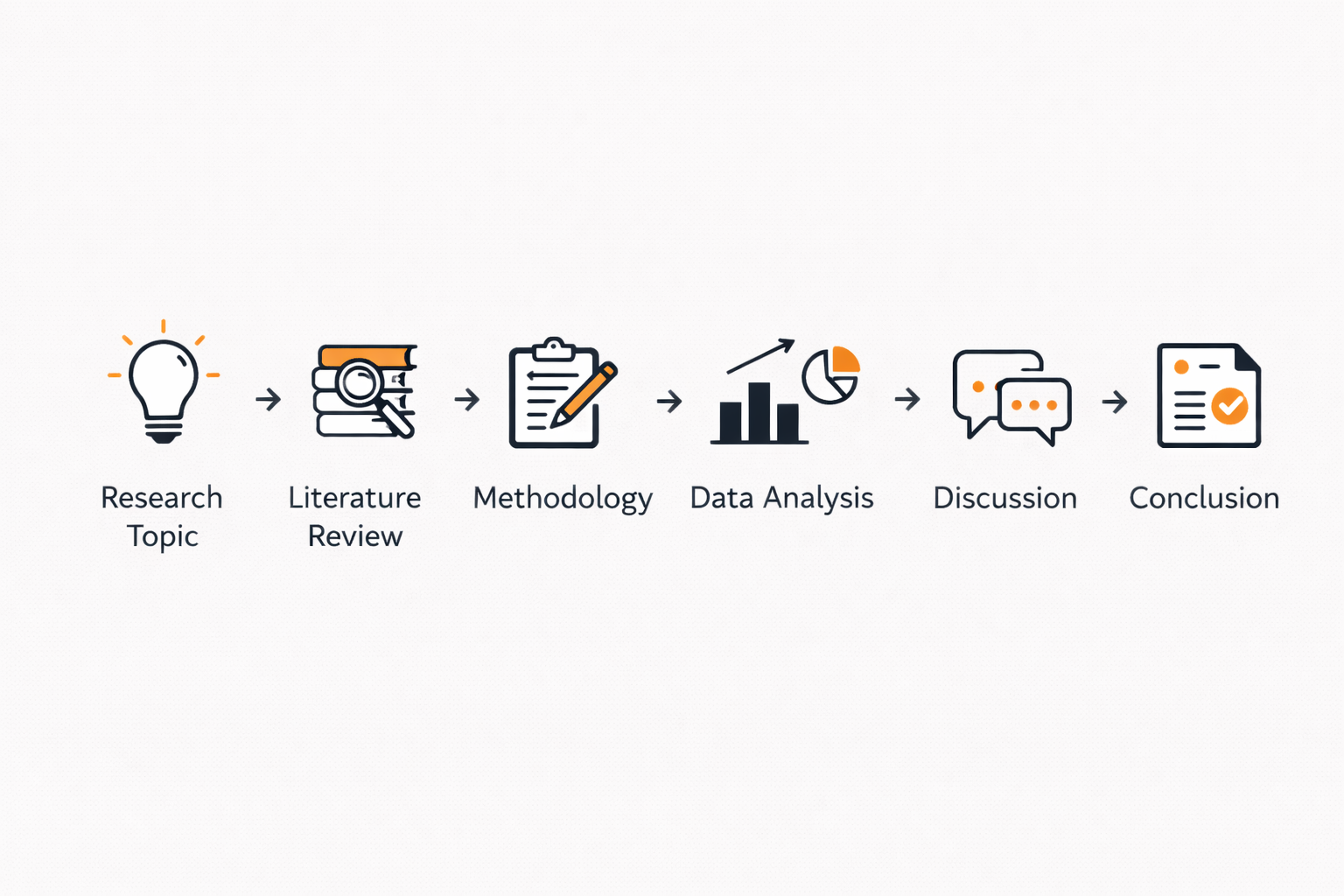
Writing a dissertation is one of the most challenging academic tasks students encounter during their university education. Unlike standard essays or coursework assignments, a dissertation requires independent research, theoretical analysis, methodological justification, and sustained academic writing over tens of thousands of words. Because of these demands, many students actively seek dissertation help to manage the complexity of the process.
Dissertation help does not simply mean someone writing a paper. In most academic contexts, it refers to structured guidance that helps students plan research questions, review literature, develop methodology, organise findings, and refine academic writing. When used responsibly, such support can significantly improve the clarity, structure, and academic quality of a dissertation.
This guide explains what dissertation help involves, how dissertations are structured, the most common challenges students face, and how professional academic guidance can support the research process.
Why Students Often Need Dissertation Help
A dissertation is fundamentally different from earlier coursework because it requires students to design and conduct independent research. Many students encounter difficulties because they are expected to apply advanced academic skills simultaneously, including critical analysis, research design, and scholarly writing.
Several common challenges explain why dissertation help becomes valuable:
- Difficulty narrowing a research topic into a clear question
- Limited experience conducting academic literature reviews
- Uncertainty about research methodology
- Managing large amounts of data and sources
- Maintaining academic writing clarity across long chapters
Without structured guidance, these issues can delay progress or weaken the quality of the final dissertation.
A dissertation is not simply a long essay—it is a structured research project that demonstrates independent academic inquiry.
Understanding this distinction is essential for students beginning the dissertation process.
Understanding the Structure of a Dissertation
One of the most important aspects of dissertation help involves understanding the structure of a research thesis. Most universities require dissertations to follow a consistent framework that demonstrates logical progression from research problem to conclusion.
| Section | Purpose |
|---|---|
| Introduction | Defines research problem, objectives, and significance |
| Literature Review | Examines existing research and theoretical debates |
| Methodology | Explains research design and data collection methods |
| Findings / Results | Presents empirical data or research outcomes |
| Discussion | Interprets results and links them to research questions |
| Conclusion | Summarises findings and identifies research implications |
This structure ensures that research is presented logically and transparently.
How Dissertation Help Supports Topic Development
Choosing a research topic is one of the most difficult stages of dissertation writing. Students often start with ideas that are either too broad or too narrow. Effective dissertation help focuses on transforming general interests into researchable questions.
A strong dissertation topic should meet several criteria:
- Clearly defined research problem
- Availability of scholarly literature
- Feasible research methods
- Academic relevance within the discipline
For example, a vague topic such as “social media and society” may become a focused research question like: “How does social media usage influence academic productivity among university students?”
Focused research questions lead to stronger dissertations.
The Role of Literature Review in Dissertation Research
The literature review forms the intellectual foundation of a dissertation. Rather than summarising sources individually, the literature review critically evaluates existing research, identifies debates, and reveals gaps that the dissertation aims to address.
Effective dissertation help often focuses on teaching students how to synthesise sources rather than simply summarising them.
A strong literature review demonstrates:
- Understanding of theoretical frameworks
- Critical comparison between scholars
- Identification of research gaps
- Justification of the current research project
This analytical approach shows examiners that the student understands the scholarly conversation surrounding their topic.
Understanding Research Methodology
Methodology is another area where students frequently require dissertation help. The methodology chapter explains how the research was conducted and why particular methods were chosen.
Research methods generally fall into three categories:
- Qualitative research (interviews, thematic analysis, case studies)
- Quantitative research (surveys, statistical analysis, experiments)
- Mixed methods (combining qualitative and quantitative approaches)
Choosing the correct method depends on the research question and the type of data required to answer it.
| Method Type | Typical Data Sources |
|---|---|
| Qualitative | Interviews, focus groups, textual analysis |
| Quantitative | Surveys, statistical datasets, experiments |
| Mixed Methods | Combination of interviews and survey data |
A clear methodological explanation strengthens the credibility of the research findings.
How Dissertation Help Improves Academic Writing
Even when research is strong, students sometimes struggle to communicate their ideas clearly in academic writing. Dissertations require formal tone, structured argumentation, and consistent referencing.
Effective dissertation help often focuses on improving writing clarity by addressing:
- Logical flow between chapters
- Clear explanation of theoretical concepts
- Proper integration of citations
- Consistent referencing style
Strong academic writing ensures that complex ideas remain accessible to readers.
Common Mistakes Students Make in Dissertations
Understanding common dissertation mistakes can help students avoid major problems during the writing process. Many of these issues arise from poor planning or misunderstanding academic expectations.
- Research questions that are too broad
- Literature reviews that summarise rather than analyse
- Methodology sections lacking justification
- Weak connection between findings and research objectives
- Inconsistent referencing
Recognising these mistakes early allows students to strengthen their research before final submission.
Using Dissertation Help Responsibly
Responsible use of dissertation help focuses on improving academic understanding rather than replacing independent work. Students remain responsible for conducting their own research, analysing data, and presenting their findings.
Professional guidance can support students by:
- Providing structural feedback
- Improving clarity of arguments
- Helping organise literature and sources
- Ensuring formatting and referencing accuracy
This approach complements academic supervision rather than replacing it.
Completing Your Dissertation with Confidence
Dissertation help can play an important role in supporting students through one of the most complex academic projects they will undertake. By understanding dissertation structure, developing a clear research question, conducting thorough literature review, and applying appropriate methodology, students can produce research that demonstrates both intellectual depth and academic professionalism.
The most successful dissertations combine independent thinking with structured research guidance. When students approach the process strategically and seek support where necessary, they are far more likely to produce work that meets university expectations and contributes meaningfully to their field of study.


Comments