
Essay writing is one of the first academic skills university students are expected to master, yet it is also one of the most misunderstood. Many beginners enter higher education with strong ideas but limited understanding of how those ideas should be structured, argued, and presented within academic conventions.
Essay writing for beginners therefore requires more than learning how to write grammatically correct sentences. It involves understanding academic expectations, developing analytical thinking, and learning how to communicate ideas in a structured, evidence-based manner. This guide explains the foundations of essay writing in a way that is accessible, rigorous, and aligned with university marking criteria.
What an Academic Essay Is and Why It Is Used
An academic essay is a structured piece of writing that responds to a specific question or task by presenting a reasoned argument supported by evidence. Universities use essays because they allow students to demonstrate understanding, critical thinking, and the ability to engage with academic sources.
For beginners, confusion often arises because essays are not designed to test memory alone. Instead, they assess how well a student can interpret a question, develop a position, and justify that position using credible evidence. Understanding this purpose is essential before attempting to write an essay.
When students treat essays as opinion pieces or summaries of information, they often lose marks despite demonstrating effort.
Key principle: An academic essay answers a question through argument, not personal opinion or description.
Understanding the Essay Question
One of the most common beginner mistakes is failing to fully understand the essay question. Academic questions are carefully worded to test specific skills such as analysis, evaluation, or comparison. Misinterpreting these instructions leads to off-topic or descriptive responses.
Essay questions often include directive terms such as “discuss,” “analyse,” “evaluate,” or “compare.” Each term signals a different type of response and level of critical engagement. Beginners should always clarify what the question is asking before planning their essay.
Spending time unpacking the question reduces confusion later in the writing process.
Common Directive Terms Explained
- Analyse: Break down an issue and examine its components
- Evaluate: Assess strengths and weaknesses using evidence
- Discuss: Explore multiple perspectives with critical commentary
Recognising these distinctions helps beginners align their writing with assessment expectations.
Planning Before Writing
Planning is a fundamental step in essay writing for beginners, yet it is often skipped. Writing without a plan usually results in weak structure, repetition, and underdeveloped arguments. Academic essays require deliberate organisation.
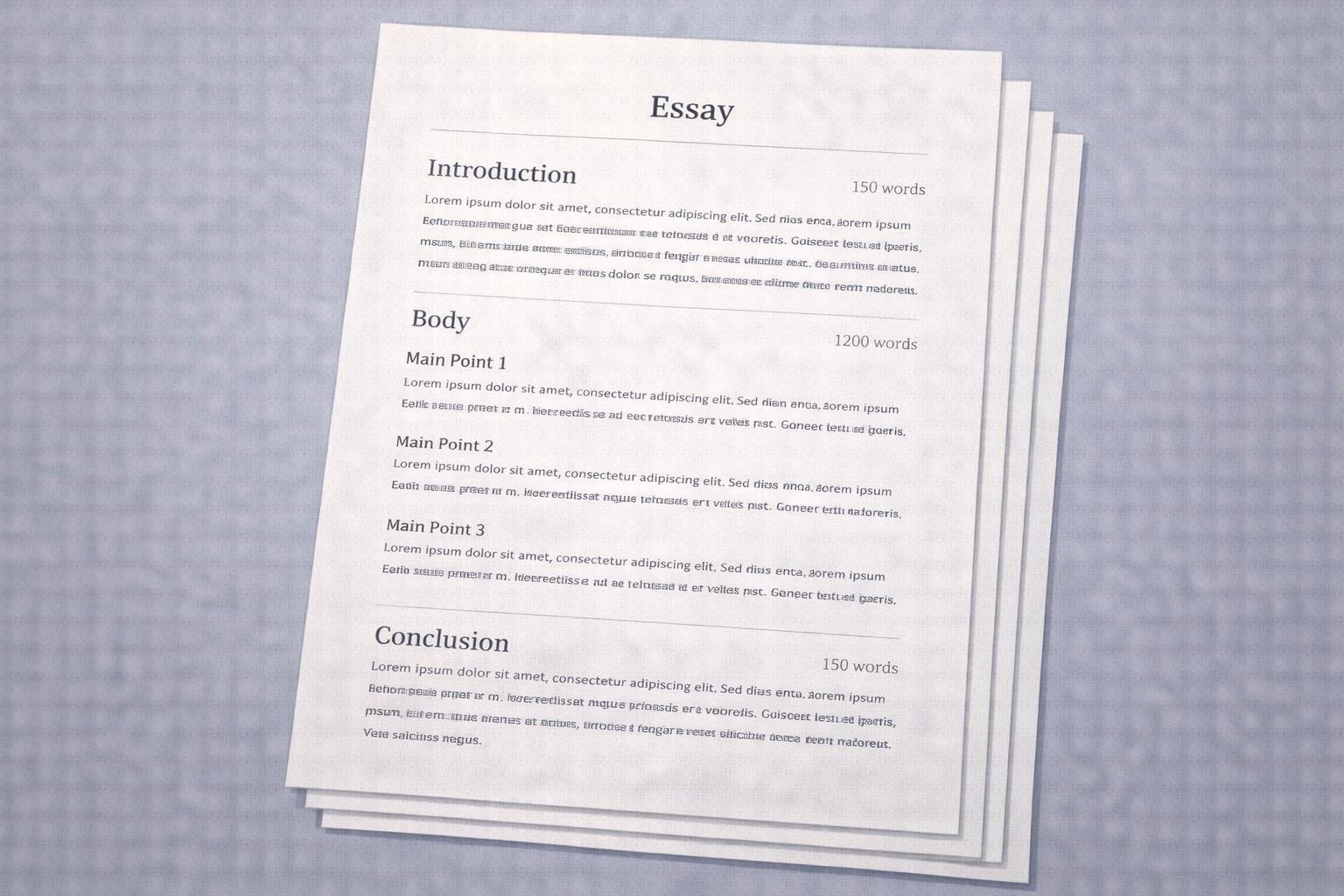
A basic essay plan outlines the introduction, main points, supporting evidence, and conclusion. This structure ensures that each paragraph contributes meaningfully to the overall argument.
Planning does not restrict creativity; rather, it provides a framework that supports clarity and logical progression.
Writing an Effective Introduction
The introduction sets the direction for the entire essay. Its role is to introduce the topic, demonstrate understanding of the question, and present a clear argument or position. Beginners often struggle by either being too vague or including unnecessary detail.
A strong introduction narrows from general context to the specific focus of the essay. It should clearly indicate what the essay will argue without presenting full evidence or analysis.
Examiners often form an initial impression of an essay based on the clarity of its introduction.
Examiner expectation: The introduction should clearly signal the essay’s argument and scope.
Building Strong Body Paragraphs
Body paragraphs are where the main argument of the essay is developed. Each paragraph should focus on one clear point that supports the overall position. Beginners often attempt to include too many ideas in one paragraph, which weakens clarity.
An effective paragraph typically begins with a topic sentence that states the main idea. This is followed by explanation, evidence, and analytical commentary linking back to the essay question.
Paragraph discipline is one of the clearest indicators of academic writing quality.
Core Elements of an Academic Paragraph
- A clear topic sentence
- Explanation of the idea
- Evidence from credible sources
- Analysis connecting evidence to the argument
Beginners who master paragraph structure often see immediate improvement in grades.
Using Evidence Correctly
Academic essays rely on evidence to support arguments. This evidence usually comes from scholarly books, journal articles, or credible academic sources. However, simply inserting quotations does not demonstrate understanding.
Effective use of evidence involves introducing the source, explaining its relevance, and analysing its implications. Beginners often struggle with this balance, either over-quoting or failing to explain why a source matters.
Evidence should strengthen the student’s voice, not replace it.
Maintaining an Academic Tone
Academic tone refers to the formal and objective style expected in university writing. Beginners may unintentionally adopt conversational language or emotional expressions that reduce academic credibility.
An academic tone avoids slang, contractions, and unsupported claims. It also uses cautious language, acknowledging complexity rather than making absolute statements.
Developing an academic tone takes practice but significantly improves the professionalism of an essay.
Referencing and Academic Integrity
Referencing acknowledges the sources used in an essay and demonstrates academic honesty. Beginners may find referencing systems confusing, but consistency is more important than perfection.
Incorrect or missing references can raise concerns about academic integrity, even when plagiarism is unintentional. Learning basic referencing rules early helps prevent serious issues later.
Referencing is not optional; it is a core academic requirement.
Common Beginner Mistakes in Essay Writing
Understanding common errors helps beginners avoid them. Many essay problems are predictable and stem from misunderstanding academic expectations rather than lack of effort.
| Mistake | Academic Impact |
|---|---|
| Descriptive writing without analysis | Lower marks for limited critical engagement |
| Poor paragraph structure | Reduced clarity and weaker argument flow |
| Weak or unclear introduction | Essay lacks direction and focus |
Recognising these issues early allows beginners to correct them before submission.
Revising and Editing Your Essay
Revision is a crucial stage in essay writing for beginners. Many students confuse revising with proofreading, but academic revision involves reviewing argument strength, structure, and clarity.
Effective revision often reveals gaps in reasoning or unclear sections that were not obvious during drafting. Editing for grammar and spelling should occur only after content has been refined.
High-quality essays are almost always the result of careful revision.
Building Confidence as a Beginner Essay Writer
Confidence in essay writing develops through understanding, practice, and reflection. Beginners often believe strong writing is innate, but academic writing is a learned skill.
By mastering core principles such as structure, argumentation, and evidence use, students gain control over their writing process. This reduces anxiety and improves performance across assignments.
Essay writing becomes manageable when approached systematically.
Developing Strong Foundations for Academic Success
Essay writing for beginners is about building solid foundations rather than achieving perfection. Understanding academic expectations, structuring ideas clearly, and engaging critically with sources are skills that develop over time.
Students who invest in learning these fundamentals early are better prepared for advanced coursework and research-based assignments. Strong foundations lead to sustainable academic success.
With practice and reflection, beginners can become confident, effective academic writers.


Comments